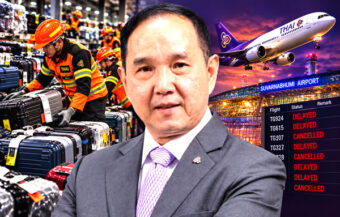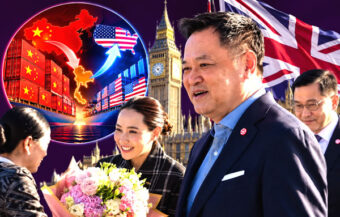
For years, airline crews passed airport screening largely on trust. That era is over. New rules will ban unnecessary personal items, expand intelligence operations, retrain X-ray staff and deploy more than 60 additional police K9 dogs nationwide.
Thailand is imposing its toughest airport security crackdown in years after the arrest of a Thai Airways hostess in Australia exposed critical weaknesses in outbound screening, prompting Prime Minister Anutin Charnvirakul to order sweeping reforms that will end the long-standing practice of trusting airline crews, tighten baggage inspections for all passengers, deploy more than 60 additional police drug-sniffer dogs, strengthen intelligence operations and introduce strict new controls aimed at shutting down drug trafficking routes from the kingdom.
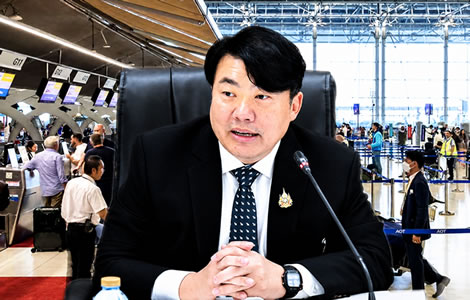
Following the arrest of a Thai Airways hostess in Melbourne on June 26 and a previous incident in late May involving a French woman flying to Perth from Thailand, the government and airport authorities have moved to strengthen screening of all outbound passengers from Thailand’s airports.
This follows a high-level meeting last Friday between Prime Minister Anutin Charnvirakul and all relevant state agencies. Before that, the Ministry of Transport had conceded that airline crews were treated on the basis of trust and honour when it came to onboard screening.
Thailand is introducing its toughest airport screening measures in years after two international heroin trafficking cases exposed weaknesses in outbound security procedures.
Transport ministry unveils sweeping airport security overhaul after Australian heroin trafficking arrests
The Ministry of Transport will tighten baggage inspections for passengers and airline crews alike. It will also strengthen intelligence gathering, expand drug detection capability and impose new restrictions on airline personnel.
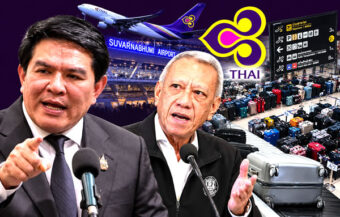
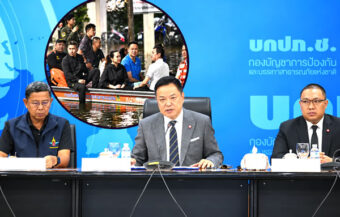
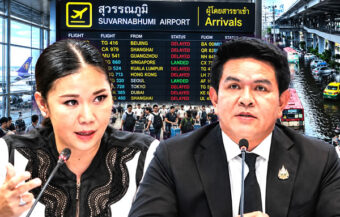
Deputy Minister of Transport Siripong Angkasakulkiat announced the measures on Sunday after attending the July 3 meeting of the Committee on Narcotics Prevention and Suppression. Prime Minister Anutin Charnvirakul chaired the meeting.
Mr Siripong represented Deputy Prime Minister and Minister of Transport Pipat Ratchakitprakarn, who was on an official visit to another province. Following the meeting, he confirmed the ministry would implement every operational measure agreed by the committee.
The government’s response follows the June 26 arrest of a Thai Airways flight attendant in Melbourne. Australian authorities allege heroin was concealed in baggage arriving from Bangkok. Earlier, a French woman was arrested after arriving in Perth on a flight from Thailand. Australian investigators also alleged she carried heroin hidden inside her luggage. In response, the two cases triggered an urgent review of outbound screening procedures at Thailand’s international airports.
Officials say traffickers adapted to screening methods as airport inspections become significantly tougher
Mr Siripong stressed that airport screening already complied with international standards before the latest arrests. He also noted that narcotics had previously been intercepted on both inbound and outbound flights.
Drug trafficking arrests at Thai airports were therefore not unprecedented. Nevertheless, investigators now believe organised trafficking groups have adapted to existing inspection methods. Officials also believe criminal networks understand routine screening procedures. As a result, the government decided that current safeguards must be strengthened.
“But from now on, there will be stricter instructions regarding inspections because we believe these groups may be aware of the authorities’ inspection procedures and are constantly trying to find ways to evade them,” Mr Siripong said.
The most significant operational changes concern airline crew members. At present, pilots and cabin crew already pass through airport scanning systems before entering secure areas. However, additional controls will now apply whenever crew members carry personal belongings. If prohibited items or unnecessary goods are found, inspection procedures will immediately become more intensive.
Civil Aviation Authority of Thailand to ban unnecessary crew items and tighten airline control procedures
As part of this, the Civil Aviation Authority of Thailand will issue additional regulations covering every airline. The rules will prohibit crew members from carrying unnecessary personal items because of the security risks involved.
Airlines will also be required to strengthen their own internal control procedures. The Ministry of Transport said further policy directives will follow to reinforce the new regime.
Notably, the measures represent a significant departure from previous practice. Until recently, airline crews were largely screened on the basis of trust and professional honour. The Ministry of Transport openly acknowledged that approach following the Australian arrest. That long-standing practice will now give way to a more comprehensive inspection system covering both passengers and airline personnel.
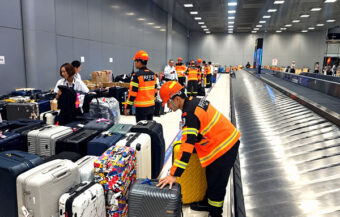
Separately, the ministry will strengthen the technical capability of airport security teams. X-ray machine operators will receive additional training to improve the identification of suspicious baggage. The programme is intended to sharpen the detection of concealed narcotics and other prohibited items. Airport screening officers will also receive stronger operational support.
Intelligence upgrades and expanded police K9 teams will reinforce airport drug detection and baggage screening
In parallel, intelligence gathering will be upgraded across the aviation security network. Officials did not disclose operational details for security reasons. However, they confirmed intelligence would play a much greater role in identifying emerging trafficking methods and supporting frontline inspections.
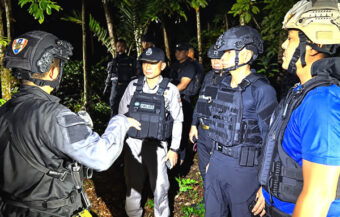
On another front, Thailand will significantly expand its use of drug detection dogs. More than 60 K9 dogs from the Royal Thai Police will join the Customs Department’s existing detector dog units.
The additional teams will strengthen inspections across passenger terminals, baggage handling facilities and cargo operations. They will also increase random screening capacity at international airports.
Nationwide screening regime strengthens security and closes vulnerabilities exposed by heroin cases
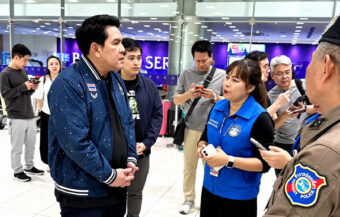
Meanwhile, the Ministry of Transport will continue working with the Office of the Narcotics Control Board as implementation begins. Other state agencies involved in Friday’s meeting will also support the expanded security programme. Further policy announcements are expected after the initial measures take effect.
The strengthened inspection regime applies to all airlines operating from Thailand. It covers both passenger baggage and crew baggage. Importantly, officials stressed the measures build upon existing international standards rather than replace them. Instead, they are designed to close vulnerabilities highlighted by the recent Australian heroin cases.
Thai hostess to face the music for her actions as Prime Minister pushes to close drug trafficking gaps
Trusted airline personnel are not screened for flights the same as passengers, admits Transport Minister
Taken together, tighter crew controls, enhanced baggage inspections, upgraded intelligence, improved X-ray training and more than 60 additional police K9 dogs amount to one of Thailand’s broadest aviation security upgrades in recent years.
The government has not indicated how long the enhanced measures will remain in force. However, the new regime signals a decisive tightening of outbound airport screening following two high-profile drug trafficking cases linked to flights departing Thailand.
Join the Thai News forum, follow Thai Examiner on Facebook here
Receive all our stories as they come out on Telegram here
Follow Thai Examiner here
Further reading:
Bungling French drug dealer arrested at Phuket Airport after cocaine sachets found on concourse
Phuket Airport Immigration Chief rebuts UK tabloid coverage linked with the arrest of a UK tourist
24 year old New Zealand tourist arrested. Cocaine found inside his passport clearing Phuket Airport