China’s shadow over Thailand? Fresh claims the Chinese Embassy tried to pressure a Taiwan film festival come as Bangkok deepens ties with Beijing, prompting a furious Taipei protest and raising new fears over media freedom and diplomatic influence.
Thailand’s expanding partnership with China has collided with growing concern over Beijing’s influence inside the kingdom after organisers of Taiwan’s annual documentary and film festival alleged the Chinese Embassy sought to pressure cinemas before the event opened. The dispute unfolded alongside fresh claims of Chinese contacts with Thai media, reported diplomatic interventions over exhibitions and public events and a sharply worded Thailand-China statement on Taiwan that triggered an unprecedented rebuke from Taipei. Together, the developments expose a week in which cultural diplomacy, press freedom, foreign policy and regional security became intertwined, raising new questions about how far Beijing’s influence now extends in Thailand.

There was growing diplomatic tension in Bangkok this week following Prime Minister Anutin Charnvirakul’s visit to Beijing and ahead of Taiwan’s annual documentary and film festival in the Thai capital.
The developments unfolded as Thailand and China moved closer on security, defence and economic cooperation. At the same time, organisers of the festival alleged that the Chinese Embassy in Bangkok had tried to intervene before the event opened.
The claims centred on a telephone call and a subsequent visit from individuals claiming to represent the embassy. Consequently, the dispute quickly extended beyond a cultural event into a wider diplomatic issue involving Taiwan, media coverage and China’s growing influence in Thailand.
The allegations arrived against a backdrop of mounting concern among Thai journalists and press freedom advocates. Reports in recent months have described repeated contacts between Chinese officials and local media organisations over editorial coverage.
Chinese pressure claims over Taiwan reporting raise fresh concerns in Thai media circles
Those concerns have focused particularly on Taiwan and politically sensitive issues involving Beijing. Previously, the Chinese Embassy warned that reporting on Taiwan could affect Thailand’s relationship with China.
It also suggested such coverage could influence Chinese tourism and investment. Separately, Chinese Ambassador Zhang Jianwei criticised reporting on so-called grey Chinese capital, saying it could unfairly damage legitimate investors and visitors.
On another front, several Thai media organisations reported that Chinese officials had telephoned newsrooms to question stories involving China. Press freedom activists said the contacts reflected a growing pattern rather than isolated incidents.
Similar concerns have also surrounded coverage of Chinese business activity in Thailand. In response, editors have privately expressed concern about direct approaches to journalists rather than formal diplomatic engagement. Those reports have never altered Thailand’s official position, but they have heightened scrutiny of China’s public diplomacy inside the kingdom.
Against that backdrop, Taiwan’s annual documentary and film festival assumed greater significance than in previous years. The festival has operated in Thailand for eight years without public controversy.
This year, however, organisers said they encountered direct pressure before the opening ceremony. The reported contacts coincided with Prime Minister Anutin’s return from Beijing and an increasingly sensitive debate over Taiwan. As a result, what began as a cultural programme quickly became entwined with regional diplomacy.
Taiwan film festival becomes diplomatic flashpoint after reported embassy intervention
Taiwan’s representative in Bangkok declined to escalate the dispute publicly. Instead, Peter Lan, head of the Taipei Economic and Cultural Office in Thailand, concentrated on the festival itself after the opening ceremony at House Samyan on Wednesday 22 July. Reporters questioned him about the intervention and asked whether Thailand’s Ministry of Foreign Affairs had contacted his office.
Mr Lan confirmed that no Thai government officials had approached TECO regarding the reported incident. He also avoided criticising either the Thai government or the Chinese Embassy directly.
“I think I’m here tonight to make sure that we have this wonderful cultural event going on,” he said. “I encourage everyone to focus on the wonderful and iconic movies.” Mr Lan added that he had already expressed his personal interpretation of the films. Therefore, he would not comment further on their wider meaning. Even so, his remarks did little to diminish interest in the controversy surrounding the festival.
For its part, TECO stressed that cultural exchange remained central to Taiwan’s relationship with Thailand. Mr Lan noted that trade, investment and business links continued to expand. Nevertheless, he argued that cultural cooperation was equally important. “As you can tell from the name, it is the Taipei Economic and Cultural Office,” he said. “So, of course, this will be very important when it comes to exchange and understanding between Thailand and Taiwan.”
TECO says cultural exchange remains central despite growing diplomatic tensions over Taiwan
Mr Lan said the festival reflected that broader relationship. It features 17 Taiwanese films and documentaries. Screenings are taking place between 22 and 26 July. Venues include House Samyan and Century Sukhumvit in Bangkok, together with Pratudang Space in Khon Kaen. In his view, showcasing Taiwanese cinema represented another important pillar of bilateral cooperation alongside commerce and investment.
“Tonight, when we are showing our iconic movies, all 17 of them, we are focusing on another pillar of these relations,” he said. “And this will continue, and we will strive to do so.” His comments underlined Taiwan’s intention to continue expanding cultural engagement despite the diplomatic dispute. They also reflected TECO’s effort to keep the focus on the festival rather than the surrounding controversy.
Reporters also asked why the alleged interference had emerged during the festival for the first time. Mr Lan again declined to criticise Thailand. Instead, he expressed confidence in the country’s long-standing support for cultural exchange. “The host country is Thailand,” he said. “Thai people are peace-loving, democratic, supporting freedom of speech and freedom of expression.” He concluded that Taiwan remained confident such exchanges would continue.
Earlier in the evening, Mr Lan referred to themes running through many of the films. He spoke about family relationships, empathy and mutual respect.
Drawing on a familiar Thai saying, he observed that people without music in their hearts were considered “strange and peculiar.” He then suggested audiences might reach a similar conclusion after watching the festival’s films. Families without empathy, compassion, respect and love, he said, were equally unusual.
Peter Lan’s remarks on family, respect and coercion deepen attention on festival’s significance
“If you watch those movies, you understand that if somebody claims to be your family member but knows only pressure, coercion and threats as a means to communicate with you, that’s not family,” Mr Lan said. He followed with another observation. “Family members need to know empathy, compassion, respect and love.”
Notably, he stopped short of explaining whether the remarks carried any wider significance. Instead, he said viewers should form their own conclusions. “After all, we are in a democracy, right? So enjoy your movie tonight,” he said.
The controversy had begun before audiences arrived at House Samyan. According to festival director Thida Philtpolkarnpim, both cinemas hosting the event received telephone calls on 20 July from someone claiming to represent the Chinese Embassy. The caller objected to Taiwan’s Ministry of Culture logo appearing on promotional material. He asked organisers to remove it before the festival opened. Ms Thida refused.
She later said the caller spoke Thai with a Chinese accent. As the conversation continued, she said his tone became increasingly confrontational. He raised his voice after she rejected the request, she said, before making remarks she regarded as threatening.
Even so, organisers left the promotional material unchanged. Ms Thida maintained that any formal objection should be submitted through Thailand’s Ministry of Foreign Affairs rather than directly to festival staff.
The following day, according to Ms Thida, the matter escalated further. Another individual claiming to represent the Chinese Embassy visited one of the participating cinemas. He repeated the request to remove Taiwan’s Ministry of Culture logo from festival publicity.
Once again, organisers declined. In turn, Ms Thida informed the visitor that any diplomatic concerns should be raised through official government channels. She also reported the incident to the Taipei Economic and Cultural Office on 21 July.
Festival dispute follows reported embassy calls and cinema visit over Taiwan ministry logo
TECO later confirmed that the reported incident had occurred. The opening ceremony nevertheless proceeded as scheduled, and screenings began without disruption. The Chinese Embassy in Bangkok has not publicly responded to the allegations.
However, organisers argued the reported contacts reflected a broader pattern rather than a single disagreement. That claim would gain greater significance when viewed alongside several earlier incidents involving exhibitions, media organisations and public events in Thailand.
Organisers drew that conclusion by pointing to several earlier episodes involving Chinese diplomatic objections in Thailand. Those incidents involved art exhibitions, environmental protests, media organisations and documentary screenings.
Taken together, they suggested a consistent approach based on direct engagement with organisers rather than formal diplomatic protests. While each case differed, all centred on issues Beijing considers politically sensitive. Consequently, the Taiwan film festival became the latest chapter in a wider pattern already attracting attention among journalists and cultural organisations.
One of the most prominent cases emerged last year at the Bangkok Art and Culture Centre. In July, the venue opened an exhibition entitled Constellation of Complicity.
The exhibition examined cooperation between authoritarian governments and featured exiled artists from China, Russia and Iran. Three days after it opened, however, organisers said Chinese Embassy staff arrived at the gallery alongside Bangkok city officials. According to Myanmar artist and co-curator Sai, they requested that the exhibition be closed.
Bangkok gallery exhibition altered after reported diplomatic pressure over political artworks
Subsequently, Reuters reported details of an internal gallery email dated 30 July 2025. The email said pressure had been conveyed through Thailand’s Ministry of Foreign Affairs and the Bangkok Metropolitan Administration, which supports the gallery.
According to the report, officials warned that the exhibition risked creating diplomatic tension. Extensive changes followed. Those alterations affected both displays and individual exhibits. As a result, visitors saw a significantly revised exhibition.
References to China were covered on displays listing authoritarian states. The changes appeared in both Thai and English. In parallel, the names and national origins of three artists linked to Hong Kong, Tibet and the Uyghur diaspora were concealed.
Tibetan and Uyghur flags were also removed. Videos by the Tibetan artist disappeared from public display. A postcard referring to President Xi Jinping was likewise taken down. Later, organisers said embassy representatives returned seeking additional changes.
China’s Foreign Ministry later welcomed Thailand’s response. It said the outcome demonstrated that Tibetan independence, the East Turkestan movement and Hong Kong independence had no place on the international stage.
That statement highlighted Beijing’s position on issues it considers matters of national sovereignty. Although the exhibition remained open, several works had already been altered or removed. Consequently, the incident attracted international attention and raised fresh questions about artistic freedom in Thailand.
River pollution protests widen scrutiny of Chinese diplomatic responses across Thailand
The focus shifted again earlier this month. Environmental campaigners began protesting over pollution affecting the Kok, Sai, Ruak and Mekong rivers. They linked the contamination to Chinese-backed mining projects operating in Myanmar’s Shan State under the Belt and Road Initiative. Demonstrators demanded stronger action from both Thai and Chinese authorities. As part of this campaign, public protests were organised in northern Thailand and Bangkok.
On 6 July, demonstrators gathered outside the Chinese Consulate in Chiang Mai. The protest was later dispersed.
Two people were injured during the confrontation. One activist suffered a broken arm. Although the demonstration ended, concern over river pollution continued to grow. Campaigners maintained that cross-border contamination required an international response.
Two days later, attention moved to Bangkok. Protesters assembled outside the Chinese Embassy carrying banners reading “China Hands Off Thailand.” Some wore masks depicting Chinese President Xi Jinping.
Others poured water collected from the affected rivers onto a map of Thailand and Myanmar. The demonstration generated extensive media coverage. Images from the protest quickly circulated across Thai news platforms and social media.
Those photographs prompted another reported intervention. According to an analysis published by Khaosod English on 16 July, several Thai journalists said the Chinese Embassy contacted their news organisations after the protest.
The journalists said embassy representatives requested that photographs showing protesters wearing Xi Jinping masks should not be published. While the embassy made no public comment, the reported contacts added another dimension to concerns already circulating within Thai newsrooms.
Newsroom contacts and documentary dispute strengthen claims of broader pattern of pressure
Separately, the same report cited additional claims involving the Foreign Correspondents’ Club of Thailand. Sources told Khaosod English that the Chinese Embassy had approached Thailand’s Ministry of Foreign Affairs roughly one month earlier.
According to those sources, the embassy sought official intervention to prevent the screening of a documentary at the club. No formal public complaint was issued. Instead, organisers again reported indirect diplomatic pressure.
Viewed together, the gallery, protest, newsroom and cinema incidents presented striking similarities. Each involved subjects regarded by Beijing as politically sensitive. Each also featured reports of direct approaches to organisers or institutions before public events proceeded.
Rather than relying solely on formal diplomatic channels, organisers alleged informal contact became the preferred method. Consequently, concerns spread beyond cultural organisations into wider discussions about media independence and public debate in Thailand.
Anutin’s Beijing visit produces landmark agreements before Taiwan wording sparks dispute
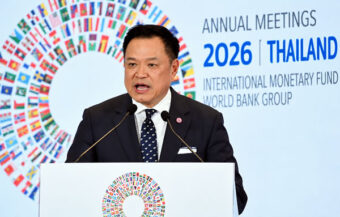
Against this backdrop, Prime Minister Anutin Charnvirakul travelled to China between 16 and 20 July at the invitation of Premier Li Qiang. The visit marked one of the most significant engagements between Bangkok and Beijing in recent years.
During the trip, Mr Anutin held talks with President Xi Jinping, Premier Li and National People’s Congress Chairman Zhao Leji. He also attended the World AI Conference 2026. The programme reflected the expanding scope of cooperation between the two governments.
Several agreements were signed during the visit. They covered trade, agriculture, technology, artificial intelligence, aviation and action against transnational crime. Both governments also agreed to strengthen cooperation across several strategic sectors.
Those commitments reflected increasingly close economic and security ties. In response, attention quickly turned to the wording of the joint statement released after the visit. That document would soon become the centre of a separate diplomatic dispute involving Taiwan.
On 21 July, China’s Foreign Ministry published the joint statement issued after the visit. Thailand’s Ministry of Foreign Affairs released identical wording. The statement reaffirmed Thailand’s commitment to the One China policy.
It recognised the People’s Republic of China as the sole legal government representing China. It also described Taiwan as an inalienable part of China. Moreover, it expressed support for peaceful reunification, rejected calls for Taiwanese independence and endorsed China’s “One Country, Two Systems” policy.
Joint statement on Taiwan draws immediate protest after Thailand adopts stronger wording
That language attracted immediate attention because it extended beyond wording commonly used by many governments. Most states acknowledge Beijing’s position without explicitly endorsing its preferred approach to reunification.
Thailand’s statement went further by expressing support for both peaceful reunification and the “One Country, Two Systems” framework. Notably, those passages appeared in the official statements released by both governments. Within hours, Taipei issued a formal response rejecting the language.
Taiwan’s Ministry of Foreign Affairs responded the same day with an unusually strong statement. It said the wording seriously distorted the facts and repeated what it described as Beijing’s false narrative on Taiwan.
The ministry also expressed disappointment that Thailand had aligned itself with China’s position. In its view, the joint statement undermined Taiwan’s sovereignty and departed from the balanced language traditionally associated with Thailand’s One China policy.
The ministry reaffirmed that the Republic of China, Taiwan’s official name, is a sovereign and independent country. It also stated that Taiwan and the People’s Republic of China are not subordinate to one another.
In response, it urged Thailand to value decades of economic cooperation, investment and people-to-people exchanges between the two sides. The statement further warned that cooperation with Beijing in suppressing Taiwan could undermine regional peace and stability. Taipei therefore rejected the wording contained in the joint communiqué.
Taiwan rejects Bangkok’s position and defends sovereignty after strongly worded China statement
Taiwanese Foreign Minister Lin Chia-lung reinforced that position soon afterwards. He criticised China’s repeated use of international platforms to reduce Taiwan’s international standing.
Reporters also asked whether the dispute could affect visa-free travel for Thai visitors. Mr Lin replied that Taiwan’s visa policy is based on reciprocity and equal treatment. Although he announced no policy change, the remarks were widely interpreted as a reminder that visa arrangements ultimately remain a sovereign decision.
The diplomatic disagreement developed rapidly. The first reported telephone call to cinemas hosting the festival came on 20 July. The visit by another person claiming to represent the Chinese Embassy followed on 21 July.
That same day, Thailand and China released their joint statement on the One China policy. Less than 24 hours later, the Taiwan Documentary and Film Festival officially opened in Bangkok. Consequently, the controversy surrounding the festival unfolded alongside an increasingly sensitive diplomatic dispute.
Festival controversy unfolds alongside diplomatic disagreement between Bangkok and Taipei
Prime Minister Anutin rejected suggestions that Thailand had altered its long-standing foreign policy. Speaking at Government House, he insisted Bangkok had consistently supported the One China policy for many years.
“Thailand has always maintained the One China policy. It is nothing new,” he said. His remarks came after questions over Taiwan’s criticism of the joint statement. He maintained that Thailand’s position remained clear and unchanged.
Asked directly about Taipei’s response, Mr Anutin said Thailand respected Taiwan’s right to express its views. “That is their position. We acknowledge it. Our policy is clear,” he said. He also dismissed suggestions that Thailand’s support for the One China policy would damage economic relations with Taiwan. Trade, investment and broader cooperation, he argued, would continue unaffected. In his view, both sides already understood each other’s positions.
Reporters also questioned whether Bangkok would seek further discussions with Taipei following the criticism.
Mr Anutin indicated that no additional explanation was necessary. He said both governments were already familiar with each other’s longstanding positions. Separately, he rejected suggestions that Thailand had chosen Beijing over Taipei. Instead, he described the government’s position as consistent with existing policy rather than a diplomatic shift.
Anutin insists Thailand’s One China policy is unchanged despite criticism from Taiwan
The prime minister also responded to speculation circulating on social media. Some online commentators suggested Taiwan could reconsider visa-free entry for Thai visitors. Others questioned whether employment opportunities for Thai workers might also be affected.
Mr Anutin dismissed those suggestions. He repeated that Thailand’s diplomatic position had not changed. He also expressed confidence that practical cooperation between Thailand and Taiwan would continue.
The timing nevertheless attracted considerable attention. Prime Minister Anutin had returned only days earlier from Beijing. During that visit, Thailand and China expanded cooperation across trade, agriculture, aviation, artificial intelligence and transnational crime.
The governments also strengthened security and defence engagement. On Friday, Chinese Defence Minister Admiral Dong Jun travelled to Government House for further discussions. The meeting reinforced the impression of increasingly close ties between Bangkok and Beijing.
At the same time, Mr Anutin again underlined Thailand’s adherence to the One China policy following his meeting with Admiral Dong. He insisted that closer cooperation with Beijing did not represent any change in Thailand’s diplomatic position.
Beijing visit strengthens defence ties. Anutin dismisses fears over closer alignment with China
Nevertheless, his remarks came as Taiwan continued protesting the wording of the joint statement. Consequently, the issue remained central to regional diplomatic discussion throughout the week.
China’s more assertive public messaging on Taiwan had not emerged suddenly. On 21 May, Ambassador Zhang Jianwei published an article restating Beijing’s position. He described Taiwan as an internal Chinese matter.
The ambassador also cited Chinese Foreign Minister Wang Yi’s warning that mishandling the Taiwan issue could trigger serious conflict. Thai analysts viewed the article as a clear signal that Taiwan remained one of Beijing’s principal diplomatic priorities.
The ambassador’s public comments extended beyond Taiwan. In recent weeks, he also criticised reporting concerning so-called grey Chinese capital operating in Thailand. Mr Zhang argued that inaccurate coverage could unfairly damage the reputation of legitimate Chinese businesses.
He similarly warned that sensational reporting might discourage Chinese investment and tourism. Those remarks attracted attention because they coincided with growing scrutiny of Chinese business activity across the kingdom.
Ambassador Zhang reinforces Beijing’s Taiwan stance and warns over reporting of Chinese investors
Separately, reports from Thai media organisations and press freedom advocates described further contacts between Chinese officials and local newsrooms. Journalists said embassy representatives questioned coverage relating to China and Taiwan.
Others referred to earlier warnings that reporting on Taiwan could affect Thailand’s relationship with Beijing. While those reports remained separate from the film festival dispute, they contributed to broader concerns about attempts to influence public discussion inside Thailand.
Thailand and Taiwan continue to maintain extensive economic links despite the absence of formal diplomatic relations. Bangkok operates the Thailand Trade and Economic Office in Taipei as its representative office.
Taiwan maintains the Taipei Economic and Cultural Office in Bangkok. Those arrangements have remained unchanged for decades. Trade, investment and business cooperation also continue despite political differences over diplomatic recognition.
Thailand maintains unofficial Taiwan ties despite growing Chinese diplomatic influence
What has changed, however, is the diplomatic environment surrounding those relationships. Taiwan believes the wording adopted in the latest Thailand-China joint statement moved beyond previous formulations.
In Taipei’s view, the statement appeared to endorse Beijing’s preferred approach to reunification rather than simply acknowledge its position. Thailand, by contrast, insists its policy remains unchanged. That disagreement now sits alongside expanding cooperation between Bangkok and Beijing across a growing range of sectors.
Chinese ambassador appeals to the Thai media not to offend genuine business investment from his country
Thailand and China move closer on defence and security co-operation after Prime Minister’s visit
The reported contacts involving the Taiwan Documentary and Film Festival unfolded against that increasingly sensitive background. Festival organisers alleged direct approaches from individuals claiming to represent the Chinese Embassy.
Earlier reports described similar interventions involving an art exhibition, environmental protests, news organisations and a documentary screening.
Meanwhile, Thailand reaffirmed its commitment to the One China policy following the prime minister’s visit to Beijing. Together, those developments ensured that a week intended to celebrate Taiwanese cinema instead became another focal point in the wider diplomatic contest surrounding Taiwan’s place in the region.
Join the Thai News forum, follow Thai Examiner on Facebook here
Receive all our stories as they come out on Telegram here
Follow Thai Examiner here
Further reading:
Officials zero in on ownership of expanding Chinese food delivery services operating in the kingdom
Huai Khwang raid shows nominee shareholdings being used by Chinese infiltrating the economy
Sweep of nominee firms and business networks on Koh Phangan. 22 arrested, 200 million in land seized
Anutin visits Koh Phangan as nominee crackdown shows 68% of firms with foreign ownership links
Blitzkrieg on foreign firms and enterprises on Koh Phangan continues with French owned resort busted
Russian-Chinese Koh Phangan alliance to sell drugs to foreigners. Accused entered Thailand illegally
Crackdown aimed at upending foreign business trade moves from Koh Phangan to Phuket. Four arrested