Chinese Ambassador Zhang Jianwei urges Thai media to stop branding investment as ‘grey Chinese’, warning the label damages investor confidence, tourism and Thai-China ties as Bangkok intensifies probes into Chinese businesses and nominee firms today.
As Thailand intensifies scrutiny of Chinese investment and alleged nominee businesses, Chinese Ambassador Zhang Jianwei has publicly challenged Thai media over its use of the term “grey Chinese capital”, warning that it unfairly links China to criminal activity, damages investor and tourist confidence and threatens one of Thailand’s most important bilateral relationships. Speaking before senior politicians, academics and journalists in Bangkok, the envoy drew a sharp distinction between organised crime and legitimate Chinese business while backing Thailand’s crackdown on illegal operators and calling for more balanced reporting.
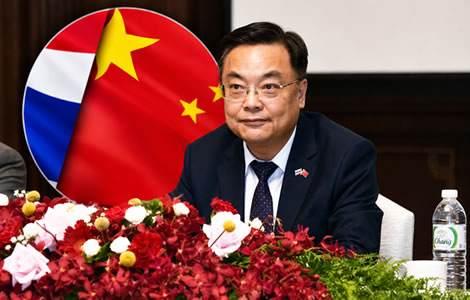
Chinese Ambassador Zhang Jianwei has issued a direct appeal to Thailand’s media, urging journalists to stop using the term “grey Chinese capital” when reporting on Chinese investment and business activity.
He warned that repeated use of the phrase creates a false image of China. He also said it risks damaging investor confidence, tourism and the long-standing relationship between Thailand and China.
The ambassador delivered the message on Thursday during a reception and seminar at the Chinese Embassy on Ratchadaphisek Road in Bangkok’s Din Daeng district. The event marked the 105th anniversary of the founding of the Communist Party of China and the 51st anniversary of diplomatic relations between Thailand and China. It brought together senior politicians, academics and media representatives to discuss the future of bilateral cooperation.
Senior Thai politicians join Chinese embassy event as envoy urges fair reporting on investment issues
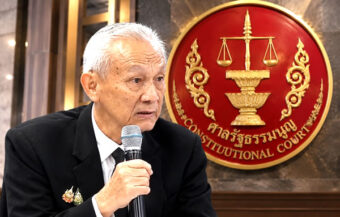
Notably, the gathering reflected the breadth of political support for continued engagement with Beijing. Among those attending were former Deputy Prime Minister Phumtham Wechayachai, Ruam Thai Sang Chart Party leader and former Deputy Prime Minister Peerapan Salirathavipak, Professor Emeritus Dr Bowornsak Uwanno, Deputy Minister of Digital Economy and Society and Bhumjaithai Party spokeswoman Nan Boonthida Somchai, Air Chief Marshal Anudith Nakornthap of the Kla Tham Party, Democrat deputy leader Isra Sunthornwat, Pheu Thai deputy leader Chakraphong Saengmanee, Prachachon Party secretary-general Pijarn Chaowapatanawong, Prachachon deputy leader Dr Chaiwat Sathavorawichit, Thai Ruam Palang Party leader Wasawat Puangphornsri, Ruam Thai Sang Chart member Siam Bangkultham and Phubodin Pakpong, personal secretary to Mr Phumtham.
Mr Zhang’s intervention comes as Chinese investment is facing its closest examination in years. Authorities are reviewing major investment projects approved by the Board of Investment (BOI).
Separately, officials are investigating businesses suspected of using nominee shareholding arrangements. The Department of Business Development (DBD) is also probing Chinese-operated restaurant businesses in Bangkok for possible legal breaches. As a result, Chinese commercial activity has become an increasingly prominent public issue.
His remarks closely followed a similar appeal by Tourism and Sports Minister Surasak Phancharoenworakul last week. Before a Cabinet meeting at Government House, the minister urged caution against broad descriptions that could unfairly damage China’s reputation. Thursday’s comments showed the Chinese Embassy shares those concerns.
Questions over grey Chinese label prompt envoy to defend lawful investment and Thai law enforcement
In response to questions from reporters, Mr Zhang addressed the controversy directly. A journalist referred to a recent public debate surrounding the expression “grey Chinese”. The question also mentioned comments made last week by Deputy Tourism and Sports Minister Chakraphon Tangsutthitham concerning investment groups. The reporter asked how the phrase affected Chinese people in Thailand and what could improve understanding between the two societies.
Mr Zhang replied that illicit capital exists in many countries. He said Thailand also has both Thai nationals and foreigners involved in unlawful commercial activity. Therefore, criminal investigations should focus on offenders rather than nationalities.
“I am confident that every country will not tolerate illicit capital and will suppress it according to the law,” Mr Zhang said.
“In fact, I understand and support Thailand in cracking down on any illegal behaviour, whether it be illicit capital or anything else.”
However, the ambassador questioned why illegal business had become so closely associated with China. He said that the connection unfairly singled out one country while ignoring the broader international nature of organised crime.
“But at the same time, we question why we are tying up grey market capital to China,” he said.
“If we tie grey market capital to China alone and generalise, we feel it is unacceptable, especially now that China has invested heavily in Thailand and there are a large number of Chinese tourists visiting Thailand as well.”
Envoy warns broad labels could deter investment, damage tourism and undermine confidence in China
Mr Zhang argued that individual criminal cases should never define an entire nation. Instead, he said every investigation should stand on its own evidence. Broad labels, he warned, eventually shape public opinion regardless of the facts.
He also defended the overall contribution of Chinese investment to Thailand’s economy. Chinese entrepreneurs, investors and skilled personnel have created employment opportunities, supported industrial upgrading and strengthened economic cooperation. According to Mr Zhang, those benefits have reached communities in both countries. Consequently, he said isolated criminal cases should not overshadow decades of legitimate commercial cooperation.
On another front, the ambassador warned of direct economic consequences from repeated use of the expression “grey Chinese”. Legitimate investors could reconsider expansion plans. Existing businesses could lose confidence. Tourist perceptions could also change.
“If we exaggerate, stigmatise and reinforce the term ‘grey Chinese’, it could negatively impact the confidence of legitimate businesses in Thailand, as well as tourists and other individuals visiting Thailand,” he said.
“If we use this term for too long, it is possible that when people see Chinese people or Chinese businesspeople, they will assume they are involved in grey business.”
Ambassador says repeated media coverage shapes opinion in China and influences travel and investment
Mr Zhang said the effect extends well beyond Thailand. Chinese audiences also follow Thai media reports closely. Repeated references to “grey China”, he said, create the impression that Thailand views China through a negative lens. That perception can influence decisions about tourism, business and future investment.
To illustrate the point, the ambassador described a recent personal conversation. A friend planned to travel to Thailand. Yet before departing, the friend contacted him with a simple question.
“Is Thailand safe?” the friend asked.
Mr Zhang said the exchange demonstrated how media coverage influences public perceptions across borders. Once negative impressions take hold, they can affect decisions long before people arrive in Thailand. Accordingly, he argued that careful reporting serves the interests of both countries.
The ambassador then addressed journalists directly. He urged reporters to distinguish clearly between legitimate Chinese businesses and criminal enterprises. He also asked the media not to exaggerate individual cases or apply broad national labels to isolated offences.
“Therefore, I sincerely hope that fellow journalists from various outlets will report the news in a reasonable and fair manner, and should not exaggerate, generalise or stigmatise,” he said.
Envoy broadens appeal beyond media as Thailand tightens scrutiny of foreign business investment
Notably, Mr Zhang reserved his strongest message for the press rather than Thai authorities. He repeatedly acknowledged Thailand’s right to enforce its laws against illegal business activity. At the same time, he insisted that lawful Chinese investment should not be associated with criminal investigations involving a minority of offenders.
In closing, the ambassador broadened his appeal beyond the media. Governments, businesses and society all have roles in maintaining strong bilateral relations, he said. Continued cooperation, rather than broad generalisation, would strengthen confidence on both sides.
People’s Party MP calls for stronger oversight of Chinese activities and trade investments in Thailand
Tourism Minister passes on concerns of Chinese envoy to Thailand over coverage of ‘grey Chinese’ used in media coverage
“I am confident that if we simply face each other and work together, we can resolve all problems and further improve China-Thailand relations,” he said.
His remarks come as Thailand continues tightening oversight of foreign investment structures while pursuing alleged nominee businesses and other unlawful commercial activity.
Simultaneously, China remains one of Thailand’s largest foreign investors and its most important source of international visitors. Against that backdrop, Mr Zhang sought to draw a firm distinction between criminal conduct and legitimate Chinese investment while calling for more measured language in future reporting.
Join the Thai News forum, follow Thai Examiner on Facebook here
Receive all our stories as they come out on Telegram here
Follow Thai Examiner here
Further reading:
Officials zero in on ownership of expanding Chinese food delivery services operating in the kingdom
Huai Khwang raid shows nominee shareholdings being used by Chinese infiltrating the economy
Sweep of nominee firms and business networks on Koh Phangan. 22 arrested, 200 million in land seized
Anutin visits Koh Phangan as nominee crackdown shows 68% of firms with foreign ownership links
Blitzkrieg on foreign firms and enterprises on Koh Phangan continues with French owned resort busted
Russian-Chinese Koh Phangan alliance to sell drugs to foreigners. Accused entered Thailand illegally
Crackdown aimed at upending foreign business trade moves from Koh Phangan to Phuket. Four arrested