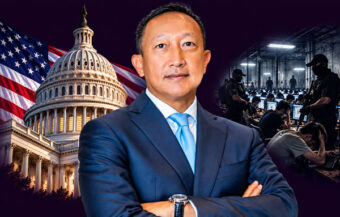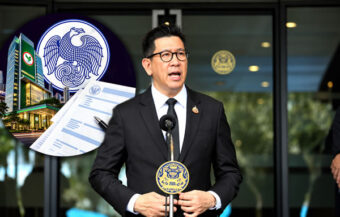
Thailand rejects claims its US military alliance is being used to win trade concessions. Suphajee prepares for fresh Washington talks as 12.5% tariffs hit exposed garment and shrimp exporters and Bangkok seeks exemptions from new tariff measures.
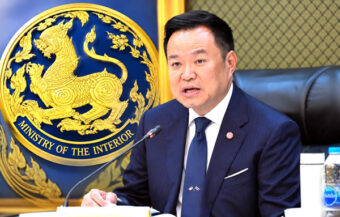
Thailand has rejected reports it may use its US military alliance as leverage in a widening trade battle with Washington. The denial comes as Deputy Prime Minister and Commerce Minister Suphajee Suthumpun prepares for fresh talks over a 12.5% Section 301 tariff, forced-labour rules and Thailand’s US$51.36 billion trade surplus. Garment and shrimp exporters face particular pressure, while Bangkok insists Cobra Gold and wider defence ties remain firmly outside the negotiations.
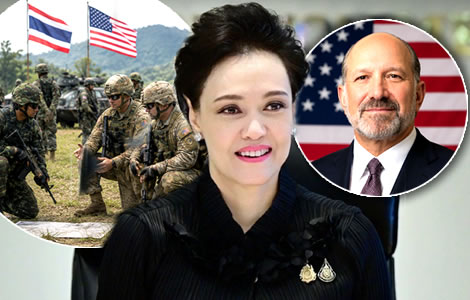
Thailand’s government on Wednesday firmly denied using its military alliance with the United States as leverage in trade negotiations. The rejection comes as Thai exporters face mounting pressure from new American tariffs. In particular, garments and shrimp are exposed as Bangkok fights for improved treatment in Washington.
Deputy Prime Minister and Commerce Minister Suphajee Suthumpun is expected to lead another negotiating mission to Washington next week. The visit follows high-level talks there last month. This time, unresolved tariffs, exemptions and American trade demands will dominate discussions.
Government spokesperson Ratchada Thanadirek rejected foreign media reports linking Thailand’s military relationship with the trade talks. She said on August 12 that the reports were untrue and did not reflect government policy. Instead, Thailand would negotiate according to its economic interests, fairness and balanced trade.
Thailand keeps military ties outside US trade talks as tariffs put exporters under growing pressure
As part of that approach, officials will examine every proposal for its impact on the domestic economy. Farmers, businesses, manufacturers and the Thai public will be central considerations. Bangkok will also seek agreements providing appropriate and fair benefits to both countries.
Separately, Ratchada stressed that Thailand’s extensive security relationship with Washington operates under its own framework. The two countries are treaty allies with decades of military cooperation. Their relationship is based on shared security interests, she said.
Accordingly, existing military programmes will continue independently of the trade negotiations. That cooperation includes Cobra Gold, the major multinational exercise hosted annually by Thailand. The exercise remains an important element of American military engagement in Southeast Asia.
Ratchada said Cobra Gold would continue under established frameworks and existing military plans. Crucially, it would not become a bargaining condition during commercial negotiations.
The 46th Cobra Gold exercise is already included in a six-year training programme. That programme covers the period from 2025 through 2030. Thirty-one countries are scheduled to participate in the next exercise.
Cobra Gold preparations continue as Thailand separates defence cooperation from trade talks
Notably, the programme is being expanded to cover both traditional and emerging threats. These include cyber and space-related security challenges. The exercises are designed to strengthen military capabilities and improve preparedness.
In parallel, military planners will hold an intermediate planning session in Hawaii during September. That meeting will prepare participating countries for Cobra Gold in March 2027. Ratchada said the exercise would remain intensive while expanding its scope.
“Thailand and the US have broad and deep relations across many dimensions, including the economy, trade, security and people-to-people ties,” she said.
Even so, Ratchada insisted those relationships operate under different frameworks and involve separate national interests.
“Each issue has its own framework and national interests that must be carefully considered,” she said. “The government will not use one area of the country’s interests to exchange for another.”
Her intervention followed a Bloomberg report concerning Thailand’s military relationship with Washington. The report suggested Bangkok was considering linking damaging American tariffs with future military cooperation. Potential implications for Cobra Gold were also raised.
Bangkok rejects military leverage claim as Section 301 tariffs expose garments and shrimp exporters
In response, the Thai government has categorically rejected that account. It says military cooperation will proceed regardless of the commercial negotiations.
The controversy has emerged during a critical phase in Thailand’s trade relationship with Washington. Since July 24, most non-exempt Thai exports have faced an additional 12.5% Section 301 tariff.
The measure followed Thailand’s failure to enact and enforce a ban on imports produced using forced labour. Consequently, Bangkok is accelerating legislation intended to establish that prohibition.
Yet the tariff does not hit every Thai exporter equally. Around 2,120 Thai product categories have been exempted from the new measure. Together, those exemptions represent more than half of Thai exports to America by value.
Outside that protection, however, some labour-intensive industries face substantially greater exposure. Thailand’s garment and shrimp sectors are among those receiving particular attention. Both have faced longstanding American scrutiny concerning labour practices and supply chains.
On another front, Washington has established special Section 301 treatment for certain textile and apparel imports. Qualifying countries can receive reduced treatment for specified volumes.
Thailand currently faces the higher 12.5% rate. Bangkok has not yet established the forced-labour import prohibition demanded by Washington. By comparison, countries meeting specified American requirements received a 10% rate.
Thailand seeks tariff relief as huge US trade surplus and forced-labour rules dominate negotiations
For Bangkok, that difference has become another significant negotiating issue. Suphajee is seeking exemptions and treatment that would allow Thai exporters to compete against regional rivals. At the same time, Thailand is rejecting demands it believes would damage domestic industries or national interests.
Behind the immediate tariff fight sits Thailand’s enormous merchandise trade surplus with America. Thailand exported US$72.51 billion in goods to the United States during 2025. Conversely, it imported only US$21.14 billion in American goods.
That left Thailand with a US$51.36 billion merchandise trade surplus. Washington has increasingly focused on the imbalance while seeking to reduce its trade deficit.
Bangkok, though, argues the headline numbers require wider context. Thailand says a significant proportion reflects production by American companies operating inside the kingdom. Nonetheless, the surplus remains central to the negotiations.
Suphajee has already taken Thailand’s case directly to senior American officials. She travelled to Washington on July 15 and 16 for a series of high-level meetings.
During that mission, Suphajee met US Commerce Secretary Howard Lutnick. She also met White House Chief of Staff Susie Wiles. Additionally, she held discussions with Deputy US Trade Representative Rick Switzer.
Thailand pressed Washington to complete negotiations for an Agreement on Reciprocal Trade. Suphajee also sought improved tariff treatment and clarity concerning separate US trade investigations.
Suphajee prepares new Washington push as US trade pressure spreads across several commercial fronts
Washington, however, said it required additional time to examine Thailand’s proposals. Several important questions therefore remained unresolved following the July meetings.
Next week’s expected mission would give Suphajee another opportunity to press those issues personally. Reports on Wednesday said a Commerce Ministry negotiating team was preparing to travel to America. Suphajee is expected to lead that delegation.
Beyond the immediate tariff dispute, another Section 301 investigation is creating uncertainty for Thai manufacturers. That investigation concerns structural manufacturing overcapacity.
As a result, Bangkok is fighting on several commercial fronts simultaneously. Tariffs form only one part of the dispute. Market access, forced-labour regulations and the huge bilateral trade imbalance are also involved.
Meanwhile, Thailand’s garment industry is watching the negotiations particularly closely. Thai Garment Manufacturers Association President Chalamphol Lotharaksapong addressed the situation on Wednesday.
Chalamphol said the direction and objectives of American trade policy were clear. Washington wants to reduce its trade deficit through import tariffs or other measures, he said.
For that reason, he expects American pressure could continue regardless of the present 12.5% tariff. The industry must therefore assess Thailand’s treatment against competing manufacturing countries.
Thai garment exporters eye Japan and Europe as US tariffs threaten a market taking 39% of shipments
For Thai clothing producers, relative tariff rates are critical. Chalamphol said Thailand could remain competitive if rival exporters faced broadly similar rates.
Serious concerns would arise if Thailand faced substantially higher tariffs than competing countries. Based on current information, however, he said that had not happened.
The scale of Thailand’s American exposure remains considerable. Approximately 39% of all Thai garment exports are sold in the United States.
Still, the remaining 61% goes to markets elsewhere. Chalamphol therefore supports accelerating expansion into alternative export destinations. Businesses must simultaneously protect their existing position in America.
One potential route is through countries already covered by Thai free trade agreements. Japan stands out because Thailand already has an established bilateral framework.
Specifically, the Thailand-Japan Economic Partnership Agreement offers potential for increased garment and textile exports. Chalamphol identified Japan as an important alternative market.
Elsewhere, European trade agreements could provide another route for expansion. Thailand is progressing with free trade arrangements involving the European Free Trade Association.
More significantly, a Thailand-European Union Free Trade Agreement would provide access to a far larger market. The European Union contains more than 450 million people.
Garment industry faces wider cost pressures as Suphajee prepares for another crucial Washington mission
Such access could create new commercial opportunities for Thai garment manufacturers. It would also spread export exposure across a wider range of markets.
During the second half of 2026, Chalamphol expects businesses to closely monitor American developments. Public and private sectors are also examining measures to mitigate the impact on US exports.
At the same time, manufacturers face pressures extending well beyond tariffs. Global economic conditions remain important. Exchange rates can quickly alter export competitiveness, while raw material costs directly affect margins.
Furthermore, environmental and sustainability requirements are becoming increasingly stringent across overseas markets. Chalamphol said these factors would affect long-term competitiveness within the Thai garment industry.
Against that backdrop, the expected Washington mission carries considerable weight. Suphajee will return after her July meetings with Lutnick, Wiles and Switzer.
At issue will be Thailand’s treatment under Section 301 and the conditions demanded by Washington. Negotiators will also seek clarity over exemptions and separate American investigations.
For garment manufacturers, the immediate calculation remains straightforward. Thailand can compete if rival exporters face comparable American tariffs. A substantially higher Thai rate would sharply alter that position.
Shrimp and garments remain exposed as Bangkok keeps Cobra Gold firmly outside its US trade negotiations
Likewise, the shrimp industry remains exposed to American scrutiny involving labour practices and supply chains. Its position adds another sensitive export sector to Suphajee’s negotiating agenda.
Taken together, Washington is pressing Bangkok across several areas. These include its trade surplus, forced-labour rules, market access and manufacturing overcapacity.
Thailand, in turn, wants competitive tariff treatment and exemptions for exposed exporters. It is also accelerating legislation addressing imports produced through forced labour.
Yet Bangkok has drawn a firm boundary around military cooperation. Preparations for Cobra Gold will continue under the existing six-year plan.
In September, military planners will meet in Hawaii as scheduled. Then, in March 2027, the 46th Cobra Gold exercise is due to proceed.
Thirty-one countries are expected to participate. Its programme will remain intensive while expanding into cyber and space-related threats.
None of that, the government says, will become currency in the trade negotiations.
Suphajee faces tariffs and US demands as Bangkok rules military alliance out of commercial bargaining
Instead, Suphajee faces a commercial battle defined by tariffs, exemptions and American demands. Her agenda also includes Thailand’s US$51.36 billion trade surplus and separate Section 301 investigations.
For Thai garment producers, America remains impossible to ignore. It buys approximately 39% of the industry’s exports. Japan and Europe, however, are being examined for further growth.
Suphajee led high powered Thai team to Washington DC seeking to close a US trade deal and partnership
Commerce Minister Suphajee talks about gold in an economy and world driven by US-China trade rivalry
Shrimp exporters also remain exposed as Washington scrutinises labour practices and supply chains. Meanwhile, more than half of Thai exports by value remain protected through existing product exemptions.
Next week’s expected talks will therefore focus attention directly on Suphajee and her negotiations with Washington. She will seek clearer answers and improved treatment for exposed Thai industries.
Military cooperation, however, will remain outside the room. Bangkok insists its longstanding US security alliance is not a trade bargaining chip.
Join the Thai News forum, follow Thai Examiner on Facebook here
Receive all our stories as they come out on Telegram here
Follow Thai Examiner here
Further reading:
Business lobby urges Anutin to improve climate for inward investment by axing old laws and red tape
Tax and welfare revolution as Thailand moves ahead with Negative Income Tax that expands reporting
Thumbs up from economic gurus for 2027 Negative Income Tax plan. It’s a game-changer for progress
Expert warns foreign tourism has become Thailand’s curse, fueling inertia and a widespread malaise