Bangkok’s party strip faces a midnight shutdown! Khao San traders reel from a police corruption scandal as just four of 30-plus venues hold proper licences. Minister Paradorn launches a 15-day rescue plan, with tougher safety checks and longer hours.
Bangkok’s world-famous Khao San Road is facing a nightlife crisis after a police bribery scandal sparked a midnight crackdown, hammering tourism businesses and workers. Shockingly, only four of more than 30 surveyed venues hold proper entertainment licences. On Friday, Prime Minister’s Office Minister Paradorn Prissananantakul joined Bangkok Governor Chadchart Sittipunt and senior police chiefs for urgent talks. Their proposed Khao San–Rambuttri Sandbox could restore late-night trading while overhauling outdated laws and imposing strict safety controls. Meanwhile, police officers face disciplinary and criminal investigations over suspected corruption. The scandal has exposed a wider licensing problem, with over 1,000 similar venues identified across Bangkok and 22 provinces lacking designated entertainment zones. Officials have just 15 days to advance the proposals, potentially reshaping Thailand’s nightlife industry.
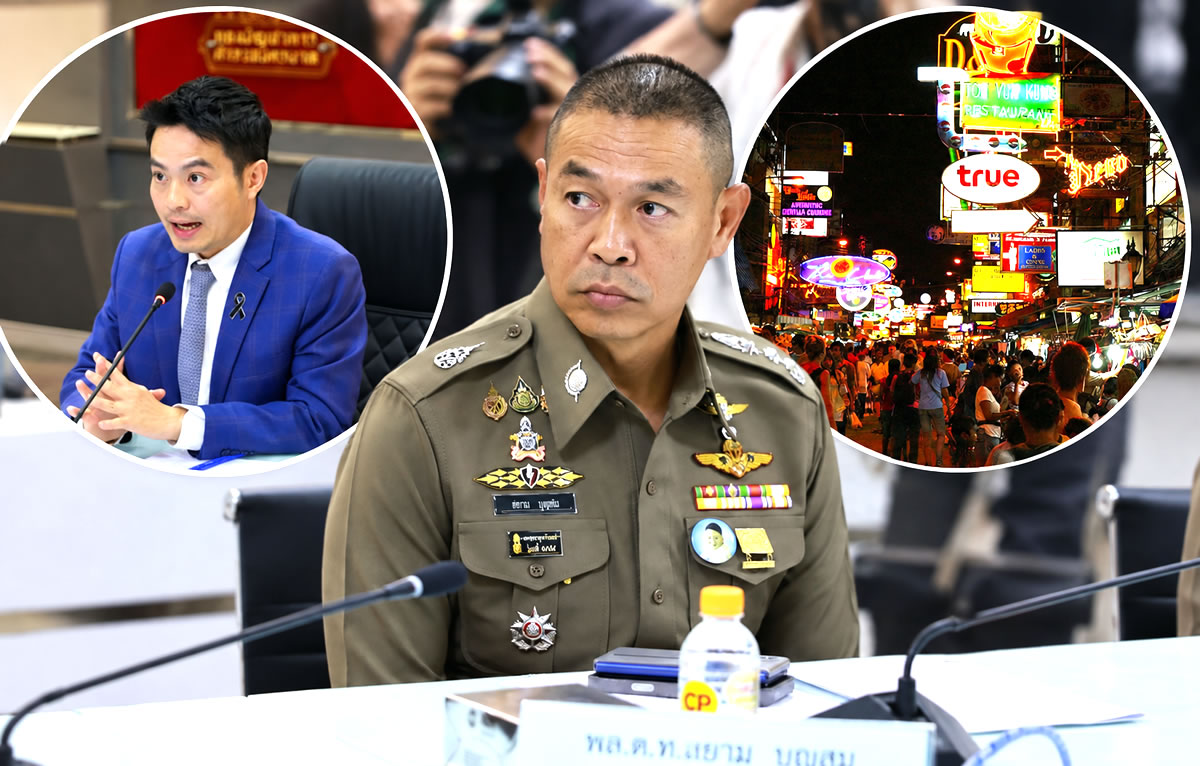
Thailand’s government is preparing to extend nightlife hours on Bangkok’s world-famous Khao San Road following a police corruption scandal. A crackdown has forced businesses to close at midnight, hitting one of the capital’s busiest foreign tourism districts.
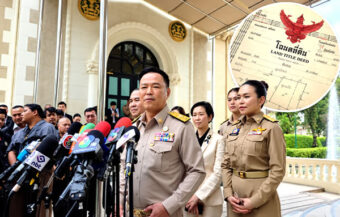
On Friday, Prime Minister’s Office Minister Paradorn Prissananantakul held urgent talks with Bangkok Governor Chadchart Sittipunt and senior police commanders. The proposed Khao San–Rambuttri Sandbox would permit longer trading under revised licensing and safety regulations.
However, only four of more than 30 surveyed establishments hold proper entertainment licences. Meanwhile, police officers face disciplinary investigations and criminal inquiries over suspected bribes. Authorities have 15 days to advance proposals addressing outdated laws, corruption and the restrictions crippling late-night business.
Paradorn leads Bangkok police and city officials in talks over longer hours for Khao San nightlife
The high-level meeting took place on Friday, October 30, at Metropolitan Police Bureau headquarters in Bangkok. Paradorn chaired discussions involving senior police officers, Bangkok Metropolitan Administration (BMA) executives and anti-corruption officials.
Metropolitan Police Commissioner Police Lieutenant General Siam Boonsom attended alongside Bangkok Governor Chadchart Sittipunt. Also present were Deputy Governor Pornprom Na Wikitseth and Public Sector Anti-Corruption Commission Secretary-General Phumwisan Kasemsuk.
The discussions centred on a pilot scheme covering Khao San Road and neighbouring Rambuttri Road. Under the proposal, selected entertainment businesses could remain open beyond midnight.
However, operators would first have to satisfy licensing, building and safety requirements. The government is also examining entertainment zoning laws dating back to 2002. These regulations have become central to a dispute involving tourism businesses, police enforcement and suspected official corruption.
Only four of more than 30 Khao San businesses hold entertainment licences as midnight closures bite
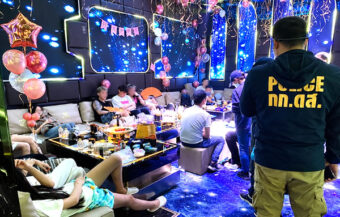
The scale of the licensing problem emerged during a recent survey of Khao San Road establishments. Authorities examined more than 30 businesses. Yet only four possessed proper entertainment licences. The remaining establishments operated under other classifications, including restaurant licences.
Nevertheless, many provided music, dancing and other services normally associated with entertainment venues. This discrepancy has become a central issue in the government’s proposed overhaul.
The distinction determines which activities businesses can legally provide and how late they can operate. Restaurants cannot automatically trade under the same conditions as licensed entertainment venues.
Consequently, recent enforcement action has forced numerous establishments to close at midnight. The restrictions have hit an internationally recognised tourist district where late-night business supports hotels, restaurants, bars and other services.
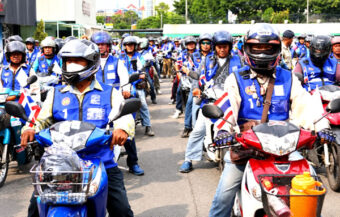
Paradorn acknowledged the immediate commercial consequences. Khao San Road, normally crowded with international visitors after dark, had become noticeably quieter after midnight. Meanwhile, business owners complained about falling revenue and reduced earning opportunities.
OK Bar inspection sparks bribery inquiries as Khao San operators petition minister over midnight curbs
Restaurant employees, musicians and other service workers have been affected. The minister identified these losses as a principal reason for examining the existing regulations.
The dispute intensified following an Interior Ministry inspection of a Khao San Road establishment identified as OK Bar. Officials uncovered possible licensing violations and indications of payments to government personnel.
Investigators suspect officials from several agencies accepted money to overlook breaches of entertainment regulations. Subsequently, enforcement authorities increased scrutiny of businesses operating under restaurant licences. The resulting restrictions brought the licensing dispute directly into the district’s commercial operations.
In response, local operators approached Paradorn at Parliament on Thursday, October 29. They submitted a petition seeking relief from the midnight restrictions and changes to the regulatory arrangements.
The minister acknowledged their economic concerns but insisted that safety and legal compliance remained essential. He told operators longer hours could be considered through the proposed Sandbox. However, businesses would first have to meet the necessary requirements.
Government examines temporary late-night trading measures as 2002 zoning rules exclude Khao San Road
Paradorn also undertook to continue discussions with business representatives after Friday’s meeting. He said operators must accept responsibility for the safety of tourists, customers and their premises.
At the same time, government agencies would examine mechanisms for permitting extended trading. The immediate approach involves temporary administrative measures while broader legislative amendments proceed through the political system.
The underlying problem concerns Thailand’s entertainment zoning regulations. A royal decree introduced in 2002 established designated entertainment areas in Bangkok. These include Royal City Avenue, commonly known as RCA, Patpong and Ratchadaphisek.
Notably, Khao San Road falls outside those zones despite its international reputation as a nightlife destination. Consequently, businesses face difficulties obtaining licences appropriate to their commercial activities.
Many establishments therefore operate as restaurants while providing services resembling those of entertainment venues. Their legal classifications impose different restrictions on operating hours and permitted activities.
Paradorn said the zoning arrangements no longer reflected Bangkok’s commercial conditions. Furthermore, he identified comparable problems in other provinces. The minister linked the regulatory difficulties to opportunities for officials to demand unofficial payments.
Corruption concerns drive entertainment law review as officials weigh new powers to extend opening hours
The recent corruption allegations have sharpened that issue. Businesses unable to secure entertainment licences remain subject to enforcement by officers responsible for policing the regulations.
Paradorn argued that clearer legal arrangements would reduce opportunities for bribery. Nevertheless, the government must address both the Entertainment Places Act and the zoning regulations governing where establishments may operate.
The Department of Provincial Administration has already drafted amendments to the entertainment legislation. Separately, the Pheu Thai and Bhumjaithai parties have submitted proposed changes concerning entertainment establishments.
These measures are intended to address problems extending beyond Khao San Road. However, parliamentary consideration will take time. The government is therefore pursuing a smaller pilot while the broader legislative process continues.
Friday’s meeting examined possible administrative mechanisms for extending business hours within the proposed Sandbox. One option involves an announcement through the Prime Minister’s Office.
Alternatively, officials could seek approval through consultation with the Alcoholic Beverage Control Committee. The committee’s responsibilities include matters concerning alcohol sales, public health and safety. Its position will therefore influence the conditions governing extended trading.
No new closing time agreed as officials plan licensing register and safety rules for Khao San businesses
Officials agreed to examine the available mechanisms before returning with recommendations. However, Friday’s meeting did not approve a new closing time. Nor did it authorise unrestricted late-night trading throughout Khao San Road.
Instead, participating agencies must establish how selected businesses could operate longer while complying with existing legislation. The proposals will also address licensing, safety inspections and enforcement procedures.
Paradorn identified three principal concerns: economic activity, public safety and legal enforcement. The first involves businesses and employees affected by midnight closing. The second concerns building standards, operating conditions and customer safety.
Finally, the legal dimension covers licensing restrictions, police responsibilities and suspected corruption. The proposed Khao San–Rambuttri Sandbox is intended to address all three issues within one administrative framework.
As part of the initiative, authorities intend to compile a comprehensive register of businesses operating in the district. The records will include licensed entertainment venues, restaurants and establishments providing similar services.
Officials will then compare and standardise information held by different agencies. This would establish a common record for licensing and enforcement decisions. It would also identify businesses requiring further inspections or regulatory action.
Bangkok plans colour-coded venue classifications and 17-point safety checks for extended nightlife hours
In addition, authorities are examining a colour-coded classification system. Businesses would be divided into green, yellow and red categories according to their regulatory status and compliance requirements.
Detailed criteria remain under consideration. Nevertheless, the proposal follows the discovery that most surveyed Khao San establishments lacked proper entertainment licences. The government intends to use the classification arrangements alongside licensing and safety assessments.
Safety inspections will form a central condition for businesses seeking extended hours. The BMA and Metropolitan Police have already conducted a wider survey across Bangkok. They identified more than 1,000 establishments operating in ways similar to entertainment venues.
Some have undergone inspections using a 17-point safety checklist. Others are still completing the process. The findings demonstrate the wider scale of businesses operating outside conventional entertainment classifications.
Paradorn said every establishment seeking longer trading hours must satisfy the complete 17-point checklist. Operators must also comply with the Building Control Act and other applicable safety legislation.
Where violations are identified, businesses would have to correct them. Those failing mandatory requirements would not be permitted to continue entertainment activities. Thus, extended trading would depend on compliance rather than existing commercial practices alone.
Noise complaints and police corruption inquiries join Bangkok crackdown on unlicensed nightlife venues
The proposed changes also cover noise complaints and administrative enforcement. Authorities are examining clearer reporting channels for complaints involving entertainment businesses. Relevant agencies would then investigate matters within their responsibilities.
Alongside this, police and BMA officials would continue checking licences and operating conditions. Residents and business operators would also be consulted about the proposed arrangements.
On another front, the government is pursuing investigations into suspected corruption involving officials responsible for enforcement. Paradorn confirmed that disciplinary proceedings against police personnel have already begun.
The relevant police agencies have established investigation committees. Separately, the Public Sector Anti-Corruption Commission is conducting preliminary inquiries into possible criminal offences. Both processes concern allegations arising from the enforcement of entertainment regulations.
Public Sector Anti-Corruption Commission Secretary-General Phumwisan Kasemsuk attended Friday’s meeting. His agency was also assigned a coordinating role in developing the Sandbox proposals.
Anti-corruption officials coordinate police inquiries as senior commanders join talks on Khao San reforms
It will consult the Metropolitan Police Bureau, BMA and other participating authorities. Meanwhile, disciplinary investigators will examine the conduct of officers suspected of misconduct. Criminal inquiries will proceed under the applicable procedures.
The allegations concern suspected payments to officials in exchange for overlooking licensing violations. Paradorn said clearer regulations would provide police officers with more precise enforcement guidelines.
He also linked the existing licensing difficulties to opportunities for bribery. However, responsibility for individual offences remains subject to the ongoing investigations. The proposed regulatory changes and the corruption proceedings are therefore advancing through separate processes.
The senior police attendance reflected the importance of enforcement arrangements. Metropolitan Police Commissioner Police Lieutenant General Siam Boonsom joined Deputy Commissioner Police Major General Charin Kopattata. Police Major General Tinkorn Somwandee also participated. Additionally, Metropolitan Police Division 1 Commander Police Major General Worasak Pisitbannakorn attended alongside senior officers from his division.
Khao San tourism faces nightlife overhaul as Bangkok officials and police review rules for local venues
Other representatives included Police Colonel Ekkapop Tanprayoon, deputy commander of Metropolitan Police Division 1. Police Colonel Rakchayut Saipromyat and Police Colonel Tosaporn Hongthong were also present.
Representatives of the Phra Nakhon District Office joined officials responsible for inspection, prevention and suppression. The meeting consequently brought together agencies involved in policing, licensing, building controls and local administration.
The proposed overhaul carries considerable importance for Bangkok’s foreign tourism industry. Khao San Road is among the capital’s most internationally recognisable destinations. The approximately 400-metre street lies in historic Banglamphu, close to the Grand Palace and Chao Phraya River. Since the 1980s, it has developed from a budget accommodation centre into a major international backpacker district.
Initially known for inexpensive guesthouses, Khao San subsequently developed a substantial nightlife and hospitality industry. Today, surrounding streets contain hotels, hostels, restaurants, bars, travel agencies, massage businesses and souvenir shops.
Neighbouring Rambuttri Road forms part of the same tourism district. Together, the streets attract foreign visitors seeking affordable accommodation, food, entertainment and travel services.
Khao San draws international backpackers and supports hotels, restaurants and Bangkok tourism services
The Tourism Authority of Thailand recognises the area as an important gathering place for international travellers. Meanwhile, travel publisher Lonely Planet has described Khao San Road as one of the world’s most famous backpacker enclaves.
Its guide has estimated that busy nights can attract as many as 50,000 visitors. That figure represents a published estimate rather than a verified current daily attendance count.
The district’s commercial importance extends beyond alcohol sales and late-night entertainment. Foreign visitors spend money on accommodation, restaurants, transport, shopping, tours and other services.
Furthermore, many use the district as a starting point for journeys elsewhere in Thailand. The concentration of tourism businesses creates economic links between nightlife operators and other local services. Consequently, restrictions on late trading affect a wider range of commercial activities.
Khao San Road also serves a different market from several other Bangkok entertainment districts. Sukhumvit, Thonglor and parts of Silom attract higher-spending tourists, expatriates and Thai customers.
By comparison, Khao San remains particularly associated with backpackers and independent international travellers. Its relatively affordable accommodation and nightlife have supported that reputation for decades. The current dispute therefore concerns an established destination within Bangkok’s international tourism industry.
Paradorn cites 22 provinces without nightlife zones as government prepares wider entertainment law changes
Beyond the capital, Paradorn identified outdated entertainment zoning as a nationwide problem. According to the minister, 22 provinces have no designated entertainment zones. Yet businesses providing nightlife services operate in some of those provinces. He specifically identified Pathum Thani, immediately north of Bangkok. The province has numerous establishments operating in ways similar to entertainment venues.
Paradorn said Pathum Thani’s zoning arrangements did not reflect its existing commercial activities. He cited the province as another example of discrepancies between entertainment laws and business operations.
More broadly, the minister said the entire legal framework required review. The Department of Provincial Administration has already prepared amendments. Meanwhile, two additional legislative proposals have been introduced in Parliament.
The government intends to pursue the Khao San pilot while those broader changes remain under consideration. Paradorn explained that extended hours would initially be tested within a limited area.
Authorities would examine compliance with safety requirements and enforcement arrangements. They would also assess concerns raised by the Alcoholic Beverage Control Committee. Any wider application would depend on the results and the relevant legal conditions.
Government gives agencies 15 days to develop Khao San pilot as police pursue separate bribery inquiries
The minister indicated that arrangements could subsequently be considered for neighbouring areas. However, the immediate priority remains Khao San Road and Rambuttri Road.
The pilot would provide a practical examination of longer operating hours under revised administrative controls. Its findings could then inform consideration of similar arrangements elsewhere. For the moment, officials must first establish the legal basis for the Bangkok scheme.
Friday’s meeting imposed a 15-day timetable for the next stage. The anti-corruption authorities and participating agencies must examine the available legal and administrative mechanisms.
They are expected to report progress and discuss further measures around November 14. Their recommendations will address opening hours, licensing, safety standards and enforcement procedures. Paradorn will also continue consultations with affected business operators.
Until those arrangements are approved, the midnight restrictions remain a central issue for businesses operating under restaurant licences. Meanwhile, the police disciplinary investigations and anti-corruption inquiries continue.
The proposed Sandbox has therefore reached the planning stage rather than implementation. Its immediate purpose is to establish conditions under which selected businesses could legally operate later.
Khao San nightlife businesses await new rules as officials tackle midnight closures and licensing failures
The government’s initiative follows three developments exposed by the recent enforcement operation. Most surveyed Khao San establishments lack proper entertainment licences.
Midnight restrictions have curtailed trading in a major international tourist district. In parallel, suspected payments to government officials have triggered disciplinary and criminal investigations. Authorities are now examining changes to licensing, safety requirements and operating hours.
Police respond within 10 minutes to drunk foreign tourist attacking and breaking into ATM for lost card
Thailand emerges as a safe world destination for solo female travellers in latest online surveys and guides
The next stage comes within 15 days, when participating agencies must report their recommendations. Those proposals will determine how the government proceeds with the Khao San–Rambuttri Sandbox.
For Bangkok’s internationally recognised backpacker district, the immediate issue remains the future of late-night trading. For the wider entertainment industry, the review also concerns zoning regulations that have governed businesses since 2002.
Join the Thai News forum, follow Thai Examiner on Facebook here
Follow Thai Examiner on Google here
Receive all our stories as they come out on Telegram here
Follow Thai Examiner here
Further reading:
Furious Dutchman rips ATM from its moorings after his ฿10 million investment in with Thai wife fails
Body of crazed German man who refused to take his meds but instead smoked cannabis, found at home
Loony pot-smoking German who terrorises dentist clinics on the run in Nakhon Ratchasima. Arrested
29-year-old Indian tourist jumped to his death in Bangkok’s Sukhumvit area. Cannabis found in room