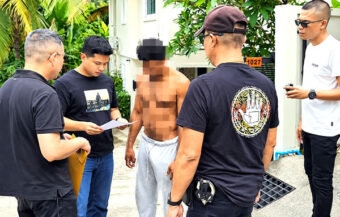
Thai immigration police intercept an American restaurant owner arriving from Singapore and an Israeli woman flying from Bangkok. The Samui Airport arrests come amid a sweeping crackdown on suspected nominee firms, with offenders facing three years in jail.
An American businessman returning to Thailand was met by Immigration Bureau police on November 10 at Samui International Airport. Acting on advance intelligence, officers arrested restaurant owner Robert Brown Forster, 49, at passport control after his flight from Singapore. Subsequently, Israeli businesswoman Hila Suissa, 34, was detained after arriving from Bangkok. Forster faces accusations of using Thai nominees, while Suissa is accused of unlawful land acquisition. Both deny the accusations. Meanwhile, Thailand’s sweeping crackdown has seen 12,906 companies examined, 88 suspects identified and ฿1.2 billion in property implicated. Crucially, American investors require formal authorisation despite privileges under the 1966 Treaty of Amity. Offenders face three years in prison, million-baht fines and court-ordered business closures.
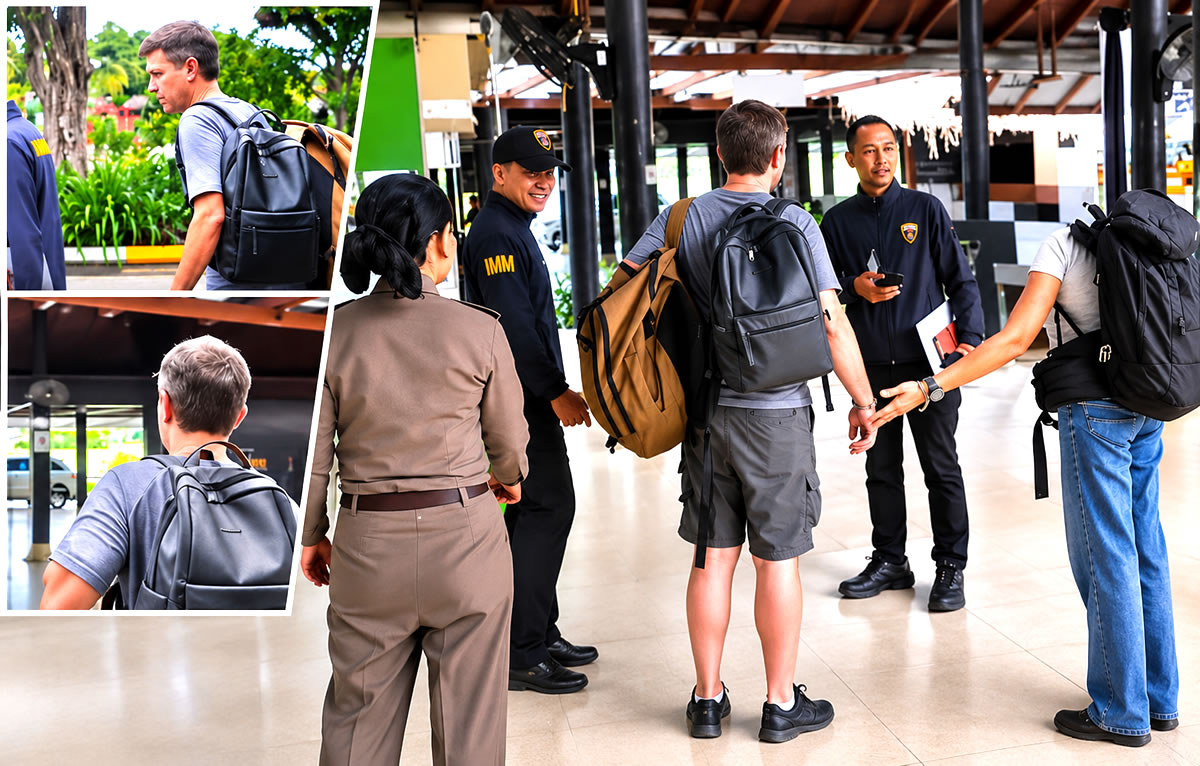
Thailand’s crackdown on foreign-owned businesses using Thai proxies continues, with immigration police intercepting wanted foreign investors at Samui International Airport. On Tuesday, November 10, officers arrested American restaurant owner Robert Brown Forster, 49, after he arrived from Singapore.
Subsequently, Israeli businesswoman Hila Suissa, 34, was detained after arriving aboard a domestic flight from Bangkok. Both arrests involved outstanding court warrants issued months earlier.
Crucially, both foreigners firmly denied the criminal accusations against them. The arrests come amid an extensive enforcement campaign targeting commercial enterprises and property holdings across Thailand’s southern tourist islands.
American restaurant owner arrested at Samui Airport over suspected nominee business after Singapore flight
Immigration officers received advance intelligence concerning Forster’s return to Thailand. Acting on that information, officers intercepted the American businessman at the international arrivals passport control checkpoint.
They executed an outstanding arrest warrant issued on Thursday, May 21, 2026. The warrant had remained outstanding for 173 days. Investigators accuse Forster of using Thai nationals as nominee shareholders to operate a restricted food and beverage business.
In addition, the American faces accusations of submitting false information to government officials. Investigators maintain that he operated a commercial enterprise without securing the required foreign business authorisation.
The accusations concern restrictions imposed under Thailand’s Foreign Business Act BE 2542 (1999). Significantly, the legislation specifically restricts foreign-controlled enterprises engaged in selling food and beverages.
However, Forster firmly rejected the accusations when confronted by immigration officers. He acknowledged that he was the individual identified in the outstanding court warrant.
American’s restaurant remains unidentified. Police also arrested an Israeli woman arriving from Bangkok
Following his detention, immigration officers transferred the American to local police investigators for criminal proceedings. There was no reported resistance during the arrest. Nor has evidence emerged that Forster deliberately remained overseas to avoid prosecution.
Local sources have not identified the American’s restaurant or disclosed its registered corporate name. Likewise, the identities of the Thai nationals suspected of acting as nominee shareholders remain undisclosed.
Investigators have not released details of the company’s registered capital or shareholding structure. The precise location of the restaurant and its current operating status also remain unconfirmed.
On another front, immigration officers intercepted Israeli businesswoman Hila Suissa following her arrival from Bangkok. Details of her detention emerged on Tuesday, November 24. Officers executed an outstanding warrant issued by Koh Samui Provincial Court on August 10, 2026.
The arrest brought another foreign investor into criminal proceedings concerning Thailand’s restrictions on foreign economic activity.
Israeli woman denies unlawful land acquisition accusations as two state agencies target nominee activity
In Suissa’s case, investigators accuse the Israeli national of providing false information to government officials. She also faces accusations concerning the unlawful acquisition of land in Thailand.
After completing the airport arrest, immigration officers transferred Suissa to Bo Phut Police Station. There, the businesswoman confirmed her identity but rejected the accusations. She also declined to provide investigators with a statement.
The two cases target distinct areas of foreign investment regulation. Forster faces prosecution over the operation of a food and beverage enterprise. By contrast, Suissa’s case concerns the acquisition of Thai land.
Both arrests, nevertheless, come amid a broader enforcement campaign targeting suspected nominee arrangements. That campaign encompasses restaurants, property developments, corporate formation services, hotels and other commercial activities.
Notably, the warrant against Forster followed a major government announcement by just ten days. On Monday, May 11, two government agencies announced a coordinated campaign against suspected foreign nominee businesses.
The Department of Special Investigation (DSI) joined forces with the Department of Business Development (DBD). Together, both agencies designated Koh Samui and neighbouring Koh Phangan as their initial enforcement targets.
Senior officials examine 11,426 companies as nominee crackdown targets five additional tourist destinations
Department of Special Investigation Director-General Police Major Yutthana Praedam participated in the high-level meeting. Security Crime Bureau Director Police Lieutenant Colonel Chanchai Likhitkanthasorn also attended.
Representing the Department of Business Development was Director-General Poonpong Naiyanapakorn. His department oversees corporate registration and the administration of foreign business authorisation in Thailand.
Ahead of the announcement, officials had examined corporate information relating to 11,426 registered companies. Investigators divided those enterprises into three categories according to their risk of unlawful nominee activity.
As part of this process, authorities identified businesses requiring closer scrutiny. The examination concentrated on corporate structures suspected of concealing foreign commercial interests behind Thai shareholders.
Beyond Surat Thani province, authorities identified five additional destinations for expanded enforcement. These included Phuket, Krabi, Phang Nga, Pattaya and Hua Hin. Each destination has substantial foreign commercial interests across several business sectors. Accordingly, the government’s enforcement programme extends beyond the southern islands initially selected for investigation.
Koh Phangan probe generates 45 arrest warrants before more than 300 officials join major August crackdown
Police moved quickly following the May 11 announcement. On Wednesday, May 13, officers launched a major enforcement operation targeting suspected nominee networks. Investigations into commercial enterprises operating on Koh Phangan subsequently generated 45 arrest warrants.
By Wednesday, June 10, police had arrested 27 suspects. At that stage, another 18 individuals remained wanted under outstanding court warrants.
During June, immigration officers also intercepted foreign nationals arriving at Samui International Airport. Several suspects were wanted under warrants issued on May 21. That date corresponds with the warrant executed against Forster in November. Despite the matching dates, authorities have not identified Forster as one of the original 45 suspects.
Separately, authorities launched another extensive enforcement operation on Saturday, August 15. More than 300 officials participated in the crackdown on suspected foreign nominee businesses. Deputy Interior Minister Polpeera Suwannachawi was among the senior government figures involved. Then Deputy National Police Chief Police General Samran Nualma also participated in the operation.
General Samran is now the National Police Commissioner.
August crackdown nets 14 foreigners as investigators identify 88 suspects and ฿1.2 billion in property
Fourteen foreign nationals were arrested under outstanding court warrants during the August crackdown. Among those detained was an American citizen whose identity was not publicly disclosed.
By August, investigators had examined records relating to 12,906 registered companies. Of those enterprises, 8,254 had foreign shareholders. Moreover, officials identified 875 companies with potentially suspicious ownership structures.
From that wider examination, investigators identified 59 companies for legal action. The operation involved 60 criminal cases and 88 suspects. Among those identified were 26 Thai nationals and 62 foreigners.
Authorities obtained 37 search warrants as part of their investigations. Property implicated in the August operation was valued at approximately ฿1.2 billion.
During the wider enforcement campaign, investigators seized corporate registration documents and accounting records. Officers also took possession of computers, mobile phones and other electronic evidence.
The investigations covered registered company ownership, commercial operations and suspected arrangements involving Thai shareholders. Five principal business networks emerged during the August operation.
Three business networks face scrutiny over luxury villas, childcare, company formation and work permits
The first involved the Israeli-linked Kalp-Tree network, comprising 19 companies. Its commercial interests included property development, luxury villas and childcare services. Investigators examined the corporate arrangements behind those enterprises.
The network formed one of the largest identified groups of companies facing scrutiny during the August crackdown.
In parallel, investigators examined four German-linked companies operating within the Hol-C network. Their inquiries extended beyond registered corporate ownership. Authorities also scrutinised villa developments, building permits and taxation.
The investigation brought property construction and associated commercial activities within the scope of the enforcement operation.
A third investigation targeted the Kamon network, involving 27 registered companies. Its activities included establishing companies for foreign nationals seeking visas and work permits. Investigators examined the corporate arrangements underpinning those services.
The network contained the largest number of companies among the five principal groups identified during the operation.
Police examine company ownership changes and hotel offences as crackdown reaches restaurant trade
Elsewhere, another 16 companies associated with the Pa network came under scrutiny over changes in their registered ownership structures. Some businesses had initially been registered under entirely Thai ownership.
Later, foreign shareholders were introduced into their corporate structures. Authorities also questioned whether companies within the network were conducting genuine commercial activities.
The fifth network involved two French-linked companies. Investigators examined suspected investment fraud, property acquisition and unlicensed hotel operations. These inquiries extended the enforcement campaign into another segment of the tourism industry. Collectively, the five networks encompassed 68 companies across several distinct commercial sectors.
Against that backdrop, the criminal case against Forster brings Thailand’s enforcement campaign directly into the restaurant industry. The Foreign Business Act specifically regulates foreign participation in food and beverage sales.
Under List Three, Item 19, selling food and beverages constitutes a restricted commercial activity. Consequently, foreign-controlled restaurants, bars and cafés fall within the legislation’s scope.
Foreign investors and Thai nominees face three years in prison and fines of up to ฿1 million under the law
Foreign ownership of such enterprises is not categorically prohibited. The legislation provides mechanisms allowing eligible foreign investors to establish and operate restricted commercial businesses legally.
These include foreign business licences and authorisation obtained under applicable international treaties. Without the required permission, foreign investors operating restricted enterprises can face criminal prosecution.
Of particular importance is Section 36 of the Foreign Business Act. The provision addresses arrangements involving Thai nationals acting as proxies to circumvent foreign business restrictions. Its provisions extend to Thai nationals assisting foreigners in circumventing the legislation. Foreign investors participating in prohibited arrangements also face criminal liability.
Convictions under Section 36 can result in prison sentences of up to three years. Offenders also face fines ranging from ฿100,000 to ฿1 million. Courts can impose imprisonment, financial penalties or both. The provision also empowers judges to order the termination of unlawful nominee arrangements.
Under Section 37, foreigners operating restricted commercial enterprises without the necessary authorisation face equivalent criminal penalties. The maximum prison sentence is three years. Financial penalties can reach ฿1 million. Beyond those sanctions, courts can order the termination of unlawful business operations.
Daily fines can reach ฿50,000 while American investors enjoy special commercial rights under 1966 treaty
Failure to comply with subsequent court orders can trigger further financial penalties. Additional fines range from ฿10,000 to ฿50,000 for each day of continued non-compliance. Those provisions give courts powers to enforce orders terminating unlawful commercial operations or prohibited ownership arrangements.
The precise statutory provisions cited in Forster’s arrest warrant have not been publicly disclosed. Additionally, the accusation concerning false information submitted to government officials could involve separate criminal proceedings. Published accounts have not identified the particular declarations or corporate documents at the centre of that accusation.
For American investors, Thailand’s foreign business regulations contain a significant distinction. The United States enjoys special commercial privileges under a longstanding bilateral agreement with Thailand.
The Treaty of Amity and Economic Relations between the two countries was signed in 1966. Its provisions grant qualifying American investors ownership rights unavailable to most other foreign nationals.
Under the agreement, eligible American entrepreneurs can establish wholly American-owned companies across numerous commercial sectors. This provides a legal route to full American ownership without using Thai nominee shareholders. Nevertheless, businesses seeking to operate under the treaty must complete the required authorisation procedures.
American business owners must obtain formal certification to exercise commercial rights under treaty
Specifically, eligible enterprises must obtain a Foreign Business Certificate from the Department of Business Development. The certification procedure falls under Section 11 of Thailand’s Foreign Business Act. American citizenship alone does not automatically authorise the operation of a restricted commercial enterprise. The required certification remains a distinct legal obligation.
Indeed, the Department of Business Development explicitly identified the Treaty of Amity in its 2025 annual report. The department listed the bilateral agreement among the mechanisms available for obtaining foreign business authorisation.
American investors can therefore obtain recognition of their treaty-based commercial privileges through established administrative procedures.
In Forster’s case, authorities have not disclosed whether his business obtained certification under the bilateral agreement. Neither have investigators disclosed whether he applied for such certification or held another form of foreign business authorisation. Those details remain outstanding as criminal proceedings concerning his restaurant business move forward.
Land ownership restrictions remain in force as immigration police pursue outstanding warrants
Conversely, the Treaty of Amity does not generally confer land ownership rights on American investors. Thailand’s restrictions on foreign land acquisition remain applicable despite the commercial privileges available under the bilateral agreement. Commercial authorisation and land ownership remain distinct matters under Thailand’s foreign investment regulations.
The November airport arrests demonstrate that enforcement continues long after the initial operations launched in May and August. Immigration officers are executing outstanding warrants against foreign nationals returning from overseas and travelling within Thailand.
Israeli man arrested on arrival at Koh Samui Airport over nominee firm to buy property for holiday home
51-year-old Frenchman arrested in Chiang Mai for running a tourist hostel through a nominee company
The interception of Forster and Suissa adds two further cases to the continuing enforcement campaign.
As of Thursday, November 26, Forster’s subsequent bail arrangements and judicial proceedings remained unverified. No subsequent court ruling concerning Suissa’s property-related case has been disclosed in the available reports.
Both foreigners have denied the accusations against them. Their cases remain unresolved as authorities continue pursuing outstanding warrants involving suspected nominee businesses and unlawful foreign property holdings.
Join the Thai News forum, follow Thai Examiner on Facebook here
Follow Thai Examiner on Google here
Receive all our stories as they come out on Telegram here
Follow Thai Examiner here
Further reading:
Koh Phangan Police to oppose bail for foreign investors. 21 to be charged before the court on Monday
Sweep of nominee firms and business networks on Koh Phangan. 22 arrested, 200 million in land seized
Anutin visits Koh Phangan as nominee crackdown shows 68% of firms with foreign ownership links