Live cockroaches are flying off the shelves in Phitsanulok as a 29-year-old breeder earns up to ฿5,200 weekly. Anglers swear their scent and underwater movement lure fish better than rival bait, leaving her farm unable to satisfy surging orders fast.
Live cockroaches are delivering a fast-growing income for a 29-year-old woman in northern Thailand as anglers scramble for her unusual bait. Natliya Amhasime earns up to ฿5,200 weekly from her Phitsanulok farm, yet production cannot match orders. Fed quality chicken feed, protected from ants and refrigerated alive, the insects command ฿130 per bottle. Fishermen say their scent, underwater flash and frantic wriggling attract fish better than grasshoppers or shrimp, driving expansion plans.
A 29-year-old woman in northern Thailand has turned farmed cockroaches into a steady and profitable family business. Natliya Amhasime sells the live insects as fishing bait from her home in Phitsanulok province. After only one year, weekly sales generate between ฿3,900 and ฿5,200. More importantly, orders now exceed the small farm’s production capacity.
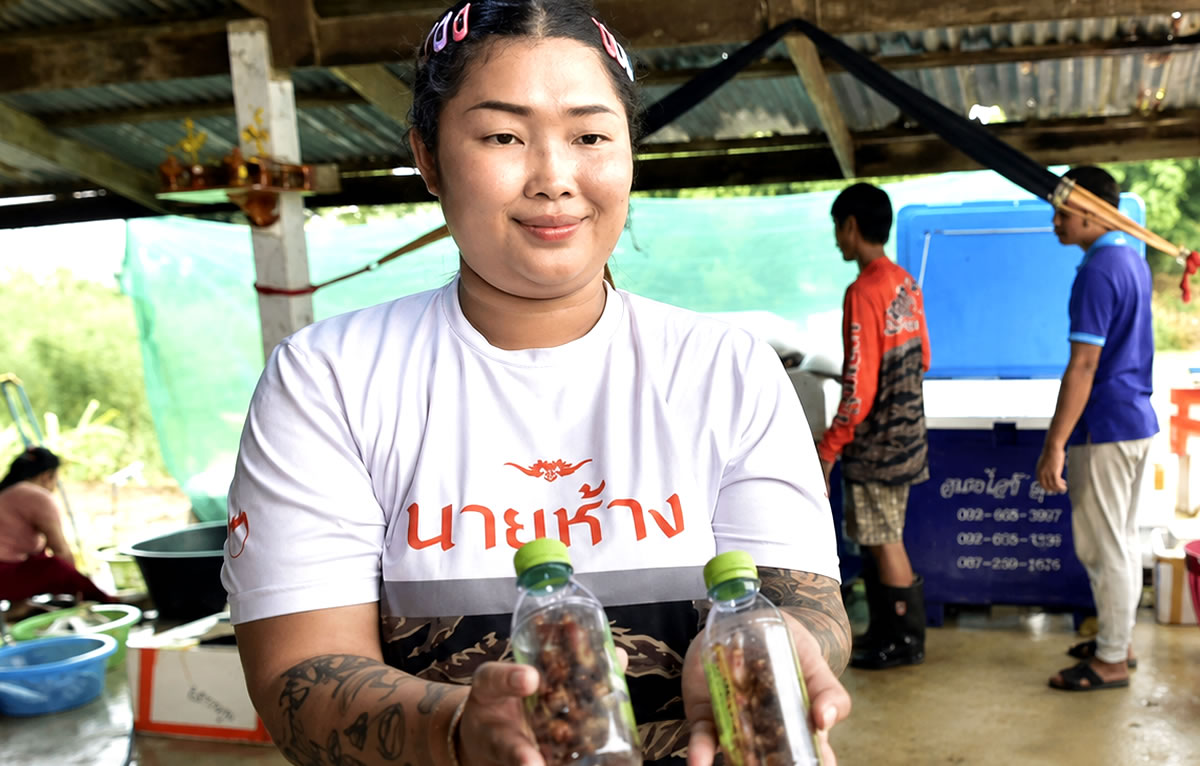
Natliya sells each bottle for ฿130, with 50 live cockroaches packed inside. She currently produces between 30 and 40 bottles during each weekly harvest. However, demand can reach 30 bottles daily, forcing customers to order ahead. In response, she is preparing to expand the breeding operation and raise output.
Reporters visited the farm on August 31 in Ban Tabak Ngam village. It operates in Chum Saeng Songkhram subdistrict, Bang Rakam district. The village lies in Phitsanulok, a province in northern Thailand. Specifically, Natliya lives with her family at 90/21 Moo 9.
Yom River fishing demand turns farmed cockroaches into valuable bait for local northern Thai anglers
The business emerged from the family’s location near the Yom River. Fishing remains a popular occupation among residents living beside the waterway. Consequently, the area provides an established market for bait targeting river fish. Cockroaches already had a strong reputation among local anglers.
Fishermen say the insects produce a distinctive scent which attracts fish more effectively than other bait. Their soft texture and underwater movement also add to their appeal. Notably, anglers compare their performance favourably with grasshoppers and shrimp. That local knowledge gave Natliya the idea for her farm.
Initially, she researched how to breed the insects safely and consistently. She found that farmed cockroaches were not difficult to raise. Nevertheless, they require separation, regular care and protection from predators. “They need food and water, and they don’t eat dirty things like regular cockroaches,” she said.
Instead, the insects receive high-quality chicken feed inside the controlled breeding area. In addition, Natliya changes their water every week. “They eat high-quality chicken feed, and the water is changed weekly,” she said. The system keeps the breeding stock separate from cockroaches found inside homes.
Sealed breeding room protects valuable cockroach eggs and larvae as customer orders pile up
On another front, ants and geckos present a constant production threat. Both predators can eat cockroach eggs, larvae and growing insects. Therefore, Natliya keeps the operation inside a sealed room. Small ventilation holes provide airflow while limiting access.
As part of this protection, she covers every ventilation opening with fine mesh. The mesh prevents ants and geckos from entering the breeding area. “You just need to make sure that ants and geckos don’t bother them,” she said. Without that barrier, predators could quickly damage the farm’s breeding stock.
Once the cockroaches reach the required stage, Natliya selects and catches them individually. She prefers insects that are moulting from white to light brown. “We select and catch cockroaches when they are moulting, from white to light brown,” she said. Afterwards, workers count 50 live insects into each bottle.
At the current price, 30 bottles produce ฿3,900 in sales. By comparison, a 40-bottle harvest generates ฿5,200. Natliya normally completes one harvest each week. Even so, the available insects cannot satisfy every order immediately.
“They’re selling very well now, 30 bottles a day, and we can barely keep up with demand,” Natliya said. “We have to take orders.” Meanwhile, weekly production remains between 30 and 40 bottles. The difference between orders and output has created a growing backlog.
Anglers buy live cockroaches in bulk as strong river demand forces the farm to source more stock
Some customers purchase at least five bottles during each visit. These fishermen often know specific places where fish regularly gather. Through experience, anglers can identify productive river locations and return to them. As a result, successful fishing spots generate repeated bait orders.
Separately, the cockroaches require relatively little food after reaching customers. Natliya said one batch can last approximately one week. The insects also attract several varieties of fish. In particular, fishermen use them for soft-fleshed species, including red snapper.
Demand has become strong enough for Natliya to buy additional cockroaches for resale. Yet she accepts stock only from other controlled breeding operations. “We don’t buy cockroaches from homes because of hygiene concerns,” she said. This restriction separates the product from insects collected in kitchens, drains or other residential areas.
Similarly, Natliya refuses to purchase or sell dead insects. “Only live cockroaches are sold; we don’t buy dead ones,” she said. The insects must remain alive throughout packing, storage and delivery. Their movement forms a central part of their value as bait.
Crucially, the cockroaches can survive for extended periods inside the retail bottles. “Even when we put them in bottles to sell, they don’t die,” Natliya said. “They can survive for a very long time.” Proper cold storage helps preserve them until customers are ready to fish.
Cold storage keeps bottled cockroaches alive as fishermen favour their scent over conventional bait
Following bottling, Natliya places the containers inside a refrigerator’s vegetable compartment. The insects can remain there for one week. During storage, low temperatures temporarily stun them and reduce their movement. However, they become active again after spending time outside the refrigerator.
One condition remains essential during refrigeration. Water and condensation must not enter the bottles. Moisture could interfere with the storage process and damage the livestock. Accordingly, the containers must remain dry until sale.
“We’ve been raising them for about a year, just starting out, and it’s been very profitable,” Natliya said. Weekly sales now average between 30 and 40 bottles. That output provides the family with ฿3,900 to ฿5,200 in weekly revenue. Furthermore, the market operates throughout the year rather than during one fishing season.
Jakarin Chanchuen, a 21-year-old fisherman from Sukhothai province, confirmed the bait’s popularity. He first heard about the farm approximately one year ago. Since then, farmed cockroaches have become a common bait among river fishermen. Jakarin said their smell performs better than grasshoppers or shrimp.
To test that view, he used cockroaches and grasshoppers at the same fishing location. The comparison produced a clear difference in the fish’s response. According to Jakarin, soft-fleshed fish preferred the cockroach bait. Red snapper showed a particularly strong preference.
Live cockroaches flash and wriggle underwater as demand drives plans for a larger Phitsanulok farm
At the same time, the bait must remain alive when cast into the water. A live cockroach wriggles underwater and catches the available light. It also releases its distinctive scent around the hook. Together, those features make the bait easier for fish to locate.
Jakarin described a flashing effect as the cockroach moved beneath the water. The movement attracts attention while the scent draws fish towards the line. Subsequently, fish can see the insect and bite the bait. Dead cockroaches would not provide the same combination of movement and smell.
Bangkok protest anger over northern rivers poisoned by Chinese-backed firms near the Thai border erupts
Angry elephant told to hurry up his mating business turns on his owner and locals in Buriram province
For Natliya, the immediate challenge is production rather than finding customers. Current weekly output remains capped at about 40 bottles. Meanwhile, orders continue arriving from anglers seeking live, farmed stock. The business must also buy insects elsewhere when its own supply falls short.
Looking ahead, Natliya plans to enlarge the farm and increase its breeding capacity. Additional stock would help clear advance orders and support larger weekly harvests. It would also reduce her reliance on cockroaches purchased from other farms. Above all, year-round sales offer the family a continuing source of additional income.
Join the Thai News forum, follow Thai Examiner on Facebook here
Receive all our stories as they come out on Telegram here
Follow Thai Examiner here
Further reading:
River Kok in Chiang Rai poisoned with arsenic from Wa state-controlled gold mining across the border
Rangsiman Rome MP calls for stiffer response to Myanmar’s junta over the jailing of Thai sailors
Myanmar Junta meltdown threatens to end Bangkok’s condominium sales boom as Kyat currency fails
Tyrant of Nay Pyi Taw’s days are numbered as Karen soldiers burn the hated Myanmar flag in Myawaddy