Thailand moves towards a landmark debt rescue system after MPs vote 444–0. Ex Justice Minister Thawee Sodsong says borrowers owing from ฿100,000 could restructure debts, while covered civil servants facing bankruptcy can keep their jobs.
Former Minister of Justice Thawee Sodsong has hailed a landmark bankruptcy reform offering indebted Thais a new route out of financial collapse. Backed by MPs 444–0, it lets borrowers owing from ฿100,000 seek court protection and restructure debts before bankruptcy. Farmers, freelancers and seasonal workers can qualify, while courts gain powerful restructuring powers. Crucially, covered civil servants could keep their jobs even if rehabilitation fails. The breakthrough comes with household debt at ฿16.4 trillion, or 85.9% of GDP. Thawee says the reform shifts Thailand from asset seizure and bankruptcy towards restructuring, preserving businesses and protecting jobs. The bill returns to the Senate on September 28.
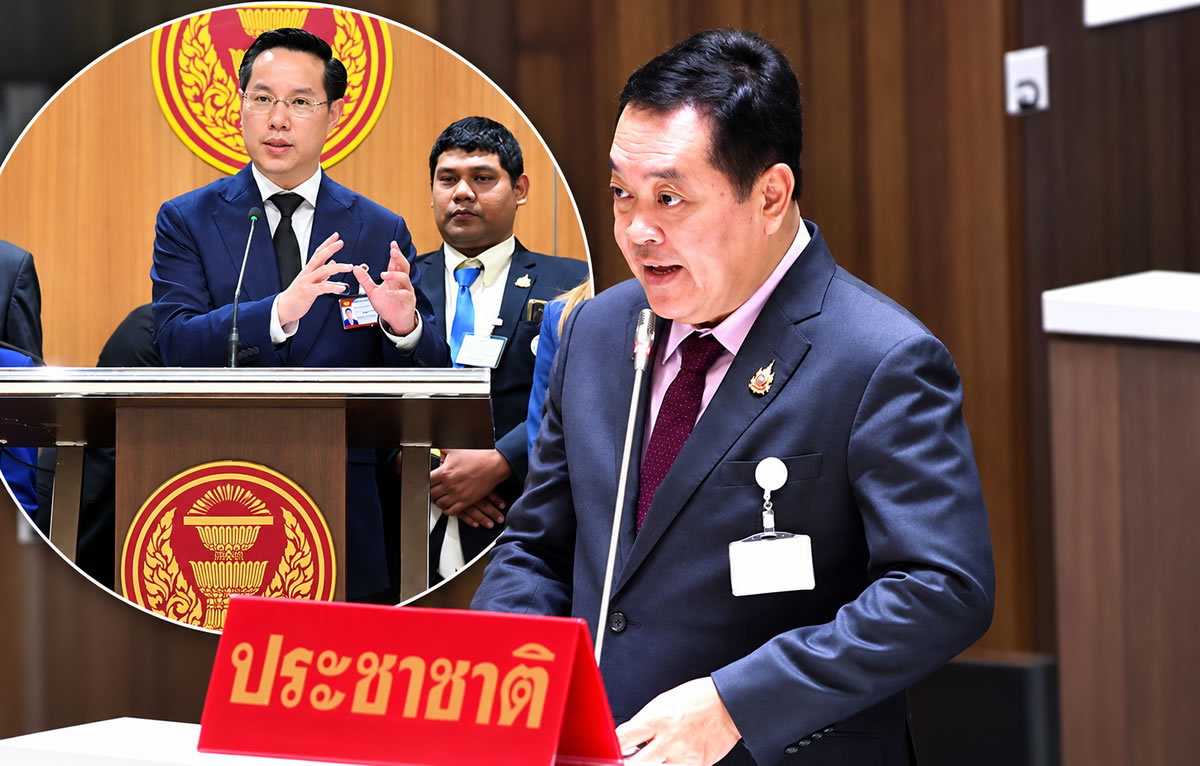
Former Justice Minister Pol Col Thawee Sodsong has welcomed sweeping bankruptcy reforms overwhelmingly backed by MPs on Wednesday. The legislation creates Thailand’s first dedicated personal financial rehabilitation route since the Bankruptcy Act was introduced in 1940. Crucially, ordinary people with debts from ฿100,000 can enter a court-supervised process before bankruptcy. Farmers, freelancers and seasonal workers are included because applicants do not need regular monthly income.
Pol Col Thawee, now a Prachachart Party list MP, described the overhaul in striking terms. “From bankruptcy law to a law for the recovery of people, businesses, and the economy,” he said. Meanwhile, the legislation introduces significant protection for government workers. Civil servants will not automatically lose their jobs when failed rehabilitation subsequently results in bankruptcy.
The House of Representatives approved the joint parliamentary committee’s Bankruptcy Act amendment on September 23. MPs voted 444 to zero for the compromise, with one abstention and one member not voting. In addition, all 446 participating MPs endorsed the joint committee’s observations. The agreed legislation returns to the Senate on September 28.
Bankruptcy reform survives two dissolutions as lawmakers agree four routes for debt rehabilitation
The vote follows a lengthy legislative battle spanning successive parliaments. During the 25th House, Pol Col Thawee served as first vice-chairman of the original ad hoc committee. It held nine meetings before parliament was dissolved under then-prime minister Prayut Chan-o-cha. Consequently, the unfinished legislation returned during the 26th House, with Pol Col Thawee chairing another 23 committee meetings.
During that work, MPs heard from the public, businesses, lawyers, financial institutions and relevant government agencies. Furthermore, committee members travelled to Nakhon Ratchasima, Songkhla and Chiang Mai to gather evidence. Another dissolution later interrupted Senate consideration under Prime Minister Anutin Charnvirakul. The bill was subsequently revived under Section 147 of the Constitution after the Cabinet requested continued consideration.
Senators amended four areas before the House rejected some of their changes. Accordingly, a joint parliamentary committee was established to settle the differences. Pol Col Thawee joined that body and served as an adviser. Its work covered repayment priorities, secured creditors, individual income requirements and employment protection for government workers.
The final compromise establishes four separate rehabilitation systems. Large businesses owing at least ฿50 million remain covered by rehabilitation provisions under Section 3/1. By contrast, smaller businesses receive a separate process with lower entry thresholds. Individual entrepreneurs qualify with debts from ฿1 million to below ฿50 million.
New debt routes open access to freelancers as automatic court stays halt lawsuits and asset seizures
Legal entities qualify from ฿2 million to below ฿50 million. Separately, accelerated rehabilitation allows debtors and creditors to negotiate a plan before approaching the court. The completed agreement can then be submitted for judicial consideration. According to Pol Col Thawee, that procedure is designed to reduce stages, costs and time.
The fourth route covers ordinary individuals and represents the biggest departure from the existing framework. Under Section 90/151, applicants need income and debts of at least ฿100,000. However, the joint committee rejected a Senate requirement that this income must be regular. That preserves access for farmers, freelancers and people earning money seasonally.
There is also a separate band for individuals operating businesses. Those with debts from ฿100,000 to ฿1 million fall within the individual rehabilitation provisions. Above that level, qualifying individual entrepreneurs move into the SME framework. The structure therefore creates different routes according to debt size and commercial status.
Beyond those categories, the legislation contains five major procedural changes. First, an automatic stay begins when a court accepts a qualifying rehabilitation petition. Lawsuits, asset seizures and specified enforcement proceedings can then be temporarily suspended. This gives the parties time to negotiate and develop a plan.
Courts gain cram-down powers while secured creditors receive safeguards on rates and repayments
Second, courts receive a new power commonly described as “cram down”. A court can approve a qualifying plan despite insufficient creditor support under specified conditions. However, the plan must be fair, feasible and satisfy legal requirements. The provision prevents individual creditors from automatically blocking an otherwise qualifying restructuring.
At the same time, secured creditors receive statutory protection. Under Section 90/116, they must receive at least 3% annually where the provision applies. Repayment can extend for no more than 20 years without written creditor consent. Importantly, the joint committee said 20 years was a ceiling rather than an automatic repayment term.
Instead, individual circumstances must be examined. These include repayment capacity, cash flow and the viability of the rehabilitation. The committee also called for the cram-down mechanism to be monitored after implementation. Its observations specifically cited the need to balance restructuring with secured-creditor rights.
Third, the legislation changes the treatment of overdue loan repayments. Under Section 90/106, plans must establish an order covering principal, interest and legal expenses. The intention is to ensure payments actually reduce outstanding debt. In parallel, guarantor liabilities must be handled under the applicable legal framework.
Debt counselling expands as civil servants gain job protection after failed financial rehabilitation
Fourth, court officials receive a larger role in assisting smaller debtors. The legislation lays the foundations for a debt counselling system. Assistance can include understanding procedures, preparing plans and exercising rights correctly. Thus, the court-supervised system is not confined to large corporate debtors.
Fifth, Section 90/170 introduces the critical employment protection for government workers. If rehabilitation fails and subsequently produces bankruptcy, that judgment will not automatically disqualify covered employees. The protection applies to government service and other employment covered by relevant legislation. However, it does not cover every bankruptcy involving a civil servant.
That distinction became a significant issue during Wednesday’s debate. Democrat Party leader Abhisit Vejjajiva questioned why civil servants would receive different treatment depending on how bankruptcy occurred. In response, the joint committee recommended broader legislation dealing with bankruptcy-related employment restrictions. It called for a central law to be completed within two years after the amendment takes effect.
Pheu Thai list MP Suchart Thada-Thamrongvech also supported retaining Section 90/170, paragraph two. Additionally, he called for civil-service legislation to be amended accordingly. For now, however, the protection remains tied to bankruptcy following unsuccessful rehabilitation under this legislation.
Creditor threshold falls as failed SME regime and huge teacher debts sharpen pressure for reform
Ruam Thai Sang Chart Party list MP Atthawich Suwannaphakdee highlighted another major procedural change. The existing small-business rehabilitation regime normally requires creditor meetings and two-thirds support. Under the revised arrangements, consent representing at least 50% of total debt can be sufficient. Moreover, a formal creditors’ meeting may not always be necessary.
Instead, sufficient creditor consent can support an application to the court. Mr Atthawich linked the change directly to the poor performance of the existing SME system. That regime has operated since 2016. Yet only 10 rehabilitation petitions reached courts during the following decade.
Of those cases, courts approved only two plans. Neither debtor subsequently completed rehabilitation successfully, according to Mr Atthawich. The figures provided lawmakers with a stark benchmark for the revised system. They also explain the drive to remove procedural barriers from smaller cases.
The civil-service provision carries particular significance for Thailand’s heavily indebted teaching profession. Government figures show 116 teachers’ savings cooperatives have 862,539 members. Their outstanding loans total ฿1.142 trillion. Average lending interest stands at 5.6%, while rates at some cooperatives reach 9%.
Teacher salary protections widen as Thailand’s ฿16.4 trillion household debt burden weighs on borrowers
Separately, the Education Ministry is already targeting the impact of repayments on teachers’ salaries. Its measures seek to leave indebted teachers with at least 30% of monthly income after deductions. The bankruptcy amendment addresses a different risk at the severe end of indebtedness. Covered employees can retain government employment despite bankruptcy following unsuccessful rehabilitation.
Mr Atthawich said continued employment also leaves workers with money to support their families. Importantly, their salaries provide continuing income from which creditors can receive payments. The protection extends beyond teachers to qualifying civil servants and permanent government employees. Police officers can therefore also fall within the affected workforce.
The legislation arrives while household borrowing remains one of Thailand’s largest financial pressures. Household loans stood at ฿16.4 trillion during the first quarter of 2026. That was equivalent to 85.9% of gross domestic product. Meanwhile, the Bank of Thailand continues to classify household credit risk as elevated.
Consumer lending also contracted during the second quarter of 2026. Against that background, the amendment creates formal procedures before conventional bankruptcy reaches its conclusion. However, it does not extinguish debts or exempt borrowers from liability. Debtors remain responsible for payments required under court-supervised plans.
Creditors retain rights as reform shifts bankruptcy towards restructuring, jobs and economic recovery
Likewise, creditors retain enforceable rights within the new framework. The joint committee also called for measures promoting financial discipline and preventing unnecessary excessive borrowing. Additionally, debtor income should be assessed for its source, continuity and adequacy. Those assessments would determine whether proposed repayments can realistically be maintained.
Pol Col Thawee characterised the central change as moving beyond conventional insolvency procedures. He contrasted “asset seizure – business closure – bankruptcy” with “debt restructuring – business preservation – job retention – opportunities for a fresh start.” The legislation accordingly combines business rehabilitation, individual restructuring and employment protection within one amended framework.
Stark and disturbing data shows Thai households are losing out in an economy that is driving inequality
Couple commit suicide in Hua Hin after exhaustion from dealing with rising informal debt and lenders
Nevertheless, the House vote does not finally enact the legislation. The joint committee text must return to senators on September 28. If approved, it will have secured parliamentary consent and move through the remaining constitutional stages. The legislation provides for commencement 180 days after publication in the Royal Gazette.
Join the Thai News forum, follow Thai Examiner on Facebook here
Follow Thai Examiner on Google here
Receive all our stories as they come out on Telegram here
Follow Thai Examiner here
Further reading:
Business lobby urges Anutin to improve climate for inward investment by axing old laws and red tape
Tax and welfare revolution as Thailand moves ahead with Negative Income Tax that expands reporting
Thumbs up from economic gurus for 2027 Negative Income Tax plan. It’s a game-changer for progress
Expert warns foreign tourism has become Thailand’s curse, fueling inertia and a widespread malaise