Thai women blow open ‘Freya Ice Queen’ trafficking gang exploiting 24 victims across 26 brothels. Passports were seized, crushing debts imposed and one woman was smuggled across the Channel hidden in a vehicle. Four gang members get almost 23 years.
A vast trafficking network led by a woman known as “Freya Ice Queen” recruited Thai women before trapping them in 26 brothels across London and Kent. At least 24 were exploited through crushing debts and seized passports, while one was smuggled across the English Channel hidden inside a vehicle. The gang was exposed after Thai women tipped off police and identified “Freya Ice Queen”. Now four traffickers have been jailed for almost 23 years following a major Metropolitan Police investigation.
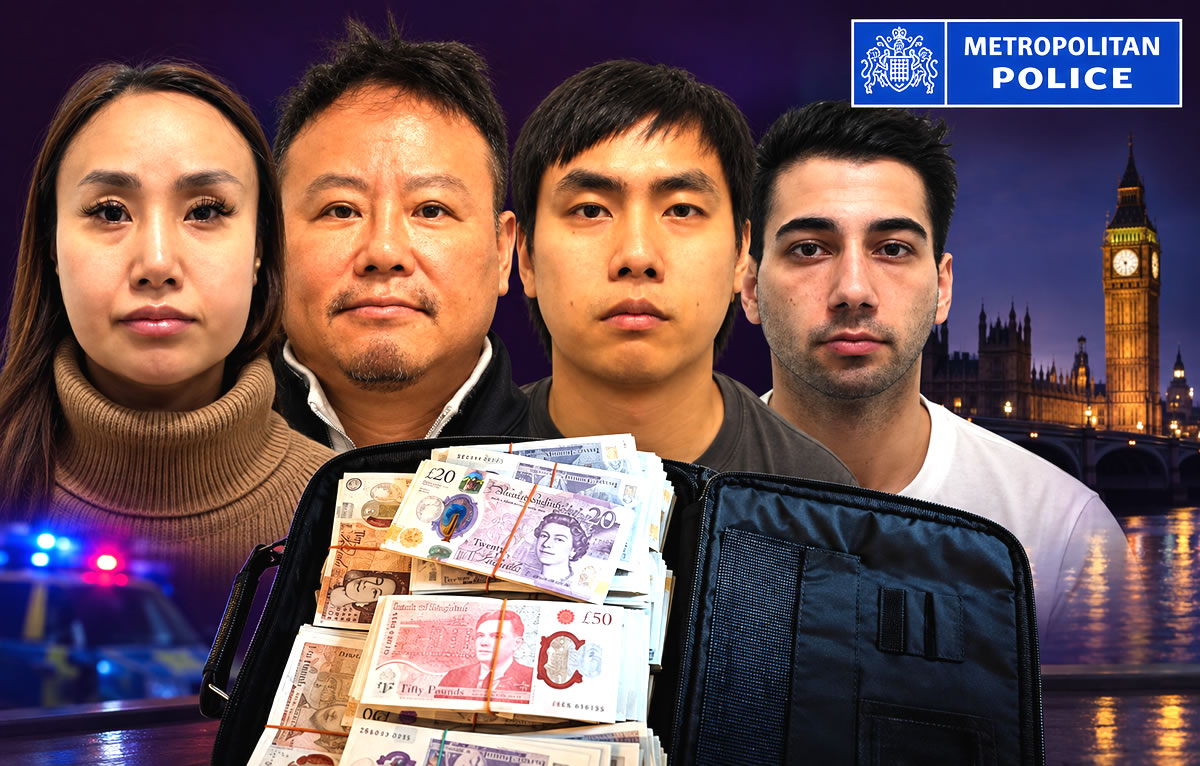
A sprawling trafficking network brought at least 24 Thai women to Britain before exploiting them across 26 brothels. The operation stretched across London and Kent, with women recruited thousands of miles away in Thailand. Many arrived on visitor visas before being moved into prostitution. Their passports were routinely taken and huge debts imposed.
At least one woman entered Britain through an even more secretive route. She was brought from the Netherlands and hidden inside the back of a vehicle. The vehicle then crossed the English Channel with the Thai woman concealed inside. Police have not identified her, her age or where she lived in Thailand.
Now, four people behind the operation have been jailed for almost 23 years. Woolwich Crown Court sentenced them on Friday, September 18. The sentences followed an extensive Metropolitan Police investigation and a seven-week trial involving three defendants.
Thai women’s missing passports lead police to a sprawling network of 26 brothels across London and Kent
At the centre of the investigation were Thai women who first told police their passports had disappeared. They identified a woman known as “Freya” or “Freya Ice Queen”. That information pushed detectives beyond their original investigation and into a far larger network.
From there, officers traced 26 brothels across London and Kent. Two properties were owned by one defendant. Detectives also identified 24 Thai women who arrived in Britain during 2025. Police believe the organisation exploited all 24.
The women had travelled thousands of miles after being targeted in Thailand. Frequently, their journeys initially appeared legitimate. Many entered Britain on visitor visas before being taken to brothels.
Once there, their circumstances changed sharply. The women were told they owed substantial sums of money. According to police, those debts could reach tens of thousands of pounds. They were then required to provide sexual services to repay them.
At the same time, passports were routinely removed from their possession. That left women isolated and dependent upon those controlling them. Police later recovered three victims’ passports during raids on the network.
The Channel smuggling operation provided another major strand of the case. One woman travelled through the Netherlands rather than entering Britain directly. She was placed inside the rear of a vehicle before being driven across the Channel.
Police reveal secret Channel smuggling route as Thai woman is concealed inside the rear of a vehicle
Notably, police have revealed little more about that journey. They have not identified the woman or disclosed her age. Her Thai home province or city also remains undisclosed. Likewise, investigators have not said how she originally reached the Netherlands.
The Metropolitan Police has also not identified the Channel crossing used. However, detectives established that she was concealed inside the vehicle when brought into Britain.
The investigation began during 2025 with an apparently separate police inquiry. Officers were carrying out welfare checks at brothels connected with another investigation. During those visits, they encountered Thai women working inside the premises.
Critically, those conversations changed the direction of the investigation. Women told officers that their passports had been confiscated. They also identified “Freya” or “Freya Ice Queen” to detectives.
Armed with that information, investigators began following connections outside the original inquiry. The trail quickly expanded across London and Kent. Financial records, digital evidence and other material exposed connections between defendants, women and individual brothels.
In parallel, police began establishing how women had reached Britain. Investigators found that women were targeted in Thailand before their travel was arranged. Many then entered Britain using visitor visas.
Women face huge debts and sexual exploitation as police map 26 brothels linked to trafficking network
Yet arrival was only the first stage. Women were moved into brothels and presented with substantial debts. Police said those liabilities could reach tens of thousands of pounds. Sexual services were then required to repay the money.
Meanwhile, investigators continued mapping the British side of the organisation. Eventually, 26 brothels were connected with the network. Significantly, one defendant owned two of the identified properties.
Police then launched a safeguarding operation covering every known brothel. Officers visited all 26 locations in an attempt to locate women connected with the network. By that stage, however, many had disappeared or moved elsewhere.
Separately, detectives identified 24 Thai women who arrived in Britain during 2025. Police believe all were exploited by the organisation. Their names have not been released.
The investigation moved decisively on October 22, 2025. Metropolitan Police officers executed six warrants as they moved against the organisation. Altogether, seven locations were searched.
The raids uncovered £57,145 in cash. Officers also found a cash-counting machine, adding another financial strand to the investigation. Designer watches and handbags were recovered during the searches.
October raids uncover £57,145, luxury goods and evidence as police move against trafficking operation
In addition, police seized mobile phones and SIM cards. Bank cards were also taken as evidence. However, one discovery directly matched what Thai women had previously told investigators.
Police found the passports of three victims.
Those documents became particularly significant because passport confiscation had helped expose the network. Women had originally told officers their travel documents were being held by people controlling them.
Following the raids, detectives combined the seized material with evidence already gathered. Financial records helped establish connections throughout the operation. Digital material provided further links between people and properties.
On another front, investigators continued examining the movement of women through the brothels. They also traced connections between defendants and individual premises. Eventually, the evidence produced criminal proceedings against four people.
Achareeya Spurr, 49, of Saint David’s Square in east London, faced three charges. She was born on October 10, 1976. Unlike the other defendants, Spurr pleaded guilty.
She admitted conspiracy to commit human trafficking. She also admitted conspiracy to control prostitution for gain. Furthermore, Spurr admitted acquiring, using or possessing criminal property.
Woolwich Crown Court handed her the heaviest sentence. Spurr was jailed for seven years and eight months.
Three men, however, contested the charges. They went through a seven-week trial before being convicted.
Four defendants face prison after trafficking investigation leads to guilty plea and seven-week trial
Chin Ping, 56, also lived at Saint David’s Square in east London. He was born on January 19, 1970. Following his conviction, Ping received six years and nine months in prison.
Sarunyoo Siriwan, 31, lived at Seagar Place in south-east London. He was born on October 6, 1994. Siriwan was sentenced to four years and four months.
Ugur Sahin, 27, lived at Victoria Road in north-west London. He was born on September 5, 1999. The court jailed Sahin for four years.
Together, the three men were convicted of conspiracy to commit human trafficking. They were also convicted of conspiracy to control prostitution for gain. All three were additionally convicted of acquiring, using or possessing criminal property.
Their convictions went further. Each man was convicted of facilitating a breach of UK immigration law by a non-UK national.
Combined, the four prison sentences totalled almost 23 years. Moreover, all four received Slavery and Trafficking Prevention Orders. Those orders impose further restrictions following their eventual release.
Four jailed for almost 23 years as court imposes trafficking prevention orders after major convictions
The Metropolitan Police release does not state the defendants’ nationalities. Therefore, neither Spurr nor Siriwan can be identified as Thai from the police information supplied. By contrast, police specifically confirmed that the 24 identified women were Thai.
As the case developed, detectives established a clear connection between Thailand and the British brothel network. Women were targeted in Thailand before their journeys were arranged. Many then travelled directly to Britain using visitor visas.
One woman, however, took a very different route. She reached the Netherlands before being smuggled across the Channel inside a vehicle. Police have not disclosed who arranged that particular journey.
Nor have detectives explained how long she spent in the Netherlands. No details were released about where she boarded the vehicle. Nevertheless, police confirmed her concealment during the journey into Britain.
Inside Britain, the organisation had developed a wide geographical footprint. Its 26 identified brothels stretched across London and Kent. Two belonged to one of the defendants.
As part of this, detectives examined financial records linking people with individual properties. They also used digital evidence to establish further connections. The investigation eventually extended across women, defendants, money and premises.
Police trace Thai recruitment routes as trafficking network stretches across London, Kent and the Channel
The October raids then gave police another substantial body of evidence. More than £57,000 in cash was recovered. The cash-counting machine pointed investigators towards another financial element of the operation.
Alongside that haul came designer watches and handbags. Officers also seized phones, SIM cards and bank cards. Most importantly for the original investigation, three women’s passports were found.
By then, police had already encountered difficulties locating some women. The safeguarding operation took officers to every identified brothel. However, many women were no longer there when police arrived.
Despite that obstacle, investigators assembled enough evidence for the four prosecutions. Spurr entered guilty pleas, while the three men went before a jury. Their trial lasted seven weeks.
Ultimately, all three men were convicted on the charges they faced. Those convictions covered trafficking, prostitution for gain and criminal property. They also included immigration offences.
The resulting sentences ranged from four years to seven years and eight months. Spurr received the longest term. Ping followed with six years and nine months.
Raids strengthen trafficking case with cash, passports, phones and financial evidence seized by police
Siriwan received four years and four months. Sahin received four years. Consequently, the combined punishment reached almost 23 years.
Detective Constable Kathryn Horne worked on the case with the Modern Slavery and Child Exploitation Team. She described the operation as a sophisticated criminal enterprise targeting women for profit.
Horne said the defendants treated women as commodities. She also said women travelled thousands of miles before becoming trapped through “debt, control and sexual exploitation”.
Importantly, Horne credited victims who provided evidence against the group. Their information had played a central role from the beginning of the investigation.
Police also worked with Justice and Care, an anti-trafficking organisation. A reception centre was established during the operation. Women could receive immediate assistance and advice there.
For its part, Justice and Care highlighted women who participated in the criminal proceedings. Debi Lloyd is the organisation’s Head of UK Counter-Trafficking Operations. She pointed particularly to those who came forward following their experiences.
Detective condemns women treated as commodities as victims help bring trafficking network to court
The police investigation nevertheless remained rooted in hard evidence gathered across multiple locations. Officers had cash, passports, financial records and digital material. They also seized phones, SIM cards, bank cards and luxury goods.
Beyond that, detectives had mapped a network of 26 brothels. They identified 24 Thai women who entered Britain during 2025. Additionally, they established two distinctly different routes into the country.
Many women used visitor visas and entered through conventional immigration channels. At least one woman was smuggled inside a vehicle from the Netherlands. She crossed the Channel concealed in the rear.
Once inside Britain, police said women were confronted with huge debts. The amounts could reach tens of thousands of pounds. They were then expected to repay the money through sexual services.
Compounding that control, passports were routinely taken away. Three of those documents later surfaced during the October police operation. Their recovery matched information women had supplied during the initial welfare checks.
The case therefore grew from a small opening into a sprawling investigation. Initially, police were examining brothels connected with an entirely separate inquiry. Conversations with Thai women changed everything.
Evidence reveals two routes into Britain as Thai women face debt, passport seizures and exploitation
First came the reports about confiscated passports. Then came the identification of “Freya” or “Freya Ice Queen”. After that, detectives followed financial, digital and property connections through London and Kent.
Eventually, police traced 26 brothels. They also identified 24 Thai women linked with the operation. In turn, the investigation led back thousands of miles to recruitment in Thailand.
The October 2025 raids marked the decisive enforcement stage. Six warrants took officers into seven locations. Police emerged with £57,145 in cash and a substantial collection of evidence.
Nearly a year later, the case reached its sentencing conclusion at Woolwich Crown Court. Four people were sent to prison. Their sentences totalled almost 23 years.
Yet the investigation had started with something far simpler. Thai women told police their passports had been taken.
Missing passports and Freya Ice Queen led detectives from welfare checks to 26 brothels and Thai recruits
From that disclosure came “Freya Ice Queen”, 26 brothels and a trail reaching back to Thailand. It also uncovered visitor-visa arrivals and a woman hidden inside a vehicle crossing the English Channel.
Finally, the police operation produced four convicted defendants and Slavery and Trafficking Prevention Orders against each. The court imposed the orders alongside their prison sentences.
The final police figures laid out the scale. Twenty-four Thai women were identified. Twenty-six brothels were connected with the organisation.
Justice served up to evil rapist after horrific ordeal of a Thai woman who refused to obey UK criminals
Teenager appears before a London Magistrates court Saturday charged with 2024 murder of a Thai woman
Six warrants were executed and seven locations were searched. Police seized £57,145, luxury goods, financial material and communications equipment.
And among that haul were three passports belonging to victims.
Those passports echoed the first information Thai women gave investigators during the welfare checks. From there, detectives had uncovered a trafficking operation stretching from Thailand into the heart of London and Kent.
Join the Thai News forum, follow Thai Examiner on Facebook here
Follow Thai Examiner on Google here
Receive all our stories as they come out on Telegram here
Follow Thai Examiner here
Further reading:
Health Minister Somsak launches regulatory blitz to outlaw non-medical cannabis use within 40 days
Outbound cannabis smuggling smashed by Chiang Mai police this week. Europe and London targeted