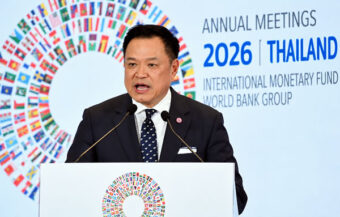
Thailand’s biggest banks face another bruising year as Fitch warns profits will fall, bad loans will rise and slower growth will squeeze lending. Krungthai Bank and TTB could also be hit if Thailand’s sovereign credit rating is downgraded.
Thailand’s biggest banks are heading into another year of mounting financial pressure, with Fitch Ratings warning that weaker profits, rising bad loans, slowing economic growth and Thailand’s negative sovereign outlook are converging to test the country’s leading lenders. While strong capital buffers should preserve stability, the agency says narrowing lending margins, elevated credit costs and growing stress among businesses and households will make 2026 an increasingly difficult year for the banking sector, with Krungthai Bank and TMB Thanachart Bank facing the greatest risk from any sovereign rating downgrade.
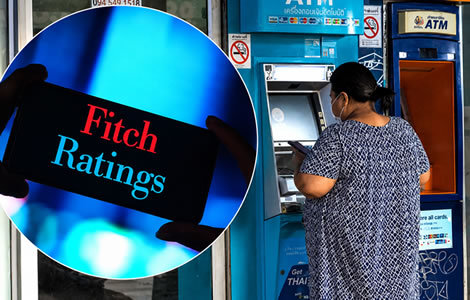
Thailand’s largest banks face another difficult year as profits weaken and bad loans rise, Fitch Ratings has warned. The agency also said Thailand’s negative sovereign outlook could weigh on some lenders’ credit profiles.
Fitch maintained a “deteriorating” outlook for Thailand’s banking sector in its 2026 Peer Credit Analysis report released on Monday.
The assessment covers Bangkok Bank, Krungthai Bank (KTB), Kasikornbank, Siam Commercial Bank, Bank of Ayudhya and TMBThanachart Bank (ttb). Together, they form Thailand’s domestic systemically important banking group.
Profit pressure grows as weaker lending, lower margins and slowing growth squeeze banks
The agency expects profitability to remain under pressure throughout 2026. Lower net interest margins will reduce earnings. Weak economic conditions will also curb loan growth. Consequently, banks are expected to generate less income from their core lending businesses.
Fitch forecasts Thailand’s economy will grow by 1.8% this year. That modest expansion leaves little room for stronger lending demand. In turn, business opportunities across the sector are expected to remain limited. Even so, the agency believes earnings and core profitability should remain within the implied “bbb” category, although both measures will weaken this year.
Separately, interest rates are becoming another drag on earnings. Fitch said policy rate cuts by the Bank of Thailand will continue feeding through to bank results.
Those reductions began in the fourth quarter of 2024 and continued through the first quarter of 2026. The delayed impact is expected to narrow net interest margins during 2026, placing further pressure on profitability.
Asset quality is also expected to deteriorate. “Fitch expects the impaired-loan ratios of major banks to increase this year, while credit costs are likely to remain elevated compared with regional peers,” the report said.
Rising bad loans among SMEs and retail borrowers threaten profits despite capital buffers
Notably, the pressure is expected to come from the most vulnerable borrowers. Small and medium-sized enterprises remain exposed to weak economic conditions. Certain retail customer segments also continue to struggle. As those pressures persist, more loans are expected to become impaired. Credit costs are therefore likely to remain above regional averages.
Despite those challenges, Fitch said the sector enters the year from a position of financial strength. Common equity Tier 1 capital ratios range between 16.4% and 18.7%. Past provisioning has also strengthened balance sheets.
Management overlays have further increased protection against future losses. As a result, banks maintain high loan-loss allowance coverage, providing what Fitch described as a solid buffer against potential downside risks.
Nevertheless, those financial cushions will not shield earnings completely. Narrower lending margins are expected to weigh on returns. Elevated credit costs will add further pressure. Together, those factors are likely to produce another year of softer profitability for Thailand’s largest lenders.
Sovereign rating risks leave Krungthai Bank and TTB facing the greatest exposure says Fitch
On another front, Fitch highlighted Thailand’s sovereign credit profile as a key consideration for bank ratings. On July 6, the agency affirmed Thailand’s long-term foreign-currency issuer default rating at BBB+ while retaining a negative outlook.
The rating reflects the country’s strong external finances and sound macroeconomic policy framework. However, the negative outlook reflects mounting fiscal pressures and persistently high household debt.
Any future sovereign rating action would not affect every bank equally. Instead, the impact would depend on each institution’s rating structure.
Mixed signals from economy that consistently shows resilience as Fitch warns about outlook for banks
Budget Bureau warns Finance Minister that Thailand’s economy faces acute crisis with rising public debt
Krungthai Bank and TMBThanachart Bank remain the most exposed because their ratings are driven by government support ratings. In response, Fitch said any downgrade of Thailand’s sovereign rating would likely lead directly to lower ratings for both lenders.
Meanwhile, the remaining major banks continue benefiting from strong capital positions and substantial loan-loss reserves. Those strengths provide resilience against a weaker operating environment. However, they are not expected to offset slower economic growth, weaker lending activity and rising pressure on vulnerable borrowers.
Overall, Fitch expects Thailand’s banking sector to remain well capitalised but financially tested throughout 2026. Profitability is set to weaken. Asset quality is expected to deteriorate. Credit costs are likely to remain elevated, while loan growth stays subdued. The combination points to another demanding year for Thailand’s biggest banks as margins narrow, business opportunities remain limited and pressure on borrowers continues to build.
Join the Thai News forum, follow Thai Examiner on Facebook here
Receive all our stories as they come out on Telegram here
Follow Thai Examiner here
Further reading:
Mixed signals from economy that consistently shows resilience as Fitch warns about outlook for banks
Rates cut to 1.25% as damaged economy limps on to the end of 2025 with even stiffer headwinds ahead
Ex Energy Minister supports oil and arms supplies blockade against Cambodia in the Gulf of Thailand