Sukhumvit’s cocaine hucksters approach a travel vlogger beside his young children in broad daylight. Despite raids, hidden drug rooms and a ฿380 million kingpin arrest, overseas criminal networks keep feeding Bangkok’s scandalous tourist marketplace.
Cocaine hucksters are openly approaching foreigners on Bangkok’s Sukhumvit Road despite continuing police raids against powerful international supply networks. Travel vlogger GlobetrotterJulez filmed repeated daytime offers after a dealer first approached him while he carried his four-year-old daughter. He returned with his nine-year-old son and recorded at least ten approaches within 40 minutes. Meanwhile, police operations have uncovered hidden dealing rooms, mouth-concealed drug packets and a 400-gramme cocaine haul. On June 9, officers also arrested the suspected leader of a transnational network handling more than ฿380 million. Yet barely two months later, Julez filmed men offering cocaine beside his young son in broad daylight.
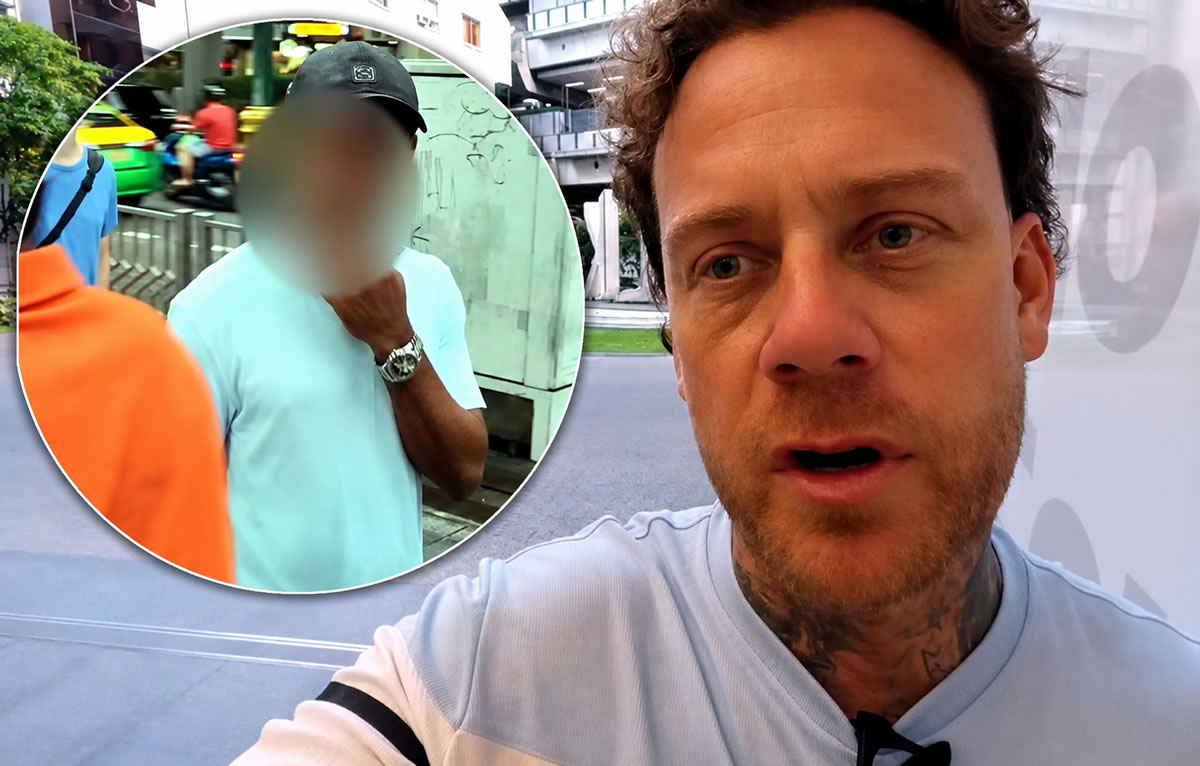
Despite extensive police operations, Bangkok’s Sukhumvit area remains a marketplace for cocaine hucksters linked to foreign criminal networks. An independent travel blogger discovered this in mid-August when a dealer approached him in broad daylight. At the time, he was carrying his four-year-old daughter along the busy road.
The creator, known online as GlobetrotterJulez, said the approach was not an isolated incident. Instead, several men repeatedly offered him “Coke” as he walked through the area. During one encounter, his daughter thought the man meant Coca-Cola. He then returned the girl to their hotel.
Soon afterwards, Julez went back and confronted the man. The experience prompted him to examine how openly cocaine was being offered. As a result, he returned the following day wearing Meta smart glasses. The device allowed him to record encounters without holding a camera.
Vlogger returns with his nine-year-old son and records repeated daytime cocaine offers on Sukhumvit
This time, his nine-year-old son accompanied him. Julez wanted to know whether the boy’s presence would discourage further approaches. Far from stopping, several men initiated conversations or tried to attract his attention. He estimated that at least ten approaches occurred during the 30-to-40-minute walk.
Some conversations were unrelated to narcotics. Even so, several encounters appeared to involve direct or coded cocaine offers. His son’s presence failed to deter the men. Notably, some continued talking while the boy walked directly beside his father.
Julez published the footage on August 18. The recording does not show cocaine being displayed, purchased or exchanged. Nonetheless, it captures repeated approaches along one of Bangkok’s busiest roads. Several occurred openly during daylight hours.
At the same time, the video does not identify the suppliers behind the suspected hucksters. Nor does it establish how much cocaine was available. Likewise, it cannot prove that sellers operate continuously throughout the day and night. Thailand publishes no separate figures for cocaine dealing specifically on Sukhumvit Road.
Thai police have continued pursuing dealers and larger supply networks across Bangkok. Since September 2025, operations have targeted Nana and Sukhumvit sois 3, 11 and 13. Beyond those areas, investigators traced suspected suppliers to Samut Prakan, Nonthaburi and other Bangkok districts. Officers also followed money and property connected with the trade.
Bangkok police pursue dealers and major cocaine networks through raids, surveillance and seizures
In parallel, police used undercover purchases, surveillance, coordinated raids and financial investigations. They arrested street sellers and stormed concealed dealing rooms. Additionally, officers seized cocaine, cash, vehicles, telephones and luxury goods. One transnational network reportedly moved more than ฿380 million.
The first case came on September 2, 2025. Bangkok narcotics officers arrested two suspects at a Samut Prakan condominium. They were Nigerian national Ukwe Vincent Chisom and his Thai girlfriend, Kesinee, known as Lek. Officers said the couple supplied cocaine within Bangkok’s Sukhumvit district.
Although the suspected sales occurred in Sukhumvit, the arrests took place on Srinakarin Road. Investigators recovered 99 grammes of cocaine and three mobile telephones. They also seized property worth more than ฿700,000. The operation followed information about cocaine sales around the tourist district.
Subsequently, investigators traced both suspects to Samrong Nuea in neighbouring Samut Prakan. Their arrest showed suppliers did not need to live near their customers. The cocaine could be stored outside central Bangkok. It could then be carried into Sukhumvit for distribution.
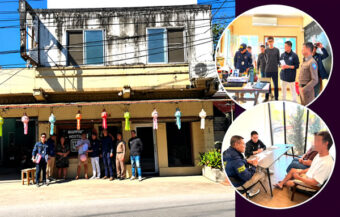
A second operation followed on October 15, 2025. That night, an undercover Metropolitan Police officer entered Sukhumvit Soi 3. He posed as a foreign tourist while senior officers monitored him. Several Arab men approached and offered him drugs.
Undercover officer follows suspected dealers into a hidden drug room behind a Sukhumvit Soi 3 barbershop
After making contact, the men led him into a five-storey commercial building. They promised an experience resembling a journey “to the top of a pyramid”. Upstairs, the officer entered a floor containing a barbershop. The planned drug sale occurred inside a concealed room behind the business.
Throughout the operation, the officer carried a hidden wireless microphone. Consequently, Metropolitan Police Bureau Commissioner Police Lieutenant General Sayam Boonsom followed events in real time. Once the proposed transaction was confirmed, waiting officers stormed the building. They arrested seven Arab men and one Thai woman.
At first, officers found only the drugs offered to their undercover colleague. In response, they brought two sniffer dogs into the building. A wider search then uncovered 1.7 grammes of cocaine. It also recovered 3.3 grammes of crystal methamphetamine.
Elsewhere inside, officers found four ecstasy pills and two methamphetamine tablets. They also seized magic mushrooms, hookah equipment and contraband cigarettes. The Thai woman said she operated a beauty business there. She admitted selling cannabis but denied knowing about the other drugs.
For their part, the seven foreign suspects said they worked for another person. They described that person as their boss. Investigators withheld the individual’s identity while widening the case. Police Major General Theeradet Thumsuthee said the group had operated there for some time.
Police uncover a concealed Sukhumvit sales room before striking nine suspects in nearby Nana days later
According to the senior officer, group members intimidated tourists and disturbed nearby residents. The raid therefore reached beyond a single proposed drug sale. It exposed a concealed sales room inside an ordinary commercial building. The location stood inside one of Bangkok’s busiest foreign districts.
Eleven days later, officers struck again in nearby Nana. During the early hours of October 26, 40 plainclothes officers entered Sukhumvit Soi 11. Some disguised themselves as construction workers. From there, they watched suspected cocaine sellers moving among tourists.
The operation followed online complaints about dealers and pickpockets around Nana. Visitors had reported repeated approaches and disturbances. Acting on those reports, officers moved into the soi shortly after midnight. They arrested eight Nigerian men and one Thai suspect.
Those arrested ranged from 23 to 41 years old. Separately, police identified the Thai suspect as a 36-year-old Udon Thani resident. Officers seized two packets containing four grammes of cocaine. They expected to recover more packets swallowed by suspects.
Police described the method as “spit-and-sell”. Dealers reportedly carried small cocaine packets inside their mouths while walking among potential customers. Once a sale was agreed, the seller could spit out a packet. If officers appeared, the same packet could be swallowed.
Couriers swallow cocaine packets as police seize 400 grammes from a British suspect on Sukhumvit Soi 13
On another front, investigators said couriers used similar concealment when flying into Thailand. They swallowed drug packets before entering the country. Afterwards, the packets were recovered and distributed through nightlife centres. Tourist districts then became the final sales points.
A much larger seizure followed on March 6, 2026. That night, police arrested 64-year-old British national Phillip Thomas Lingwood near Sukhumvit Soi 13. Investigators had received information about a foreign cocaine supplier. They placed the road and nearby buildings under surveillance.
At approximately 10.30 pm, Lingwood left a building carrying a black and green paper bag. Officers immediately moved in and arrested him in Watthana district. The operation recovered approximately 400 grammes of cocaine. Smaller quantities of MDMA and crystal methamphetamine were also found.
Significantly, investigators accused Lingwood of supplying cocaine to tourists around lower Sukhumvit. The haul exceeded those recovered during the October street raids. His arrest occurred only two sois from the Nana operation. Advance information and surveillance again led police to their target.
Four suspects arrested as police recover cocaine, cash and property during coordinated Bangkok raids
By then, officers were also moving against suppliers operating behind the street sellers. On April 18, four suspects were arrested across Bangkok and Nonthaburi. The coordinated raids followed an investigation lasting approximately four months. Officers recovered cocaine, cash, foreign currency and a vehicle.
The principal suspect was a 47-year-old Nigerian national named Patric. Investigators accused him of commercial cocaine sales in five cases. Officers arrested him in Bangkok at approximately 11 pm. A 60-year-old Swiss national was arrested separately outside a Nonthaburi shop.
At the time, the Swiss suspect carried 0.87 grammes of cocaine. Two Thai suspects, identified as Yot and Nat, were arrested on Rama III Road. Officers accused them of jointly possessing a Category 2 narcotic without permission. Altogether, the operation recovered approximately 30 grammes of cocaine.
Financial seizures formed another part of the operation. Officers confiscated a car, foreign currency and approximately ฿1.5 million in cash. Other property was valued at over ฿400,000. During one search, more than ฿1 million was found above Patric’s bathroom ceiling.
Patric denied deliberately hiding the money. Rather, he said it came from Nigeria and was placed there for safekeeping. All four suspects were transferred to investigators for legal proceedings. The Office of the Narcotics Control Board then began examining the seized property.
Police widen their inquiry before arresting the suspected leader of a ฿380 million cocaine network
As the inquiry widened, officers said further arrests could follow. The investigation had already moved across Bangkok and Nonthaburi. It had also connected foreign and Thai suspects. Cash seizures indicated a business extending beyond small street transactions.
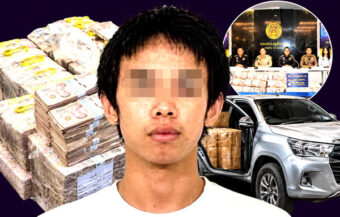
Two months later, police targeted another international network. On June 9, officers arrested a 36-year-old Nigerian national also identified as Patrick. Investigators described him as the leader of the transnational Dodorima cocaine network. They named the operation “Clipping the Wings of the Dodorima Gang Leader”.
The Metropolitan Police Bureau and Office of the Narcotics Control Board conducted the raid. Investigators tracked Patrick to a luxury condominium on Rama III Road. At approximately 10 pm, officers surrounded him in Bang Phongphang, Yannawa district. He then attempted to drive through their cordon, police said.
Following the attempted escape, officers stopped the vehicle and arrested Patrick inside it. Investigators said he had lived in Thailand for more than seven years. During that period, he regularly travelled between Thailand and Africa. Police said he began as a cocaine runner in tourist districts.
Suspected Dodorima boss rises from tourist-area runner to leader of a network moving over ฿380 million
Later, investigators said Patrick rose through the organisation and became its leader. More than ฿380 million reportedly circulated through the network. During the arrest, officers recovered approximately 18 grammes of cocaine. They also seized cash, foreign currency, a vehicle and luxury goods.
In cash, police recovered ฿178,800 and approximately US$1,900. Investigators also froze about ฿40,000 held in bank accounts. The seized vehicle was valued at ฿200,000. Luxury property was valued at another ฿200,000.
Overall, the goods and money recovered were valued at approximately ฿700,000. Investigators also obtained electronic communications between network members. Some messages contained crude remarks mocking Thai cocaine customers, police said. The arrest linked tourist-area sales with a larger international organisation.
The continuing campaign reached Huai Khwang on July 17. Metropolitan Police targeted an illegal nightclub operating behind the appearance of a games shop. The Office of the Narcotics Control Board joined the operation. Officers said the hidden venue attracted tourists and concentrated heavily on drug sales.
Inside, police also found no proper fire exit. Eleven people were arrested, including the man identified as the owner. A search recovered several types of narcotics. Cocaine was again found alongside larger quantities of other drugs.
Huai Khwang nightclub raid uncovers cocaine, ketamine, crystal methamphetamine and ecstasy pills
Specifically, officers seized 3.83 grammes of cocaine and 326.24 grammes of ketamine. They also recovered 51.16 grammes of crystal methamphetamine. Another 224 ecstasy tablets were confiscated. Officers also found 19 drug cartridges and 38 illegal electronic cigarettes.
As part of the raid, officers froze ฿91,000 in cash. Two rings and a framed amulet were also seized. The property was initially valued at approximately ฿300,000. The operation expanded the cocaine campaign beyond Sukhumvit and Nana.
Taken together, the raids show police pursuing street hucksters, hidden sales rooms and major suppliers. Yet Thailand publishes no separate count of cocaine dealers operating along Sukhumvit Road. The cases show where arrests occurred and what officers seized. They do not measure the full size of the trade.
For national context, another source examines Thailand’s place within international organised crime. It is called the Global Organised Crime Index. Despite its name, the index is not a Thai police list. Nor is it a government register of individual offences.
Instead, the index examines organised crime across all 193 United Nations member states. The Geneva-based Global Initiative Against Transnational Organised Crime produces it. The body is an independent civil-society research organisation. Its work covers organised crime and illegal markets.
Global crime index uses over 350 expert assessments but cannot count individual Sukhumvit dealers
Its international network includes more than 600 global and regional specialists. In addition, more than 350 experts contribute assessments and evaluations. The project took two years to develop before its first global edition appeared in 2021. It combines official information, published research, available figures and expert analysis.
Because of that method, its findings describe conditions across entire countries. They do not count individual dealers, arrests or street transactions. The index cannot identify everyone selling cocaine on Sukhumvit. It also cannot calculate how many hours each dealer works.
The index examines three main areas within each country. First, it studies illegal markets, including cocaine, heroin and human trafficking. Second, it examines the groups and individuals controlling those markets. Third, it assesses how effectively each country responds.
Criminal participants can include foreign organisations and domestic networks. They can also include mafia-style groups and state-linked figures. By comparison, the national response covers policing, courts, border controls and financial controls. International cooperation is also measured.
The index rates Thailand’s cocaine market as moderate. It says international networks play a larger role than purely domestic groups. Thailand’s cocaine trade remains smaller than its methamphetamine and heroin markets. Even so, cocaine arrests and treatment admissions have increased.
International networks dominate Thailand’s moderate cocaine market as police continue raids and seizures
Demand remains limited, according to the index. It has nevertheless increased among affluent Thai customers and foreign nationals. In terms of supply, traffickers use Thailand’s airports and seaports. Shipments mainly originate from South America and Africa.
Profits flow through both Thai and foreign criminal networks. West African groups are prominent participants, according to the index. Nigerian networks feature strongly within that finding. Recent Thai cases also involved British, Swiss, Arab and Thai suspects.
Regarding enforcement, the index uses the words “sporadic” and “reactive”. That countrywide description does not cover every police unit or individual operation. Recent cases show continued undercover work, surveillance, searches and financial investigations. Officers have also traced street dealing to larger suppliers.
The index also reports that corrupt assistance sometimes supports cocaine trafficking in Thailand. Crucially, it identifies no corruption connected with Julez’s video. It does not accuse Sukhumvit officers of assisting the men approaching him. That national finding therefore remains separate from his August recording.
Under Thai law, cocaine is classified as a Category 2 narcotic. Unauthorised production, importation, exportation, sale or possession can bring ten years’ imprisonment. The maximum fine can reach ฿1 million. Commercial offences carry between one and 15 years in prison.
Thailand imposes prison terms and heavy fines as Sukhumvit vlogger records repeated daytime drug offers
In those commercial cases, courts can impose fines between ฿100,000 and ฿1.5 million. Despite those penalties, Julez recorded several apparent offers during one short daytime walk. He stressed that the video targeted no race or individual. His criticism concerned what he encountered on Bangkok’s streets.
“This is not directed at any race or individual,” Julez said. “It’s targeted at Bangkok streets specifically and how it’s changed.”
GlobetrotterJulez remains a small independent creator rather than a mainstream media figure. Public information about his real name, age, nationality and professional background remains limited. Online, he identifies himself simply as Julez. He presents himself as a travelling father recording unfiltered street encounters.
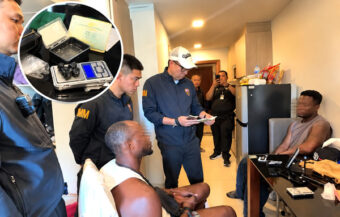
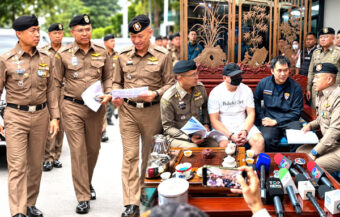
Nigerian drug dealer arrested in Inthamara area of Bangkok in sting operation with cocaine and ecstasy
Bangkok police smash evil drug gang by arresting eight African men catering for tourists in the Sukhumvit area
His material covers travel advice and subjects outside conventional tourism programmes. These include policing, scams, red-light districts, street food and poor communities. Recent videos covered Thailand, the Philippines, Vietnam, Iceland and Germany. His Instagram profile promises visits to a different country every month.
As of August 31, his YouTube channel displayed approximately 586 subscribers and 119 videos. His following remains much smaller than those of established travel influencers. Yet Thai news outlets carried his Sukhumvit footage to a considerably larger audience. Its impact came from the encounters shown, not his subscriber total.
Ultimately, the video records repeated approaches during one daytime walk lasting less than 40 minutes. Continuing police operations have separately targeted cocaine sellers and suppliers across Bangkok. Officers arrested suspects on Sukhumvit and traced supply networks beyond the district. They also seized drugs, cash, vehicles, telephones and luxury property.
Join the Thai News forum, follow Thai Examiner on Facebook here
Receive all our stories as they come out on Telegram here
Follow Thai Examiner here
Further reading:
Millionaire Thai beggar woman picked up by police in Thursday crackdown in Bangkok’s Sukhumvit area
Chinese visa scheme linked to Chinese beggars on Bangkok’s streets as PM accepts its failures
Chinese police patrols plan dumped by ministers quickly after public backlash threatened to erupt
Police Chief rebuffs reports of Chinese Police being deployed to Thailand to protect tourists