Governor Chadchart slams the brakes on Bangkok’s data centre rush amid huge fuel reserves and rising power and water demands. TikTok’s ฿842 billion expansion dominates distorted investment figures while the underlying Thai economy remains weak today.
Bangkok slammed the brakes on its data centre boom on Wednesday as Governor Chadchart Sittipunt froze new large projects. Three applications were shelved, while officials ordered inspections covering diesel tanks, electricity demand, water use, heat, noise and construction permits. The move brought a fast-emerging economic problem directly before the government and regulators. These centres consume immense resources, require vast capital and create relatively few permanent jobs. Yet one giant approval can distort Thailand’s entire private investment picture while the underlying economy remains weak. TikTok’s ฿842 billion expansion alone dominated a ฿958 billion approval wave in May. Meanwhile, fuel reserves approaching 500,000 litres have intensified safety concerns around inner-city sites. With Texas and Ireland already tightening controls, Thailand must now determine whether its power networks, water supplies and outdated regulations can sustain the AI-driven investment rush.
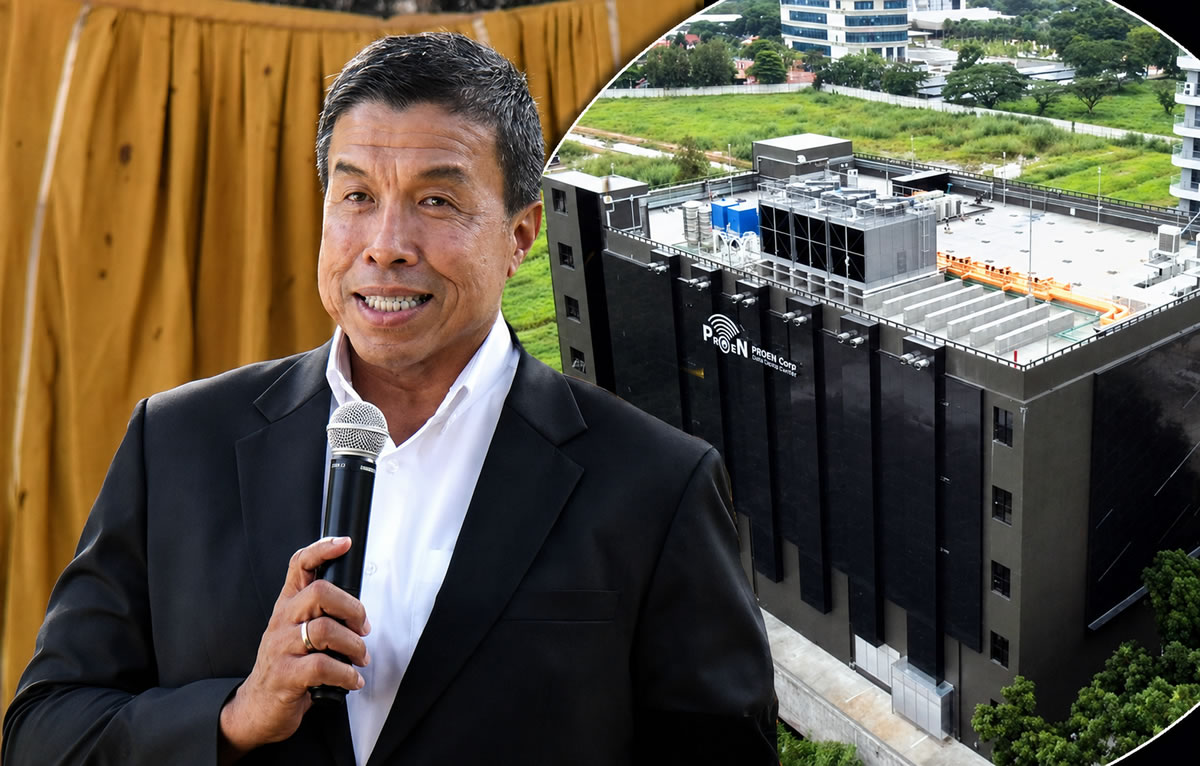
Bangkok Governor Chadchart Sittipunt froze all new large data centre approvals in the capital on Wednesday. He also ordered full inspections of projects already awaiting decisions. The move followed concerns over diesel storage, electricity demand, water consumption, noise, heat and public safety. In response, three pending stand-alone data centre applications have been shelved.
Each project must now undergo fresh examination under standards being prepared by City Hall and national agencies. At the same time, the Energy Ministry has suspended new fuel-storage permits linked to data centres. Existing facilities will face checks covering tanks, generators, licences and authorised diesel volumes. “There are no new licences for big projects now,” Mr Chadchart said.
The governor announced the measures at Bangkok City Hall on September 2. Thitipat Chotidechachainan, secretary to Energy Minister Akanat Promphan, joined the briefing. Separately, executives from Bangkok’s electricity and water agencies explained the current demands on their networks. Together, the officials addressed questions surrounding construction permits and large emergency fuel reserves.
Diesel storage claims trigger inspections, prosecution warnings and a national halt on new permits
Public attention has focused on data centres around Ramkhamhaeng and Rama IX. One report claimed a Ramkhamhaeng Soi 28 facility could eventually store approximately 400,000 litres of diesel. Other accounts placed its planned full capacity closer to 500,000 litres. However, officials said the centre currently has permission to store only 200,000 litres.
Under the order, inspectors will establish how much fuel is actually held at the site. Any amount exceeding the licensed limit could result in prosecution. Officials will also examine the fuel arrangements at projects around Rama IX. Likewise, legal action will follow if an operator stores diesel without permission.
Ms Thitipat said the Department of Energy Business would pursue every confirmed breach. Offences can bring imprisonment of up to two years and a maximum ฿200,000 fine. For now, the department has stopped issuing new fuel-storage permits for data centres. The suspension will remain while the government writes new operating standards.
Energy Minister Akanat Promphan instructed applicants to stop their applications during the review. His order covers proposed data centres and their emergency fuel facilities. In parallel, officials will inspect permits already issued and compare them with actual storage. Operators must prove that every tank complies with its approved volume and safety conditions.
Mr Chadchart said Bangkok had not ignored concerns surrounding the industry. Previously, City Hall received complaints about a project close to Rama IX Hospital. Three weeks before Wednesday’s briefing, the governor ordered officials to withhold further approvals. Other agencies had also stopped processing additional applications linked to oil storage.
Bangkok’s data centres grow beyond company use as six large projects expose serious regulatory gaps
Bangkok currently contains between 30 and 40 data centres. Most are small operations serving the internal requirements of individual companies. Many have operated for more than a decade without reported pressure on public utilities. By contrast, stand-alone centres sell storage and processing services to outside organisations.
These commercial facilities can be considerably larger than centres inside conventional business premises. Their servers run continuously and cannot simply stop during a power failure. Consequently, they require industrial cooling systems, high-capacity electricity connections and emergency generators. Their expansion has exposed gaps across Bangkok’s building, planning and environmental regulations.
Six large data centre projects applied for Bangkok Metropolitan Administration permission during 2021 and 2022. Three applications subsequently received approval. The remaining three have now been suspended for detailed reassessment. Once completed, the new standards will determine whether those projects can proceed.
Crucially, Thai law previously lacked an official definition for a data centre. Developers therefore submitted construction applications under regulations governing warehouses. Those rules were not written for buildings packed with servers, generators and powerful cooling equipment. They also failed to reflect the constant demands of modern computing facilities.
Warehouse rules leave major data centres outside environmental and industrial licensing controls
Warehouse regulations did not automatically require an environmental impact assessment. Nor did every project need an industrial factory licence. In practice, fuel storage, electricity consumption and heat discharge fell under different agencies. No single approval covered every feature of a centre.
Mr Chadchart rejected claims that warehouse applications automatically represented regulatory avoidance. Developers had used the classification available under the law. Even so, he accepted that the framework was incomplete. Stand-alone data centres had developed faster than the regulations controlling them.
A data centre does not function like an ordinary warehouse. Neither does it operate as conventional office space. Notably, its buildings contain costly equipment but relatively few workers. Existing categories therefore failed to describe its purpose, risks or resource requirements.
The Prime Minister’s Office introduced a formal data centre definition in August. That definition will provide a common basis for national and Bangkok regulations. From there, agencies can apply the same description across planning, construction, electricity and water rules. It can also support controls covering fuel, communications and environmental effects.
Bangkok plans to add the definition to its revised comprehensive city plan. City Hall will also consider specific building requirements for major computing facilities. As part of this, officials will examine whether environmental impact assessments should become compulsory. They will also consider excluding large centres from particular districts.
Bangkok weighs location curbs as fibre networks draw large data centres into crowded central districts
Any geographical restrictions could be incorporated into Bangkok’s planning regulations. Before that happens, officials must examine different centre types, sizes and operating requirements. Beyond that, they must balance network access against the limitations of crowded urban locations. Mr Chadchart said location remained an important operational issue.
Bangkok offers dense fibre-optic networks and links to international internet gateways. The capital also has stable electricity infrastructure and access to trained technical staff. In addition, operators can locate processing facilities close to customers and major sources of information. That proximity can reduce delays in sending and receiving data.
The reduced delay, commonly called latency, is important for several digital services. It also explains why operators have selected Rama IX and Ramkhamhaeng. Against this background, Mr Chadchart addressed questions about centres operating inside heavily populated districts. “This is based on AI analysis; I’m not an expert, but I think people will ask this question.”
Rama IX contains extensive fibre-optic infrastructure and strong connections to Bangkok’s wider network. The district also provides easy access to technical personnel and electricity supplies. Yet it contains homes, hospitals, offices, shops and heavily used roads. Accordingly, fuel storage and generator testing have attracted particular scrutiny.
Residents previously complained about generator testing near one Rama IX project. Those complaints followed tests conducted during the night. Conversely, City Hall received no similar reports concerning daytime testing. Officials will now examine testing procedures and possible controls on operating hours.
Oil smells, emergency generators and vast diesel reserves sharpen safety concerns across Bangkok
Reports of an oil smell around one facility triggered another inquiry. Mr Chadchart asked the Energy Ministry to establish its source. Meanwhile, residents can file similar reports through Bangkok’s Traffy Fondue platform. City Hall will investigate complaints involving fuel smells, noise, heat or construction work.
Fuel storage has become the most immediate safety question. Data centres require emergency generators to protect servers and stored information during power failures. On that basis, international operating requirements generally demand enough fuel for 48 hours of generation. A large centre can therefore require hundreds of thousands of litres of diesel.
Thai regulations permit organisations to store up to 500,000 litres for internal operations. Storage beyond that limit can also conflict with Bangkok planning rules. As a consequence, the diesel ceiling indirectly restricts the size of inner-city data centres. Larger centres generally require bigger generators and greater emergency reserves.
The Department of Energy Business will determine whether the existing limit remains suitable. It will also review engineering and safety conditions governing tanks already installed. On safety, Mr Chadchart called for detailed inspections capable of reassuring nearby communities. Any confirmed violation would trigger action under existing law.
Bangkok has approximately 56 premises licensed to store fuel for their own operations. The number covers several types of business and excludes ordinary retail fuel sales. Data centres form only one part of that group. Nevertheless, Mr Chadchart called for stricter inspections across all such premises.
Bangkok centres draw modest power as fuel tanks face strict licensing and tight fire-safety controls
The diesel held at these sites belongs to the businesses and is not sold to motorists. Every tank must still comply with licensing, engineering and fire-protection rules. For comparison, urban petrol stations can also store hundreds of thousands of litres. Those businesses operate under established requirements covering tanks, pumps and emergency systems.
Electricity consumption presents a separate challenge. Bangkok’s existing centres remain smaller than hyperscale projects planned in other provinces. Kasem Sathonghak, assistant governor of the Metropolitan Electricity Authority, detailed their current requirements. He said a typical Bangkok centre was designed for approximately 20 megawatts.
Actual electricity consumption averaged only about eight megawatts. The requested supplies also remained within the Metropolitan Electricity Authority’s available capacity. On another front, the centres received power through arrangements separate from ordinary distribution. Mr Kasem said current operations had not disrupted household or business supplies.
“The Metropolitan Electricity Authority can supply power,” he said. “Their energy consumption is very small compared with large facilities like department stores which consume more than 100 megawatts each.” The second quotation exceeds 20 words because its original wording has been preserved. Mr Chadchart also confirmed that residents had suffered no electricity impact.
Future projects raise power and water demands despite limited effects from centres now operating
Current demand does not settle the issue surrounding future projects. Indeed, centres outside Bangkok can require several hundred megawatts each. Many are planned for the Eastern Economic Corridor and neighbouring provinces. The electricity question therefore extends far beyond six applications inside the capital.
Water consumption has drawn similar attention. Large Bangkok data centres use approximately 7,800 cubic metres each month. By comparison, a large hospital can consume about 20,000 cubic metres. Major shopping centres can use between 30,000 and 40,000 cubic metres monthly.
Supichete Thavorntaveevong, deputy governor of the Metropolitan Waterworks Authority, supplied those figures. He said existing data centres had not affected Bangkok’s public water services. Looking ahead, the agency will help screen proposed operations for City Hall and the Energy Ministry. It will assess consumption and possible effects on neighbouring users.
“There has not been any impact on water services in Bangkok yet,” Mr Supichete said. “The Metropolitan Waterworks Authority is ready to support data centre supervision by the Ministry of Energy and the Bangkok Metropolitan Administration.” He added: “We will try to prevent or minimise impacts.” These direct quotations retain his original wording.
Data centres use water mainly to cool servers and electrical systems. Some of that water evaporates during the process. Meanwhile, another portion can be collected, cooled and reused. Officials said the process did not normally produce polluted wastewater.
City Hall examines heated water and server heat as Thailand’s data centre investment boom accelerates
Even then, Mr Chadchart ordered checks for releases of heated water into Bangkok’s canals. Such discharges could require controls even without chemical contamination. As a next step, environmental assessments may include temperature monitoring and reporting requirements. Operators could also face demands to explain their cooling technology before construction.
Officials will separately examine heat released by large concentrations of computing equipment. Data centres can contain thousands of servers operating around the clock. Inevitably, their cooling systems must continuously remove heat from the machinery. Mr Chadchart said City Hall had received no heat-related complaints from existing facilities.
Future projects could operate on a far greater scale. For that reason, officials will study building design, cooling technology and possible effects beyond each site. They will also examine whether Bangkok remains suitable for the largest developments. City-planning rules could then direct them towards other locations.
The Bangkok intervention comes during a massive national expansion of the industry. Construction accelerated after 2023 under the former Pheu Thai-led government. Nationally, Thailand was promoted as a regional centre for cloud computing and artificial intelligence. Global technology groups then announced huge investment commitments.
Amazon Web Services committed US$5 billion over 15 years. Google subsequently announced an investment of US$1 billion. Microsoft confirmed plans for its first data centre region in Thailand. Alongside them, Chinese, Singaporean and Middle Eastern investors entered or expanded within the market.
TikTok dominates a huge ฿958 billion approval wave as Thailand draws global data centre investment
During 2025, applications for 36 data centre projects exceeded ฿728 billion. The Board of Investment later approved another four projects worth ฿96 billion. Then, in May 2026, the scale of the approvals changed dramatically. Six major projects received approval with a combined value of ฿958 billion.
Three data centre and hosting developments accounted for ฿913 billion of that package. In effect, digital infrastructure represented more than 95% of the approved value. TikTok System (Thailand), linked to China’s ByteDance group, dominated the figures. Its expansion alone carried a reported value of ฿842 billion.
The TikTok project covers Bangkok, Samut Prakan and Chachoengsao. It will add servers and expand data storage and processing capacity. Furthermore, the facilities will serve rising regional demand for digital services. The total approved investment was valued at approximately US$25 billion.
TikTok had previously announced a US$8.8 billion Thai investment programme over five years. Before that, a US$3.8 billion hosting project received approval in January 2025. Operations were expected to begin during 2026. It remained unclear whether the earlier figures formed part of the later approval.
Within the May package, Skyline Data Centre and Cloud Services secured another major approval. The company is linked to the United Arab Emirates-based DAMAC Group. Its ฿46 billion centre in Chachoengsao will carry a 200-megawatt information technology load. Bridge Data Centres also received approval for a ฿24.6 billion Chonburi project.
Massive project values distort investment figures while major Thai data centre approvals multiply
The Singapore-linked Bridge development will support a 134-megawatt information technology load. Earlier, several other investors had obtained permission for large Thai facilities. In March 2025, data centre and cloud approvals reached ฿90.9 billion. That package included a 300-megawatt project from Beijing Haoyang Cloud and Data Technology.
The Chinese development was valued at ฿72.7 billion. Additionally, GSA Data Center 02 received approval for a ฿13.5 billion centre. Singapore-based Empyrion Digital was also included in that investment round. Multiple large projects were therefore already moving through Thailand’s fragmented approval system.
The sheer figures transformed Thailand’s reported investment totals. A single data centre decision could dominate an entire reporting period. Most strikingly, TikTok’s ฿842 billion project exceeded the annual investment totals of many industrial sectors. One approval could decide whether private investment appeared to surge, stagnate or contract.
An approved investment does not mean the full amount has entered the economy. Nor does it prove that every building, server or electrical system has been installed. In reality, major centres can take several years to finance, construct, equip and connect. Spending also depends on construction schedules and final operating requirements.
Imported equipment, limited jobs and divided regulation complicate Thailand’s data centre expansion
Some equipment will be imported rather than manufactured inside Thailand. As such, the approved value does not translate directly into domestic output. Data centres also require extremely high initial expenditure. Most capital pays for servers, electrical systems, cooling equipment and specialised buildings.
Once operational, these centres can employ relatively few permanent workers. Their employment profile differs sharply from labour-intensive manufacturing projects of comparable value. Therefore, investment value and lasting job creation require separate measurement. The same distinction applies to domestic purchasing and local supply-chain activity.
The expansion also exposed Thailand’s divided regulatory structure. No single agency controls every element of a data centre project. Institutionally, City Hall handles planning and construction permission inside Bangkok. The Department of Energy Business regulates fuel storage.
Electricity providers assess power connections and emergency generating arrangements. Water agencies examine supply requirements and possible discharges. The National Broadcasting and Telecommunications Commission regulates qualifying communications services. Elsewhere in the system, the Board of Investment handles promotion and tax privileges.
The Digital Economy and Society Ministry supervises other parts of digital infrastructure. Yet no individual permit proves that a centre holds every required approval. On Tuesday, Digital Economy and Society Minister Chaichanok Chidchob raised that concern publicly. He said many centres could be operating without complete permission in Bangkok.
Government forms central policy board as Thailand and Texas suspend further data centre approvals
Officials were also checking fuel stockpiling and the foreign investment status of some facilities. To close the gap, the government established a Data Centre Business Policy Committee. Deputy Prime Minister and Finance Minister Ekniti Nitithanprapas chairs the body. Its first meeting was scheduled for September 4 at 8.30 am.
Mr Chadchart and Energy Minister Akanat Promphan were due to attend. Environmental, utility and investment agencies were also expected to participate. At the policy level, the committee will connect separate regulators and establish common conditions. It will cover electricity, water, fuel, safety and environmental requirements.
Economic benefits and investment incentives will also form part of the review. Ahead of that meeting, the Board of Investment had already stopped approving new projects in April. Developments currently proceeding therefore obtained investment promotion before the suspension. New applications cannot advance until the wider framework is settled.
Thailand is not alone in tightening controls. Overseas, Texas recently suspended new data centre connections to its electricity grid. The state had become one of America’s fastest-growing technology centres. Yet electricity requests from proposed projects climbed at an extraordinary rate.
Texas connection requests increased from 48 gigawatts in 2023 to 474 gigawatts. Across major American electricity regions, proposed large connections exceeded 700 gigawatts. Taken together, that was more than ten times the industry’s estimated current national demand. It also equalled the combined electricity consumption of every American household.
Texas targets ghost demand as tougher fees expose speculative projects without finance or customers
Regulators found that some applications were duplicated. Others came from companies without confirmed customers, finance or technical expertise. As a result, grid planners could not treat every request as genuine future consumption. The inflated projections became known as “ghost demand”.
Power companies risked building costly infrastructure for centres which might never open. In response, Texas Governor Greg Abbott ordered a detailed audit of proposed connections. Developers must identify their true owners and explain their financing. They must also disclose water consumption, onsite generation, tax benefits and community effects.
Texas stopped new grid approvals while officials checked the project pipeline. Other American states introduced deposits and connection-study fees. Following those changes, several utilities sharply reduced their expected demand figures. The tougher requirements quickly removed projects lacking financial substance.
Chicago-based Exelon cut its estimate of possible data centre demand by 40%. Its forecast fell to approximately 11 gigawatts after tighter deposit requirements. Meanwhile, AEP Ohio recorded a reduction exceeding half. That fall followed legislation imposing a US$100,000 infrastructure study fee.
Pennsylvania tightened requirements for projects demanding at least 25 megawatts. More than 100 developments had been proposed across the state. Notably, only about 20 had filed proper applications. Many lacked an identified electricity source or confirmed customer.
Ireland tightens power rules while Bangkok confronts regulatory gaps rather than utility shortages
Ireland has also restricted data centre expansion. Its centres already consume a substantial share of national electricity. Earlier connection limits around Dublin reflected pressure on generating capacity and transmission networks. Subsequently, Ireland introduced tougher requirements for new facilities.
New centres must provide dispatchable electricity generation or storage. That capacity must support their maximum connection requirements. Moreover, operators must demonstrate access to additional renewable electricity. Those conditions force developers to carry more of their own power requirements.
Bangkok has not reported shortages comparable to Texas or Ireland. Its existing facilities remain within available electricity and water capacity. Unlike those markets, its immediate problem centres on incomplete rules and divided responsibility. Wednesday’s suspension stops another wave of projects before further city permits are issued.
Each agency must continue using its present legal powers during the review. The Department of Energy Business can stop unlawful fuel storage. Should electricity consumption threaten public supplies, the Metropolitan Electricity Authority can intervene. Water agencies can also act against improper discharges or excessive demand.
Bangkok keeps applications frozen as inspections continue and national operating rules take shape
The Bangkok Metropolitan Administration remains responsible for construction and nuisance breaches. Mr Chadchart said no agency could deny responsibility during the regulatory gap. Pending new rules, inspections and enforcement will continue under existing laws. Confirmed violations will therefore face immediate action.
For now, Bangkok’s three pending stand-alone applications remain frozen. New data centre fuel-storage permits have also stopped. Simultaneously, existing facilities face renewed checks covering tanks, generators, licences and operating conditions. Public complaints about noise, fuel smells or heat will also be investigated.
Huge investments in Thai data centres draw warning from leading industry leader about scarce resources
Central bank holds interest rate steady at 1% as real economy strains and investment targets technology
Ultimately, the government committee must establish national conditions for future development. Those rules will cover location, size, electricity, water, diesel storage and environmental examination. Data centre construction approved earlier can continue. However, Bangkok’s next wave cannot proceed until the regulatory review is completed.
Join the Thai News forum, follow Thai Examiner on Facebook here
Receive all our stories as they come out on Telegram here
Follow Thai Examiner here
Further reading:
CP boss says Thailand must engage US and become Southeast Asia’s top data centre with cheap energy
Thailand’s obscure negotiation strategy with United States an outlier as PM promises a ‘secret deal’
Thaksin does not rule out joining talks in US as Thai team finalises plans. They fly out on Thursday
Trump’s remaking of World trade, if it works, will force Thailand to decide between the US and China