Thailand’s Indian tourism boom slams into reverse after visa confusion and fewer flights drive arrivals down 12%. The setback threatens billions in spending and one of the economy’s most dependable growth markets.
Thailand’s vital Indian tourism market has suddenly slammed into reverse after government visa confusion and reduced airline capacity hit advance bookings. Arrivals fell about 12% year-on-year during August’s first 22 days, making India Thailand’s only declining top-four source market. The Cabinet first proposed replacing visa-free entry with a 15-day, ฿2,000 visa on arrival, before reversing course in July. However, the retreat came too late for cancelled holidays, weddings and corporate groups. India delivered a record 2.48 million visitors and ฿90.43 billion during 2025, partly replacing subdued Chinese demand. Now, Thailand’s 2.7 million target is under pressure. The Bank of Thailand has questioned whether August brought a temporary booking shock or whether lasting damage to a crucial source of tourism income and economic growth has been inflicted.
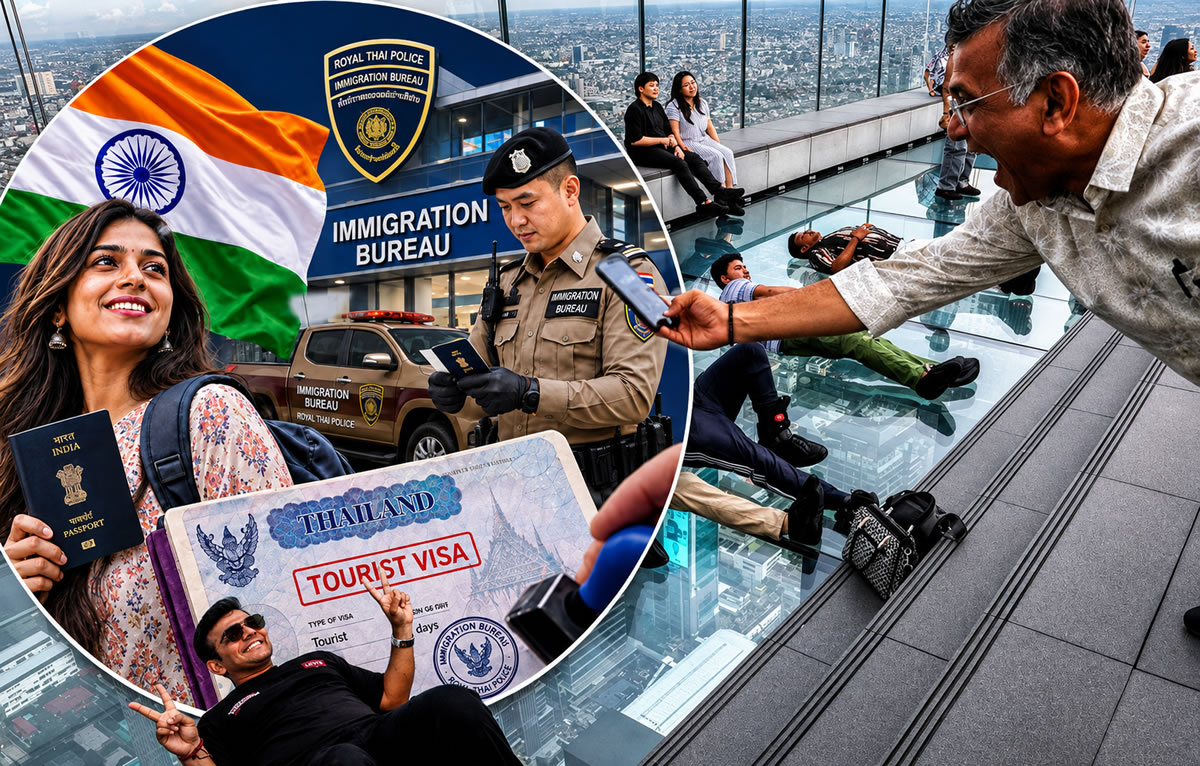
Indian tourist arrivals to Thailand fell about 12% year-on-year between August 1 and 22. India was the only declining market among Thailand’s four largest tourism sources. The reversal followed confusion over Thailand’s changing entry rules. Notably, India had been expected to drive tourism growth during 2026.
The disruption began with a Cabinet proposal on May 19. Ministers proposed removing Indian nationals from Thailand’s visa-free entry scheme. Instead, Indians would receive a 15-day visa on arrival and pay ฿2,000. Almost immediately, travel agents reported cancellations and weaker advance bookings.
Indian holidays are commonly arranged weeks or months before departure. Group tours, weddings and corporate events require even longer preparation. As a result, uncertainty during May affected travel planned for July and August. Families, companies and tour groups began reconsidering confirmed or proposed trips.
Cabinet visa reversal came too late as cancellations cut Indian arrivals and erased earlier growth
The Cabinet reversed course on July 14. Indian nationals received 30-day visa-free entry instead of the proposed paid visa. However, the decision came too late for many August travellers. Bookings had already been cancelled, postponed or transferred elsewhere.
Thailand never enforced the proposed restriction. Yet the announcement alone disrupted the market. In effect, the country lost bookings because travellers expected new costs and shorter stays. The later reversal could not restore holidays already reorganised.
Tourism and Sports Minister Surasak Phancharoenworakul previously linked the confusion to a booking decline approaching 20%. Actual arrivals then fell about 12% during August’s first 22 days. Thus, the arrival figures confirmed damage already visible among travel companies. Reduced airline capacity also restricted arrivals during parts of the period.
The decline marked a sharp reversal from India’s 2025 performance. Thailand received approximately 2.48 million Indian visitors that year. Arrivals increased 16.82%, setting a record for the market. In addition, those visitors generated about ฿90.43 billion in tourism revenue.
India had become Thailand’s strongest-performing large tourism market. It also helped compensate for the prolonged weakness of Chinese arrivals. Previously, China supplied enormous visitor numbers and supported tourism businesses nationwide. Against that background, India’s rapid growth became increasingly important.
Strong Indian demand, rising incomes and direct flights had put another annual record within reach
Indian travel demand also appeared supported by durable commercial factors. Rising incomes enabled more middle-class Indians to travel internationally. Direct flights provided comparatively short journeys between both countries. Likewise, competitive fares made Thailand affordable against many alternative foreign destinations.
The market extended far beyond ordinary package holidays. Indian visitors travelled for weddings, corporate events, nightlife, shopping and short breaks. Wedding parties produced concentrated spending across hotels, restaurants, transport and entertainment. Meanwhile, corporate groups supported conference venues, accommodation providers and local service companies.
Thailand originally targeted approximately 2.7 million Indian visitors during 2026. Reaching that total would have established another annual record. At first, the target appeared achievable after a positive opening half. Indian arrivals increased 3.06% year-on-year between January and June.
By August 1, Thailand had welcomed 1,376,433 Indian visitors during 2026. India remained the third-largest source market behind China and Malaysia. Nevertheless, the first-half increase was modest compared with the later 12% decline. Several weak months could erase the remaining cumulative advantage.
Thailand’s Indian visitor target comes under pressure as August’s sharp reversal cuts earlier gains
Full-year arrivals cannot yet be described as exceeding 2025. Thailand must receive more than 2.48 million Indian visitors to establish another record. Consequently, the 2.7 million target now faces substantial pressure. A recovery during the remaining months has become essential.
The Bank of Thailand considers the August reversal significant for several reasons. India was expected to produce growth rather than contraction. Moreover, it was Thailand’s strongest large tourism market during 2025. Its expansion partly replaced demand lost through subdued Chinese tourism.
India was also the only declining market among Thailand’s four principal sources. Accordingly, the fall cannot be attributed entirely to Thailand’s general seasonal pattern. A broad seasonal downturn should have weakened several major markets. Instead, the contraction was concentrated within India.
That contrast points towards factors affecting Indian travellers directly. Visa uncertainty dominated those factors during the booking period. Separately, reduced airline capacity limited available seats during parts of the period. Together, both pressures weakened demand and restricted supply.
Policy reversal failed to restore lost bookings as cancelled Indian groups drained tourism income
The policy sequence exposed the speed of international travel decisions. Travellers reacted to the May proposal before ministers reached a final position. Many customers would not risk further changes before departure. By the time the Cabinet reversed course, their money had moved elsewhere.
Holiday planning also follows fixed commercial timetables. Airlines publish schedules and allocate capacity before departure dates. Hotels reserve room blocks for tours, weddings and corporate events. Similarly, travel companies sell packages long before customers arrive at airports.
A July policy correction could not immediately repair August business. Carriers could not instantly restore removed capacity or fill weak services. Hotels could not recover every cancelled reservation at comparable prices. For that reason, the disruption continued after visa-free entry was confirmed.
Each lost visitor also removed spending from several domestic industries. Hotels lost room income, while restaurants lost food and beverage sales. Transport operators missed airport transfers, regional journeys and organised tours. Furthermore, retailers and entertainment businesses lost additional customer expenditure.
The effect becomes larger when group travel is involved. One cancelled wedding can remove hundreds of room nights and banquet purchases. It can also eliminate transport, restaurant, shopping and entertainment spending. On another front, cancelled corporate events can reduce conference and business-travel revenue.
Indian visitors spend less per trip but deliver strong daily income across major tourism sectors
Thailand earned ฿90.43 billion from Indian visitors during 2025. Based on 2.48 million arrivals, average spending reached approximately ฿36,400 per person. Some tourism reports place expenditure nearer ฿38,000–฿40,000 per trip. The difference reflects timing, methodology and included spending categories.
Indian visitors spend less per trip than the average international traveller. Overall foreign visitor spending is approximately ฿47,000 per trip. That average reflects stays exceeding nine days. By comparison, Indian travellers usually take shorter regional holidays.
American travellers spend roughly ฿80,000–฿96,000 per Thailand trip. European visitors frequently spend between ฿70,000 and ฿90,000. A Tourism Council survey placed American spending at ฿96,269 per visit. It valued average European spending at US$2,684, then roughly ฿89,000.
Importantly, that survey dates from late 2022. Its figures should not be presented as current official 2026 averages. Even so, they illustrate the effect of longer stays. American and European travellers often remain for 12 to 15 days.
Total trip expenditure and daily spending measure different things. Long-haul tourists accumulate more accommodation and food costs over longer visits. In contrast, Indians may spend heavily each day during shorter holidays. Wedding, corporate, nightlife and luxury groups can produce particularly high daily expenditure.
Falling Indian arrivals threaten tourism receipts, consumption and Thailand’s wider economic growth
India’s lower per-trip average therefore tells only part of the story. The market provides volume, repeat travel and substantial daily spending. Beyond that, its money circulates widely across the domestic economy. Hotels, restaurants, shops, transport companies and entertainment venues all benefit.
Tourism remains one of Thailand’s few major economic supports. Household consumption is restricted by high debt. Private investment also remains uneven across sectors. Under these conditions, a sustained tourism decline would directly weaken service-sector income.
Lower Indian arrivals could reduce tourism receipts and private consumption. They could also weaken Thailand’s current-account balance. In turn, reduced service activity could affect national growth forecasts. The central bank therefore needs to distinguish temporary disruption from lasting market damage.
A quick recovery would indicate an isolated booking shock. Travellers would have returned after receiving clear entry conditions. Conversely, continued weakness would suggest longer damage to demand and airline capacity. Thailand would then lose momentum within a previously dependable market.
Affordable fares and short flights made India vital as subdued Chinese tourism left a widening gap
The position becomes more serious because Chinese tourism remains subdued. India had partly filled the gap left by missing Chinese visitors. Without that expansion, Thailand has fewer large markets capable of delivering substantial additional volume. Hence, India’s decline carries more weight than an ordinary monthly movement.
Air fares are central to India’s tourism performance. Thailand remains comparatively affordable for middle-class Indian travellers. Promotional economy return fares during 2026 ranged from ₹18,000 to ₹25,000. That equalled approximately ฿6,700–฿9,300.
Normal advance return fares generally cost ₹25,000–₹35,000. In baht, that represented approximately ฿9,300–฿13,000. During peak holidays, late bookings reached ₹35,000–₹50,000 or more. Additionally, luggage, meals and seat selection raised many advertised low-cost prices.
Delhi–Bangkok fares normally began around ₹8,000–₹15,000 one way. Mumbai–Bangkok tickets commonly cost ₹10,000–₹18,000 one way. Direct flying time from Delhi was approximately four hours. From Mumbai, the journey took about four-and-a-half hours.
These fares made Bangkok comparable with some long domestic Indian journeys. The calculation became stronger when full-service fares and accommodation were considered. Crucially, short flying times made Thailand suitable for brief holidays. Travellers could reach Bangkok without surrendering an entire day to travel.
Capacity cuts and visa confusion combined to raise fares, weaken demand and prolong market damage
Connectivity between India and Thailand was extensive but uneven. Major cities benefited from more direct services and greater fare competition. Other locations depended on fewer routes or less convenient schedules. Therefore, capacity cuts could disproportionately affect travellers outside the largest Indian centres.
Reduced capacity creates several immediate pressures. Fewer seats can raise fares and remove convenient departure times. At the same time, connecting journeys reduce Thailand’s attraction for short-stay travellers. A four-day holiday becomes less practical when connections consume substantial time.
The market therefore faced pressure from both policy and aviation changes. Visa confusion weakened advance demand during the planning period. In parallel, reduced airline capacity limited affordable and convenient travel. Those forces turned expected growth into a double-digit decline.
Weak bookings can also encourage airlines to reduce capacity further. Fewer services then increase fares or make travel less convenient. Subsequently, higher costs can suppress demand beyond the original policy disruption. This commercial cycle can outlast the announcement that first triggered it.
The Cabinet’s July decision protected visa-free entry for Indian nationals. A 30-day stay also covers most Indian holidays comfortably. Accordingly, the permitted duration was not the central commercial issue. Timing, uncertainty and changing official messages caused the immediate damage.
Lost Indian bookings put the annual record and ฿2.7 million visitor target under mounting pressure
Travellers needed clear conditions before paying airlines and hotels. Tour operators needed stable rules before advertising and confirming packages. Equally, wedding organisers needed certainty before committing large groups. The May proposal interrupted those decisions during a critical booking period.
The figures also challenge any assumption that the entire 2026 market remained above 2025. Indian arrivals were slightly higher during the first half. Yet August was substantially below the same period during 2025. For now, the full-year result remains unresolved.
Thailand needs more than 2.48 million Indian arrivals to achieve another record. It needs approximately 2.7 million to reach its original target. On current evidence, August reduced the margin for further weakness. Stronger later months must now compensate for the lost arrivals.
The spending figures add scale to the risk. At approximately ฿36,400 per visitor, every 100,000 missing Indians represents about ฿3.64 billion. That calculation applies the 2025 average without adjusting for visitor type. Nonetheless, it shows how arrival losses can quickly affect tourism revenue.
Indian tourism spreads income nationwide while repeat visits reduce reliance on Western winter demand
The impact would not remain confined to Bangkok or major hotels. Indian travellers spend across restaurants, retail, local transport and entertainment. Wedding and corporate groups also purchase specialised services. As part of this, their expenditure supports numerous suppliers beyond the tourism industry’s largest companies.
India differs from the American and European markets in another important way. Western visitors spend more per trip because they usually remain longer. Indians travel more quickly and can return more easily. Thus, Thailand gains shorter visits but stronger opportunities for repeat business.
India also provides limited seasonality compared with some Western markets. Weddings, corporate trips and short holidays occur throughout the year. This pattern gives hotels and airlines business outside traditional long-haul winter demand. In practical terms, India supplies volume when other markets may slow.
The Bank of Thailand will now watch incoming arrival and receipt data. Recovery would support the view that August reflected temporary booking disruption. Alternatively, continuing weakness would force a reassessment of tourism income expectations. It could also affect forecasts for consumption, the current account and growth.
Thailand’s weak economy raises the stakes as Indian tourism shifts from strong growth to contraction
Thailand’s wider economy increases the importance of that assessment. High household debt continues to restrict domestic spending. Investment remains inconsistent, while tourism supports businesses across several regions. Against this economic picture, losing a major growth market carries immediate consequences.
No final full-year conclusion is yet possible. The first half remained slightly above 2025, while August recorded a sharp reversal. Even so, the direction changed quickly after the visa announcement. India moved from dependable expansion to the only decline among Thailand’s four largest markets.
Tourism bosses in the South ask Minister to improve planned visa regime for Indian arrivals to Thailand
Immigration Bureau denies targeting Cambodian and Indian foreign tourists on arrival at Thai airports
The central issue is therefore clear. Thailand expected India to strengthen visitor numbers during 2026. Instead, policy uncertainty damaged bookings before the proposed restriction even took effect. Reduced airline capacity then added further pressure.
A later recovery could contain the losses. Still, cancelled August holidays cannot be restored after their travel dates pass. Hotels, airlines and service businesses have already missed that revenue. The 2.7 million visitor target now requires a stronger finish.
India supplied Thailand with record arrivals, broad spending and sustained growth during 2025. It also partly replaced weaker Chinese demand. Now, the August contraction has placed that progress at risk. The next arrival figures will show whether the damage was temporary or continuing.
Join the Thai News forum, follow Thai Examiner on Facebook here
Receive all our stories as they come out on Telegram here
Follow Thai Examiner here
Further reading:
60-day visa regime to be ended confirms Minister responding to rising industry security concerns
Tourism boss warns Thailand it is facing a Chinese blacklist if another security controversy erupts
Visa waiver scheme questioned with another China Crisis for foreign tourism driven by security fears
Tourism cryptocurrency sandbox payment plan is bound to face stiff opposition from the central bank