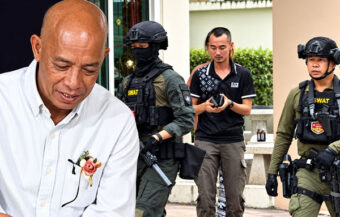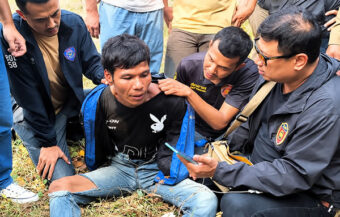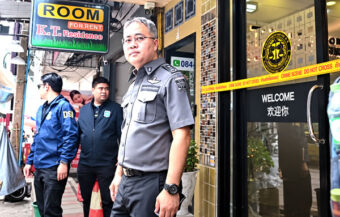
Narathiwat residents marched for peace after a deadly insurgent attack halted talks to end Thailand’s southern conflict. Five rangers were killed, causing officials to suspend talks indefinitely and demand answers over the attack and a vicious campaign of murder.
A deadly insurgent attack that killed five volunteer rangers has derailed Thailand’s latest southern peace initiative, forcing negotiators to suspend talks in Malaysia as residents of Narathiwat marched through the province demanding an end to the violence. The unprecedented public appeal for peace came as officials confirmed negotiations had been halted indefinitely, raising fresh concerns over the future of efforts to end the kingdom’s long-running southern conflict.
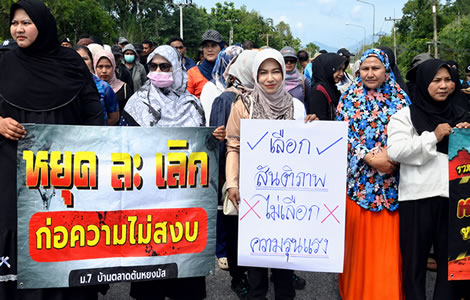
As residents of Narathiwat marched through the troubled southern province demanding peace, renewed insurgent violence has derailed negotiations that had been advancing in Malaysia.
The latest bloodshed followed the July 22 attack that killed five volunteer rangers. As a result, the government has suspended dialogue with insurgent representatives indefinitely. Officials insist negotiations cannot resume until those responsible explain the deadly assault.
On Tuesday, former House of Representatives Speaker Wan Muhamad Noor Matha acknowledged that the attack had pushed the peace process into serious difficulty. He said differing views within the insurgent movement had complicated negotiations.
At the same time, he suggested criminal interests also had reasons to resist a return to stability. He pointed to people smuggling, narcotics trafficking and other illegal businesses. Such activities, he said, could benefit from prolonged unrest.
However, he declined to link organised crime directly to insurgent financing. Instead, he urged investigators to examine every possible connection before reaching conclusions.
Peace talks halted after deadly Narathiwat raid as Wan warns criminal interests profit from the unrest
Against that backdrop, villagers and students gathered at Bukeh Sami Bridge in Village No. 7, Tan Yong Mas Subdistrict, Ra-ngae district. The July 28 march formed part of the campaign, “Stop, Refrain from, and End the Unrest.”
Protesters carried banners declaring, “Stop the unrest,” “We want peace in Ra-ngae District” and “Choose peace, not violence.” Collectively, they appealed for an immediate end to the violence. They also declared they no longer wished to live under constant fear.
The demonstration reflected growing frustration across local communities. Until recently, major attacks had become less frequent. The latest assault abruptly ended that period of relative calm. Consequently, the march became a visible rejection of renewed bloodshed. It also highlighted the impact of continuing violence on everyday life.
Among those attending was Ms Yazmani, who described the return of violence as deeply shocking. She said serious incidents had remained quiet for a considerable time. Then, violence resurfaced with deadly consequences. The latest attack killed an officer and damaged homes within the community. She said many residents struggled to understand why the violence had returned after months of comparative calm.
Narathiwat villagers march for peace as renewed bloodshed shatters calm and leaves only fear
She described the close relationship between local people and officers serving at security checkpoints. “Whenever I’m visiting the local community and see officers at checkpoints, I always greet them with a friendly smile,” she said. “I’m saddened that some good people, like the officers, have to suffer such a loss.” She added that the damaged houses belonged to families well known throughout the district. Therefore, the attack affected far more than those directly involved.
Notably, Ms Yazmani recalled the officers’ assistance during previous flooding. They helped villagers move belongings from flooded homes. They also supported families during emergency operations. For that reason, she said their deaths were felt across the community. “So, when something like this happens, it’s truly heartbreaking,” she said.
She said the demonstration was intended to send a direct message. “The purpose of today’s protest is to send a clear signal that the villagers no longer tolerate violence,” she said. “We ask that the violence end here. We have pity on the villagers who have to live in fear.” Her comments echoed the mood among many participants, who said they simply wanted lasting peace restored.
Thailand freezes talks as negotiators await answers from insurgents and Malaysia appoints new facilitator
While residents marched in Ra-ngae district, officials in Bangkok confirmed that formal peace negotiations had been halted. National Intelligence Agency director Thanut Suvarnananda, who heads Thailand’s dialogue team, said talks had been progressing well before the July 22 attack.
Technical-level discussions had already taken place. In addition, another meeting had been scheduled for September. That meeting has now been cancelled indefinitely.
Mr Thanut said the violence was too serious to overlook. “We were already talking, then the violence occurred. We need an explanation first before any talks resume,” he said. Questions have already been sent to insurgent representatives. So far, no response has been received. Accordingly, the government will not resume formal dialogue until clarification is provided.
Separately, Mr Thanut confirmed that Thailand has not formally contacted Malaysia since the attack. He said Malaysia was appointing a new peace facilitator. That has created a temporary gap in coordination.
Even so, communication can continue through intermediaries and existing channels. Thailand, he said, will await both Malaysia’s next move and any response from insurgent representatives.
Security operations continue alongside dialogue as investigators probe unusual nature of Narathiwat attack
Mr Thanut also rejected suggestions that stronger security measures would damage future negotiations. Instead, he said security forces and the dialogue team performed different roles while pursuing the same objective.
Military operations will therefore continue. In parallel, efforts to secure a negotiated settlement will also remain active. According to Mr Thanut, both approaches are necessary.
On another front, investigators have identified unusual aspects of the Narathiwat attack. However, Mr Thanut declined to discuss details before evidence had been fully examined. He noted that similar attacks had occurred previously in the province.
Likewise, he rejected suggestions that authorities concentrated only on symbolic dates associated with insurgent groups. Instead, he said security agencies remained vigilant throughout the year.
Mr Thanut also said the prime minister continued to support dialogue as the government’s long-term strategy for resolving the southern conflict. Although he had only recently become chief negotiator, he remained confident negotiations could eventually resume despite current tensions.
Wan backs martial law and parallel peace moves while urging caution over insurgent responsibility claims
Earlier, Mr Wan delivered a similar assessment. He said the attack would inevitably make negotiations more difficult because different groups held sharply differing views on the peace process. Some supported negotiations. Others opposed them. Nevertheless, he stressed that dialogue remained a central government policy aimed at achieving lasting peace in the southern border provinces.
In response to concerns over security, Mr Wan insisted that peace negotiations and law enforcement had to proceed together. Neither approach, he said, could succeed alone. Following the attack, he expressed condolences to the families of the five rangers who were killed. He also urged authorities to identify those responsible and bring them to justice without delay.
Mr Wan also defended the recent imposition of martial law across Narathiwat. He said the measures strengthened security operations by providing authorities with appropriate legal powers.
Those powers, he said, allowed officials to respond more effectively to emerging threats. Meanwhile, security agencies would continue assessing developments to prevent further violence.
Asked whether the attackers belonged to one of the organisations involved in peace talks, Mr Wan urged caution. He said it was too early to determine their affiliation. The insurgent movement, he noted, consisted of several factions. Those included political representatives, supporters of negotiations and armed operatives. Therefore, investigators should avoid premature conclusions.
Wan urges wider crime probe as Thailand and Malaysia strengthen border security after peace talks stall
He also urged investigators not to focus exclusively on insurgent violence. Drug trafficking, people smuggling and other illegal businesses also required close examination.
Such criminal enterprises, he said, could benefit from prolonged instability. Even then, he declined to suggest they directly financed insurgent operations. Instead, he repeated that every possible link deserved thorough investigation.
As part of this, Mr Wan confirmed that the government’s special committee on the southern border provinces would meet again. Foreign Affairs Minister Sihasak Phuangketkaew will schedule the meeting after returning from overseas. Although the committee normally meets every two months, it can convene sooner if circumstances require.
Police sergeant fends off four attackers with gunfire in latest southern insurgency attack in Pattani
Site foreman callously murdered by balaclava clad executioners as insurgency campaign hits hard
Meanwhile, Mr Sihasak said the committee could meet this week to review the worsening security situation. Members will also discuss cooperation with Malaysia to prevent suspects exploiting shelter zones after attacks.
He added that Thailand and Malaysia continued discussions on dual nationality issues following recent talks between the two countries’ prime ministers. Both governments, he said, remained committed to stronger border security cooperation and development across the southern border region.
Finally, Mr Sihasak was asked whether the Barisan Revolusi Nasional staged the latest attack to gain recognition. He declined to speculate. He said authorities acknowledged the group’s existence but could never accept violence. Any future dialogue, he added, must begin with a reduction in attacks. For now, investigators continue examining the motives behind the Narathiwat assault that has abruptly halted Thailand’s latest peace initiative.
Join the Thai News forum, follow Thai Examiner on Facebook here
Receive all our stories as they come out on Telegram here
Follow Thai Examiner here
Further reading:
Defence minister says Barisan Revolusi Nasional (BRN) carried out gold raid and horde is in Malaysia
Insurgency erupts again in South with bold and brazen attacks on security forces shielded by border
Army security agency confirms bomb spree targeting tourist hotspots near Phuket linked to insurgency