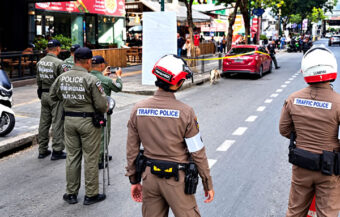
Bangkok has imposed martial law in Narathiwat after a coordinated insurgent attack killed five Army rangers. Troops now have expanded powers as commanders vow to hunt down the gunmen behind one of the ongoing terror campaign’s deadliest assaults.
Thailand has imposed martial law across Narathiwat and launched its most aggressive security crackdown in years after six heavily armed insurgents openly rode through the province in a black pickup before massacring five Army rangers in coordinated attacks that stunned the country. As investigators race to identify the gunmen using CCTV footage and forensic evidence from their burned getaway vehicle, Bangkok has abandoned restraint, granting sweeping new powers to security forces and openly ordering commanders to “hunt down” those responsible despite continuing peace contacts with insurgent leaders in Malaysia.
The government has imposed martial law across Narathiwat province after one of the deadliest insurgent attacks in southern Thailand in recent years left five members of the 45th Ranger Regiment Task Force dead.
The order gives security forces sweeping new powers as Bangkok shifts towards a more aggressive campaign against those responsible. It also marks the strongest military response since the latest surge in violence across the southern border provinces.
The decision follows the coordinated attacks on Wednesday, July 22, at the Bukeh Sami checkpoint in Ra-ngae district. Six heavily armed insurgents travelled openly in the rear of a black pickup truck before launching the assault.
CCTV footage captured the vehicle shortly before the attack. The gunmen then opened fire with automatic weapons and used pipe bombs against the checkpoint. Five rangers were killed. Afterwards, the attackers escaped before later setting fire to the pickup truck in Sakor Subdistrict, Srisakorn district. Investigators believe the vehicle was deliberately burned to destroy forensic evidence.
Coordinated attacks and brazen gunmen reflect renewed insurgent confidence across South
The checkpoint assault came only hours after a separate attack involving a car bomb at the old Tan Yong Police Station. Together, the operations demonstrated a high degree of coordination. They also represented one of the boldest insurgent offensives seen in recent years.
Moreover, the footage of six armed men travelling in plain sight has drawn particular attention among investigators and military commanders.
However, the violence did not stop there. On Thursday, another insurgent unit struck in neighbouring Yala province. Two gunmen wearing balaclavas arrived on a motorcycle before entering a worksite.
They executed a site foreman and immediately fled. Consequently, the latest attacks raised fresh concerns over insurgents’ ability to strike both security personnel and civilian targets within hours of each other.
The attacks have shocked Thailand. Yet they also come as the government continues engagement with insurgent leaders in Malaysia. That contrast has sharpened attention on security policy in the Deep South. Meanwhile, developments over the past two days have revealed a clear change in Bangkok’s public messaging.
Military language hardens as Bangkok shifts from restraint to openly pursuing the terrorists
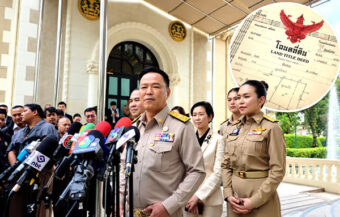
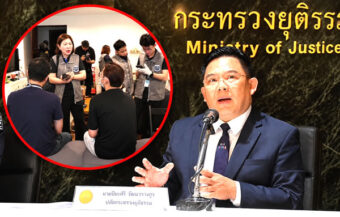
On Thursday, Lieutenant General Norathip Poynok, Commander of the 4th Army Region, declared that security forces would hunt down those responsible for the killings. His remarks immediately attracted national attention.
Shortly afterwards, Defence Minister Lieutenant General Adul Bunthamcharoen urged reporters not to use the word “hunted” when referring to military operations. Instead, the government initially appeared keen to avoid language suggesting an intensified campaign.
By Friday, that position had changed. Army Chief of Staff General Chaiyapruk Duangprapat publicly adopted the same language first used by the southern commander. His remarks confirmed a tougher operational approach from Bangkok. They also removed any doubt that military strategy had shifted following the attacks.
“It’s time to hunt down those responsible. Regardless of who is helping whom or which country is providing assistance, we will pursue them. It’s time for us to become the hunters,” General Chaiyapruk said.
The statement marked the clearest indication yet that security forces had entered a new operational phase. Notably, General Chaiyapruk said those responsible would be pursued regardless of who supported them or where they attempted to hide. The remarks reflected a decisive change in emphasis following Thursday’s public debate over military language.
Martial law grants soldiers sweeping search, arrest and weapons powers to pursue insurgents
Prime Minister Anutin Charnvirakul also appeared to endorse the tougher approach on Friday. At the same time, he confirmed that martial law had been imposed across Narathiwat province.
The declaration grants military personnel expanded authority under the Martial Law Act of 1914. In response, commanders now possess broader legal powers to restore security while pursuing those behind the attacks.
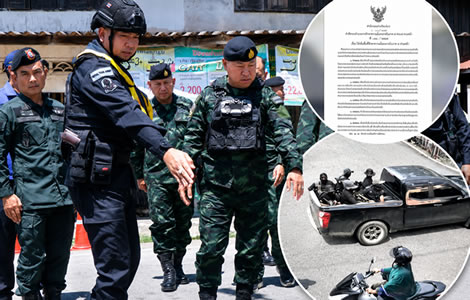
Major General Yod-awut Phungphak, Commander of the Narathiwat Task Force, signed Order No. 131/2569 authorising the use of military personnel under the Martial Law Act throughout Narathiwat.
According to the order, the attacks on July 22 left multiple fatalities while those responsible remain at large inside the province. Furthermore, the document states that the fugitives continue to threaten public safety, property and peace within the area. Therefore, military, police and civilian agencies have been instructed to work together to locate and apprehend every suspect.
The order grants military personnel significantly expanded operational authority. Soldiers may establish checkpoints on public roads, inspect vehicles, search residences and immediately arrest individuals suspected of involvement in the unrest.
In addition, military personnel are authorised to use weapons immediately against violent offenders posing a threat. However, any use of force must comply with the principles of necessity and proportionality.
Order takes immediate effect as officers prepare intensified security operations in Narathiwat
As part of the order, military personnel stationed throughout Narathiwat have also received expanded search powers. Their operations will focus on maintaining security and locating violent offenders.
Civilian personnel must comply with operational requirements issued by military officers during suppression operations or efforts to maintain peace and order. The declaration took immediate effect upon signature and remains in force until further notice.
Lieutenant General Norathip disclosed the order during a press conference at the Southern Marine Corps Task Force air squadron reception room. The briefing focused on both the car bomb attack at the old Tan Yong Police Station and the deadly assault on the Bukeh Sami checkpoint.
Military officials confirmed that the 4th Army Region had instructed the Narathiwat Task Force commander to impose martial law. However, Major General Yod-awut had already signed the declaration one day earlier following the attacks.
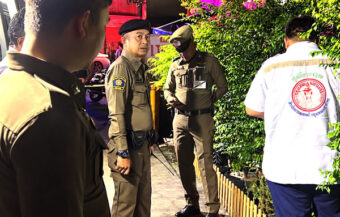
Meanwhile, General Chaiyapruk travelled to Narathiwat to inspect the attack scenes personally. He first visited the Bukeh Sami checkpoint at Tan Yong Mas Subdistrict Municipality in Ra-ngae district.
Army chief orders forensics to identify every attacker and fast-track the investigation into the atrocity
There, he received operational briefings before examining the damage. He also praised the five rangers who were killed while protecting the public. In parallel, the army pledged that their families would receive full rights and welfare with the highest honour.
Later, at 2.10 pm, the Army Chief of Staff travelled to Sakor Subdistrict, where investigators recovered the burned pickup truck believed to have been used by the attackers. He instructed forensic teams to recover every possible piece of evidence from the wreckage.
He also ordered investigators to accelerate the inquiry and establish links between the vehicle and those responsible. According to the army, every participant in the attack must be identified and arrested.
Separately, the Forward Command of the Internal Security Operations Command Region 4 received new operational instructions. Commanders were directed to consider the appropriate use of force during future operations.
Even so, all actions must comply with the law together with the principles of necessity and proportionality. The military nevertheless instructed commanders to act decisively to deter further attacks, maintain security and strengthen public confidence across the region.
Burned getaway vehicle and CCTV footage become central evidence in widening hunt for gunmen
Investigators believe the burned pickup truck could become a critical piece of evidence. The vehicle was allegedly destroyed after the attack to conceal forensic traces.
Even so, specialists have already begun examining the wreckage for material capable of identifying those involved. General Chaiyapruk instructed forensic officers to collect evidence meticulously and use every available lead to connect the attackers with the crimes committed on July 22.
The Bukeh Sami attack has drawn particular attention because of the confidence displayed by the insurgents. CCTV footage showed six armed men riding openly in the rear of the pickup truck before the assault.
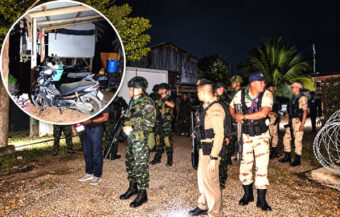
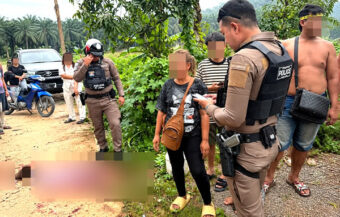
Five soldiers killed in attack by armed insurgents at a checkpoint in Narathiwat on Wednesday evening
Site foreman callously murdered by balaclava clad executioners as insurgency campaign hits hard
The images have become one of the defining features of the investigation. Moreover, the attackers appeared unconcerned about being seen before launching one of the deadliest assaults on security forces in recent years.
For now, martial law provides commanders with wider legal authority to conduct searches, detentions and security operations throughout Narathiwat. Meanwhile, contacts between the government and insurgent representatives in Malaysia continue.
However, the military response has unmistakably entered a more aggressive phase. Senior commanders have made clear that locating, identifying and arresting everyone involved in the July 22 attacks is now the immediate operational priority. Bangkok’s message has also changed. Security forces are no longer speaking about simply responding to violence. They are now openly preparing to hunt down those responsible.
Join the Thai News forum, follow Thai Examiner on Facebook here
Receive all our stories as they come out on Telegram here
Follow Thai Examiner here
Further reading:
Defence minister says Barisan Revolusi Nasional (BRN) carried out gold raid and horde is in Malaysia
Insurgency erupts again in South with bold and brazen attacks on security forces shielded by border
Army security agency confirms bomb spree targeting tourist hotspots near Phuket linked to insurgency