
Thailand puts railways at the heart of its tourism revival as TAT discusses premium routes with luxury operator Belmond. Meanwhile, SRT’s new ฿30–฿50 Bangkok Connex train to Ayutthaya fills every seat on its inaugural journey from the capital itself.
The Tourism Authority of Thailand (TAT) is preparing to embrace rail tourism as a new vehicle to revive Thailand’s fading appeal. Its plans span low-cost heritage excursions, packaged journeys, premium charters and possible luxury routes developed with Belmond. The company currently operates premium railway experiences between Singapore and Malaysia. Meanwhile, the State Railway of Thailand (SRT) has shown that demand for rail adventures already exists. Its new Ayutthaya service, launched on August 1, filled every seat on its first run. Vietnam provides a successful regional model, having turned scenic trains, heritage connections, VIP carriages and luxury sleepers into major tourism attractions.
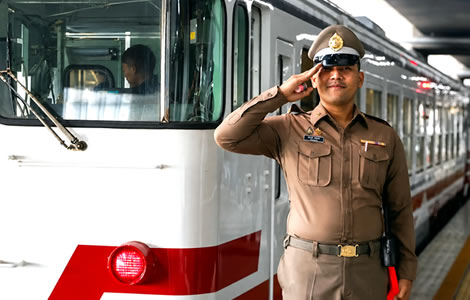
Thailand is placing railway travel at the centre of a broader tourism strategy. The shift follows a revamped State Railway of Thailand service to Ayutthaya. In parallel, tourism officials are pursuing new premium routes and complete railway experiences.
The Tourism Authority of Thailand views improved trains as important products for attracting visitors. As part of this, it has held talks with luxury train operator Belmond. The discussions concern new Thai railway services and tourism experiences.
Belmond operates the Eastern and Oriental Express, a luxury train currently running between Singapore and destinations in Malaysia. Notably, proposed routes from 2027 could connect Bangkok with Kanchanaburi, Hua Hin, Hat Yai and Padang Besar. These plans would extend Thailand’s premium railway market across central and southern destinations.
Bangkok Connex launches daily air-conditioned service from central Bangkok to historic Ayutthaya
At the affordable end, the State Railway launched its air-conditioned Bangkok Connex service on August 1, 2026. The trains link Krung Thep Aphiwat Central Terminal with Ayutthaya. The inaugural 9.05 am service filled every seat.
Thai and foreign travellers arrived early at Krung Thep Aphiwat for the first departure. In response, railway staff guided passengers and supplied information throughout the terminal. The turnout provided an immediate test of demand for the revamped operation.
Previously, the suburban service ran only between Don Mueang and Ayutthaya. It was also limited to weekdays. Under the revised timetable, trains start at Krung Thep Aphiwat and operate every day.
The extension gives Ayutthaya a direct link with Bangkok’s main long-distance railway terminal. Crucially, Krung Thep Aphiwat connects with several parts of the capital’s transport network. Passengers can transfer from the Red Line and the Metropolitan Rapid Transit Blue Line.
Separately, railway connections run towards Don Mueang International Airport. Travellers can therefore move between airport services, urban trains and Bangkok Connex through one hub. The arrangement removes the previous requirement to start the Ayutthaya journey at Don Mueang.
Ayutthaya gains a direct link to Bangkok rail hub with airport services and city network connections
The State Railway expects Bangkok Connex eventually to carry more than 1,000 passengers daily. Initially, its first train demonstrated interest among several passenger groups. These included Thai travellers, foreign tourists and ordinary railway users.
The service uses refurbished KIHA 40 and KIHA 48 diesel railcars imported from Japan. Each train includes air-conditioning and comfortable passenger seating. At the same time, several original Japanese features remain inside the carriages.
Those details include Japanese signs and selected interior fittings. Consequently, the trains retain a distinctive appearance during the journey. Their Japanese character also differentiates Bangkok Connex from standard suburban railway services.
On weekdays, six trains operate under service numbers 9001 to 9006. The first weekday departure begins at 5.15 am. Accordingly, the timetable covers early passengers alongside tourists travelling later.
At weekends, four services operate under train numbers 9003 to 9006. The first train leaves Krung Thep Aphiwat at 9.05 am. In practical terms, visitors can reach Ayutthaya in the morning.
The complete journey takes slightly more than one hour. Meanwhile, promotional fares will remain available until October 31, 2026. Prices start at ฿30 from Krung Thep Aphiwat.
Japanese diesel railcars offer daily Ayutthaya journeys with promotional fares starting from only ฿30
Passengers pay ฿30 to Don Mueang, Rangsit and Khlong Phutsa. By comparison, journeys to Bang Pa-in, Ban Pho and Ayutthaya cost ฿50. A promotional return journey between Bangkok and Ayutthaya therefore costs ฿100.
Tickets are currently available only at railway stations. However, the State Railway has not introduced online booking for Bangkok Connex. Passengers must therefore complete their purchases before boarding.
Seats are not reserved. Instead, travellers choose available places on a first-come, first-served basis. During busy periods, early arrival may determine whether passengers secure their preferred seats.
The full inaugural departure highlighted that issue. Even so, the turnout established strong early interest in the expanded route. Daily operations will provide a broader measure after the opening attention subsides.
The State Railway expects Bangkok Connex to provide an alternative to private cars. Beyond transport, it expects the service to support tourism across Phra Nakhon Si Ayutthaya province. Day trips from Bangkok form an important part of that market.
Visitors can leave the capital during the morning and return after touring Ayutthaya. Furthermore, the route includes Bang Pa-in, another established historic destination. Ban Pho and Khlong Phutsa also fall within the promotional fare structure.
State Railway combines affordable transport with heritage tourism and its premium charter trains
The railway has combined suburban transport with direct access to a major heritage centre. In addition, air-conditioning improves comfort on the journey. The central terminal also supplies stronger connections across Bangkok.
The service forms part of Thailand’s wider development of railway tourism. Increasingly, operators are packaging trains with destinations, food, accommodation and cultural attractions. The journey then becomes part of the tourism product.
The State Railway already uses Japanese-built KIHA 183 trains for tourist operations. On another front, it operates the more upmarket SRT Royal Blossom. Weekend itineraries combine railway journeys with organised visits and local experiences.
Some packages include food, accommodation, cultural attractions and guided tours. As a result, passengers buy more than transportation between two stations. The journey and destination are sold together.
In 2026, the State Railway said rail tourism was “steadily growing in popularity.” Against that background, it opened several premium trains for charter. These include the Royal Blossom, KIHA 183 and SRT Prestige.
Charter operations give groups access to complete trains and organised railway experiences. More broadly, they expand the railway’s role beyond daily public transport. They also add another price level to Thailand’s developing rail tourism market.
Tourism chiefs and Belmond discuss luxury rail routes linking Bangkok with major Thai destinations
The Tourism Authority is pursuing the same field through its national tourism programme. In June 2026, Governor Thapanee Kiatphaibool identified railway journeys as part of the visitor experience. She said travelling time could become part of the tourism product.
Equally important, Thapanee linked railway travel with distributing visitor spending into secondary destinations. The policy joins transport, attractions and local services within one offering. It covers affordable excursions and premium international travel.
The Belmond discussions represent the luxury side of that approach. Potentially, new services could carry visitors beyond Thailand’s established railway tourism routes. Kanchanaburi and Hua Hin would provide relatively short journeys from Bangkok.
Farther south, Hat Yai and Padang Besar would support longer railway experiences. Taken together, the proposed routes cover heritage, coastal and cross-border destinations. No final operating arrangements were supplied.
Bangkok Connex occupies the lower-cost side of the same market. Conversely, Belmond would serve premium passengers seeking a specialised railway experience. KIHA 183 excursions, Royal Blossom and SRT Prestige sit between those models.
Ayutthaya is particularly suited to an accessible railway product. It is slightly more than one hour from Bangkok on the new service. Moreover, it is already a major destination for Thai and foreign visitors.
Thailand follows Vietnam as railway journeys become attractions spanning scenic and luxury travel markets
The route can connect railway travel with historic attractions, food and local transport. At the same time, it remains a public service for commuters and ordinary passengers. One train can therefore serve several markets.
Vietnam offers a regional example of this railway tourism model. There, several journeys have become attractions rather than merely inexpensive transport. Its services now range from accessible scenic trains to luxury sleepers.
The country’s best-known operation is the 1,726-kilometre Reunification Express. It links Hanoi with Ho Chi Minh City. In 2025, Lonely Planet ranked it as the world’s leading train journey.
Particularly, the coastal section through the Hai Van Pass received international attention. Its scenery became a central part of the route’s tourism appeal. Yet Vietnam’s strategy extends beyond one established long-distance service.
In July 2024, the Vietnam National Authority of Tourism and Vietnam Railways signed a formal cooperation agreement. The programme covers railway tourism development through 2030. Specifically, it links trains with destinations, heritage sites and tourism products.
Vietnam links scenic railways with heritage tourism as its premium services attract strong demand
The Central Heritage Connection between Hue and Da Nang provides a clear example. Launched in March 2024, the service crosses the Hai Van Pass. Rather than selling transportation alone, Vietnam markets the journey as part of the holiday.
Passengers experience the train, coastal scenery and heritage destinations within one package. Elsewhere, services involving Dieu Tri and Quy Nhon stations were carrying nearly 600 tourists daily. Vietnamese tourism officials reported those passenger levels after developing the connections.
Vietnam has also expanded into premium railway travel. For example, the Hoa Phuong Do luxury service links Hanoi and Hai Phong. It attracted strong demand after its introduction in 2025.
Its 34-seat VIP carriage regularly sold out before departure. At a higher level, the SJourney luxury sleeper offers an eight-day railway experience. The service operates between Hanoi and Ho Chi Minh City.
SJourney targets wealthy international visitors seeking a complete railway holiday. Thus, Vietnam operates rail tourism across several price levels. Affordable scenic trains serve one market, while luxury sleepers serve another.
Thailand is developing a comparable range. Bangkok Connex provides inexpensive daily transport to a major historic city. Alongside it, KIHA 183 trains support packaged excursions and dedicated tourism journeys.
Bangkok Connex joins Thailand’s expanding rail tourism market with promotional fares capped at only ฿50
Royal Blossom and SRT Prestige provide premium services and private charter opportunities. Looking ahead, the Belmond talks could add another luxury tier from 2027. The discussions cover several routes extending from Bangkok.
The Bangkok–Ayutthaya launch therefore carries significance beyond a timetable change. It adds central Bangkok, weekend services, air-conditioning and links with urban railway lines. It also offers a journey exceeding one hour for no more than ฿50.
Eighteen passengers injured including six seriously in train crash at Kanchanaburi station on Saturday
Prime Minister calls for contractors on high speed line to be blacklisted after 32 die in express rail disaster
For passengers, the immediate proposition is direct and inexpensive. Promotional fares remain available through October 31. Nevertheless, tickets must be bought at stations and seats remain unreserved.
For the State Railway, regular operations will test demand beyond the fully occupied inaugural departure. Its target exceeds 1,000 passengers each day. Simultaneously, the Tourism Authority is pursuing wider railway products with premium operators.
Thailand’s rail tourism offering now stretches from a ฿30 suburban ticket to luxury train experiences. Bangkok Connex is its latest public service. The first train left Krung Thep Aphiwat with every seat filled.
Join the Thai News forum, follow Thai Examiner on Facebook here
Receive all our stories as they come out on Telegram here
Follow Thai Examiner here
Further reading:
Italian Thai boss and 16 others arrested on Thursday charged with Auditor General building deaths
Arrested man linked with Chatuchak building collapse now tells police he is a Chinese state employee
Prime Minister orders arrests over the Chatuchak Auditor General building disaster within seven days
Chinese steel firm linked to Chatuchak disaster faces DSI probes. Minister cancels investment status
Storm clouds gathering over Chinese firm at the centre of the collapsed Chatuchak building disaster
US scan shows 50-60 human beings said to be in a hallway within the collapsed Chatuchak building