Pattani gunmen storm Global House, clear shoppers, plant three bombs and leave a 50-kilo booby trap for police. Anutin now casts doubt on Tuesday’s Songkhla Cabinet meeting after 51 insurgent attacks struck 21 districts across the southern provinces.
Prime Minister Anutin Charnvirakul has cast doubt over Tuesday, September 1’s Songkhla Cabinet meeting after Saturday’s daring Pattani store attack. Five masked gunmen seized Global House, planted three bombs and left a 50-kilogramme booby trap for responding officers. They escaped as police launched a regionwide manhunt. The raid followed 51 incidents across 21 districts on August 22 and 23. During that onslaught, large groups of black-clad armed men carried out bomb attacks, arson and targeted assaults across Pattani, Yala and Narathiwat. Meanwhile, peace talks in Malaysia remain suspended despite martial law, emergency powers and reinforced deployments. Mr Anutin has ordered intensified operations but refuses to divert officers from residents to protect ministers.
Prime Minister Anutin Charnvirakul has raised doubts over Tuesday’s planned mobile Cabinet meeting in Songkhla. The meeting was scheduled for September 1. However, its programme now depends upon worsening security conditions across Thailand’s southern border provinces. Mr Anutin said protecting residents must take priority over protecting ministers.
His intervention followed a major insurgent attack against a prominent Pattani department store. Five masked gunmen seized the premises before planting three bombs. Separately, they left a massive device inside a motorcycle-sidecar for responding security teams. The gunmen then escaped without any immediate arrests.
Notably, the proposed Cabinet meeting would bring ministers and senior civil servants into the southern region. Such a visit requires substantial police and military protection. Mr Anutin said he would not draw those personnel away from local communities. Consequently, his comments cast uncertainty over the meeting only two days before its scheduled date.
Anutin orders tougher southern operations as armed cells expand attacks despite emergency powers
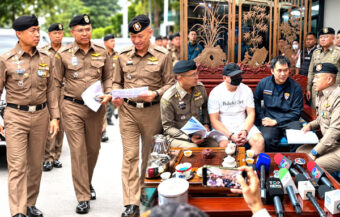
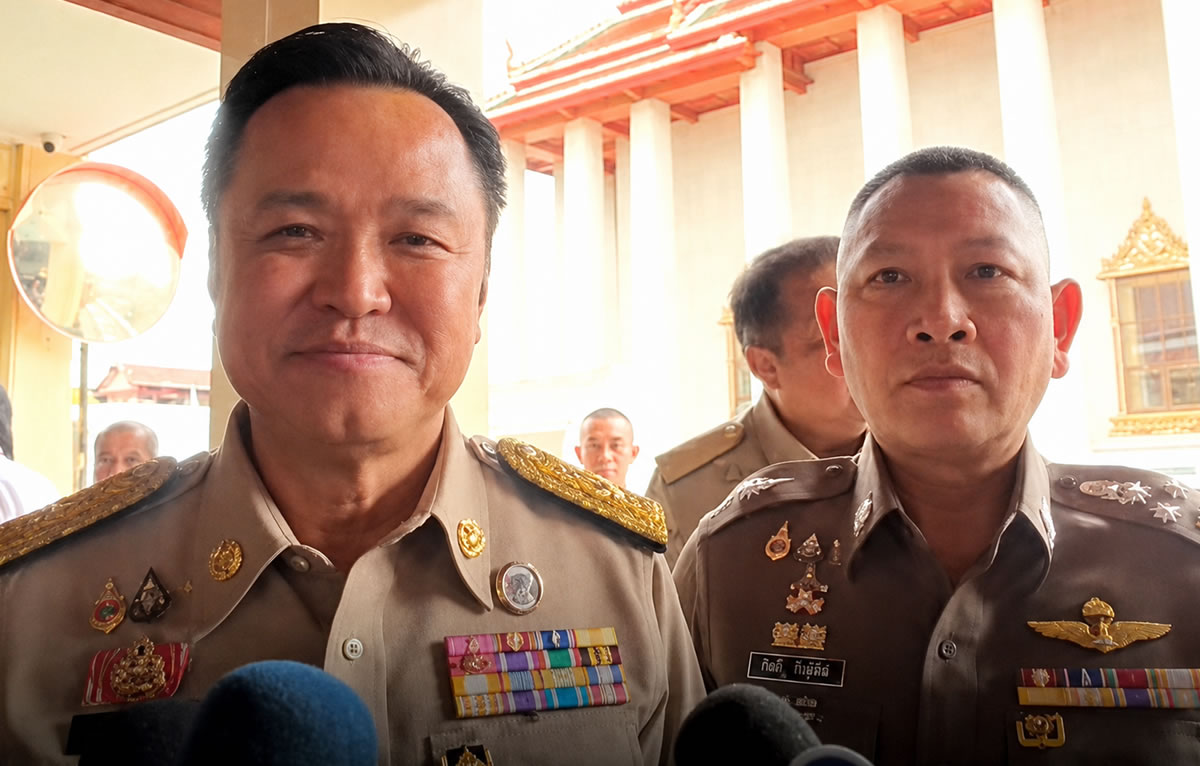
The Prime Minister addressed the crisis at 11.25 am on Sunday. He spoke during an interview at Wat Saket Ratcha Woramahawihan in Bangkok. Mr Anutin also serves as Interior Minister. In response, he ordered police and military units to combine their operations.
The National Security Council had already approved the joint security plan. Furthermore, Mr Anutin instructed every participating agency to work with maximum intensity. He described the present situation as a transitional period. Police General Kittirat Phanphet, Commissioner-General of the Royal Thai Police, had acknowledged those instructions.
Earlier, Mr Anutin raised the deepening unrest during a National Security Council meeting. He said security forces could not remain confined to responding after attacks. “We cannot simply react to the situation,” Mr Anutin said. Instead, the government wanted stronger action across the affected districts.
At the same time, martial law remains in force throughout the conflict zone. Emergency powers also operate across affected areas. Both measures give security commanders extensive legal powers. Nevertheless, insurgent cells have expanded their operations during recent weeks.
Reporters asked whether government forces were falling behind the gunmen. In reply, Mr Anutin defended the response and cited legal limits controlling state force. “We have laws to follow,” he said. “When we use excessive force, people say we don’t respect the law.”
Anutin puts September 1 Cabinet programme in doubt as security forces pursue armed Pattani gunmen
“Therefore, we must enforce the law as strictly as possible,” the Prime Minister continued. “And this is happening because we are using the law to its fullest extent.” His explanation linked recent unrest with stricter government enforcement. Yet the Pattani raid displayed the gunmen’s growing confidence and operational reach.
On another front, reporters questioned Mr Anutin about Tuesday’s mobile Cabinet meeting. The meeting had been planned for Songkhla province on September 1. Reporters also asked whether ministers would visit Pattani, Yala and Narathiwat. Initially, Mr Anutin said the formal Cabinet meeting would focus on Songkhla.
Even so, he made the wider programme dependent upon security conditions. Relevant officials might travel into the three southern border provinces. Such journeys would proceed only when operational demands allowed them. Otherwise, the government would postpone the visits.
More significantly, his answer created uncertainty surrounding the southern Cabinet programme itself. It came after gunmen mounted a complex operation in neighbouring Pattani. The attack required additional checkpoints, forensic teams and pursuit operations. In turn, those measures placed greater demands upon police and military resources.
“If a visit means security personnel must prioritise protecting senior officials instead of the people, then the trip will be postponed,” he said. “The priority will be to focus on the people first.” The remarks stopped short of formally cancelling Tuesday’s meeting. Nonetheless, they left the programme subject to an immediate security review.
Five masked gunmen swiftly seize Pattani store, clear civilians and plant three bombs before escaping
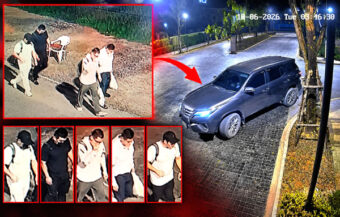
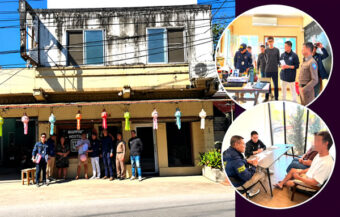
The uncertainty followed Saturday evening’s assault on the Global House store. The premises stand in Bana subdistrict of Pattani’s Muang district. Shortly before 7 pm, five masked attackers arrived with assault rifles and handguns. They travelled on two motorcycles and one motorcycle fitted with a sidecar.
According to police, the attackers divided their duties before entering. Two gunmen subdued security guards stationed at the entrance. In parallel, two others moved inside and ordered customers and employees outside. The fifth attacker drove the motorcycle-sidecar into the loading area.
Police Colonel Jeffrey Salaimankul later detailed the operation. He serves as chief of Muang Pattani Police Station. By his account, the attackers carried military-style weapons and moved quickly through the premises. They then planted three bombs at separate locations.
Before fleeing, one attacker issued a warning to a security guard. “If you do not want anyone to be killed, hurry and get everyone out of the store,” he said. The gunmen subsequently escaped on motorcycles. About five minutes later, three bombs detonated inside the building.
No deaths or injuries were reported. Despite that, the raid remained a major armed attack against a civilian commercial target. The gunmen controlled the building long enough to position several devices. They also left another bomb for police and bomb-disposal personnel.
Bomb squad finds 50-kilogramme gas-cylinder device and petrol inside abandoned motorcycle-sidecar
Inside the loading area, the abandoned motorcycle-sidecar carried the largest device. It contained an improvised bomb packed into a gas cylinder. The bomb weighed nearly 50 kilogrammes. In addition, seven gallons of petrol had been placed inside the vehicle.
As a precaution, security forces sealed the premises after the first three detonations. Officers feared further bombs remained inside or near the building. They also suspected the abandoned vehicle contained another device. Accordingly, bomb-disposal specialists began a remote inspection.
Police Lieutenant General Piyawat Chalermsri led the operation. He is Commissioner of Provincial Police Region 9. First, his team deployed a drone above the motorcycle-sidecar. The drone identified suspicious objects inside the vehicle.
Given that threat, specialists sent a bomb-disposal robot towards the sidecar. The robot disabled part of the triggering system. Afterwards, officers moved the vehicle to a secure location. Specialists then spent two hours dismantling the bomb.
Police said the triggering mechanism might have been disturbed during transportation. As a result, the device may have malfunctioned before remote activation. It was nevertheless capable of causing extensive damage. The petrol would also have intensified the impact.
Police say sidecar bomb was a booby trap intended to kill officers responding to the Pattani attack
Crucially, Police Lieutenant General Piyawat described the sidecar as a possible booby trap. Investigators believe the gunmen intended to lure security personnel towards it. They could then have triggered the bomb remotely. The three internal devices may therefore have served as an initial lure.
“EOD personnel have disabled part of the triggering system,” Police Lieutenant General Piyawat said. He said inspections would continue until the entire area was safe. During this work, forensic teams gathered fragments from each bomb site. They also examined the sidecar, petrol containers and remaining components.
Throughout Sunday morning, security personnel remained inside and around the store. They assessed structural damage and searched for additional devices. Meanwhile, investigators reviewed evidence concerning the attackers’ arrival and escape. Police have not publicly identified any of the five men.
So far, no arrests have been announced. Police have established checkpoints across the surrounding area. Officers are searching for motorcycles, weapons and supporting vehicles. They are also tracing anyone who helped prepare or transport the bombs.
As part of this response, Police General Kittirat confirmed that a full investigation was underway. Police General Samran Nualma also travelled to the region. He is Deputy Commissioner-General of the Royal Thai Police. His role includes coordinating with other security agencies operating locally.
Coordinated southern campaign brings 51 incidents across 21 districts as armed groups disperse afterwards
Beyond the store attack, the wider security picture has deteriorated sharply. Coordinated violence has spread across Pattani, Yala and Narathiwat during recent weeks. Large groups of gunmen have attacked government property and communications infrastructure. Commercial premises and security equipment have also become targets.
On August 22 and 23, a coordinated wave produced 51 reported incidents across 21 districts. The attacks struck all three border provinces during a concentrated period. Targets included government offices, telecommunications systems and closed-circuit television cameras. Vehicles and other property also suffered damage.
Operationally, the campaign required manpower, transport and communication across several districts. It also required bomb-making materials and advance knowledge of selected targets. Security sources say insurgent commanders can still assemble sizeable armed groups. Those groups then split apart after completing their operations.
In some cases, armed men have appeared dressed in black. They have carried out arson attacks, bombings, ambushes and targeted killings. Subsequently, they dispersed through villages, plantations and difficult rural terrain. Familiar local routes make immediate pursuit harder.
Bangkok strengthens deployments as organised gunmen attack despite martial law and emergency powers
Against this background, Bangkok has strengthened deployments and ordered closer police-military coordination. Martial law and emergency powers remain available to commanders. Additional checkpoints and mobile units have also been deployed. Still, the violence has continued across a broad area.
The Global House raid displayed several layers of preparation. Five gunmen reached a major store with weapons, vehicles and prepared bombs. Two controlled the entrance while two others cleared the building. Simultaneously, the fifth placed the largest device in the loading bay.
The attackers also maintained enough control to issue evacuation orders. They positioned three devices inside before beginning their withdrawal. Within minutes, they had left the area. The three bombs then detonated without trapping the gunmen inside.
The warning prevented deaths among customers and employees. Conversely, the sidecar bomb created a direct threat for emergency responders. Its position would have drawn police and bomb specialists into the loading area. The suspected triggering failure prevented that part of the plan from succeeding.
Peace negotiations facilitated by Malaysia have also stalled. Talks were suspended following a series of killings linked to insurgent groups. The Barisan Revolusi Nasional remains the strongest movement fighting the Thai state. It is widely known as the BRN.
BRN leaders operate partly from Malaysia as stalled peace talks collide with renewed southern violence
Senior BRN figures have long operated partly from Malaysia. Malaysian officials dispute claims that the organisation is headquartered there. They have also demanded evidence supporting those assertions. At the same time, Malaysia has facilitated negotiations between Thailand and insurgent representatives.
Before Saturday’s attack, some reports referred to possible renewed talks in Malaysia. The formal process nevertheless remained suspended. Continuing killings and bomb attacks have blocked progress. Security officials believe the latest raid may have sought leverage before further discussions.
Politically, the BRN has called for self-government within Thailand. Its demands include stronger protection for Malay-Muslim identity. The movement also seeks greater local control. Those aims distinguish its campaign from ordinary criminal activity.
Bangkok has repeatedly stressed connections between southern violence and illicit business networks. Smuggling, contraband routes and local criminal disputes remain entrenched across the border region. Indeed, such interests can overlap with insurgent operations. Criminal groups can supply vehicles, money or logistical support.
By contrast, Deep South security sources reject criminality as a complete explanation. They identify separatist politics, Malay nationalism and Islamic belief as central influences. Coordinated bombings and attacks against government targets support that assessment. Assassinations and organised arson campaigns show similar planning.
Insurgent fighters refuse surrender as fragmented BRN networks attract younger southern recruits
Another factor concerns the conduct of insurgents during armed encounters. Some fighters have refused to surrender after security forces surrounded them. They continued firing despite having little realistic chance of escape. Several were killed during those clashes.
For that reason, regional sources view their conduct as evidence of intense ideological commitment. The response goes beyond the calculations normally associated with criminal enterprises. However, not every fighter necessarily holds identical beliefs. Nor does every cell answer to one commander.
Structurally, the insurgency remains a patchwork rather than one centrally managed organisation. It includes armed cells, political factions and local sympathisers. Family networks and competing interests also shape operations. Even within that structure, the BRN retains the principal military capability.
Through those networks, armed units can recruit fighters and move weapons. They can prepare bombs and select targets. Likewise, they can coordinate attacks across distant districts. The latest violence shows that these systems remain active despite strengthened security measures.
Of particular concern, security sources report growing insurgent appeal among younger people. They cite deprivation, limited opportunities and distrust of state officials. Cultural identity also features in recruitment. Increasingly, commanders are placing greater emphasis upon ideology and Islamic belief.
Pattani raid exposes two-stage attack as Anutin rejects poll questions and gunmen remain unidentified
This trend differs from Bangkok’s focus on criminal networks. Both elements can nevertheless operate inside the same conflict. Illicit businesses may support transport, financing or supply routes. Armed cells can then pursue separate political and religious objectives.
In practical terms, the insurgency’s fragmented structure complicates immediate attribution. Local cells can attack without issuing public claims. They can also use community contacts and family links. Detailed knowledge of roads and rural terrain supports their escape.
Saturday’s attack showed that capability in concentrated form. The gunmen selected a large store during trading hours. They subdued guards and cleared the premises. Next, they planted three bombs and positioned a potentially lethal secondary device.
From a security standpoint, the operation presented two separate threats. The first targeted the store and its commercial operations. The second targeted officers responding after the initial detonations. That structure required timing, communications and knowledge of standard emergency procedures.
In the political sphere, Mr Anutin also rejected questions concerning a new opinion poll. The National Institute of Development Administration poll linked southern conditions with budgetary issues. “Let’s stick to the facts, don’t ask about polls,” the Prime Minister said. He offered no further response to the survey.
Five Pattani gunmen remain at large as doubts deepen over September 1 Cabinet meeting in Songkhla
For now, the government’s operation centres on checkpoints, forensic work and integrated deployments. Investigators are examining evidence recovered from all four devices. They are also tracing the attackers’ motorcycles and support network. Yet the five gunmen remain at large.
The immediate political question concerns Tuesday’s planned Cabinet meeting in Songkhla. Mr Anutin has not formally cancelled it. Even so, he made its associated southern programme dependent upon security conditions. He also rejected diverting officers from communities to protect senior officials.
Another southern insurgency attack saw a 7-Eleven store burnt out in Pattani on Monday as PM responds
Major onslaught across southern provinces as region is rocked by bombs, arson and attacks by gunmen
The timing makes that warning significant. It came only two days before the September 1 meeting. Additionally, police and military resources are already committed to the Pattani investigation. Further forces are responding to 51 recent incidents across 21 districts.
Ultimately, the Pattani gunmen completed most of their operation as planned. They controlled a major store, planted three bombs and escaped. They also positioned a 50-kilogramme booby trap for responding officers. Only that final device failed, while the five attackers disappeared.
Join the Thai News forum, follow Thai Examiner on Facebook here
Receive all our stories as they come out on Telegram here
Follow Thai Examiner here
Further reading:
Major onslaught across southern provinces as region is rocked by bombs, arson and attacks by gunmen
Ranger killed in heavy Narathiwat security operation. Extended battle between army and insurgents
Police officer’s wife killed in troubled Pattani province on Monday holding her baby by hajib gunmen
Southern army units robustly deny any involvement in attempted assassination of Prachachart Party MP
Prime Minister Anutin condemns cowardly attack on Southern Muslim MP who voted for him on Thursday