Thailand and the EU have completed a key free trade agreement chapter on state enterprises, taking negotiations to 11 of 24 chapters. Both sides aim to seal the landmark pact by the end of 2026, promising lower tariffs, stronger investment and wider market access.
Thailand has moved closer to securing one of its most important trade agreements in decades after negotiators completed another key chapter in free trade talks with the European Union. The Brussels breakthrough means 11 of the proposed agreement’s 24 chapters have now been completed as both sides target concluding the landmark deal by the end of 2026, paving the way for lower tariffs, stronger investment and wider market access while helping Thailand narrow the trade advantage enjoyed by Vietnam and Singapore.
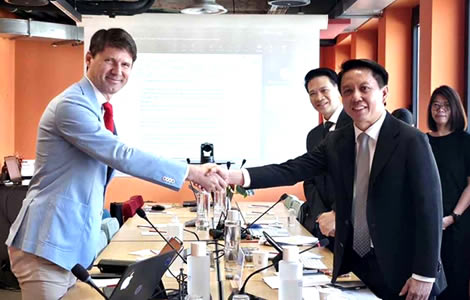
Thailand and the European Union have completed negotiations on the chapter governing the trade and services activities of state-owned enterprises under their proposed free trade agreement.
The breakthrough came during the ninth round of FTA negotiations in Brussels on Thursday, June 25. It removes another major obstacle as both sides pursue their goal of concluding the agreement this year.
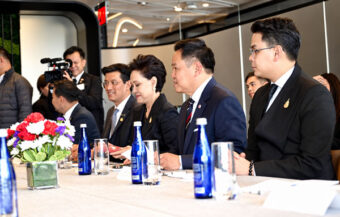
State Enterprise Policy Office director-general Tibordee Wattanakul announced the outcome following the latest negotiating round. The talks were co-chaired by Francisco Peiro of the European Commission’s Directorate-General for Trade. He headed the European Union delegation responsible for the state-owned enterprise chapter. Notably, negotiators settled every outstanding issue, including all reservations and negotiated exceptions.
State enterprise rules agreed as Thailand and EU complete another key chapter in free trade negotiations
The completed chapter establishes new rules for state-owned enterprises engaged in commercial activities. Those enterprises must operate on a non-discriminatory basis. They must also make decisions according to commercial considerations.
In effect, state-owned enterprises buying goods, selling products or providing services will compete under rules similar to private-sector companies.
At the same time, the agreement preserves government flexibility during periods of economic crisis. Governments may continue supporting state-owned enterprises when economic conditions require intervention.
Separately, smaller enterprises remain outside the scope of the new obligations. The exemption applies to enterprises generating annual commercial revenue below US$200 million, or about 6.5 billion baht.
The agreement builds on momentum established earlier this year. During the eighth negotiating round in Chiang Mai in February 2026, both sides completed three further chapters.
Consequently, 11 of the proposed agreement’s 24 chapters have now been finalised. Negotiators are continuing work on the remaining chapters. Both parties have maintained their target of concluding the entire agreement before the end of 2026.
Lower tariffs and stronger investment prospects remain central aims of the proposed Thailand-EU trade pact
The proposed FTA is expected to improve Thailand’s access to the European market through lower or zero import tariffs. Those reductions would apply across a broad range of products. Agricultural exports stand to benefit.
Food shipments are also expected to gain improved access. In addition, automobiles and automotive parts are among the sectors expected to secure lower trade barriers.
The agreement is also expected to strengthen Thailand’s appeal as a destination for European investment. In turn, officials believe it will help preserve the country’s regional competitiveness.
That objective has become increasingly important because Vietnam and Singapore already enjoy more advanced trade arrangements with the European Union. As a result, Thailand is seeking to narrow that competitive gap through its own comprehensive agreement.
Trade grows strongly as negotiators push to complete remaining chapters before the end of this year
According to the Trade Policy and Strategy Office, the European Union is Thailand’s fourth-largest trading partner.
Bilateral trade continued to expand during the opening months of 2026. In the first quarter alone, total trade reached US$22 billion. That represented year-on-year growth of 13.6%, reflecting continued expansion in commercial ties between both economies.
Commerce Minister Suphajee visits Brussels to push a badly needed Thai European Union trade pact
British Chamber of Commerce calls for more urgency on free trade talks to boost trade and investment
Looking ahead, completion of the state-owned enterprise chapter further reduces the number of unresolved issues in the negotiations. Attention will now shift to the remaining chapters. If both sides meet their year-end target, the agreement would deliver lower tariffs, broader market access, stronger investment opportunities and a more competitive position for Thailand in one of the world’s largest trading markets.
Join the Thai News forum, follow Thai Examiner on Facebook here
Receive all our stories as they come out on Telegram here
Follow Thai Examiner here
Further reading:
US Ambassador Seán O’ Neill briefed Prime Minister Anutin Charnvirakul at Government House on War
Visa waivers, discounted hotel stays and 2,000 baht a person per day for stranded tourists announced
Liquidity crisis or shortage of cash on the ground is shrinking Thailand’s economic growth prospects
Thai Minsters engage with US trade chief Jamieson Greer in Paris at global OECD ministerial meeting