Thailand’s NSC approves a powerful new national drone control centre led by the Royal Thai Air Force as agencies unite to protect critical infrastructure, while Cabinet prepares to consider Thailand’s UNCLOS representative and legal strategy.
Thailand’s National Security Council has approved a new Royal Thai Air Force-led counter-drone management centre and cleared the way for Cabinet consideration of Thailand’s next legal steps under the United Nations Convention on the Law of the Sea (UNCLOS). The decisions, taken at a high-level meeting chaired by Prime Minister Anutin Charnvirakul, mark a new phase in coordinating drone security, critical infrastructure protection and Thailand’s international maritime legal preparations.
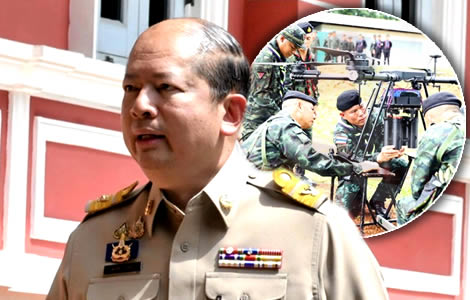
Thailand’s National Security Council (NSC) has approved a national drone management and counter-drone control centre, placing the Royal Thai Air Force (RTAF) in the leading role. The decision came during an NSC meeting at Government House on Monday, June 15, chaired by the Prime Minister and Interior Minister Anutin Charnvirakul.
Afterwards, at 4:05pm, NSC Secretary-General Mr Chatchai Bangchawad revealed that the meeting considered two major security issues. Firstly, officials examined measures to prevent and respond to threats involving unmanned aerial vehicles.
The issue follows an earlier NSC resolution in 2025 assigning the RTAF responsibility for establishing a counter-drone management centre during combat situations.
RTAF takes command as Thailand builds integrated drone defence and security system
However, Mr Chatchai said changing security conditions required adjustments to existing approaches and related operational procedures.
Therefore, the NSC formally approved the centre’s establishment and confirmed the RTAF as the primary agency. In turn, the government will urgently draft a Prime Minister’s Office regulation to provide legal support and strengthen cooperation.
Under the new framework, multiple agencies will work through an integrated management system. These include the National Broadcasting and Telecommunications Commission (NBTC), the Civil Aviation Authority of Thailand (CAAT), Aeronautical Radio of Thailand (ARIT) and other security organisations. Together, they will manage drone operations, coordinate responses and develop plans to protect energy infrastructure affected by drone activity.
Meanwhile, the NSC also considered Thailand’s position under the 1982 United Nations Convention on the Law of the Sea (UNCLOS). The meeting approved the principles and procedures needed for the next stage of the process.
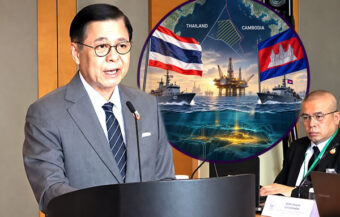
Thailand prepares a UNCLOS compromise case as Cabinet approval awaits representatives and procedures
Subsequently, the Ministry of Foreign Affairs will submit the matter to the Cabinet for approval. Further details and official principles will be announced later. When reporters asked about Thai representatives in mandatory compromise proceedings, Mr Chatchai said Cabinet approval must come first.
Notably, he confirmed that possible names were already known but remained confidential until Cabinet approval. The NSC also reviewed all procedures and preparations connected with Thailand’s participation.
When asked whether the proposal would reach the Cabinet on June 16, Mr Chatchai replied: “Yes, I understand they are trying to propose it to the Cabinet meeting on June 16th.”
Separately, reporters questioned whether the NSC had examined the Thai-Cambodian border situation, including China’s delivery of tanks to Cambodia. In response, Mr Chatchai said the meeting did not discuss the matter in detail.
NSC focuses on drones and UNCLOS while Thailand maintains heightened border security measures now
Instead, he said the session concentrated on drone security measures and UNCLOS matters. As a result, no detailed assessment of the border situation formed part of the agenda.
On another front, the new drone centre is expected to bring military, aviation, telecommunications and security agencies under one coordinated structure. Consequently, Thailand will have a clearer mechanism to manage drone operations, counter aerial threats and protect critical infrastructure.
Advanced anti tank rockets being used against Thai military forces in the raging border with Cambodia
Nightly patrols, a ban on drones and the arrest of spies. Thai border provinces are still very much in war mode
As part of this effort, the RTAF will carry the central responsibility for coordinating the system. The decision also advances the NSC policy first established in 2025 and moves the government towards implementing a nationwide counter-drone framework.
Join the Thai News forum, follow Thai Examiner on Facebook here
Follow Thai Examiner on Google here
Receive all our stories as they come out on Telegram here
Follow Thai Examiner here
Further reading:
Ex Energy Minister supports oil and arms supplies blockade against Cambodia in the Gulf of Thailand
War to continue says PM Anutin. Dismisses President Trump’s ceasefire talk as a ‘misunderstanding’
Confusion after Trump’s 20 minute phone call with PM Anutin. US side claimed a ceasefire was agreed