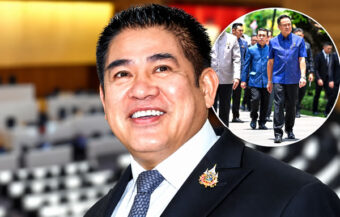
Thailand moves to election mode after the King approves parliament’s dissolution, requested by PM Anutin. The Bhumjaithai Party broke ranks over Senate powers, and a general election is now expected before February 10 amid economic woes, political instability and a border war with Cambodia.
The Thai King has signed an order dissolving parliament after Prime Minister Anutin Charnvirakul requested it on Thursday evening. The move follows the Bhumjaithai Party breaking ranks with the People’s Party over the Senate’s power to approve any new constitution during a heated joint parliamentary session. Thailand now faces a general election before February 10, amid a faltering economy, political instability and an all-out war with Cambodia that erupted Monday morning.
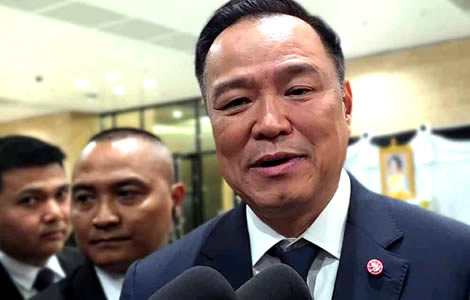
Thailand’s House of Representatives was dissolved after Prime Minister Anutin Charnvirakul received a royal decree from His Majesty King Maha Vajiralongkorn on Thursday. Consequently, the decree was published in the Royal Gazette early Friday morning. Prime Minister Anutin announced on Facebook shortly after 10 pm Thursday that he was “returning power to the people,” signalling a general election next year.
The dissolution followed growing tensions in parliament. In particular, the People’s Party had threatened a Section 151 no-confidence motion against Anutin’s minority government. Moreover, on Thursday, the party formally asked the PM to return power to the people. The request came after a dramatic, extraordinary parliamentary session earlier in the day.
During that session, the Bhumjaithai Party broke from the People’s Party. In particular, they supported a vote that allowed the Senate to retain its one-third requirement to approve any new constitution.
Bhumjaithai Party breaks ranks with People’s Party over Senate approval powers for constitutional change
Previously, the constitutional drafting committee had proposed a simple majority of the parliamentary joint sitting of MPs and senators. Consequently, the Thursday vote defeated the simple majority proposal. Bhumjaithai MPs voted against the People’s Party and other pro-democracy groups, maintaining the one-third requirement.
Following the vote, political commentator and activist Chuwit Kamolvisit criticised the People’s Party for electing Anutin over the Pheu Thai Party candidate in early September. Specifically, the People’s Party rejected former Attorney General and Minister of Justice Chaikasem Nitisiri, the last Pheu Thai Prime Ministerial nominee.
During Thursday’s joint sitting, Anutin, who also serves as interior minister and Bhumjaithai Party leader, had an MP propose a question for a potential referendum. The proposal asked whether the public wanted a new charter. Accordingly, the move highlighted parliamentary and constitutional disputes that contributed to instability.
Anutin proposes a referendum amid constitutional disputes, despite failure in parliament and governance
Government sources confirmed that Anutin submitted a formal request for House dissolution to the King. Under the 2017 constitution, elections must occur within 45 to 60 days of royal approval. Early Friday, the Royal Gazette formalised the dissolution, clearing the way for nationwide elections.
The decree cited the minority status of Anutin’s government and pressing stability concerns. Moreover, the prime minister noted that a dissolution would allow for a general election, the formation of a majority government, and smoother national administration.
This announcement came amid escalating hostilities along the Thai-Cambodian border. Since December 7, both nations have exchanged fire, with each accusing the other of provoking what is now a full-blown war.
Anutin, 58, became prime minister on September 5, receiving 311 votes in parliament, surpassing the 247 votes required from the House’s 492 MPs. He succeeded Paetongtarn Shinawatra, 39, who was dismissed by a Constitutional Court order for ethics violations. Specifically, a leaked June phone call showed her appearing to bow to Cambodian Senate President Hun Sen during rising border tensions.
Royal decree highlights minority government’s mounting challenges from border war to political instability
The constitutional amendment at the centre of the dispute was being pushed by the People’s Party, formerly the largest party in the House of Representatives. The amendment allowed charter changes to pass with a majority vote of the parliamentary joint sitting.
The People’s Party had set this condition in exchange for supporting Anutin’s minority government, which succeeded the Paetongtarn administration. Opposition sources indicated that the People’s Party had prepared a censure motion against Anutin’s administration. However, following the prime minister’s Facebook announcement, Pheu Thai Party officials informed parliament that the House would be dissolved.
Anutin’s government faced multiple challenges. It managed economic uncertainty, domestic political conflict and social tensions. Furthermore, the administration addressed fallout from US trade tariffs, attempted to boost incomes and oversaw a controversial disaster response to southern floods.
In addition, it combated online crime, gambling, and scams, and sought diplomatic solutions to border tensions with Cambodia while maintaining a strong national defence posture.
Minority coalition struggles with economic, political and security challenges amid all-out border war
The Royal Gazette’s decree noted that the minority coalition could not govern effectively amid ongoing crises. Moreover, it stressed that minority governments under intense pressure risk political instability, economic damage and loss of public confidence. Consequently, the decree identified House dissolution and a fresh general election as the most appropriate path forward.
The decree emphasised returning decision-making power to the people and enabling the formation of a stable majority government. According to the announcement, elections are expected before February 10, 2026. Meanwhile, the Pheu Thai Party will unveil its prime ministerial nominee on Tuesday, December 16, in preparation for the polls.
Observers noted that the joint sitting’s approval of senatorial involvement in constitutional amendments played a decisive role in parliamentary tensions. Moreover, the vote reinforced the one-third of the upper house requirement, overruling the simple majority favoured by the drafting committee. As a result, divisions within Thailand’s political landscape deepened.
House dissolution and upcoming elections highlight deepening political divisions over constitutional change
Thailand now faces a nationwide election within two months. The People’s Party’s influence, Bhumjaithai Party dissent, and rising border tensions frame the current political environment.
Election authorities are preparing to conduct the vote, while Anutin’s government will remain in office until a new administration is formed.
Constitutional crisis again as Bhumjaithai MPs vote to uphold the veto power of the Senate over reform
This dissolution marks a significant political shift less than three years after the last general election. Furthermore, it highlights ongoing instability in Thailand’s governance, parliament and constitutional process. Meanwhile, preparations continue for a contested election amid rising economic uncertainty, political volatility and a very dangerous border war with Cambodia.
Join the Thai News forum, follow Thai Examiner on Facebook here
Receive all our stories as they come out on Telegram here
Follow Thai Examiner here
Further reading:
People’s Party on campaign but on guard against potential legal complaints to oversight agencies
Wealthy young People’s Party leader aims to create a technology-driven and efficient welfare state