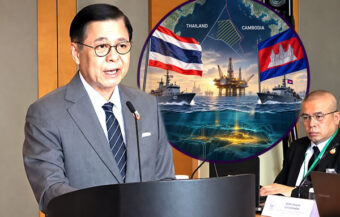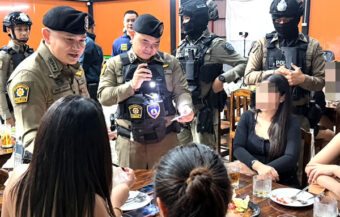
Koh Samui faces a tourism shake-up as Minister Surasak Phancharoenworakul backs a visitor levy to fund roads and safety, while PM Anutin Charnvirakul orders a crackdown on mafia-style groups after a taxi murder and growing concerns over road deaths.
A taxi murder linked to an influential transport group and the death of Australian sprint star Jemma Stapleton have placed Koh Samui under an uncomfortable spotlight, drawing attention to concerns over criminal influence, road safety and ageing infrastructure on one of Thailand’s most valuable tourism destinations. Following a high-level visit this week, Tourism and Sports Minister Surasak Phancharoenworakul unveiled a proposed tourist levy, a crackdown on mafia-style activity, stricter enforcement measures and a new “Koh Samui model” designed to improve safety, lift standards and fund long-delayed infrastructure upgrades across the island that are overdue.
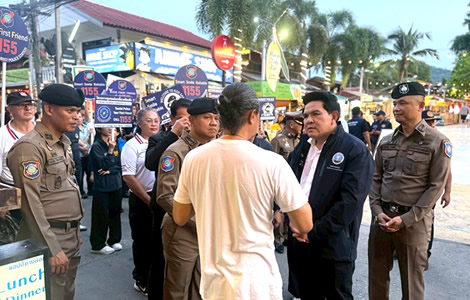
A proposed entry charge for visitors arriving on Koh Samui has become a key part of government plans to upgrade infrastructure, strengthen safety and support the island’s tourism industry.
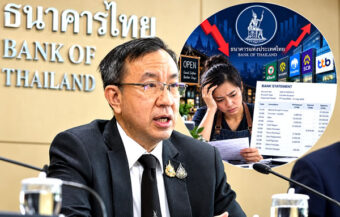
Minister of Tourism and Sports Surasak Phancharoenworakul highlighted the proposal on Thursday following a two-day inspection visit earlier this week. He said revenue raised through entry fees or land-use charges paid by foreign tourists could be directed towards road upgrades, safety improvements and enhanced security measures across the island.
The proposal emerged after local tourism operators voiced growing concerns about infrastructure shortcomings. During meetings with officials, business leaders pointed to deteriorating roads and abandoned construction projects.
Visitor levy plan gains momentum as tourism operators demand action on roads and unfinished projects
They warned that unfinished public works were damaging Koh Samui’s image as a world-class destination. In response, Mr Surasak pledged to identify the agencies responsible for delayed projects.
He also insisted that departments overseeing contracts must resolve the problems directly. Local businesses, he said, should not be left dealing with the consequences of unfinished government projects.
The minister travelled to Koh Samui on Tuesday and Wednesday to review tourist safety and assess issues affecting one of Thailand’s most important tourism destinations. During the visit, he chaired meetings attended by Tourist Police commanders, government agencies and private-sector representatives.
The Koh Samui Tourism Promotion Association played a leading role in discussions. Notably, infrastructure concerns dominated much of the agenda. Road conditions featured prominently, while abandoned projects were repeatedly raised by tourism operators.
Safety concerns dominate talks as officials confront road risks and tourism confidence challenges
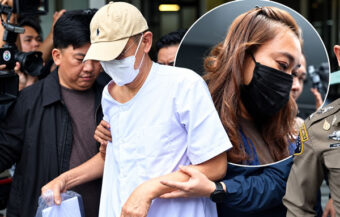
Alongside infrastructure issues, officials examined two recent incidents that have attracted national attention. The first involved the fatal shooting of a legally operating taxi driver. The case centred on a group described as operating in a mafia-like manner within the island’s transport sector.
The killing intensified scrutiny of local transport operations and raised fresh concerns about influential groups. Separately, discussions turned to the death of Australian sprint star Jemma Stapleton, 25. Ms Stapleton died after falling from a motorcycle while travelling on a winding road during wet weather.
The tragedy attracted attention in both Thailand and Australia. As a result, concerns over road safety standards have intensified.
Mr Surasak said both incidents had affected confidence in the island. Consequently, he stressed the need for decisive enforcement.
Significantly, the minister said Prime Minister Anutin Charnvirakul had already ordered authorities to eradicate influential groups operating on Koh Samui. He made clear that mafia-style influence and clandestine activity would not be tolerated. According to the minister, authorities are now intensifying enforcement efforts across the island.
Anutin orders a crackdown on criminal influence as officials step up enforcement across the island
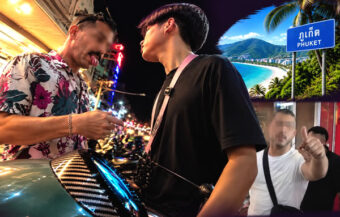
Particular attention is being directed towards vehicle rental businesses. Officials have been instructed to monitor companies that allow unlicensed tourists to rent motorcycles or other vehicles.
Going forward, violations will face prosecution. Meanwhile, traffic enforcement is expected to become more rigorous. Helmet regulations will receive special attention. Road safety measures are also being strengthened as authorities seek to reduce risks to both residents and visitors.
As part of this wider strategy, Mr Surasak highlighted what he described as the “Koh Samui model”. The proposal originated with the Koh Samui Tourism Promotion Association and received support during the minister’s visit.
He suggested that the approach could eventually be replicated elsewhere in Thailand. The model contains two principal elements designed to improve standards and strengthen visitor protection.
The first centres on a quality certification programme for tourism operators. Under the proposal, businesses meeting service, safety and environmental standards would receive official recognition.
Koh Samui model seeks higher tourism standards through certification and visitor protection measures
The certification would identify operators maintaining consistently high standards. At the same time, it would provide tourists with a clear benchmark when selecting services. The objective is to encourage higher standards throughout the tourism sector while recognising businesses that perform well.
The second element involves the creation of a comprehensive one-stop tourism service centre. Officials envisage a single facility capable of handling a broad range of visitor issues. For example, the centre would receive incident reports and coordinate directly with police, hospitals and rescue services.
It would also work with municipal authorities and provide legal guidance when required. In addition, officials would follow cases until they are resolved. The proposed centre would deal with accommodation disputes, crime reporting, visa-related matters and other concerns affecting visitors during their stay.
Importantly, Mr Surasak said relevant agencies had already been instructed to accelerate the establishment of the centre. The proposal was accepted following discussions with private-sector representatives. Officials believe the facility would provide a single point of contact for tourists seeking assistance. In turn, responses to incidents could become faster and more coordinated.
Entry fee proposal would fund road security upgrades and tourism support services on the island
On another front, the minister renewed support for a dedicated tourism fund financed through visitor charges. He linked the proposal directly to concerns raised by tourism operators regarding roads and infrastructure.
According to Mr Surasak, destinations attracting large numbers of visitors require dedicated funding sources. Revenue generated through entry fees could therefore be directed towards infrastructure projects and safety initiatives. Some of the funds could also support volunteers assisting in tourist areas.
“I emphasise the need to promote the tourism fund to collect revenue from foreign tourists through entry fees or land-use charges,” Mr Surasak said.
He added that the funds could then be used to develop infrastructure and strengthen security arrangements across the island. The proposal represents one of the most significant measures discussed during the visit. Moreover, it addresses concerns repeatedly raised by local tourism operators.
The minister also praised advances made by Tourist Police through the use of technology. In particular, he highlighted CCTV systems and drone operations integrated with AI facial recognition technology. According to Mr Surasak, the systems help identify individuals with criminal records and monitor high-risk groups.
AI surveillance and drone technology expand the Tourist Police’s reach across Koh Samui tourism zones
Previously, a relatively small number of officers faced difficulties overseeing the entire island. Now, however, technology has significantly expanded operational capabilities.
Mr Surasak said the systems improve efficiency while reducing resource demands. Equally important, they strengthen crime prevention efforts and improve situational awareness. Enhanced surveillance also acts as a deterrent to criminal activity. The minister argued that technology now allows authorities to monitor tourist areas more effectively than before.
Minister visits Koh Samui to talk safety as concerns about the island’s roads grow over motorbike deaths
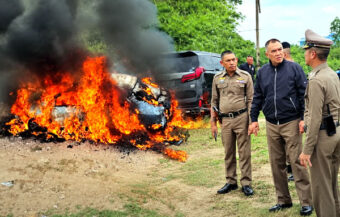
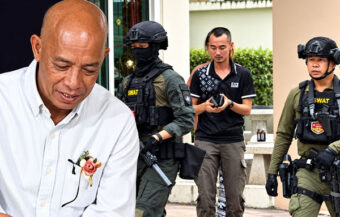
Taxi business crackdown on Koh Samui after murder of taxi driver last Sunday linked to local mafia gang
The visit comes as officials intensify efforts to strengthen safety, improve infrastructure and reinforce confidence in Koh Samui’s tourism sector. The island remains one of Thailand’s leading tourism destinations and a major contributor to tourism revenue.
Yet recent incidents have increased pressure for action. For Mr Surasak, the message was direct. Criminal influence, poor infrastructure and unsafe practices will face closer scrutiny as authorities pursue a broader strategy centred on enforcement, technology, investment and the emerging Koh Samui model.
Join the Thai News forum, follow Thai Examiner on Facebook here
Receive all our stories as they come out on Telegram here
Follow Thai Examiner here
Further reading:
UK’s Tiger Duggan dies in Bangkok. Never regained consciousness after a motorbike crash on Koh Samui
Outpouring of love for UK man fighting for life after horrific Koh Samui motorbike smash last Sunday
Deadly danger of motorbikes in Thailand, 2 dead in 1 day while an Australian’s dreams are smashed
Canadian the latest foreigner killed in a motorbike accident in Thailand early on Friday in Pattaya
Harrowing scene as Canadian cries for his dead wife at early morning accident in Kanchanaburi