American DJ Rick Alberto was arrested during a midnight Chiang Mai raid after police found him allegedly working without a permit. The case comes as Thailand intensifies inspections, with illegal work risking arrest, detention, deportation and blacklisting.
An American DJ’s arrest in a midnight Chiang Mai police raid has thrust Thailand’s widening crackdown on illegal foreign workers into the spotlight, a campaign that can quickly turn a paid gig into criminal charges, immigration detention, deportation and years of blacklisting. The arrest of 30-year-old Rick Alberto while performing at a city entertainment venue comes amid intensified inspections nationwide and underlines how Thai authorities are increasingly targeting foreigners whose work falls outside permit and visa rules.

A late-night tourist police raid in Chiang Mai ended with an American DJ in handcuffs after officers found him allegedly working without a permit.
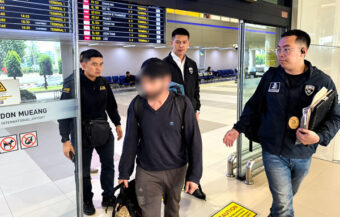
The arrest unfolded at about 12.20am on Saturday at an entertainment venue on Charoen Rat Road in Muang district. Officers entered the premises during an inspection targeting illegal foreign employment. Inside, they found 30-year-old American national Rick Alberto performing as a DJ for customers.
Police said he did not hold a work permit authorising the activity. Consequently, officers detained him at the venue and escorted him for questioning. He was later charged with working as a foreigner without a permit or beyond the scope of authorised employment.
Tourist police widen inspections as American DJ arrest highlights Thailand’s strict work permit laws
Afterwards, investigators took over the case as legal proceedings began. Tourist police confirmed the operation formed part of a wider enforcement campaign. Meanwhile, officers pledged continued inspections of venues, businesses and workplaces employing foreign nationals.
The arrest shines a spotlight on one of the most common mistakes made by foreigners in Thailand. Many assume occasional work falls outside labour regulations. However, Thai authorities often view the issue very differently.
Under Thai law, foreigners generally need both the correct visa and a valid work permit. Importantly, the legal definition of work can extend far beyond conventional employment. Activities generating income may qualify as work. Likewise, providing services can trigger permit requirements. Even assisting a business operation can attract scrutiny.
As a result, some foreigners find themselves facing criminal charges despite believing their activities were informal. DJ work falls squarely into an area authorities normally regard as employment. The activity involves providing a service to a commercial venue. Therefore, a work permit is generally required before stepping behind the decks.
Illegal employment can trigger arrest, criminal charges and deportation proceedings across Thailand
The immediate danger is arrest. Across Thailand, immigration officers, labour inspectors and police routinely carry out inspections. Their attention frequently falls on bars, restaurants, hotels and entertainment venues. In parallel, schools and construction sites remain regular targets.
Tourist destinations often receive particular focus. Chiang Mai, Phuket, Pattaya, Samui and Bangkok all attract large foreign populations. Consequently, enforcement teams regularly conduct spot checks in nightlife districts and commercial areas.
For those caught working illegally, the consequences can escalate quickly. A foreigner may be detained immediately. Criminal charges often follow. Depending on the case, fines may be imposed. In serious situations, deportation can also result.
Notably, deportation rarely marks the end of the problem. Instead, it often begins a separate immigration process. Foreign nationals facing removal are commonly transferred into immigration detention. There they remain while officials arrange travel documents and departure plans.
Immigration detention can last for months while officials arrange removal and travel documents
In some cases, embassies become involved. Even so, release is not automatic. Many detainees stay in custody until flights are secured and paperwork is completed. Accordingly, detention can continue far longer than expected.
The personal impact can be severe. Careers may be interrupted overnight. Businesses can lose key personnel. Family arrangements often face sudden strain. Moreover, legal expenses begin accumulating almost immediately.
On another front, deportation can trigger blacklisting measures. Once blacklisted, a foreign national may be barred from returning for years. That restriction can derail future employment plans. It may also affect business investments and property arrangements.
For long-term residents, the consequences can be especially damaging. Years of personal and financial planning may suddenly unravel. In addition, future immigration applications can become significantly more difficult.
Visa renewals and future residence applications can be damaged by previous immigration violations
Thailand maintains increasingly detailed immigration records. Therefore, previous violations rarely disappear. Future visa applications may be examined more closely. Extension requests can face added scrutiny. Permanent residence applications may also be affected.
Separately, employers face substantial exposure when illegal foreign employment is uncovered. Thai companies hiring foreigners without proper documentation can face heavy penalties. Regulators may also increase oversight of businesses linked to violations.
Depending on the circumstances, criminal proceedings can extend beyond the worker. Consequently, investigators often examine the actions of both employer and employee. Businesses found breaching labour regulations can face financial penalties and reputational damage.
Another risk receives less attention. Foreigners working illegally often hesitate to seek official help. If they are underpaid, exploited or injured, reporting the issue becomes difficult. The fear of exposing immigration violations frequently keeps complaints hidden.
Foreign workers without permits often avoid reporting abuse over fears of immigration action
In response, some workers simply endure poor conditions rather than approach authorities. That reluctance can leave them vulnerable. Without lawful employment status, legal protections become harder to access.
Financial pressure can also build rapidly. A worker discovered during an inspection may lose their income immediately. At the same time, legal costs begin mounting. Potential fines add further strain. Eventually, travel expenses linked to departure can create another burden.
For families dependent on that income, the effects can spread quickly. Household finances may come under pressure. Plans can be disrupted with little warning. Consequently, a single arrest can affect far more than the individual involved.
Recent cases show authorities stepping up action against foreigners working without permits nationwide
As part of this broader enforcement effort, tourist police said inspections would continue. Officers regularly monitor entertainment venues because of their reliance on service staff.
Authorities have repeatedly stressed that foreign professionals remain welcome in Thailand. Nevertheless, they expect strict compliance with labour and immigration regulations.
Crackdown on foreigners working ramped up as 89 foreign children found at illegal Koh Phangan school
Kiwi Olympic medalist arrested by immigration and deported for working without a work permit
Budding Thai tourism entrepreneur to be deported after being arrested for working without a permit
Before undertaking any work, foreigners are expected to ensure their visa status is appropriate. Equally important, they must hold a valid work permit covering the activity performed. Failing to do so can lead to arrest, prosecution and detention.
The Chiang Mai arrest is the latest example of that approach. While investigators now handle the criminal case, immigration authorities may later consider further action. For Rick Alberto, the legal process has only begun. For other foreigners, the case serves as a stark reminder that Thai authorities continue to actively police illegal employment across the kingdom.
Join the Thai News forum, follow Thai Examiner on Facebook here
Receive all our stories as they come out on Telegram here
Follow Thai Examiner here
Further reading:
Crackdown on foreigners working ramped up as 89 foreign children found at illegal Koh Phangan school
Drug party arrests on Koh Phangan lead to dealer’s capture. Four Israelis detained in police swoops
Russian-Chinese Koh Phangan alliance to sell drugs to foreigners. Accused entered Thailand illegally
Crackdown aimed at upending foreign business trade moves from Koh Phangan to Phuket. Four arrested