Thailand launches probe into 60 million litres of missing oil in Surat Thani as energy crisis deepens. DSI targets traders amid supply disruptions, tanker anomalies, and smuggling concerns, with public confidence plunging and a nationwide audit underway.
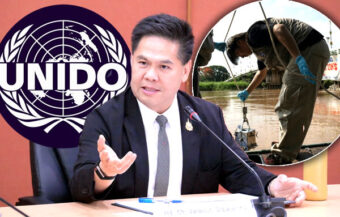
Thailand’s Minister of Justice and the Department of Special Investigation (DSI) on Thursday announced a special case into missing oil from a depot in southern Surat Thani. A nationwide audit showed 60 million litres of oil appeared unaccounted for after records indicated it should have reached the facility. The case aims to ease rising public concern and scepticism over the government’s handling of the energy crisis. A poll last week showed 82% had little or no confidence. It comes amid fears the US–Iran war may escalate again despite a fragile ceasefire unveiled on Tuesday.
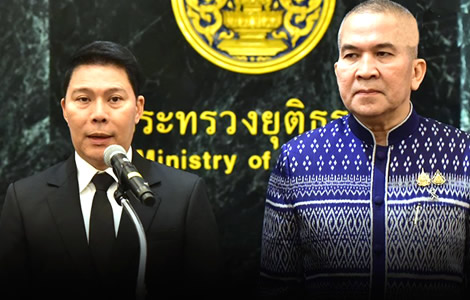
Thailand’s Department of Special Investigation (DSI) and the Ministry of Justice on Thursday announced a special case into missing oil volumes in the south. The case centres on a discrepancy of about 60 million litres.
The missing oil was identified during inspections at a storage depot in Surat Thani. Accordingly, authorities confirmed the case follows irregularities detected during coordinated checks. Several agencies took part in the inspections. As a result, the DSI will now lead the probe under special case procedures. Officials said the case meets the threshold due to scale, complexity and potential public impact.
Meanwhile, the move comes as Thailand faces an energy crisis linked to the United States–Iran conflict. Earlier this week, a two-week ceasefire for talks was unveiled in Washington, D.C. However, officials continue to warn of renewed escalation. Indeed, concerns persist that the conflict may expand further.
Global supply disruption exposes Thailand’s fuel vulnerabilities amid ongoing Middle East crisis
Consequently, global fuel supply chains have been disrupted. Thailand has reported difficulty sourcing crude oil. In addition, delivery to domestic refineries has become more complex. While oil prices have not surged sharply, supply instability remains a concern.
Presently, West Texas Intermediate (WTI) crude is priced at $94.41 and has fluctuated between $54.98 and $117.63 over the past year. Notably, the price peak during this crisis is only $102.57. Therefore, this indicates the real concern is access to supply and the disruption to shipping caused by the war.
In the meantime, the government in Bangkok has signalled its intentions to tackle possible corruption or profiteering.
For instance, the Ministry of Justice confirmed that the DSI is preparing summonses. These will be issued to a major oil depot in Surat Thani. The operators must explain the discrepancy in recorded volumes.
Significantly, a meeting of the Control Board on Thursday accepted the matter as a special case. Therefore, the DSI has legal authority to proceed immediately. Officials indicated that those involved will be required to provide detailed clarification.
Earlier, the decision followed a Special Cases Committee meeting on April 9. The meeting took place at the Ministry of Justice. Deputy Prime Minister Pakorn Nilapraphan chaired the session. Also present were senior law enforcement and government officials.
Special cases committee sets legal framework to pursue fuel traders amid complex and organised offences
Among them, Minister of Justice Police Lieutenant General Rutthaphon Naowarat attended. In addition, DSI Director-General Police Colonel Yutthana Praedam joined as secretary. Other ex officio members and experts were also present. This marked the committee’s first meeting of 2026.
During the session, the committee unanimously agreed to classify certain fuel-related offences as special cases. Specifically, these include violations under the Fuel Trading Act. The scope covers traders operating under Sections 7 and 10.
It also includes unregistered operators. Furthermore, officials stated that cases must involve organised activity or significant complexity. They must also cause a serious public or industrial impact. The timeframe applies to offences from March 1, 2026. This designation will remain until the Middle East conflict subsides.
In addition, the DSI confirmed that a suspected oil hoarding case has been accepted. Authorities believe the activity may be linked to supply disruptions. Therefore, investigators are examining whether traders withheld or delayed distribution.
After the meeting, Police Colonel Yutthana confirmed strong support for enforcement. At least two-thirds of participants backed legal action. Accordingly, the focus will be on traders suspected of criminal conduct. This includes both registered and unregistered entities.
Multi-agency task force to probe oil flows as Surat Thani becomes starting point for nationwide inquiries
Next, a special investigation team will be established. The DSI will coordinate with multiple agencies. These include the Royal Thai Police and the Ministry of Commerce. The Ministry of Finance will also assist. In addition, other partner agencies will join the operation. The team will proceed under established legal procedures. Officials stressed that all parties will be treated fairly under the law.
Initially, the investigation will begin in Surat Thani. Authorities described it as the starting point. This follows the discovery of irregularities during inspections. However, officials confirmed that other cases may also be reviewed. In fact, the DSI stated that all fuel-related offences within the timeframe will be considered. This applies regardless of the specific law involved. If the case involves fuel, it falls within scope.
Moreover, officials referenced a related case involving 57 million litres missing at sea. This occurred in the Surat Thani area. The case will be examined alongside the depot discrepancy. Investigators are assessing whether the incidents are linked.
Nationwide inspections reveal tanker anomalies and possible diversion involving multiple companies
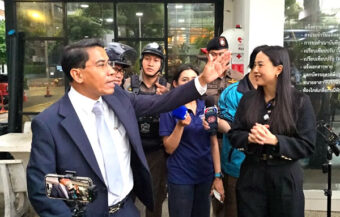
Separately, inspections took place on April 8 in several provinces. These included Rayong, Khon Kaen, Pathum Thani, and Samut Sakhon. However, authorities are still reviewing those findings. They must determine whether the cases meet special case criteria.
According to the DSI, initial findings revealed irregularities in tanker movements. Specifically, 24 out of 99 voyages showed anomalies. These included delays, stoppages, and route deviations. The shipments involved approximately 60 million litres of oil.
However, officials clarified that 24 voyages do not equal 24 vessels. Some ships made multiple trips. Therefore, investigators are working to identify all operators involved. The process remains ongoing.
So far, fewer than ten companies are believed to be linked. Authorities are tracing the destination of the oil. In particular, they aim to determine whether it was diverted or withheld. The investigation is expanding. To support this, the DSI has requested data from multiple agencies. These include the Excise Department and the Marine Department. The Department of Energy Business is also involved. In addition, the Maritime Security Command is assisting.
Economic pressure mounts as public confidence falls and government scales back long-standing subsidies
Through this process, officials will compare data across the system. This includes shipment logs and regulatory filings. If clear irregularities are confirmed, action will follow. A formal complaint would allow immediate legal proceedings.
Importantly, the case has drawn attention due to its timing. Thailand is managing domestic uncertainty linked to the global energy situation. Since February 28, the situation has remained unstable. The conflict has had direct economic effects. As a result, pressure has increased on government policy.
Prime Minister Anutin Charnvirakul has publicly apologised. He cited the government’s performance in handling the crisis. The statement followed rising public concern. According to a recent poll, dissatisfaction is widespread. The survey was conducted by the King Prajadhipok’s Institute. It found that 82 per cent of respondents were dissatisfied. The results were published last week.
At the same time, Thailand has adjusted its fuel subsidy policies. Officials confirmed that oil funds have been scaled back. These funds have long supported price stability. However, fiscal constraints have limited their use. Nevertheless, global oil prices have not surged as predicted. This has provided some relief. However, procurement and delivery remain difficult. Supply chain disruptions continue to affect operations.
Smuggling networks remain in focus as past cases highlight enforcement gaps and open investigations
Meanwhile, public scepticism has been shaped by past smuggling concerns. Authorities acknowledge the presence of international smuggling networks. These groups have operated within Thailand for years. Their influence remains a concern.
Previously, an incident in Pattaya in 2024 highlighted enforcement challenges. A vessel linked to smuggler Joe Patani escaped authorities. The operation involved a crew and coordinated planning.
Although the vessel and some crew were later detained, the oil smuggling kingpin was never caught. It is thought this vast empire continues to operate unfettered. The Royal Thai Navy later carried out arrests offshore. However, the main figure remains at large. The case remains unresolved, with legal proceedings pending.
At present, officials have not confirmed any links to current investigations. However, they stated that all possibilities will be examined. The DSI has not ruled out any scenario. The Joe Pattani affair simply highlights how oil smuggling in southern Thailand is endemic.
Previously, the individual known as Sahachai Jiansermsin had been arrested in Bangkok for money laundering in November 2021 by the Crime Suppression Division (CSD). “The money laundering charge was related to a 2012 oil smuggling case in which police had seized more than 2,000 litres of oil and 48 million baht in cash in Songkhla,” said Police Lieutenant Colonel Jiraphat Phuridet at the time.
The suspect later disappeared after being released from police custody.
Surat Thani investigation seen as starting point for wider probe into oil discrepancies and supply failures
For now, the Surat Thani case remains the primary focus. Authorities say it is seen as the starting point of wider inquiries. Notably, it has not been linked by police or officials to smuggling or any particular party. Rather, it is viewed as an exercise to explain a discrepancy between government assurances in early March that the kingdom had adequate reserves for 90 to 120 days.
Later problems with petrol station closures nationwide highlighted that something was wrong. A full audit was ordered, with oil firms required to report tallies on a daily basis.
Anutin’s second cabinet takes office amid Premier’s warning about the growing energy crisis over Iran
Case against oil smuggler may be a pup. AG official questions whether the boat arrests were legal at sea this week
Calls for a wider probe into oil smuggler Joe Pattani, the owner of the pirate boats that escaped last week
The irregularities subsequently uncovered have triggered escalation. Further findings are expected. Specifically, investigators are examining whether there was a refusal to sell fuel. They are also reviewing possible delivery delays. Other unlawful scenarios are under consideration.
Going forward, the DSI will continue collecting and analysing data. The aim is to establish accountability. Compliance with fuel trading laws will be enforced. The process will follow legal procedures.
Finally, the Ministry of Justice confirmed that updates will follow. Officials stated that investigations will proceed systematically. Additional cases may be elevated if criteria are met. The situation remains under close review.
Join the Thai News forum, follow Thai Examiner on Facebook here
Receive all our stories as they come out on Telegram here
Follow Thai Examiner here
Further reading:
Oil and energy crisis deepens in Thailand as Prime Minister Anutin shows off new EV car to reporters
Anxiety about oil supplies and prices as economic growth in 2026 now dependent on the US Iran War
US Ambassador Seán O’ Neill briefed Prime Minister Anutin Charnvirakul at Government House on War
Visa waivers, discounted hotel stays and 2,000 baht a person per day for stranded tourists announced