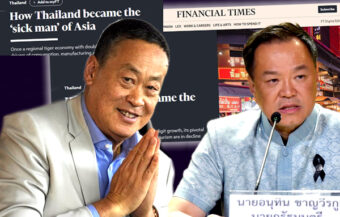
Thailand is at a crossroads as Bitkub founder Jirayut, or ‘Top’, warns of stagnation, debt, ageing, digital drain and a weak education system as the February 8th election approaches. The situation demands an urgent reset to stop Vietnam and other younger economies from overtaking the kingdom. Top wants to keep profits home through Thai platforms in a vibrant new digital economy.
One of Thailand’s most dynamic young businessmen on Wednesday demanded bold action to build a true digital economy. Jirayut Srupsrisopa, known as ‘Top’, is the founder of Bitkub, the kingdom’s dominant and fast-growing cryptocurrency exchange. He warned that Thailand is losing ground to deep structural weaknesses. His remarks echoed concerns raised in October 2025 by World Bank country manager Melinda Good. The Oxford-educated Jirayut urged Thailand to create its own online platforms and stop the haemorrhage of money to the United States. He called for a new digital age to secure Thailand’s future and drive the shift to high-income status, a goal which has eluded it.

Jirayut Srupsrisopa will be only 36 in February, yet he already stands among Thailand’s most prominent businessmen. Moreover, he is widely regarded as a technology visionary with rare influence for his age. A graduate of Oxford University, his expertise lies in blockchain systems, and therefore, he founded Bitkub, the country’s largest cryptocurrency exchange.
The platform now dominates the domestic market, and in addition, it is preparing a regional expansion across Southeast Asia. Bitkub has become a symbol of Thailand’s emerging digital sector, while most local firms still depend on traditional industries.
In recent years, Top, or Mr Jirayut, has been seen frequently beside senior politicians and global business figures. Likewise, he is a regular participant at the World Economic Forum in Davos. There, he often accompanies Thai government delegations, and these groups were led by recent prime ministers, including Srettha Thavisin and Paetongtarn Shinawatra. His presence at such events has strengthened his image as a bridge between technology and policy.
Thailand heads to the election with a weak economy and fading regional standing at stake
Meanwhile, Thailand is approaching a decisive general election on February 8. Observers connect today’s economic weakness to past military coups, specifically those of 2006 and 2014. As a result, investor confidence has never fully recovered.
Over the last two decades, the economy has steadily lost momentum, and therefore, many analysts now describe Thailand as the sick man of Southeast Asia. Furthermore, regional rivals are moving ahead at a greater speed. Vietnam, in particular, is expected to overtake Thailand within the coming decade, while growth at home has remained below 2 per cent for ten consecutive years.
The central obstacle appears to be chronic political instability, and consequently, economic reform has been repeatedly delayed. Governments have failed to confront structural barriers in education, productivity and innovation.
In turn, investment has slowed while household incomes have stagnated. The country has struggled to create new industries, while neighbours have attracted technology manufacturers and digital services.
Jirayut and the World Bank warn of digital failure and a deep slide in education standards
On Wednesday, Jirayut addressed these issues in blunt terms. He focused first on the falling population and, in addition, on the absence of a genuine digital economy.
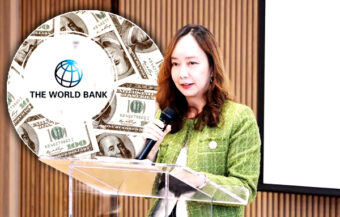
His remarks echoed those of Melinda Good, the World Bank’s country director for Thailand and Myanmar. The bank has warned that Thailand remains trapped at middle income, and therefore risks long-term decline without new engines of growth.
The World Bank recommended an overhaul of the education system, yet successive governments have delivered little progress. English proficiency continues to drop, and likewise, other performance indicators show deterioration. Employers report shortages of skilled workers, while universities struggle to match global standards.
At the same time, the country remains deeply polarised with traditional power blocs still shaping political outcomes. Moreover, this year’s Thai-Cambodian border war has added new uncertainty. The conflict has alarmed foreign investors, and consequently, fresh capital is staying away from key projects. Without decisive government action, the economic outlook appears increasingly fragile.
Bitkub founder says Thailand must abandon old exports and build a real digital future
Jirayut argues Thailand must build a new economy rather than defend the old one. He links this to the idea of “Blooming Thailand,” and from his view, it means creating entirely new forms of business. Bitkub, he said, introduced Bitcoin to the nation and became the first venture of its kind. Therefore, it represents a model for other Thai entrepreneurs.
For decades, Thailand relied on physical exports such as rubber, jasmine rice and automobile parts. By contrast, developed nations now earn their income from digital trade, online services and green industries. These sectors form the backbone of the modern economy, and consequently, countries that ignore them fall behind.
He cited ChatGPT as a clear example of digital service trade. The platform needs no office or staff in Thailand, yet local users pay around ฿600 each month.
As a result, enormous revenue flows directly to the United States. Similarly, Chinese platforms like Lazada and Shopee operate without physical stores, and nevertheless, they capture a large share of Thai consumer spending. Money leaves the country while little value returns.
Domestic platforms must keep profits at home and end decades of economic stagnation
Bitkub is remembered for breaking this pattern, because few local firms work in artificial intelligence or cryptocurrency. Therefore, the company stands out sharply against traditional conglomerates.
Jirayut insists Thailand must accelerate digital commerce, and moreover, growth should be measured by national income rather than GDP alone. Otherwise, the country will continue to import services and export cash.
He said Thailand needs Thai-owned platforms that keep profits at home. Bitkub operates as a domestic digital hub with no branches or counters, yet it pays more tax than other technology firms combined. Consequently, ownership becomes a strategic issue rather than a symbolic one.
For nearly 50 years, Thailand has focused on the same products, and workers have rarely upskilled. Exports changed little, and therefore the middle-income trap persisted. Jirayut warned that the old model can no longer survive in a digital world.
The debt crisis and an ageing nation threaten to overwhelm Thailand within five years
Household debt is rising rapidly, while public debt has reached 90 per cent of GDP. Digital trade offers far higher margins than physical exports, and he compared sacks of rice to the price of one iPhone to illustrate the gap. Traditional markets have become red oceans where price cutting destroys profits, and revenue often falls below costs.
Thai consumers spend billions on foreign applications each year, yet income systems at home remain outdated. Consequently, pressure on the currency and banking sector continues to build. Jirayut said the model will eventually explode unless new industries appear.
He divided solutions into short-term and long-term. In the short term, debt must be tackled, and confidence in the Stock Exchange must return. Without this, capital will not flow to businesses that need it.
Inequality also requires urgent action, because health insurance funds are near crisis and social security faces similar threats. Thailand has entered a super-ageing era, and one in five citizens is already over 65. Birth rates continue to fall sharply, and many families say they cannot afford children.
Population collapse could cut the nation to 33 million without radical policy changes
Deaths now exceed births, and if the trend lasts 50 years, the population could shrink to only 33 million from today’s 70 million. Therefore, he suggested extending the retirement age, since people live longer and can work longer. Social security rules must be updated, and provident funds require reform as well.
Long-term strategy must create new income sources beyond agriculture and tourism. Thailand must leave the red ocean of commodities and move into blue ocean industries with higher returns. Indeed, a new domestic economy based on data and technology is essential.
Jirayut predicted major risks within five years. Healthcare funds may collapse, household debt could worsen, and stock market confidence may sink again. Recovery would then be extremely difficult.
Foreign investors examine demographics and infrastructure before committing funds. They look at illness rates, debt levels and political stability. Thailand’s birth rate has dropped to 1.1, and experts say levels below 1 would be nearly irreversible.
World Bank says old growth model is finished as 2037 high-income goal slips away
The World Bank delivered a similar warning, stating that Thailand’s growth model has stalled for more than a decade. The model can no longer lift incomes, yet the country aims to be high income by 2037. That goal requires 5 per cent annual growth, while the economy will expand only about 2 per cent this year.
Melinda Good recalled Thailand’s earlier transformation from agriculture to industry. However, those engines are fading as global growth shifts toward technology. She said structural change has been stuck for years, because too many workers remain in low-value sectors.
Spending on research and innovation remains far below that of Korea and Vietnam. Thailand created an innovation index, yet investment has not followed. Consequently, the country stands at a crossroads where old strategies will not deliver the next leap.
Good urged Thailand to stop blocking itself, noting that the nation has a strong digital infrastructure and a strategic ASEAN location. Thai products still enjoy global recognition, and therefore, the base for growth already exists.
Opening closed services is seen as the fastest route to revive investment and competition
Yet the service sector remains too closed, and opening it could attract new investors. Vietnam opened services and saw trade jump 2.9 per cent, while Thailand moved slowly. She proposed quick wins such as simpler approval for tech firms and promotion of green finance.
Public money could target data centres, clean energy and water systems, which would support future industries. Thailand already has universal healthcare and broad education coverage, but the missing link is workforce skills for the digital age.
Good said growth must create opportunities for people rather than factories alone. Human capital is now the main driver, and with fewer births, skills matter more than ever. The Thailand Economic Monitor stressed education reform and flexible labour markets.
Vietnam follows a low-cost manufacturing path, yet Thailand faces higher wages and labour limits. Consequently, it must invest in people instead of competing on price. Digital ID systems and broadband networks give the country an advantage.
Investors deterred by red tape as election offers chance for decisive policy shift.
Thailand has long promoted inclusive growth, and despite mixed results, the principle remains strong. Opportunities must spread beyond Bangkok, and Good visited several provinces to discuss investment in new education hubs.
The upcoming election could open space for reform, and she called the moment an opportunity for decisive change. Quick wins require political decisions rather than large budgets, because barriers to entrepreneurs are mostly legal.
Many firms want to enter Thailand due to its stability, yet procedures remain cumbersome. Several investors chose neighbouring states, and technology companies complain about licencing rules.
Cutting those barriers could transform the outlook and help Thailand become a regional digital hub. The change requires will, not heavy spending, and both Jirayut and the World Bank agree on this point.
Economy faces worst year in decades as Vietnam surges and Thailand hesitates again
Population decline makes action urgent, while debt limits government choices. Investors watch politics carefully, and the border conflict has increased concern about risk.
The February election will therefore shape the nation’s direction. Voters face stagnant incomes, and growth below 2 per cent cannot sustain living standards. Vietnam’s rise shows the danger of delay.
Bitkub demonstrates that value can be created without factories or ports. Taxes can stay inside Thailand when platforms are locally owned. The contrast with foreign digital giants is clear.
Business chiefs warn of worst year for the economy in 30 years. Vietnam on track to overtake Thailand
Thai PM and top leaders fly the flag at Davos as IMF says AI benefits wealthier countries far more
Political parties are getting serious about Thailand’s lack of babies problem with new policies unveiled
Thailand’s challenge is structural reform across education, services and innovation. Digital and service sectors offer a route forward, yet implementation remains uncertain. Government and business must act together, and confidence must be rebuilt step by step. The next few years will be decisive for the kingdom’s economic future.
For now, the data show stagnation with high debt and weak growth. Education scores are sliding, and political divisions continue to block reform. Yet new industries are visible on the horizon, and leaders like Jirayut continue to push for change.
Join the Thai News forum, follow Thai Examiner on Facebook here
Receive all our stories as they come out on Telegram here
Follow Thai Examiner here
Further reading:
Thailand’s days of GDP growth in excess of 5% may be a thing of the past as it has grown too old
Cabinet in pension move as the number of working Thais to over 60s is set to half in 20 years
Thailand’s new move to boost the birth rate and fight the negative impact of an ageing population