
Former justice minister Thawee Sodsong slams a 1972 junta law he says lets Thai banks charge up to 28% interest—thirteen points above the legal cap—driving chronic household debt, rising defaults and economic strain across millions of borrowers.
Former Justice Minister and top Prachachart Party leader Thawee Sodsong has launched a sharp broadside at Thailand’s financial system, accusing it of shielding institutions rather than customers. He said many retail loans and advances now carry rates of up to 25%, despite the civil law’s 15% cap. He warned that this gap drives Thailand’s chronic household debt and deepens inequality. The central bank currently permits the higher rates under a 1972 law issued by the junta that took power in the 1971 coup.
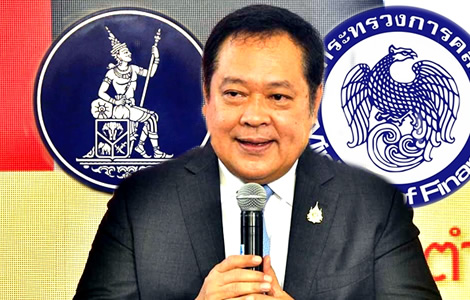
Former Minister of Justice Thawee Sodsong intensified pressure on Thailand’s financial authorities on Tuesday. Specifically, he targeted the Ministry of Finance and the Bank of Thailand, raising questions about their approval of personal loan interest rates as high as 25% per year. Notably, this figure exceeds the 15% limit under Section 654 of the Civil and Commercial Code.
Furthermore, Thawee highlighted that many households already face heavy debt loads. In addition, he argued that an annual rate of 25% only worsens that burden. He also noted that Thailand’s household debt is among the highest in the region. Consequently, he added, many people cannot access fair credit, which exacerbates economic inequality.
On December 2, 2025, he reiterated these concerns through a Facebook post. In it, he wrote that the “rule of law” had effectively disappeared. Moreover, he asked why the Ministry of Finance and the Bank of Thailand continue to allow Thai citizens to bear interest rates above the legal maximum.
Thawee questions gap and rising household debt burden as loan rates exceeds legal limit of basic law
According to Thawee, the gap between the legal limit and the actual rate is significant. He gave an example using a ฿100,000-baht loan. At 25%, the borrower pays ฿25,000 in annual interest.
At 15%, the legal rate, the cost is ฿15,000. Therefore, the ฿10,000 difference could instead reduce the principal. He said this difference drives long-term debt and slows repayment.
Furthermore, Thawee said rising interest rates now push many borrowers toward default. He warned that high rates can lead to bankruptcy risks. He said these outcomes follow directly from policies that allow financial institutions to charge above the legal ceiling.
Thailand’s debt structure has been under scrutiny in Parliament as well. The House of Representatives Subcommittee on Finance, led by Jittipon Viriyaroj, has summoned the Bank of Thailand several times. The most recent request for clarification occurred on November 25, 2015. The committee sought explanations for interest rates that exceed statutory limits.
Thawee cites regulatory failures and highlights legal caps breached by ministry announcements since 2020
Thawee said the root of the problem lies in regulatory decisions. He pointed to three major issues. First, excessive interest burdens. He noted that the Ministry of Finance’s announcement dated July 10, 2020 allows effective personal loan rates up to 28% per year. This exceeds the Civil and Commercial Code’s 15% cap. It also conflicts with the Consumer Protection Act, which requires fair and non-exploitative contracts.
He repeated that high rates hit borrowers hard. Borrowers pay interest that reduces principal slowly. As a result, debt persists and grows. For many households, repayment becomes nearly impossible.
Second, he highlighted what he called a wealth transfer through interest rate spreads. He noted that personal loan rates can reach 25% while deposit rates remain near 1%. This creates a spread of up to 24%.
He said this structure offers financial institutions a significant advantage. He also noted that such spreads allow banks to build risk reserves while keeping high profit margins.
Thawee challenges credit-risk claims and questions the legality of using the 1972 junta law
Additionally, Thawee questioned whether credit-risk claims justify the wide gap. He said the arrangement lets institutions profit while borrowers struggle. He added that this situation raises questions about fairness in regulatory oversight.
Third, he raised legal concerns about the use of Revolutionary Council Announcement No. 58 of 1972. The Ministry of Finance and the Bank of Thailand used that announcement to authorise interest rates above 15%. However, he said this may contradict the Civil and Commercial Code.
Significantly, the council was the government junta in Thailand after the 1971 coup d’état.
According to legal principles he cited, lower-ranking regulations cannot override primary legislation. The Civil and Commercial Code has higher legal status than ministry announcements. Therefore, interest rates above 15% cannot legally stand if they conflict with Section 654.
Thawee cites multiple laws that invalidate excessive interest and warns of regulatory conflict
Thawee also referred to the Act on the Prohibition of Excessive Interest Rates B.E. 2560. Section 4(1) of that Act prohibits interest that exceeds legal limits.
He added that any contract violating such laws is void under Section 150 of the Civil and Commercial Code. Thus, if the interest clause is void, creditors cannot charge interest before default, and past payments must go toward principal.
Furthermore, he said the use of Revolutionary Council Announcement No. 58 contradicts its stated purpose. The announcement allows conditions that support public safety and public well-being. Yet, allowing interest above statutory limits benefits financial institutions instead. He said this outcome diverges from the spirit of the law.
Consequently, he urged regulators to reconsider their actions. He asked whether current policies protect economic security or favour institutional interests. He said allowing personal loan rates of 25% traps borrowers in debt cycles. He linked this to widespread financial hardship, high default rates, and rising bankruptcy risks.
Thawee highlights borrower hardship, long-term economic impact and repeated regulatory resistance
Many borrowers, he said, are not intentionally defaulting. Instead, they face unstable or falling income due to economic conditions. Hence, interest charges of 25–28% leave them unable to reduce principal. Default then adds new interest, penalties, and legal fees.
Over time, defaulted borrowers face blacklisting. This restricts access to credit for business, education, and personal needs. In turn, opportunities diminish. He said the long-term effect is severe.
Thawee framed the issue as one of legal compliance. He stressed that interest limits already exist in primary law. He said regulators cannot override Parliament’s authority. He noted that ministry announcements and Bank of Thailand circulars have a lower status.
He added that the debate has continued for years. Committees repeatedly ask for clarity, yet the interest structure remains unchanged. He argued that financial institutions continue receiving privileges above legal thresholds.
Thawee warns rising interest costs intensify borrower pressure and questions the junta era law
Throughout his statements, Thawee maintained that interest charged above the legal limit increases household debt. He pointed to the ฿10,000 annual difference on a basic loan. He said this figure alone illustrates the rising strain on borrowers.
Thailand’s household debt levels continue to rise. Many borrowers pay interest that outpaces repayment. As a result, principal reduction stalls. He said these patterns strain families and weaken financial stability.
Although he did not propose policy solutions, he repeatedly returned to the legal framework. He emphasised statutory limits and questioned compliance by regulators. He said the existing regulatory approach allows persistent high interest and simply benefits financial institutions.
Indeed, it appears to be an unwritten policy.
Thawee reiterates the urgency of reviewing the regulatory position as high interest rates drive debt
He also stated that rising interest rates across the economy intensify pressure on retail borrowers. He linked this pressure to an increased risk of default. He noted that many borrowers can no longer keep pace with payments.
Moreover, he stressed the urgency of examining the legality of current rules. He said the legal hierarchy makes clear that ministry announcements cannot supersede the Civil and Commercial Code.
He also pointed out that Revolutionary Council Announcement No. 58, issued in 1972 by a junta government, does not authorise actions contrary to public interest.
Former Pheu Thai Finance Minister calls for a liquidity boost and a cheaper baht to pump the economy
Finance Minister issues warning on year end growth and rising cost of public debt. Danger of the Abyss
Finance Ministry & central bank move to boost credit by shifting non-performing debt into asset firms
Anarchy and online fraud nightmare spreading within Thailand’s digital banking system for ordinary people
In sum, Thawee said the Ministry of Finance and the Bank of Thailand enabled an interest structure that surpasses legal limits. He linked this structure to high debt, defaults, and rising economic risk. He said the situation demands scrutiny of regulatory authority, legal limits, and enforcement.
Join the Thai News forum, follow Thai Examiner on Facebook here
Receive all our stories as they come out on Telegram here
Follow Thai Examiner here
Further reading:
Former Pheu Thai Finance Minister calls for a liquidity boost and a cheaper baht to pump the economy
Rate cut anticipated as outgoing Bank of Thailand governor attends last Monetary Policy Committee