Business leaders urge PM Anutin Charnvirakul to slash red tape and fast-track legal reforms to unlock investment in seven key industries as economic pressures mount despite 2.8% GDP growth, with debt, inflation, weak tourism and manufacturing weighing on the outlook.
Thailand’s biggest business groups have urged Prime Minister Anutin Charnvirakul to cut red tape and accelerate legal reforms to attract new investment, saying faster changes to regulations and ministerial rules are needed to unlock growth in seven strategic industries. The push comes as Thailand’s economy expands at a stronger pace, with first-quarter GDP growth reaching 2.8%, but faces mounting pressure from rising debt, inflation linked to the US-Iran conflict, weak factory utilisation, softer tourism receipts and persistent current account deficits.
Thailand’s business leaders have stepped up calls for faster legal reform as economic risks continue to shadow the country’s recovery despite stronger growth.
The National Economic and Social Development Council (NESDC) reported first-quarter GDP growth of 2.8% in 2026. However, the improved figure has not eased concerns across the broader economy.
Household debt remains a significant burden. Corporate borrowing is also increasing. Meanwhile, public debt has expanded as the government finances stimulus programmes and economic support measures.
Thailand’s economic growth masks rising household, corporate and public debt pressures across the economy
External developments have created further challenges. In particular, the US-Iran war has intensified concerns over Thailand’s energy security and contributed to higher inflation pressures. As a result, the government has increased borrowing and introduced stimulus schemes aimed at strengthening economic activity at grassroots levels.
At the same time, several domestic sectors remain under strain. Thailand’s manufacturing base continues to operate below capacity. Likewise, foreign tourism has failed to meet expectations this year in both arrivals and revenue.
In addition, Thailand has repeatedly recorded current account deficits, reflecting continuing economic pressure.
Against this backdrop, senior figures from the Thai Chamber of Commerce and the Federation of Thai Chambers of Commerce met Prime Minister Anutin Charnvirakul at Government House on June 10. The discussions focused on removing barriers that businesses say are slowing investment and restricting economic expansion.
Energy inflation and weak sectors intensify business demands for faster investment reforms nationwide
The meeting took place at the Phakdi Bodin Building at 3pm. It followed the Prime Minister’s official visit to Vietnam alongside Thai private sector representatives.
During the visit, business leaders held talks with Vietnamese officials and commercial organisations. Mr Anutin said the cooperation had produced tangible benefits for both nations.
Separately, the Prime Minister outlined a broader vision for Thailand’s economic relationship with Vietnam. He said the two countries should move beyond competition and become stronger strategic and trading partners.
Thailand and Vietnam have comparable economic size, industrial strength and growth potential. Therefore, closer cooperation could increase competitiveness and create new production and trade opportunities.
Notably, Mr Anutin said discussions with Vietnamese leaders had been positive. He conveyed concerns raised by Thai businesses and sought greater support for companies investing in Vietnam. He also requested assistance in resolving outstanding issues affecting Thai entrepreneurs.
Vietnam talks highlight economic partnership as Anutin seeks new opportunities for Thai firms abroad
However, the immediate concern during Wednesday’s Government House meeting was Thailand’s domestic investment climate. Business leaders argued that complex regulations and administrative procedures continue to delay projects and reduce investment momentum.
In response, the private sector proposed urgent amendments to subordinate laws, ministerial regulations and official rules.
These changes can move faster than amendments requiring parliamentary approval. Consequently, they are viewed as the quickest path to improving the investment environment.
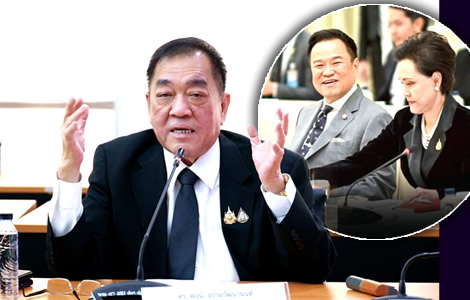
Mr Poj Aramwattananon, Chairman of the Thai Chamber of Commerce and the Federation of Thai Chambers of Commerce, said the organisation had collected proposals from members nationwide. These recommendations formed the basis of an economic development plan covering the next one to two years.
As part of this strategy, the Chamber divided the plan into first-year and second-year stages. Regional proposals were included to ensure the strategy matched economic needs across different provinces.
Business groups press for legal changes and a two-year plan to unlock investment growth
The proposals include expanding overseas markets and accelerating seven target industries. Furthermore, they support the Reinvent Thailand approach and align with the Board of Investment promotion policies.
Nevertheless, Mr Poj stressed that planning alone would not guarantee success. The critical challenge is effective implementation. This requires stronger cooperation between the public and private sectors.
On another front, the Chamber scheduled further discussions with Deputy Prime Minister Pakorn Nilapraphan, who oversees legal affairs. The meeting was held at 3.30pm on June 10 following discussions with the Prime Minister.
Private sector representatives presented proposals covering laws, ministerial regulations and rules requiring urgent revision. The focus was on barriers slowing business operations and economic expansion.
Chamber pushes seven industry reforms and faster legal changes through ministerial regulations
According to private sector sources, the government has prioritised the removal of legal obstacles. Mr Pakorn has been assigned to drive regulatory reform alongside economic development efforts.
Moreover, businesses believe changes to subordinate legislation can be delivered more rapidly than changes to Acts of Parliament. Accordingly, these measures are considered crucial for unlocking investment, production, trade and export opportunities.
The reforms are closely connected to seven target industries identified by the private sector. Businesses argue that removing unnecessary restrictions would allow smoother investment and faster industrial development.
In parallel, private sector sources said the government has opened greater opportunities for businesses to participate in designing solutions. They described legal reform and improved regulations as essential factors for increasing Thailand’s competitiveness.
A private sector source said: “Today (June 10th), after meeting with the Prime Minister, at 3:30 PM, there will be a discussion with the Deputy Prime Minister in charge of legal affairs to propose solutions for amending ministerial regulations and subordinate laws that hinder the economy. This will proceed faster than amending the Act itself, and it is a matter that the government wants to expedite.”
Government and businesses unite behind faster reforms to improve Thailand’s competitiveness
The Thai Chamber of Commerce said reforms must focus on reducing obstacles, simplifying procedures and improving government efficiency. In turn, businesses would be better prepared to adapt to rapidly changing international conditions.
Prime Minister Anutin said the private sector remains a crucial force within Thailand’s economy. The government, he said, is ready to cooperate closely with businesses to promote trade, encourage investment and expand international markets.
Couple commit suicide in Hua Hin after exhaustion from dealing with rising informal debt and lenders
Tax and welfare revolution as Thailand moves ahead with Negative Income Tax that expands reporting
Looking ahead, the government intends to support companies seeking overseas opportunities. It will also pursue additional trade channels with countries around the world.
Ultimately, the discussions highlighted the competing realities facing Thailand’s economy. Growth has strengthened. Yet debt levels, inflation, weaker manufacturing, softer tourism and current account deficits remain serious concerns.
The Government House meetings therefore reflected a growing push from both government and business leaders to accelerate implementation, remove regulatory obstacles and strengthen Thailand’s competitiveness during a period of global economic uncertainty.
Join the Thai News forum, follow Thai Examiner on Facebook here
Receive all our stories as they come out on Telegram here
Follow Thai Examiner here
Further reading:
Tax and welfare revolution as Thailand moves ahead with Negative Income Tax that expands reporting
Thumbs up from economic gurus for 2027 Negative Income Tax plan. It’s a game-changer for progress
Expert warns foreign tourism has become Thailand’s curse, fueling inertia and a widespread malaise