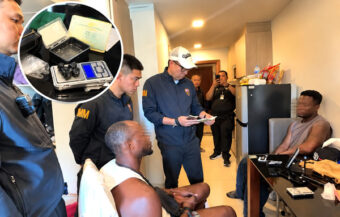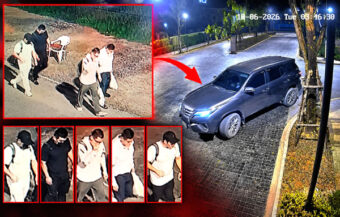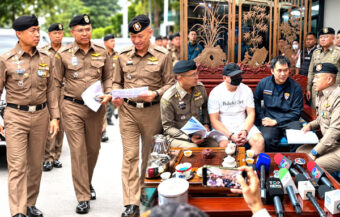
A routine courier job turned into an international drug bust after crystal meth worth millions was found hidden in tamarind jars. Thai police are hunting three Vietnamese suspects linked to a trafficking network stretching from Hanoi to Tokyo.
A Thai courier’s split-second decision to question an unusually heavy package has blown open what police believe is a sophisticated Vietnamese drug trafficking network stretching from Hanoi to Bangkok and Tokyo. More than two kilograms of crystal methamphetamine hidden inside jars of tamarind paste have led to four arrest warrants, an expanding international manhunt, cross-border financial investigations and fresh scrutiny of smuggling methods linked to the Melbourne heroin case involving a Thai Airways flight attendant, as Thai, Japanese and immigration authorities race to dismantle a highly organised operation before more shipments leave the country.
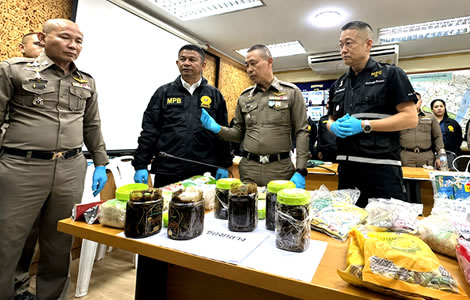
Thai police are hunting three Vietnamese nationals believed to be behind a sophisticated drug trafficking network that used Thailand as a staging ground for crystal methamphetamine shipments to Japan.
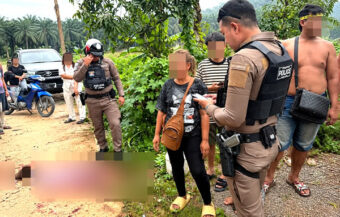
The investigation was triggered by a Thai courier who became suspicious about a package she had been asked to carry to Tokyo. Instead of boarding her flight, she walked into Bang Yi Khan Police Station and asked officers to inspect it.
That decision exposed more than two kilograms of crystal methamphetamine concealed inside jars of tamarind paste. Within hours, what appeared to be a routine parcel had become the centrepiece of a fast-moving international narcotics investigation.
Courier helps uncover meth hidden in tamarind jars launching international drug trafficking case
The breakthrough came on July 13 after the woman, who occasionally earned extra income transporting goods to Japan, received a delivery at her condominium in Bangkok Noi district. The package immediately raised concerns because it was unusually heavy. Police opened the parcel and found six jars of tamarind paste.
Hidden inside were six foil-wrapped spherical packages containing more than two kilograms of crystal methamphetamine, commonly known as “ice”. Officers immediately seized the drugs. Detectives also began tracing everyone connected with the shipment before it could leave Thailand.
Investigators soon concluded the parcel was only one part of a much larger operation. Police believe the organisation was directed from Hanoi by a Vietnamese ringleader.
According to investigators, orders were transmitted through fake Facebook accounts using anonymous online identities. Those accounts recruited riders, contacted couriers and coordinated payments while shielding senior members from direct contact with the drugs.
Rather than transporting the narcotics personally, the network allegedly relied on motorcycle delivery riders hired through Facebook. The riders collected parcels from residences used by Vietnamese nationals living in Thailand.
Detectives expose layered courier network using riders, fake Facebook accounts and recruits
They then delivered the packages to Thai couriers preparing to travel overseas. Police believe the method created several layers between organisers and the final shipment. That structure made the operation more difficult to detect and disrupted traditional surveillance.
Meanwhile, detectives uncovered evidence showing each suspect performed a specific role. One allegedly recruited Thai couriers travelling to Japan. Another coordinated delivery riders and arranged package collections.
A third handled payments moving through Thai bank accounts. Finally, Thai nationals waiting in Tokyo allegedly received the shipments before passing them through several intermediaries. Police believe each participant knew only part of the wider operation.
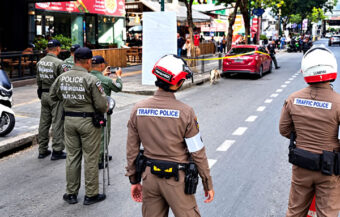
As the investigation gathered pace, officers secured four arrest warrants. They cover one Thai national and three Vietnamese suspects. However, one Vietnamese suspect had already left Thailand before police moved in. Immigration officers are now closely monitoring the remaining two. Border authorities have also been alerted as investigators work to prevent further escapes.
Police arrested the Thai suspect, 50-year-old Somphong Kaewphadee, in Pathum Thani on Thursday. He is originally from Sakon Nakhon and works for a pharmaceutical company in Pathum Thani province.
Thai mule account suspect arrested as police trace payments, couriers and wider Vietnamese network
Investigators allege he allowed his bank accounts to operate as mule accounts for the trafficking network. Police believe those accounts received money used to pay couriers and finance transport costs throughout the operation.
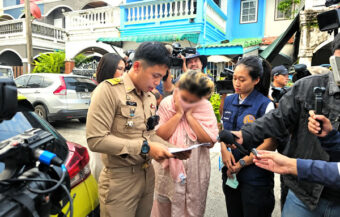
On July 17, Metropolitan Police Bureau Commissioner Pol Lt Gen Sayam Boonsom personally questioned Mr Somphong at Bang Yi Khan Police Station. Deputy Commissioner Pol Maj Gen Teeradet Thamsuthee joined the interrogation. Afterwards, officers escorted Mr Somphong to Taling Chan Criminal Court. The court denied bail. He remains in custody and has denied all allegations.
Police said Mr Somphong faces charges linked to participation in a transnational organised crime group. Detectives believe the financial trail places him at the centre of the payment network. They also suspect additional bank accounts were used throughout the operation. Those inquiries continue.
Notably, investigators found Vietnamese nationals repeatedly withdrew between 20,000 and 50,000 baht from Mr Somphong’s accounts. They allegedly returned to Vietnam immediately after each withdrawal. Police believe those rapid departures reduced the risk of arrest. Detectives also suspect the pattern points to a much larger organisation operating across both countries.
Police trace cash withdrawals, concealed drug shipments and possible wider crimes linked to the ring
In parallel, financial investigators are examining additional banking records connected with the operation. Officers are tracing every transfer linked to courier payments and transport expenses. Police believe the same network may have financed other criminal activities. However, they have not disclosed what additional offences are under investigation.
According to detectives, the gang constantly altered its smuggling techniques to stay ahead of investigators. Drugs were hidden inside tamarind paste, food products and seasoning packets. The original packaging was carefully opened before the narcotics were inserted.
Each packet was then professionally resealed to resemble an untouched commercial product. Police believe those concealment methods were designed to defeat routine inspections.
Couriers were paid 450 baht per kilogramme, which investigators described as the normal rate for transporting luggage. Officers have not disclosed how many previous shipments may have reached Japan. They have also not confirmed whether earlier couriers knew they were carrying narcotics.
Separately, detectives linked the case to another international investigation involving Thai Airways flight attendant Meena. Australian authorities arrested the 26-year-old in Melbourne last month after allegedly discovering 1.8 kilograms of heroin concealed inside tote bags she carried. She remains in custody and could face up to 25 years in prison if convicted. Her first court hearing is scheduled for September 14.
Melbourne heroin case examined as detectives compare methods used by international drug smugglers
Police say the similarities between the two cases are striking. Both operations allegedly relied on Thai couriers carrying concealed narcotics aboard international flights. Both also used sophisticated concealment methods intended to avoid airport detection. Detectives are examining whether the networks shared logistics, contacts or operating techniques.
On another front, investigators continue examining the possible involvement of Mr Somphong’s Vietnamese girlfriend. She works at a restaurant in Nakhon Pathom province. She has not been charged. Nevertheless, officers continue gathering evidence to determine whether she played any role in the operation.
As part of the investigation, detectives established that one condominium used to dispatch packages in the Pinklao area was not the suspect’s actual residence.
Police believe the network deliberately used temporary collection points to frustrate surveillance. Officers are now tracing other addresses believed to have been used for storing or dispatching parcels.
In response, Thai police have coordinated closely with Japanese authorities and the Japanese embassy. Investigators are working to identify the source of the methamphetamine before it entered Thailand. They are also trying to establish how long the network has been operating and how many consignments reached Japan successfully.
Immigration, Japanese police and Thai detectives widen hunt as investigators pursue Vietnamese suspects
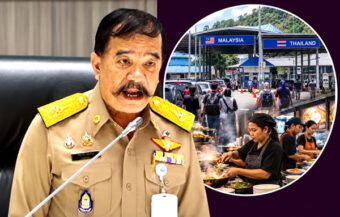
At the same time, immigration officers remain on alert for the two Vietnamese suspects believed to still be inside Thailand. Police confirmed one suspect has already fled the country. Efforts to locate the remaining suspects continue alongside financial and communications analysis.
For investigators, the evidence increasingly points towards a disciplined criminal organisation with clearly defined responsibilities. Detectives believe recruitment, logistics, finance and overseas distribution were handled by different members. That structure allowed the network to operate while limiting direct contact between participants.
Cannabis industry on the brink. Anutin threatens to reschedule the drug after huge seizures worldwide
Married couple from Loei remanded in prison until July 15 as DSI police pursue drug trafficking case against them
Finally, Pol Lt Gen Sayam urged travellers to reject requests to carry parcels or luggage overseas without knowing exactly what they contain.
Police said organised criminal groups increasingly exploit freelance couriers and ordinary travellers to move narcotics across international borders. In this case, one suspicious courier stopped a shipment bound for Tokyo and exposed a transnational drug trafficking network stretching from Bangkok to Hanoi.
Join the Thai News forum, follow Thai Examiner on Facebook here
Receive all our stories as they come out on Telegram here
Follow Thai Examiner here
Further reading:
Top Bhumjaithai Party figure defends the party’s position on cannabis. Only supported medical use
Bungling French drug dealer arrested at Phuket Airport after cocaine sachets found on concourse