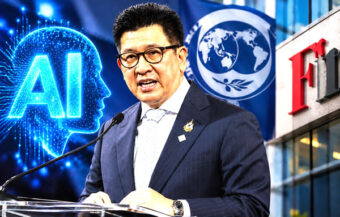
Suphachai Chearavanont says PM Anutin’s China roadshow could restore Thailand as ASEAN’s manufacturing powerhouse, with Chongqing, Sichuan and Huawei central to a drive for AI, semiconductor and high-value industrial investment.
Senior Chairman of Charoen Pokphand Group Supachai Chearavanont says Prime Minister Anutin Charnvirakul’s China roadshow could transform Thailand’s economy by attracting major investment from China’s industrial heartland and restoring the kingdom as ASEAN’s leading manufacturing base. His optimism comes as Anutin holds high-level talks with Chinese industrial leaders and Huawei executives on semiconductors, artificial intelligence, cloud computing, data centres and workforce development, while Beijing also offers to help ease the Thailand-Cambodia dispute.
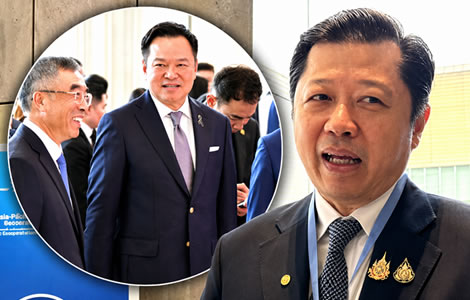
Prime Minister Anutin Charnvirakul has intensified Thailand’s campaign to attract high-value Chinese investment, targeting advanced manufacturing, semiconductors, artificial intelligence and cloud technology during a series of high-level meetings in China.
The latest stage of the government’s investment roadshow focused on Chengdu and Beijing. It forms part of a broader effort to restore Thailand’s position as ASEAN’s leading manufacturing base while competing more effectively with Vietnam, Malaysia and Indonesia.
Speaking in Chengdu on July 19, Senior Chairman of Charoen Pokphand Group Suphachai Chearavanont said the Prime Minister’s visit could unlock substantial investment from western China’s industrial heartland.
China trip targets Chongqing and Sichuan to restore Thailand’s advanced manufacturing base
He identified Chongqing and Sichuan as the most promising targets. Both provinces have become major centres for advanced manufacturing.
Their strengths include semiconductors, electronics, high technology and the aviation industry. As a result, they closely match Thailand’s long-term industrial priorities.
Suphachai said Thailand must urgently attract companies from those regions. New business partnerships would also strengthen domestic manufacturing and expand export capacity. More importantly, they would reinforce Thailand’s role in global industrial supply chains. He said stronger investment flows would directly support long-term economic growth and industrial development.
To illustrate the challenge, Suphachai compared Thailand’s recent investment performance with Vietnam. Thailand attracted about US$10 billion in foreign investment last year. Vietnam secured approximately US$27 billion over the same period.
That difference, he said, has a direct impact on GDP growth. Thailand therefore needs to accelerate efforts to secure larger volumes of international investment, especially in electronics and semiconductor manufacturing.
Suphachai says investor confidence and Chinese capital are vital to rebuilding Thailand’s economy
Meanwhile, Thailand has recorded encouraging momentum in data centre investment. However, Suphachai said Western investment remains below expectations.
Chinese manufacturers therefore represent an increasingly important source of future capital. He said Thailand must rebuild its standing as a preferred production base serving both ASEAN and global markets.
According to Suphachai, investor confidence remains the decisive factor. Chinese companies first examine legal certainty before committing major capital. They also assess tax arrangements, government support and administrative efficiency. Those factors help reduce investment risk. Consequently, Thailand must demonstrate that it is fully prepared to facilitate long-term industrial investment.
“This visit is very promising because the Prime Minister understands the government, politics, and private sector mechanisms, which are crucial factors in building confidence and good governance in investment,” Suphachai said.
He added that senior Chinese leaders had shown a willingness to consider Thailand’s proposals. At the same time, Chinese manufacturers are actively seeking new production bases across ASEAN. Thailand faces strong competition from Vietnam, Malaysia and Indonesia. Nevertheless, Suphachai believes the Prime Minister’s roadshow strengthens Thailand’s position by presenting the country as a stable and investment-ready destination.
PM expands China mission with Huawei talks focused on AI, cloud investment and digital industries
Notably, Suphachai described the mission as an important step towards restoring Thailand’s role as a preferred destination for eastern investment.
He said success in Chongqing and Sichuan would strengthen Thailand’s economic structure for the long term. It would also reinforce the country’s ambition to become a regional manufacturing and export hub for future industries.
On another front, Anutin continued the investment programme in Beijing later that day. At 5.30pm local time, he visited the Huawei Beijing Executive Briefing Centre.
He toured the company’s technology and innovation exhibition before holding talks with senior executives. The discussions focused on expanding Huawei’s investment in Thailand while deepening cooperation in artificial intelligence, cloud computing and human resource development.
Prime Minister’s Office spokesperson Ratchada Thanadirek said the government remains ready to deepen cooperation with Huawei as both an investor and technology partner. Thailand aims to become an AI-driven economy.
However, the government expects technology to deliver measurable public benefits. Priority sectors include government services, education, healthcare, agriculture and urban management. Officials also expect digital technologies to create higher-skilled employment and better-paid careers.
Huawei praises Thailand’s digital potential as government seeks more AI and semiconductor jobs
In parallel, Thailand continues to welcome investment in artificial intelligence, semiconductors, data centres, cloud systems and high-speed communications technology. Ratchada said the country already possesses the infrastructure required for further expansion.
She also highlighted Thailand’s investment ecosystem and industrial base. Both are closely connected to global supply chains. That foundation strengthens the country’s appeal to international technology companies.
Huawei executives said the company has operated in Thailand for more than 20 years. During that period, it has steadily expanded its investments. These include digital skills development centres, cloud services, data centres and its regional headquarters.
The executives praised Thailand’s openness to technology investment. They also expressed confidence in the country’s digital economy and business environment. Furthermore, they said Thailand offers favourable conditions for expanding future technology projects.
Separately, the discussions reflected themes promoted by Anutin during the World Artificial Intelligence Conference in Shanghai. There, he outlined three principles for AI governance. They are Protection, Unlocking Potential and Creating Shared Prosperity. Those principles continue to shape Thailand’s approach to international technology cooperation.
As part of this, both sides agreed to expand cooperation in workforce development. The Huawei ICT Academy Thailand programme will remain central to that effort. It already operates through partnerships with higher education institutions nationwide.
Huawei ICT Academy to strengthen AI skills as Thailand prepares workforce for future technologies
The programme is designed to equip students with skills demanded by the labour market. Huawei will also work with government agencies and universities on cloud computing and artificial intelligence projects. Those initiatives aim to produce graduates with practical digital capabilities.
In addition, both sides agreed to promote wider adoption of AI across government and business. Officials expect the technology to improve efficiency, modernise public services and strengthen national competitiveness. They also stressed that investment in technology must be matched by investment in people.
China offers to act as a mediator between Bangkok and Phnom Penh over border dispute in talks with PM
Chinese ambassador appeals to the Thai media not to offend genuine business investment from his country
Finally, Ratchada said the partnership extends well beyond attracting capital from a global technology company. It also creates opportunities for Thai people to gain knowledge and acquire market-driven skills.
Those capabilities will support quality employment in future industries. Overall, the China roadshow combines investment promotion, industrial expansion and technology cooperation as Thailand seeks greater investment in semiconductors, electronics, artificial intelligence, cloud computing and other advanced sectors.
Join the Thai News forum, follow Thai Examiner on Facebook here
Receive all our stories as they come out on Telegram here
Follow Thai Examiner here
Further reading:
Ex Energy Minister supports oil and arms supplies blockade against Cambodia in the Gulf of Thailand
War to continue says PM Anutin. Dismisses President Trump’s ceasefire talk as a ‘misunderstanding’
Confusion after Trump’s 20 minute phone call with PM Anutin. US side claimed a ceasefire was agreed