Thailand has been placed back on the US Treasury currency watchlist as December’s exports to America surge 54.3% and the trade surplus widens. Washington tightens currency scrutiny across 10 economies but stops short of naming any country a manipulator.
Thailand has returned to a United States watchlist for potential currency manipulation. The list includes several economies with large trade surpluses with the United States. The move, announced on Friday by Trump Treasury Secretary Scott Bessent, is unlikely to alarm Thai policymakers. However, concern remains over baht volatility, despite some relief this week after the currency fell 1.5% against the US dollar. The decision comes as Thailand posts record exports to the US, with shipments to its largest market surging 54.3% year on year in December 2025.
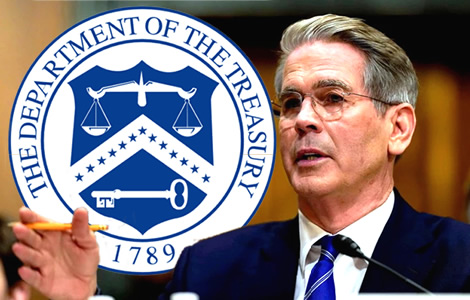
The United States Treasury Department has placed Thailand back on its currency monitoring list. The decision was released in the latest semi-annual report to Congress. The report reviews the exchange rate policies of major U.S. trading partners. This time, 10 economies were included. Thailand was the only new addition.
Notably, the list focuses on economies with large trade surpluses with the United States. As a result, the group includes China, Japan, South Korea, Taiwan, Singapore, Vietnam, Germany, Ireland, Switzerland, and Thailand. Previously, Thailand was absent from the June 2025 report. However, that position has now changed.
According to the Treasury, Thailand’s trade balances have widened. In particular, both its current account and bilateral surplus with the United States increased. Therefore, the department reinstated Thailand for closer monitoring. At the same time, the Treasury stressed that no country met the threshold for designation as a currency manipulator.
Treasury report monitoring criteria, confirms no currency manipulators but expands scrutiny
The report was submitted under Treasury Secretary Scott Bessent. It covered the four quarters ending June 2025. During that period, no trading partner satisfied all three statutory criteria. Consequently, no sanctions were triggered. Still, monitoring was strengthened.
Traditionally, the Treasury assesses three benchmarks. First, it examines bilateral goods trade surpluses with the United States above $5 billion. Second, it reviews global current account surpluses exceeding 3% of GDP. Third, it evaluates persistent one-way foreign exchange intervention of at least 2% of GDP. Countries meeting two criteria are added to the list.
In this case, Thailand met the conditions for monitoring. Specifically, its bilateral trade surplus expanded sharply. Moreover, its export growth to the United States accelerated. Therefore, scrutiny intensified.
Last year, Thailand recorded exports to the U.S. worth $55.1 billion. This figure stood out across the region. Notably, the increase occurred despite U.S. tariffs set at 19%. Even so, exports surged. From December 2025, shipments rose 54.3% year on year.
Surging exports to United States and widening surplus drive Thailand’s return to Treasury watchlist
As a result, Thailand became one of the fastest-growing exporters to the U.S. market. Meanwhile, other economies on the list remained under review without change. Thailand alone was newly added.
At the same time, Thailand lacks a completed trade agreement with the United States. Negotiations remain unfinished. Importantly, the caretaker government is barred from finalising any deal. Therefore, progress is stalled.
According to officials, the earliest possible completion would be beyond May 2026. Until then, uncertainty persists. Consequently, the Thai business community remains exposed to policy risk. Exporters continue to operate without formal trade assurances.
Meanwhile, the Treasury has begun discussions with selected partners. These talks involve six economies on the list. Thailand and Japan are included. The discussions aim to reaffirm commitments against currency manipulation. In addition, they seek improved transparency in exchange rate disclosures.
Unfinished US trade deal and caretaker limits keep Thailand exposed as Treasury opens talks
This engagement follows changes in Treasury methodology. Under the Trump administration, scrutiny has widened. The report aligns with the “America First” framework. Therefore, the Treasury has expanded how it defines potential manipulation.
Previously, the focus was on intervention to resist currency appreciation. Such actions can suppress export prices. However, the latest report goes further. Now, it also examines interventions to resist depreciation.
Accordingly, the Treasury will assess symmetry. It will examine whether authorities act similarly during appreciation and depreciation pressures. If actions differ, they will be flagged. This applies across all monitored economies.
Furthermore, the report broadens policy coverage. Capital controls will now be reviewed. Macroprudential regulations are also included. In addition, financial institution rules will be examined. The use of government investment vehicles will be analysed. Pension fund transactions will also be assessed.
Treasury widens currency scrutiny to include depreciation, capital controls and state financial tools
At the same time, the Treasury will monitor foreign exchange swaps. These instruments can offset spot interventions. Therefore, their use will be scrutinised closely. Net forward positions will also be reviewed.
Against this backdrop, Thailand’s currency performance has drawn attention. The baht strengthened sharply over the past year. In 2025, it rose by 7%. This appreciation continued into late 2025.
According to the Bank of Thailand, large gold sales played a role. Thailand is a major regional gold trading centre. As gold exports increased, foreign currency inflows followed. Consequently, the baht strengthened further.
However, the strong currency posed challenges. Export competitiveness came under pressure. As a result, the central bank faced growing constraints. Officials described the baht’s rise as difficult to manage.
In early 2026, conditions shifted. The baht began to retreat. In recent days, it lost about 1.5% against the U.S. dollar. This marked a reversal after sustained gains.
Baht volatility eases as currency retreats after sharp gains driven by gold flows and export inflows
At the same time, the dollar showed signs of stabilisation. The dollar index had earlier fallen sharply. It later edged higher for a second straight day. This followed its weakest level since February 2022.
Meanwhile, the Bank of Thailand adjusted its policy stance. In recent weeks, it loosened capital controls. The changes were significant. Exporters and investors can now retain up to $10 million abroad per transaction.
Previously, the limit stood at $1 million. Notably, the new ceiling represents a striking tenfold increase. The move aimed to ease pressure on the baht. It also sought to provide greater flexibility to businesses.
As a result, exporters welcomed the decision. A softer baht supports overseas sales. Senior officials at the central bank also expressed support. The measure was described as necessary under current conditions.
Nevertheless, the Treasury is watching closely. Capital flow adjustments fall within its expanded review scope. Therefore, the Thai policy shift will be examined for market impact.
At the same time, U.S. officials are analysing the baht’s earlier appreciation. They are also reviewing gold market dynamics. The Treasury has expressed interest in the scale and timing of gold-related flows.
Treasury examines baht surge, gold market activity and capital flows without drawing formal conclusions
There has been strong speculation surrounding these movements. However, the Treasury report itself makes no formal conclusions. Instead, it highlights the need for transparency. The role of illicit funds has been mentioned as an area of inquiry. Separately, officials note Thailand’s active gold trading sector.
Elsewhere in the report, China remains under scrutiny. It stays on the monitoring list. However, it was not labelled a currency manipulator. This avoids an immediate escalation in trade tensions.
Still, the Treasury criticised China’s currency transparency. It stated that China stands out among major partners. The department cited limited disclosure of exchange rate practices. This language repeated the June 2025 report.
Moreover, the Treasury warned that opacity offers no protection. If evidence emerges, designation remains possible. The yuan has faced depreciation pressure. At the same time, China continues to post large trade surpluses.
Japan and China remain under watch as Treasury expands review during dollar weakness
Japan also remains on the monitoring list. The yen has weakened substantially. Policymakers have relied on calibrated communication. Direct market intervention has been limited.
Recently, reports emerged of dollar-yen rate checks by the New York Federal Reserve. These moves were viewed as potential precursors. However, Treasury officials denied U.S. intervention. Secretary Bessent stated the U.S. was “absolutely not” supporting the yen.
According to Treasury officials, recent analytical changes were not country-specific. Instead, they aim to strengthen future assessments. This is particularly relevant during periods of dollar weakness. The next report is due in November.
Senator wants to look closely at the cryptocurrency market as upper house seeks answers on rising baht
Crisis for Thailand as baht rockets in value putting exports and foreign tourism under further pressure
Bank of Thailand’s sounds warning to government on the urgent need for action to curb the baht’s value
That report will cover the second half of 2025. Until then, monitoring will continue. Engagement with listed economies will remain active. Transparency will be a central focus.
In this context, Thailand’s position has shifted materially. Its export surge, widening surplus, and currency strength have converged. As a result, it faces renewed U.S. scrutiny. The absence of a trade agreement compounds uncertainty.
Still, no sanctions apply. No trading partner has been designated a manipulator. The monitoring process continues to shape U.S. currency policy. Thailand will remain under review in the next reporting cycle.
Join the Thai News forum, follow Thai Examiner on Facebook here
Receive all our stories as they come out on Telegram here
Follow Thai Examiner here
Further reading:
Rates cut to 1.25% as damaged economy limps on to the end of 2025 with even stiffer headwinds ahead
Ex Energy Minister supports oil and arms supplies blockade against Cambodia in the Gulf of Thailand
War to continue says PM Anutin. Dismisses President Trump’s ceasefire talk as a ‘misunderstanding’
Confusion after Trump’s 20 minute phone call with PM Anutin. US side claimed a ceasefire was agreed