
Thailand fuel chaos triggers nationwide shortages and panic buying, with stations running dry. Officials insist 101-day reserves remain secure as the government races to boost supply, secure US and Angola oil, and stabilise prices amid escalating Middle East tensions.
The fallout from the Middle East war has pushed the Thai government this week to shore up energy reserves and secure alternative markets. On Tuesday, it emerged that Thailand has locked in oil contracts with Angola and the United States as it ramps up refining ahead of the Songkran holiday period. There was also relief for consumers, with government sources confirming lower electricity costs, as already approved by the cabinet, from May to August 2026. The upshot for Thailand is a clear shift towards US energy purchases, aligning with efforts to narrow the widening trade gap with its largest customer.
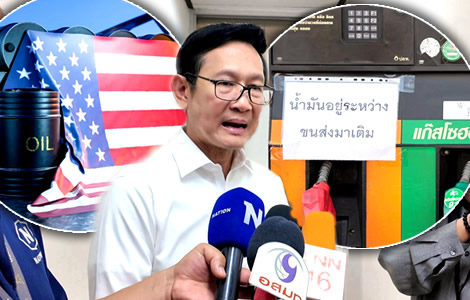
A senior Thai energy official on Tuesday apologised to the public for widespread fuel disruptions across the country. Reports of shortages emerged nationwide, including Pathum Thani, Roi Et, Ayutthaya and Nakhon Pathom. However, officials insisted that national reserves remain sufficient despite visible strain.
Sarawut Kaewtathip, director-general of the Department of Energy Business, led the response. He issued a formal apology and performed a wai gesture. He acknowledged confusion during recent briefings and disruption at retail stations.
Meanwhile, he confirmed that Thailand still holds at least 101 days of fuel reserves. Therefore, he stressed that supply at the source remains stable. However, he said the disruption stems from distribution constraints rather than shortages.
Authorities coordinate extended fuel transport hours and anti-hoarding steps as shortages spread nationwide
Consequently, authorities launched coordinated measures across multiple agencies. These include the Interior Ministry, Transport Ministry, police and the Bangkok Metropolitan Administration. Together, they are extending transport hours to accelerate deliveries.
As a result, fuel is being moved more quickly to service stations. In addition, the Commerce Ministry is working to prevent stockpiling. Officials said hoarding behaviour has worsened supply strain. Therefore, the public has been urged not to panic or over-purchase. Nonetheless, panic buying has already disrupted normal delivery cycles.
On March 16, fuel stations in Nakhon Chai Si district showed clear signs of stress. Several displayed notices stated, “Fuel out of stock, in transit.” Others reported shortages of diesel and 95 octane fuel. Meanwhile, staff were stationed at entrances to inform drivers.
This prevented unnecessary congestion but highlighted supply gaps. However, operators confirmed there are no official price controls in place. Instead, they requested voluntary limits on purchases. In some cases, informal caps were introduced at station level. Consequently, customers’ needs beyond normal accelerated the depletion of reserves.
Middle East War and Hormuz risks drive Thailand to reassess shipping routes and supply network
At the same time, officials linked the disruption to rising global tensions. The war in the Middle East has intensified, involving the United States and Israel. Significantly, the United States has refrained from striking Iranian oil facilities on Kharg Island.
Instead, it is attempting to keep the Strait of Hormuz open. However, Iran announced on Monday that the strait remains open selectively. It excluded the United States and Israel from access. Therefore, uncertainty over shipping conditions has increased. As a result, Thai authorities have flagged higher risks in regional waters.
Last week, those risks materialised. A Thai-flagged bulk carrier, the Mayer Naree, suffered extensive damage in waters off Oman. Subsequently, Thai vessels in the area were ordered to head to port.
The incident disrupted maritime operations and raised alarm in Bangkok. Notably, officials had believed Thai ships faced lower risks than larger fleets. However, that assumption proved unreliable. Consequently, authorities are reassessing maritime exposure and supply routes.
Government ramps up refining and secures Angola and US crude supplies ahead of Songkran demand
Domestically, the government moved quickly to reinforce supply lines. Atthapol Rerkpiboon addressed the issue after a cabinet meeting on March 17. He confirmed that crude oil supply remains sufficient at the source. Moreover, he said refineries are operating at full capacity. Some facilities are exceeding standard output levels to meet demand.
This comes as Thailand prepares for Songkran 2026, when travel demand will surge. Therefore, refineries have been instructed to increase production further. However, the minister reiterated that transportation remains the main bottleneck.
He emphasised that there is no shortage of crude oil. Accordingly, he urged the public not to hoard fuel.
At the same time, Thailand has secured additional crude supplies to strengthen reserves. Agreements include nearly 2 million barrels from Angola. In addition, more than 600,000 barrels will be sourced from the United States. These deals aim to reinforce supply resilience amid global uncertainty.
Thailand expands LNG imports and diversifies suppliers with US deals and accelerated delivery timelines
Meanwhile, Thailand has approached Australia for further supply options. It is also in discussions with Russia under market-based pricing mechanisms. Officials confirmed that oil trading follows free market rules. However, recent exemptions for Russian oil are limited in scope and duration.
In parallel, Thailand is expanding its liquefied natural gas imports. LNG remains central to electricity generation across the country. Therefore, diversification of suppliers is a priority. Negotiations are ongoing with Cheniere Energy to increase supply volumes.
The existing contract provides for 1 million tonnes per year. However, this is expected to rise to 1.3 million tonnes annually under a long-term agreement to 2041. Moreover, officials are seeking to accelerate deliveries. Some shipments may shift from the third quarter to the second quarter of 2026. This adjustment aims to reduce exposure to Middle East instability.
Additionally, Thailand plans further LNG agreements with US suppliers. These include more than 1 million tonnes over five years. Another plan covers 400,000 tonnes of US ethane over four years. PTT Public Company Limited is central to these efforts.
US energy imports rise as Thailand targets trade imbalance and expands long term LNG agreements
The company is also exploring imports from the Alaska Gasline Development Corporation project. Potential volumes could reach up to 2 million tonnes annually. Consequently, US suppliers will play a larger role in Thailand’s energy mix.
This shift aligns with broader trade strategy. Thailand recorded a $45.6 billion trade imbalance with the United States in 2024. Therefore, increased imports of US energy and agricultural goods are being pursued.
Meanwhile, Thailand has also expanded LPG supply agreements with a US-based supplier in Houston. The contract, signed in 2022, spans twenty years. Initially, it covered 1 million tonnes per month from 2026. However, this has now been raised to 1.3 million tonnes. The deal involves PTT Global LNG, a subsidiary of PTT. Officials said the increase will support domestic energy demand.
At the same time, the government addressed electricity pricing. Officials confirmed that rates from May to August 2026 will remain low. The cabinet approved a range between ฿3.98 and ฿3.99 per unit. However, logistics disruptions continue to pose risks to stability.
Government manages economic risks as fuel shortages raise strike threats and pressure on consumers
Prime Minister Anutin Charnvirakul is overseeing the national response. The government is working to stabilise distribution before existing issues worsen. Timing remains critical as demand pressures build.
Meanwhile, economic effects are beginning to surface. Hauliers have raised concerns over fuel availability. In some cases, strike action has been proposed. In addition, wholesalers have issued warnings about supply disruptions.
Supermarkets have also flagged potential price increases due to rising transport costs. However, the government expects a limited impact. Officials estimate that prices may rise by around 1 per cent. They said measures are in place to contain inflationary pressure.
Distribution challenges persist despite reserves, as government accelerates deliveries and long term plans
Nonetheless, the situation remains fluid across several regions. Distribution challenges continue despite adequate reserves. Therefore, authorities are maintaining close coordination between agencies. Efforts remain focused on restoring normal delivery patterns.
At the same time, the disruption has exposed vulnerabilities in Thailand’s energy system. Reliance on global shipping routes has become more apparent. Consequently, the government is expanding supply partnerships and strengthening logistics systems.
Anxiety about oil supplies and prices as economic growth in 2026 now dependent on the US Iran War
Ministers scramble to secure oil supplies due to Middle East War. Rationing at petrol stations starts
For now, officials maintain that the situation is under control. They emphasise that fuel remains available at the national level. However, local shortages may persist until distribution improves. Therefore, authorities continue to accelerate deliveries and discourage hoarding. The priority remains restoring stability across all regions while securing long-term supply resilience.
Join the Thai News forum, follow Thai Examiner on Facebook here
Receive all our stories as they come out on Telegram here
Follow Thai Examiner here
Further reading:
Anxiety about oil supplies and prices as economic growth in 2026 now dependent on the US Iran War
US Ambassador Seán O’ Neill briefed Prime Minister Anutin Charnvirakul at Government House on War
Visa waivers, discounted hotel stays and 2,000 baht a person per day for stranded tourists announced
Liquidity crisis or shortage of cash on the ground is shrinking Thailand’s economic growth prospects