Middle East War shock slams Thailand’s economy as oil prices are 38% higher than on February 28th, and banks brace for losses. Officials warn the crisis could surpass COVID-era damage. US military moves in the Gulf and possible strikes on Iran fuel fears of a wider conflict, including ground operations and deeper economic fallout.
Thai banks on Wednesday said they were raising reserves in response to rising risks from the Middle East war, which is shaking the world’s economy. Bankers are concerned about negative outcomes in the kingdom and the heightened risk of global financial shocks from the escalating situation in the Gulf. On Tuesday, Finance Minister Ekniti Nitithanprapas warned that this crisis is more severe economically than the COVID-19 emergency in 2020 and the Asian Financial Crisis of 1997. He outlined a broad strategy he will pursue as Thailand ushers in a new government in the coming days.
The deepening crisis in the Middle East is striking Thailand’s economy with force. Moreover, officials say the disruption is spreading through energy, banking, and industry. At the same time, there is rising anxiety and uncertainty about what is happening in the Gulf as the conflict between Iran and the United States–Israeli alliances escalates.
On Wednesday, a top banker warned that Thai banks were preparing to raise reserve levels. It comes in response to the impact of the war so far on small business operators and overborrowed households.
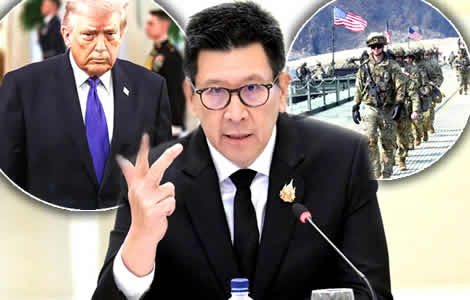
On Tuesday, Deputy Prime Minister and Finance Minister Ekniti Nitithanprapas issued a direct warning. He said the US-Iran war crisis is more severe than the COVID-19 shock of 2020. The Deputy Prime Minister outlined a broad strategy, which it is thought will be pursued by Thailand’s new government, which is to be sworn in over the next week.
Thailand faces economic shock from Middle East war as banks raise reserves and officials warn of risks
During that earlier crisis in 2020, Thailand’s economy contracted sharply amid global shutdowns. However, the present disruption centres on destroyed energy infrastructure and surging oil prices.
According to Ekniti, the impact will be wide-ranging across sectors. Meanwhile, the duration of the conflict remains unpredictable. Therefore, government agencies are preparing for prolonged disruption and volatile markets.
Ekniti said the war has damaged long-standing global energy systems. Specifically, attacks have hit oil production facilities and natural gas infrastructure. Consequently, supply capacity in producing regions has been disrupted.
Moreover, infrastructure built over decades is now under strain. He said this conflict targets physical energy networks rather than only markets. During COVID-19, demand collapsed, and supply chains stalled worldwide. However, the present crisis involves direct damage to production assets.
Damage to global oil and gas sources shifts focus from demand collapse fears to energy supply disruption
Therefore, recovery timelines remain uncertain and potentially long. At the same time, governments worldwide are reassessing energy risks. Meanwhile, global markets continue reacting to developments in the Gulf.
The United States is now increasing military resources in the Gulf region. According to briefings from Washington, DC, troop involvement is being examined seriously. In particular, officials are discussing reported raids or limited military operations.
These discussions indicate operational planning tied to the evolving conflict. Meanwhile, Iran’s missile and drone capabilities have been revealed during recent exchanges. Observers say the scale and reach of these systems surprised many governments. Consequently, regional security calculations are shifting quickly.
Analysts note that Iran strengthened its defences after earlier attacks in 2025. Israel and the United States carried out strikes during that earlier phase. Since then, Iranian missile and drone capacity appears to have expanded. Therefore, recent operations exposed the scale of those upgrades.
Expanding US military planning and revealed Iranian missile capabilities reshape security calculations
Experts are warning that the conflict could widen further. Meanwhile, Gulf states are urging the United States to remain engaged militarily. They want the threat from Iran fully neutralised before any disengagement. As a result, pressure on Washington is increasing from regional partners. At the same time, reports indicate the United States may prepare additional strikes, which could significantly escalate the situation.
These operations could target Iranian energy and power infrastructure directly. However, diplomatic talks appear strained and largely stalled. Negotiations brokered through intermediaries are showing little progress. Consequently, military planning continues while diplomacy falters.
While tensions rise, energy markets are reacting sharply. Oil prices have surged since the conflict intensified. According to the finance minister, prices climbed from about 90 dollars per barrel to roughly 240 dollars. Therefore, the increase represents a three to fourfold surge in price levels.
Consequently, fuel costs are spreading through global economies rapidly. Thailand is heavily exposed due to its reliance on imported energy. Moreover, transport, logistics, and manufacturing expenses are rising quickly. Businesses and households are facing growing cost pressure.
Surging oil prices and stalled diplomacy deepen global energy shock, while Thailand faces rising costs
On Tuesday, March 31, Ekniti addressed the crisis again in detail. He said the current energy shock may exceed the disruption caused by COVID-19. Furthermore, he said the war destroyed core energy structures in producing regions.
No clear timeline exists for the conflict’s end. Therefore, adaptation must occur rapidly across the economy. However, decisions must also reflect long-term planning. According to the minister, the global system is shifting quickly. Those who adapt faster will manage the environment more effectively.
He said the conflict is destroying long-standing infrastructure across energy markets. Specifically, oil and gas production facilities have been hit during operations. As a result, global supply routes and pricing structures are shifting.
Markets are reacting to the sudden disruption in capacity. Energy sources worldwide are affected simultaneously. Moreover, the shock is spreading beyond the immediate war zone. In comparison, pandemic disruptions came from lockdowns and halted demand. However, the current crisis stems from damaged energy production and conflict.
Ekniti said Thailand must accept this changing reality. Therefore, policy adjustments are being prepared urgently by authorities. Officials are reviewing fiscal tools, energy policy, and economic resilience strategies. Meanwhile, volatility continues across global markets and commodities.
Finance minister warns energy shock may surpass covid impact as infrastructure damage continues
The finance minister outlined three key approaches for Thailand’s response. These measures aim to stabilise the economy while preparing for structural change. At the same time, policymakers acknowledge fiscal limits and resource constraints.
First, governments must define clear policy targets in the crisis. The central question concerns how high oil prices may rise. Countries must also decide how subsidies will operate going forward. However, maintaining broad price subsidies is becoming increasingly difficult. According to Ekniti, governments cannot defeat market forces indefinitely. Public budgets are limited everywhere under rising cost pressure. Therefore, continuing price subsidies could trigger another fiscal crisis. Many countries are now shifting policy direction.
Instead of subsidising prices broadly, governments are targeting support directly. Assistance is being redirected toward individuals affected by rising energy costs. In particular, vulnerable households require protection from sudden price increases. Small businesses also require support during cost surges.
If governments fail to adjust subsidy models, fiscal risk will grow. Resources must therefore be used carefully and efficiently. Every country, business, and household faces financial limits. Consequently, policy must focus on those most in need.
Governments shift from broad fuel subsidies toward targeted aid as budgets tighten under energy pressure
The second approach involves accelerating the transition toward new energy sources. Authorities say the shift must happen as quickly as possible. High oil prices may persist for a considerable period.
Presently, as the price yo-yos on conflicting statements, it still remains 38% higher than where it was on February 28th 2026, when the war opened. To some extent, this reflects the diminishing importance of the Gulf and may explain why this war was unleashed at this time.
Of course, countries worldwide are preparing for sustained energy volatility. The pricing structure in the Middle East has been severely damaged. Infrastructure losses will take time to repair and stabilise. Consequently, supply reliability cannot be assumed soon. Governments are examining alternatives to oil dependence.
Thailand plans to accelerate renewable energy development projects. Solar farms are a major component of the national plan. Floating solar installations are also under preparation. Consequently, domestic generation capacity may expand over time. In addition, the government will streamline direct power purchase agreements.
These agreements allow renewable producers to sell electricity directly to users. Private companies and individuals can buy electricity from producers. As a result, trading opportunities may expand while costs decline.
Thailand accelerates renewable energy plans, including solar farms and direct power purchase agreements
The third approach focuses on transforming human resources and productivity. Artificial intelligence is seen as a key economic driver. Technology can improve efficiency across multiple sectors. Moreover, AI may help address labour shortages linked to ageing demographics.
Thailand’s population is ageing steadily. Therefore, workforce productivity is becoming increasingly critical. Authorities want businesses to adopt AI and digital systems faster. Meanwhile, workforce transformation is being discussed across industries.
Ekniti said Thailand must recognise global change immediately. If policies remain unchanged, problems may multiply quickly. Therefore, reforms must move forward without delay.
Officials aim to prevent overlapping crises in the economy. Resources across the economy remain limited. Consequently, support must focus on vulnerable groups first. Some individuals cannot adapt quickly to rising costs. Therefore, targeted assistance is considered essential.
AI adoption and workforce transformation highlighted as Thailand responds to ageing demographics
Capital market mechanisms are also part of the strategy. Authorities want financial markets to help the economic transition. Small businesses may gain support through improved funding access. Meanwhile, structural adjustment continues across sectors.
Ekniti confirmed the Thailand Individual Savings Account project will proceed. The program aims to support long-term savings among citizens. It will also stimulate capital market growth. Consequently, households may gain greater financial resilience.
While policymakers outline responses, Thai banks on Wednesday let it be known they are preparing for financial stress. Thai lenders are increasing loan-loss reserves across the sector. This move aims to absorb potential credit losses during the crisis. Meanwhile, the number of vulnerable borrowers is rising steadily.
On Monday, Payong Srivanich spoke after a meeting of the Joint Standing Committee on Commerce, Industry and Banking. He is the Thai Bankers’ Association Chairman. He revealed that banks are presently strengthening reserves. That is because the war is weighing heavily on customers.
Thailand’s economy is already growing more slowly than expected. Existing vulnerable groups have weaker debt repayment capacity. These groups include small businesses and heavily indebted households. Moreover, rising costs are worsening their financial position.
Banks build loan loss reserves as vulnerable borrowers rise amid slowing growth and higher costs
According to Payong, the conflict is expanding the pool of vulnerable borrowers. Some previously strong groups are now showing as a risk. Therefore, banks must manage both existing and newly vulnerable segments. Monitoring across the financial sector has intensified.
Oil price increases are a major factor driving pressure. Raw material costs are also rising quickly. Businesses must adjust their operating models rapidly. Traditional approaches are becoming less profitable under current conditions.
Uncertainty about the war complicates planning for companies. Energy costs, transport expenses, and materials continue rising. Consequently, businesses cannot forecast operations easily.
Some companies have suspended production temporarily to manage costs. Others have shut down operations entirely for now. These moves aim to limit financial losses during cost surges. Meanwhile, adjustments are spreading across industries nationwide. Certain companies have reduced transport fleets to cut expenses. The goal is to lower fuel consumption and logistics costs. Transport expenses have surged sharply during the crisis.
Businesses suspend production and cut fleets as oil and material costs surge across Thai industry
However, Payong said the disruption is not yet a full industrial collapse. Some factories have paused operations for now. Yet the impact has not spread across every sector. Banks are monitoring developments carefully and continuously.
The banking sector is maintaining core operational principles. However, support measures are expanding gradually. Banks are extending assistance during the uncertain period. Continuous economic assessments are underway.
Financial institutions are reviewing conditions at each stage of the crisis. Policies may shift depending on economic developments. Therefore, flexibility remains essential in the current environment. Liquidity support is being considered for affected businesses. However, the challenge is becoming more complex. Debt repayment ability is weakening in some sectors. Consequently, liquidity alone may not resolve all problems.
Despite the pressure, Payong noted possible positive factors later this year. Tourism activity may strengthen economic momentum. Major international events are scheduled in Thailand soon. One important event is the Gastech Conference. In addition, Thailand will host meetings of the World Bank and the International Monetary Fund. These gatherings are expected to support economic activity and investment interest.
Banks monitor risks while tourism events and global meetings offer limited economic support later
Nonetheless, this conflicts with a Ministry of Tourism and Sports briefing last week. In it, top officials warned of a potential 15% fall in foreign tourist levels in 2026.
However, geopolitical tension may still influence domestic sentiment. Payong said the Songkran holiday could feel the impact. Global developments springing from the Middle East are shaping expectations across the country.
These range from closed petrol stations to a shortage of fertiliser for crop growing. Businesses remain cautious while monitoring events closely. Meanwhile, financial leaders are examining broader global volatility in addition to problems developing in Thai bank accounts. The risk of a global financial shock is heightened.
On March 31, a major seminar was held at Siam Paragon in Bangkok. The event was organised by the Khaohoon Business Newspaper Group with SCB X. At the seminar, SCB X chief executive Arthit Nantawittaya described the crisis environment. He said the current situation reflects persistent global volatility. According to him, instability is no longer temporary.
Financial leaders warn of global volatility as tourism outlook weakens and crisis sentiment spreads
He compared the situation with the 1997 financial crisis. That earlier crisis caused a sudden collapse across sectors simultaneously. However, the present crisis is unfolding gradually over time. Arthit described the pattern as a gradual meltdown.
In this structure, the economy splits into two tiers. Some sectors remain stable and competitive. Others steadily lose competitiveness in supply chains.
Small and medium enterprises are particularly affected by these changes. These firms are losing position within global supply networks. Over time, this trend could affect financial institutions. Therefore, preparation is necessary across sectors. Arthit emphasised the importance of maintaining strong cash flow. Businesses must rely on revenue from existing operations.
Stable income sources remain critical during volatility. Companies are focusing on core business activities. Meanwhile, global uncertainty continues affecting planning. Arthit also discussed government policy direction in detail. Thailand currently shows political stability, according to his remarks. However, attracting investment remains essential for future growth.
Gradual economic meltdown described as SMEs lose competitiveness and firms focus on cash flow
Resources should support long-term transformation projects. Spending on short-term measures alone is insufficient. Therefore, investment must focus on future industries and infrastructure. Arthit said borrowing for large investments may be necessary. However, funds must support structural change rather than temporary programs.
He also discussed economic growth targets for Thailand. The country should aim for about three per cent GDP growth. This growth must come from new industries. Existing sectors alone cannot deliver the target. Tourism and exports remain important drivers. However, high-technology investment must increase.
Data infrastructure and artificial intelligence are key areas. Platform-based investment models may support expansion. Reducing reliance on fixed assets is another objective. Flexible investment structures may emerge as a result. These could create new S-curve industries in Thailand.
Arthit also addressed geopolitical risks tied to the Middle East war. Thailand must maintain credibility as a financial hub. Strengthening the country as an investment platform is important now. The Stock Exchange of Thailand plays a central role in this effort. He highlighted several priority industries.
Investment in AI data platforms and new industries targeted to achieve three per cent growth
These include food innovation and digital technology sectors. Health and well-being industries are also part of the focus. Clean energy development remains another priority area. These sectors are receiving attention under the current climate.
At the same time, developments involving the United States are shaping the broader crisis. Washington is steadily increasing its military resources in the Gulf region. Briefings indicate preparations for possible operational involvement. US planners are examining limited military actions, including raids. Moreover, discussions include potential strikes targeting Iranian infrastructure.
Meanwhile, Gulf states are pressing Washington not to disengage militarily. They want continued US involvement until the Iranian threat is removed. Consequently, the US strategy is under regional pressure. In addition, officials are believed to be preparing options targeting Iranian energy and power infrastructure.
US military buildup and strike planning against Iranian infrastructure intensifies pressure in Gulf
Such operations would strike facilities tied to oil supply and electricity networks. These preparations are being discussed as diplomatic talks falter. Negotiations brokered through intermediaries appear frayed and going nowhere. Therefore, military planning is continuing alongside stalled diplomacy.
Oil and energy crisis deepens in Thailand as Prime Minister Anutin shows off new EV car to reporters
2026 economic growth could be slashed to 0.5% if War with Iran rages on for months says Bank of Thailand
These United States moves and discussions at the White House and Pentagon are central to the unfolding crisis. They are influencing energy prices and global market reactions. Moreover, they are shaping expectations across governments, banks, and businesses worldwide. As the conflict evolves, Thailand remains exposed to these developments and their economic consequences.
No one quite knows what will happen next, but one thing is for certain. The world, including Thailand, has entered a crisis where the downside risk is growing as the days go by. US President Donald Trump is tackling a threat that has existed for 47 years, but which previous US leaders had shied away from with good reason.
As Trump signals the conflict may end in 2-3 weeks and addresses the United States on TV, there is apprehension that some sort of ground operation may ensue.
Join the Thai News forum, follow Thai Examiner on Facebook here
Receive all our stories as they come out on Telegram here
Follow Thai Examiner here
Further reading:
Oil and energy crisis deepens in Thailand as Prime Minister Anutin shows off new EV car to reporters
Anxiety about oil supplies and prices as economic growth in 2026 now dependent on the US Iran War
US Ambassador Seán O’ Neill briefed Prime Minister Anutin Charnvirakul at Government House on War
Visa waivers, discounted hotel stays and 2,000 baht a person per day for stranded tourists announced
Liquidity crisis or shortage of cash on the ground is shrinking Thailand’s economic growth prospects
Thai Minsters engage with US trade chief Jamieson Greer in Paris at global OECD ministerial meeting