After nearly 11 years, Thailand finally delivers justice for the Erawan Shrine massacre as two Chinese Uyghur bombers are sentenced to death over the Bangkok attack that killed 20 and injured 126 in a case involving 400 witnesses and 10,000 pages of evidence.
Nearly 11 years after a backpack bomb devastated Bangkok’s Erawan Shrine, killing 20 people and injuring 126 in Thailand’s deadliest bombing, a Thai court has handed down death sentences to two Chinese Uyghur men in a landmark verdict closing the first chapter of one of the kingdom’s most complex criminal cases. The ruling followed a decade of investigations, a trial involving more than 400 witnesses and 10,000 pages of evidence, with prosecutors relying on CCTV footage, forensic findings and explosive materials recovered from a Bangkok apartment. However, the case remains unresolved, with the convicted men rejecting the judgment and preparing an appeal as questions surrounding the wider network behind the 2015 attack continue to haunt up to this day.
Nearly 11 years after Thailand’s deadliest bombing, Bangkok South Criminal Court sentenced two Chinese Uyghur men to death on Thursday for the Erawan Shrine attack that killed 20 people and injured 126 others.
The ruling brought a dramatic first conclusion to one of Thailand’s longest criminal proceedings. The case stretched across nearly a decade and involved thousands of pages of evidence.
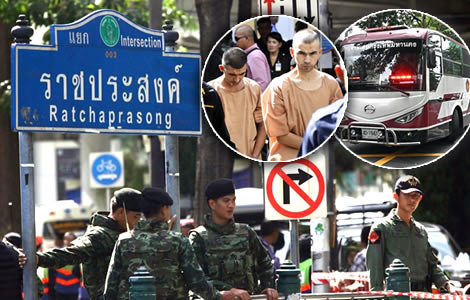
The court convicted Bilal Mohammed, also known as Adem Karadag, and Mieraili Yusufu of jointly carrying out the bombing at the Erawan Shrine at Bangkok’s Ratchaprasong intersection on August 17, 2015.
Court sentences two Uyghur men to death almost 11 years after Bangkok shrine bombing attack
The attack killed six Thai citizens and 14 foreign nationals. Among the victims were five tourists from mainland China and two from Hong Kong.
Following a lengthy review of the evidence, the four-judge panel ruled that the pair committed several offences through a single criminal act.
Therefore, the court imposed the maximum punishment available under Thai law.
“The defendants committed a single act that violated multiple laws. The court therefore imposed the harshest penalty available under the law, the death sentence,” one judge said during the reading of the verdict.
In addition, the court fined each defendant 1,000 baht for carrying weapons in a public place without reasonable cause.
The judges also ordered compensation for damaged public property.
The defendants must jointly pay 16,000 baht to the Bangkok Mass Transit Authority.
Separately, they must pay 364,500 baht to Police Hospital under the Royal Thai Police.
The Bangkok Metropolitan Administration will receive 530,000 baht.
Meanwhile, the Traffic and Transportation Department of the Bangkok Metropolitan Administration will receive 594,471 baht.
Death penalty remains while court orders fines, compensation and property payments after bombing
The court also ordered the confiscation of explosives and military equipment recovered during the investigation.
Notably, additional prison terms for explosives and immigration offences did not alter the final punishment because the death sentences remained in effect.
The judgment followed one of Thailand’s largest criminal trials.
Prosecutors presented more than 400 witnesses during the proceedings.
The defence called more than 45 witnesses.
Altogether, the evidence file exceeded 10,000 pages.
The bombing happened at approximately 6.55pm on August 17, 2015.
At that time, tourists and worshippers filled the Erawan Shrine compound.
The shrine stood among Bangkok’s most important religious landmarks and busiest tourist destinations.
Investigators later concluded the weapon was a TNT-based improvised explosive device hidden inside a backpack beneath a bench.
Within minutes, the device detonated and ripped through the crowded shrine area.
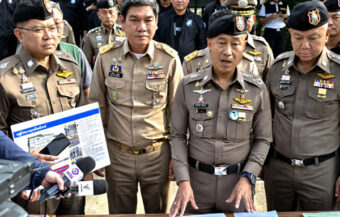
Investigators reveal how a backpack bomb was planted before the deadly Erawan Shrine explosion
The explosion scattered debris across the Ratchaprasong intersection and damaged surrounding property.
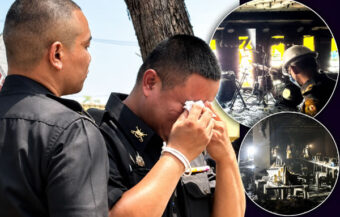
Emergency teams faced scenes of devastation as they treated the dead and injured.
The prosecution’s case relied heavily on CCTV footage, witness testimony and forensic evidence.
According to investigators, CCTV captured a man wearing a yellow shirt arriving near the shrine by tuk-tuk.
He entered the shrine compound, sat near a bench and placed a backpack beside him.
Afterwards, he remained briefly in the area and appeared to pose for photographs.
At 6.53pm, he walked away from the bench.
No one approached the backpack afterwards.
Three minutes later, at 6.56pm, the bomb exploded.
The court accepted prosecution evidence identifying the man in the yellow shirt as Bilal Mohammed.
In support of this conclusion, a taxi driver identified him as the passenger who had travelled from Soi Charoen Nakhon 61 to Hua Lamphong railway station.
Subsequently, a tuk-tuk driver identified him as the passenger who travelled from Hua Lamphong to the Erawan Shrine.
CCTV, taxi and tuk-tuk evidence linked Bilal Mohammed to the Erawan Shrine bombing scene
The route reconstructed by investigators matched the CCTV timeline and other evidence.
On another front, prosecutors linked Mieraili Yusufu to the operation through separate witness accounts and technical evidence.
A tuk-tuk driver identified him as a man wearing a purple shirt travelling from Hua Lamphong to the CentralWorld area.
The location sits close to the shrine and the bombing scene.
Moreover, CCTV footage showed Yusufu moving through the area before the attack.
Mobile phone records also became important evidence.
They showed communication between both defendants around the period of the bombing.
As part of this evidence, investigators reconstructed the defendants’ movements before and after the explosion.
The court ruled that the combined evidence established a coordinated operation involving both men.
The investigation then moved towards the suspects’ accommodation in Bangkok, where further evidence emerged from Poolanan Apartment.
Forensic evidence from the Bangkok apartment connected both men to explosives and materials found
At Poolanan Apartment, investigators searched rooms 412 and 414 and uncovered key forensic evidence.
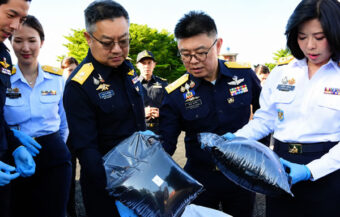
Police recovered chemicals, detonators and aluminium powder from the rooms.
Forensic examinations confirmed that the materials were explosive components and military equipment.
The apartment caretaker told the court that Bilal had lived in room 412.
Evidence also showed that Yusufu had previously occupied both rooms.
Furthermore, fingerprint and palm print examinations linked both defendants to the rooms containing the explosive materials.
Forensic officers identified distinctive patterns matching the defendants’ fingerprints and palm prints.
In parallel, prosecutors presented three witnesses who described Yusufu purchasing chemicals later discovered during the searches.
The court accepted that testimony as credible.
Consequently, it found the evidence proved illegal possession of explosives and military equipment beyond a reasonable doubt.
Court rejects defence arguments after reviewing statements, evidence and forensic findings
The prosecution also relied on evidence gathered during the investigation phase.
During questioning, both defendants made statements and participated in crime scene reconstructions.
The court considered those statements alongside CCTV footage, witness accounts and forensic findings.
However, the judges ruled that the statements did not amount to sufficient mitigation to reduce the punishment.
The defendants had consistently denied the charges during the trial.
They argued that the investigation was unlawful and alleged torture and improper treatment.
In response, the court examined those arguments against the wider body of evidence.
The judges concluded that the defence claims lacked sufficient weight to undermine the prosecution’s case.
Meanwhile, the court reached a different conclusion regarding a separate alleged bombing at Chao Phraya Princess Pier in the Charoen Nakhon area.
Judges dismiss separate Chao Phraya Princess Pier bombing charges due to insufficient evidence
Prosecutors alleged that the two men carried another explosive device to the pier earlier on August 17, 2015.
According to the indictment, Bilal brought the device to the location while Yusufu was accused of triggering it remotely.
However, the prosecution could not prove that allegation beyond a reasonable doubt.
CCTV footage showed Bilal travelling towards the Charoen Nakhon area.
Nevertheless, the footage did not capture him placing an explosive device at the pier.
Moreover, investigators failed to recover any explosives or physical evidence from the location.
Therefore, the court gave both defendants the benefit of the doubt under Section 227 of the Criminal Procedure Code.
Those charges were dismissed, while the Erawan Shrine convictions remained.
The court also reviewed the wider consequences of the bombing.
The judges said the attack occurred while large crowds of tourists and worshippers were gathered at the shrine.
Court details the devastating impact of the bombing that killed twenty people and injured many others
As a result, 20 people were killed and 126 others suffered injuries ranging from minor to severe.
The explosion also damaged property belonging to private individuals and government agencies.
In addition, the court found that the offences affected national security, public safety and public order.
The judges imposed separate penalties for explosives offences and immigration violations.
Bilal was convicted of entering Thailand illegally and remaining in the kingdom without permission.
The court imposed two additional six-month prison terms for those offences.
However, those sentences did not change the final outcome because the death sentence carried the highest penalty.
Court maintains fines and compensation orders despite death sentences remaining in force
Separately, the court maintained the 1,000 baht fine against each defendant for carrying weapons in a public place without reasonable cause.
The judgment also required both men to jointly compensate government agencies for property damage.
The Bangkok Mass Transit Authority will receive 16,000 baht.
Police Hospital under the Royal Thai Police will receive 364,500 baht.
The Bangkok Metropolitan Administration will receive 530,000 baht.
Meanwhile, the BMA Traffic and Transportation Department will receive 594,471 baht.
The court further ordered the confiscation of all explosives and military equipment seized as evidence.
The prosecution originally filed the case before the Bangkok Military Court on November 23, 2015.
The case proceeded under National Council for Peace and Order Announcement No. 50/2014.
Later, on November 14, 2019, the military court transferred the proceedings to the Bangkok South Criminal Court.
Trial involving more than 400 witnesses and 10,000 pages of evidence stretched for years
The trial then became one of the longest and most complicated criminal cases in modern Thai legal history.
More than 400 prosecution witnesses gave testimony.
The defence, meanwhile, presented more than 45 witnesses.
Altogether, the evidence file grew to more than 10,000 pages.
The proceedings suffered repeated interruptions over the years.
The Covid-19 pandemic disrupted the court schedule and slowed hearings.
Additionally, the process was complicated by difficulties obtaining suitable translators for the defendants.
At one stage, a translator assigned to the accused faced drug-related charges.
That development created another delay in a case that had already stretched for years.
The bombing took place during a period of heightened diplomatic sensitivity between Thailand and China.
Only weeks before the attack, Thailand’s military government forcibly returned 109 Uyghurs to China.
Uyghur deportation before the bombing drew criticism as investigators examined possible links
The deportation drew criticism from international rights groups, which warned that the Muslim minority faced cultural and religious repression in Xinjiang.
Uyghurs are a Turkic ethnic minority originating from China’s western Xinjiang region.
The timing of the bombing subsequently led to speculation that it was retaliation for Thailand’s repatriation of the Uyghurs.
However, Thai authorities never publicly established a definitive motive behind the attack.
The Erawan Shrine bombing immediately triggered one of the largest investigations in Thailand’s modern history.
Police identified 17 suspects in connection with the attack.
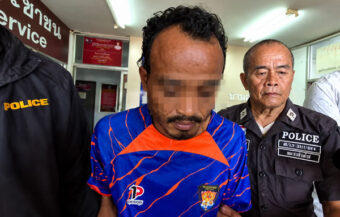
However, only Bilal Mohammed and Mieraili Yusufu were initially arrested and brought before the court.
The investigation later faced criticism from some observers, who questioned why progress appeared to slow after the two men were detained.
Meanwhile, investigators continued pursuing other individuals connected to the wider network.
Third suspect acquitted after years of proceedings as wider investigation continued after arrests
In 2017, Thai national Wanna Suansan became the third named suspect arrested in the case.
She was detained upon arriving in Bangkok under an arrest warrant connected to the bombing.
Prosecutors charged her with attempted murder, associated murder and possession of bombs and weapons.
However, after years of legal proceedings, the court acquitted her of all charges in 2024.
The legal battle involving Bilal and Yusufu continued through a series of delays and procedural obstacles.
By the time the judgment was delivered, almost 11 years had passed since the explosion devastated central Bangkok.
The final ruling represented the first major judicial conclusion in a case that remained unresolved for more than a decade.
Following the verdict, Mieraili Yusufu openly rejected the court’s decision.
“RIP Thailand’s justice system. I don’t accept any of this. I didn’t do anything wrong,” he said after the ruling.
Defendants prepared to appeal as China backs Thailand’s legal process over the deadly bombing
In response, defence lawyer Choochat Kanpai confirmed that both men would challenge the judgment.
He said the defendants would appeal because several aspects of the proceedings had not been fully considered.
That included concerns regarding the treatment of the defendants during the lengthy court process.
The appeal will now move the case into the next stage of Thailand’s judicial system.
Separately, China publicly supported Thailand’s handling of the case.
Chinese Foreign Ministry spokesman Lin Jian strongly condemned those responsible for the bombing.
“The attackers were totally inhumane and extremely heinous,” Lin said during a press briefing.
He added: “China supports Thailand in conducting the trial in accordance with the law and severely punishing the murderers.”
The Chinese government’s reaction carried particular significance because Chinese citizens were among the dead.
Five visitors from mainland China and two from Hong Kong were killed in the explosion.
Erawan Shrine remains a major tourist destination as the historic bombing case continues
The Erawan Shrine has since returned as one of Bangkok’s most recognised tourist landmarks.
Large numbers of visitors, especially from China, continue to visit the site each year.
However, AFP interviews conducted before the verdict suggested many Chinese tourists were unaware of the case.
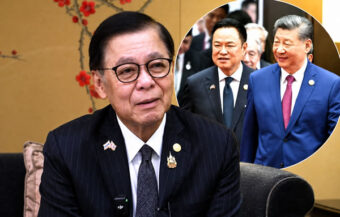
Deputy PM Phumtham says no other country would take Uyghurs. Thailand neutral in US-China spat
Royal Thai police make breakthrough in Bangkok bomb probe as police identify ringleader
The judgment closes a major chapter in Thailand’s longest-running terrorism prosecution.
Nevertheless, the legal process remains unfinished as the defendants prepare their appeal.
The death sentences remain in place while the appeals process moves forward.
The case leaves behind a record of hundreds of witnesses, thousands of pages of evidence and a criminal investigation that lasted almost 11 years.
It also remains one of the most devastating attacks ever carried out on Thai soil.
Join the Thai News forum, follow Thai Examiner on Facebook here
Receive all our stories as they come out on Telegram here
Follow Thai Examiner here
Further reading:
Deputy PM Phumtham says no other country would take Uyghurs. Thailand neutral in US-China spat
Immigration boss warns that a new crackdown on foreigners flouting Thai laws has begun