Thailand’s nominee crackdown could become far more severe as a proposal would make hidden foreign ownership a money laundering crime. AMLO powers, land seizures, asset tracing, jail and ฿3m fines could hit investors as nationwide raids intensify.
Thailand’s intensifying crackdown on nominee ownership could become a nightmare for those involved if the government heeds plans unveiled on Thursday by the President of the Ombudsman, Mr Songsak Saichue. He proposed treating offences used to conceal foreign control as a money laundering crime. The move could unleash AMLO investigations, asset tracing, retrospective ownership checks, land seizures, prison terms and multi-million-baht fines as scrutiny spreads from criminal syndicates into hotels, farms, property investments and long-established foreign businesses nationwide.
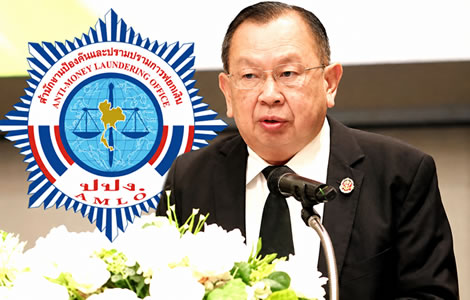
Nominee shareholding offences used to conceal foreign ownership in Thailand could be classified as money laundering crimes under proposals put forward by President of the Ombudsman Mr Songsak Saichue, a move that would dramatically increase potential penalties for thousands of foreign investors if ultimately adopted by the government.
The recommendation marks the most far-reaching proposal yet to emerge from Thailand’s expanding campaign against nominee shareholding. Although it is not government policy, it points to a tougher enforcement strategy.
If eventually adopted, the proposal would transform nominee ownership from a corporate compliance issue into a serious financial crime carrying far wider legal consequences.
Crackdown on nominee ownership moved from organised crime into mainstream foreign businesses
The recommendation also comes as authorities continue widening investigations into businesses suspected of disguising foreign ownership through Thai shareholders. During the past year, enforcement has accelerated across several ministries.
Police, commercial investigators and land officials have all intensified inspections. As a result, many foreign investors now face growing uncertainty over business structures once regarded as commonplace.
Initially, the government’s campaign focused on organised crime and illicit foreign capital. However, its scope has steadily broadened. Today, enforcement increasingly reaches mainstream commercial activity. Consequently, concern is spreading well beyond criminal networks to include long-established foreign business owners and property investors.
Many smaller foreign entrepreneurs have invested heavily in Thailand over the past three decades. Some operate restaurants, hotels and tourism businesses. Others own manufacturing firms, trading companies or service businesses. Meanwhile, many property investors have also relied upon corporate structures to support long-term investments in the kingdom.
Officials link nominee companies to grey capital, financial crime and criminal syndicates
Thai authorities argue that stronger action has become unavoidable. According to officials, nominee structures have increasingly been exploited by transnational criminal organisations. In particular, Chinese criminal syndicates have become a growing concern.
Officials believe these networks have used Thai companies to conceal beneficial ownership, launder illicit funds and establish businesses beyond effective regulatory oversight.
Consequently, nominee ownership has become closely linked with the government’s wider campaign against grey capital. Authorities increasingly regard disguised ownership as more than a commercial issue. Instead, they see it as part of a broader effort to combat financial crime, illegal business operations and cross-border criminal networks.
Nevertheless, the wider crackdown is also affecting many reputable foreign investors. Many established businesses received advice from lawyers or accountants.
At the time, nominee shareholding was often presented as a practical solution to Thailand’s foreign ownership restrictions. Some professional advisers specialised in establishing these structures. They commonly charged formation fees together with annual or monthly maintenance costs.
Successive governments have repeatedly warned that nominee arrangements are unlawful where they exist solely to circumvent the Foreign Business Act. Likewise, officials have consistently warned against using nominees to bypass Thailand’s land ownership restrictions. Those warnings have become increasingly direct during the past decade as enforcement has intensified.
Foreign investors face uncertainty as legal reform and investigations gather momentum
Many foreign investors have responded by restructuring their businesses. Others have altered shareholding arrangements to strengthen legal compliance. Yet uncertainty has continued to grow. Prospective investors have become increasingly cautious. Property purchasers have also become more reluctant to rely upon structures once considered routine.
Notably, concern has spread beyond nominee companies alone. Long-term lease agreements remain recognised under Thai law.
However, some investors now fear future court interpretations could examine whether certain lease structures were created primarily to avoid restrictions on foreign land ownership. Although no such policy currently exists, the expanding crackdown has heightened those concerns.
Against that backdrop, Mr Songsak’s latest proposal has attracted particular attention within Thailand’s foreign business community.
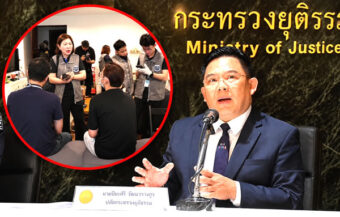
Speaking on Thursday, the President of the Ombudsman called for nominee shareholding offences to become predicate offences under Thailand’s anti-money laundering legislation. Importantly, he was outlining recommendations from the Ombudsman’s Office rather than announcing a confirmed government policy.
Even so, the proposal carries considerable significance. Several government agencies are already reviewing related legislative reforms. If the recommendation were eventually accepted, investigations into nominee ownership could fall within the powers of the Anti-Money Laundering Office (AMLO). That would represent a substantial escalation from current enforcement practices.
Money laundering powers could vastly expand the penalties for unlawful nominee schemes
Under such a framework, authorities could pursue financial investigations alongside ownership offences. Asset tracing and other money laundering procedures could also become available. Consequently, the legal exposure facing those involved in unlawful nominee arrangements would increase sharply.
Mr Songsak announced the proposal while discussing the Ombudsman’s broader campaign against scammers, nominee businesses and illicit financial networks. He said the office had already visited several border provinces to strengthen cooperation with neighbouring countries.
Current discussions involve Thailand, China and Myanmar. However, those talks are expected to expand to Cambodia and Laos. Bilateral discussions are also planned with other countries confronting similar criminal activity.
In parallel, Mr Songsak outlined several regulatory reforms already under consideration. According to him, the Ministry of Commerce, the Ministry of Interior and the Land Department have all introduced or proposed measures targeting nominee ownership. Those agencies are now working alongside police and other enforcement bodies as the government’s campaign continues to expand.
Legal reforms could see retrospective ownership investigations and tougher enforcement powers
The Ministry of Commerce has already introduced regulations allowing retrospective examination of company ownership covering the previous three months. However, Mr Songsak questioned whether that period remains adequate.
The Ombudsman’s Office is now considering whether retrospective investigations should instead extend between one and three years. Such a change would allow investigators to examine ownership structures over a much longer period.
Separately, the Anti-Money Laundering Office is reviewing amendments arising from recommendations submitted by the Ombudsman’s Office. Those proposals would add nominee ownership offences to the list of predicate offences supporting money laundering investigations.
Although the review remains ongoing, it represents the clearest indication yet that nominee enforcement may soon extend well beyond existing company and land laws.
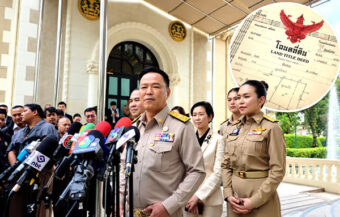
On another front, the Land Department has already submitted proposed legislative amendments to the Cabinet. Those proposals seek dramatically tougher penalties for unlawful nominee land ownership.
Current sanctions remain relatively limited. Individuals found using nominees generally face financial penalties and must surrender the land involved.
Tougher land ownership penalties could bring prison, multi-million-baht fines and state asset seizure
The proposed amendments would fundamentally change that position. Land acquired through unlawful nominee arrangements would instead become state property. In addition, both Thai and foreign shareholders involved could face prison sentences of up to three years. They could also receive fines of approximately ฿3 million each.
As part of this wider strategy, officials have also intensified inspections across areas considered vulnerable to nominee ownership and grey capital. The Ministry of Commerce has coordinated operations with police and other agencies.
Together, they have expanded investigations into businesses suspected of concealing foreign ownership. Those operations now extend well beyond individual complaints and form part of a broader nationwide enforcement campaign.
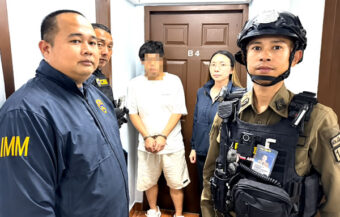
Alongside the proposed legal reforms, enforcement operations are continuing across Thailand. Officials are no longer concentrating solely on individual companies. Instead, they are targeting entire districts and business sectors considered vulnerable to nominee ownership, grey capital and organised criminal activity.
The Ombudsman’s Office continues receiving complaints from across the country. Those reports are being shared with the agencies responsible for enforcement and further investigation.
Huai Khwang and tourism provinces become priority targets in nominee ownership investigations
Bangkok’s Huai Khwang district has emerged as one of the principal areas under scrutiny. Mr Songsak described it as a significant centre for suspected nominee ownership and illicit capital. Consequently, the district remains under close observation as officials continue examining business ownership, financial activity and suspected nominee arrangements.
Elsewhere, enforcement teams have expanded inspections into several provinces with large tourism industries. Phang Nga and Surat Thani have already been identified as priority areas.
Authorities are also examining complaints concerning Khao Lak, where numerous hotels are alleged to operate through nominee structures. Those investigations form part of a broader effort to identify businesses believed to conceal effective foreign ownership behind Thai shareholders.
In response, senior officials from multiple ministries have continued meeting to strengthen coordination. The Ombudsman’s Office has invited representatives from key agencies to monitor developments, exchange information and recommend further action. The objective is to ensure investigations continue across provincial boundaries rather than remaining isolated cases.
Agricultural land has become another major area of concern. Officials fear nominee arrangements are increasingly being used to place productive farmland under effective foreign control. As a result, several important agricultural provinces are now receiving closer attention.
Agricultural land ownership complaints widen nominee investigations across farming regions
Mr Songsak identified Chanthaburi, Trat, Rayong and Chumphon among the areas facing heightened scrutiny. He also named Samut Songkhram, Samut Sakhon and Ratchaburi. According to the Ombudsman, complaints indicate agricultural land in those provinces may be passing into foreign control through nominee structures.
Beyond that, investigators are reviewing complaints involving specialist agricultural businesses. Sweet tamarind farmers in Phetchabun have already submitted proposals raising concerns about foreign investment.
Meanwhile, authorities are examining coconut-growing areas in Samut Songkhram, Samut Sakhon, Ratchaburi and Phetchaburi. Those complaints allege foreigners have gained effective control while Thai nominees remain the registered owners.
Separately, longan orchards have also attracted official attention. Mr Songsak said complaints had been received from Phetchabun, Chiang Mai and Chiang Rai. Those reports are now being monitored alongside wider investigations into nominee ownership across the agricultural sector.
Border provinces remain another enforcement priority. According to Mr Songsak, nominee businesses often overlap with scam operations and organised criminal networks operating across Thailand’s frontiers.
Border security cooperation expands as nominee firms become linked with regional crime networks
Those networks also facilitate the movement of both Thai and foreign workers abroad. Therefore, the Ombudsman’s Office has expanded cooperation with neighbouring countries while encouraging closer intelligence sharing.
Current discussions involve Thailand, China and Myanmar. However, Mr Songsak said the initiative will broaden further. Cambodia and Laos are expected to join future discussions. In addition, bilateral talks will be held with other countries confronting similar cross-border criminal activity.
Notably, the Ombudsman’s Office views the issue as extending well beyond nominee shareholding alone. Instead, officials increasingly see nominee companies, scammers, illicit capital and organised financial crime as interconnected challenges requiring coordinated enforcement by multiple agencies.
Tourism businesses remain another important focus. According to Mr Songsak, numerous hotels, resorts and guesthouses across Thailand are believed to operate through nominee structures. Consequently, investigations into ownership arrangements are expected to continue in major tourist destinations alongside wider commercial enforcement.
Ombudsman urges stronger action as foreign investors confront a rapidly changing environment
Despite the expanding campaign, Mr Songsak acknowledged the complexity of the task. He said dismantling nominee networks would not be straightforward because responsibility is shared across numerous agencies. Corporate ownership, land law, financial regulation and criminal investigations frequently overlap. Therefore, close coordination remains essential.
Even so, he stressed that the Ombudsman has a constitutional responsibility to push implementing agencies towards stronger and more consistent enforcement. The office cannot conduct every investigation itself. However, it can monitor government performance, issue recommendations and encourage agencies to produce more tangible results.
On corruption, Mr Songsak indicated that further investigations may follow wherever evidence emerges. Cases involving public officials would be referred to the National Anti-Corruption Commission together with other competent agencies.
According to preliminary information received by the Ombudsman’s Office, both private individuals and government officials may already be involved in some cases currently under investigation.
For many foreign investors, the expanding campaign has altered the investment landscape. During previous decades, nominee shareholding was widely marketed by legal and accounting firms as a practical solution to Thailand’s ownership restrictions. Today, those same structures face increasingly intensive scrutiny from regulators and law enforcement agencies.
Proposal signals toughest move yet in Thailand’s year long crackdown on nominee schemes
Consequently, many business owners have already reorganised their affairs in an effort to comply with evolving official interpretations. Others remain uncertain about whether long-standing arrangements could eventually face investigation. Property investors have expressed similar concerns, particularly as authorities continue broadening reviews of ownership structures across several sectors.
Importantly, Mr Songsak’s proposal to classify nominee offences as money laundering crimes remains only a recommendation. It has not yet been adopted by the government or enacted into law. Nevertheless, it reflects the increasingly firm direction of Thailand’s enforcement strategy.
Nominee shareholding crackdown moves into Chiang Mai with 31 firms raided and 5 foreigners arrested
Foreign nominee firms still the target of an escalating crackdown and blamed for poor economic growth
If the recommendation ultimately becomes law, the consequences would extend well beyond existing company and land ownership offences. Nominee shareholding could become a financial crime carrying substantially heavier penalties.
Combined with broader investigative powers, tougher prison terms and multi-million-baht fines already under consideration, the proposal would represent the most significant escalation yet in Thailand’s long-running campaign against disguised foreign ownership.
Join the Thai News forum, follow Thai Examiner on Facebook here
Receive all our stories as they come out on Telegram here
Follow Thai Examiner here
Further reading:
Nominee shareholding crackdown moves into Chiang Mai with 31 firms raided and 5 foreigners arrested
Koh Samui and Koh Phangan raids target a Chinese backed investment network on the paradise islands
Huai Khwang raid shows nominee shareholdings being used by Chinese infiltrating the economy
Sweep of nominee firms and business networks on Koh Phangan. 22 arrested, 200 million in land seized
Anutin visits Koh Phangan as nominee crackdown shows 68% of firms with foreign ownership links
Blitzkrieg on foreign firms and enterprises on Koh Phangan continues with French owned resort busted
Russian-Chinese Koh Phangan alliance to sell drugs to foreigners. Accused entered Thailand illegally
Crackdown aimed at upending foreign business trade moves from Koh Phangan to Phuket. Four arrested