Thai and Cambodian airports clash as Cambodian officials accuse Bangkok hubs of targeting travellers with delays and lost baggage. Tourism drops 8–10% in 2025, yet flights continue amid ongoing border war and security fears across the region.
Thailand’s airport authorities rejected Cambodian claims this week that travellers to Phnom Penh and Sihanoukville are being targeted while transiting through Thailand. The Thai capital maintains normal two-way air traffic with Cambodia despite the border war. Yet both countries have seen tourist numbers drop 8–10% in 2025, driven by the war and security fears linked to scam centre controversies.
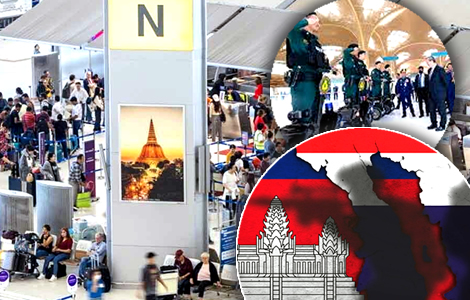
Thailand’s Airports of Thailand (AOT) hit back against claims by Cambodia this week that passengers heading for its airports through Bangkok at Suvarnabhumi Airport and Don Mueang are being disadvantaged.
Most international flights destined for Phnom Penh pass through Suvarnabhumi Airport, while low-cost budget airlines fly from Don Mueang Airport in the capital.
Authorities in Phnom Penh had previously accused the Thai airports of targeting Cambodian passengers. They claim repeated delays and missing baggage incidents occur regularly. The allegations cover flights to Phnom Penh and Sihanoukville. Cambodian officials insist the issues are systematic, not random.
Thailand’s airports reject Cambodian claims that passengers are being disadvantaged by delays
Furthermore, Cambodian authorities reported that both major and smaller Thai airports are involved. They highlighted frequent disruptions in baggage handling and passenger processing. According to officials, luggage often goes missing or is delayed for hours. As a result, travellers miss connections and face logistical challenges.
Officials also stressed that business travellers and tourists alike have been affected. They noted that Cambodian citizens are disproportionately impacted by these disruptions. Complaints reportedly span multiple months, though no specific dates were released. Moreover, Cambodian authorities claim repeated patterns indicate operational bias.
In response, Airports of Thailand (AOT), the agency managing Thailand’s airports, issued a statement on Friday. AOT categorically denied all allegations. The agency emphasised that all passengers are treated equally. Furthermore, AOT stated that claims of missing baggage and delays are untrue.
AOT confirmed that its staff follow international operational standards. The agency highlighted that millions of passengers transit Thai airports annually without discrimination. Additionally, AOT emphasised that minor incidents are handled according to established protocols. They specifically referenced Bangkok’s Suvarnabhumi and Don Mueang airports.
Cambodian authorities accuse major and smaller Thai airports of repeated baggage and transit problems
These airports serve as major hubs for flights to Cambodia. Both facilities operate multiple daily flights to Phnom Penh and Sihanoukville. Therefore, Cambodian officials argue that incidents significantly impact travel reliability. Moreover, Thai airports control a substantial portion of regional air traffic.
Meanwhile, Cambodia opened Techo International Airport in Phnom Penh in September 2025. The facility cost approximately $2 billion to construct. Cambodian authorities said the airport is key to increasing international connectivity. Furthermore, they claim flights routed through Thailand form a large proportion of incoming travellers.
Tourism statistics underline the stakes. Cambodia’s foreign tourism sector declined 8.8% in the first nine months of 2025. Authorities forecast a full-year drop between 8% and 10%. Similarly, Thailand’s tourism sector is also declining. Therefore, disruptions in Thai airports may exacerbate these trends.
Cambodian authorities insist delays are targeted and systematic, not routine, across Thai airports
Cambodian authorities maintain that the reported delays are not routine. They describe incidents as repeated, targeted disruptions. Complaints include missing luggage, slow check-ins, and extended transit times. Consequently, passengers face missed flights and interrupted itineraries. Both leisure and business travellers report similar experiences.
Furthermore, Cambodian officials claim to have documented multiple incidents affecting individuals and larger groups. They claim evidence exists to support patterns of disruption. However, no detailed public records have been released. Nevertheless, officials insist the problem is ongoing.
AOT, in contrast, maintains that all incidents are minor and isolated. Officials assert that strict procedures govern baggage handling, security screening, and passenger processing. Moreover, they emphasise that international standards guide daily operations. Therefore, the agency rejects any suggestion of systematic targeting.
Nevertheless, travellers report continued issues. Delays at both major and regional Thai airports persist. Passengers travelling to Phnom Penh and Sihanoukville report missing baggage and extended waits. Consequently, Cambodian authorities continue to monitor operational patterns closely.
Cross-border air travel amplifies disruptions as Cambodia highlights repeated operational failures
The dispute has intensified due to the volume of cross-border travel. Flights from Bangkok represent a major portion of Cambodia’s international arrivals. In addition, Thai airports dominate transit routes for Cambodian travellers. Consequently, even minor disruptions have amplified effects.
Tech International Airport in Phnom Penh was designed to improve arrivals and departures. Yet, Cambodian authorities claim that disruptions in Thailand compromise its effectiveness. Passengers continue to face logistical challenges when flights transit through Thai hubs. These include baggage delays, missed connections, and extended waiting periods.
Furthermore, Cambodian officials insist that the problems are consistent across multiple airports. Complaints cite repeated incidents over months. Therefore, authorities argue that the disruptions cannot be dismissed as isolated events.
AOT stresses operational integrity and fairness, while Cambodian officials report repeated issues
AOT emphasises operational integrity at both Suvarnabhumi and Don Mueang airports. Officials point to millions of passengers processed annually without discrimination. Furthermore, they stress that any issues are resolved promptly under standard procedures. Therefore, the agency maintains that Cambodian claims are inaccurate.
Despite denials, Cambodian authorities continue to highlight recurring problems. They claim that operational failures affect flights to Phnom Penh and Sihanoukville disproportionately. Reports mention lost luggage, delays in boarding and missed connections. Moreover, officials describe the issues as consistent rather than sporadic.
The ongoing dispute reflects the strategic importance of air routes between the two countries. Thai airports act as major gateways for Cambodian travel. Consequently, operational disruptions carry practical consequences for tourism, business, and logistics. Reports indicate that passengers face tangible hardships, including lost time and disrupted schedules.
Moreover, Cambodian authorities have focused their complaints solely on Thai airport operations. They have not accused airlines or flight scheduling processes directly. The emphasis is on baggage handling, passenger processing and transit procedures. Documentation reportedly exists to support their claims.
AOT denies ongoing allegations while travellers continue to report delays and baggage issues through Bangkok
AOT continues to reject these allegations. Officials insist that procedures follow internationally recognised norms. They maintain that incidents of missing baggage are minor and promptly addressed. Nevertheless, Cambodian authorities continue to report ongoing disruptions, citing multiple examples.
Flights from Bangkok to Phnom Penh and Sihanoukville remain busy. Passengers transiting through Thailand continue to report delays. According to Cambodian authorities, operational patterns indicate repeated challenges. Thai officials with Airports of Thailand (AOT), however, insist on system efficiency and fairness.
Furthermore, the conflict highlights the critical role of airport operations in regional travel. Efficient baggage handling, passenger processing, and timely departures are essential. AOT maintains its operations meet these standards. Cambodian authorities insist, meanwhile, that disruptions persist despite these claims.
Techo International Airport investment challenged by repeated logistical issues and disputes
Techo International Airport represents Cambodia’s investment in modern infrastructure. The $2 billion facility aims to streamline arrivals and departures. However, Cambodian officials assert that repeated issues at Thai airports limit the benefits. Travellers continue to experience logistical problems, particularly with baggage handling.
War rages on as F16s bomb a supply depot in Poipet as Defence Minister warns of oil rig attack in Gulf
Fear on Eastern border under Martial law. Cambodian Bond nabbed on ฿162 a day from Phnom Penh regime
Thailand and Cambodia move closer together with new rail and flights to boost trade, business and tourism
The dispute remains unresolved. Cambodian authorities continue to document incidents affecting flights to Phnom Penh and Sihanoukville. Airports of Thailand stands by its position. Reports from travellers, according to Phnom Penh, indicate persistent delays, lost baggage and missed connections.
In summary, Cambodian authorities accuse Thai airports of targeting Cambodian passengers. Allegations include repeated baggage losses and flight delays. AOT denies the claims and emphasises adherence to international standards.
Nevertheless, the escalating Thai-Cambodian war looms like a spectre over travel between the countries. Operational failures, according to Phnom Penh’s reports, are impacting both tourism and business travellers alike.
Join the Thai News forum, follow Thai Examiner on Facebook here
Receive all our stories as they come out on Telegram here
Follow Thai Examiner here
Further reading:
War to continue says PM Anutin. Dismisses President Trump’s ceasefire talk as a ‘misunderstanding’
Confusion after Trump’s 20 minute phone call with PM Anutin. US side claimed a ceasefire was agreed