Polls clash as Thailand votes, with Bhumjaithai and the People’s Party both tipped to lead, Pheu Thai strong, arrests over vote buying, and an early landslide Yes in the constitution referendum as counting begins.
On Sunday evening, the Pheu Thai Party’s prime ministerial candidate and campaign figurehead urged supporters to remain cautiously optimistic. Pollsters and analysts remain split over the election outcome. Some favour the Bhumjaithai Party, while others say the People’s Party has scored a stunning victory. For now, all attention is on the count. However, one point is clear: Pheu Thai has recorded a significant result and is on track for 100 to 120 seats in the new House of Representatives. In addition, the referendum on a new constitution appears to have passed.

Initial opinion polls released after voting closed present sharply conflicting pictures of Thailand’s 2026 general election outcome. At first glance, projections point in opposing directions.
However, all available data underline a fragmented and tightly contested race. While some surveys identify a clear leader, others suggest a very different balance of power. As a result, uncertainty dominates the immediate post-poll landscape.
According to the National Institute of Development Administration, the Bhumjaithai Party is positioned to lead the next House of Representatives. Specifically, the NIDA poll projects Bhumjaithai will secure between 140 and 150 seats. This figure includes both constituency and party-list MPs. By contrast, other survey organisations report a stronger showing by rivals. Notably, Suan Dusit surveys suggest the People’s Party may have captured as many as 175 seats nationwide.
Pollsters diverge on winner but converge on Pheu Thai’s strength keeping it central to coalition arithmetic
Meanwhile, despite disagreement over the outright winner, polling organisations broadly align on Pheu Thai’s performance. Across multiple surveys, the former ruling party emerges as a major parliamentary force. Most estimates consistently place Pheu Thai between 100 and 120 seats. As a result, it remains central to any future parliamentary arithmetic.
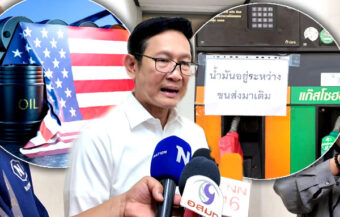
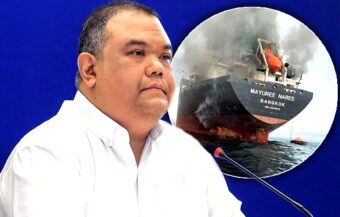
On Sunday, Pheu Thai’s figurehead and prime ministerial candidate, Dr Yotsanan Wongsawat, addressed supporters. He urged them to stay upbeat. At the same time, he warned against overconfidence. His remarks came as rival projections circulated rapidly throughout the day.
Further complexity is added by media-based polling. In particular, a Matichon survey placed the People’s Party well ahead in the popular vote. It recorded support at 49 per cent. Pheu Thai followed with a strong 37 per cent. Bhumjaithai, by contrast, trailed far behind at just 4.9 per cent. However, these figures stand in sharp contrast to NIDA’s findings.
According to NIDA’s party-list poll, the People’s Party leads with 37.17 per cent. Bhumjaithai follows with 19.27 per cent. Pheu Thai ranks third at 18.03 per cent. Consequently, projected party-list seat totals vary significantly between polling bodies. Under NIDA’s model, the People’s Party would gain 32 to 37 party-list seats. Bhumjaithai would secure 18 to 19 seats. Pheu Thai would win 17 to 18.
Party list projections show wide gaps between surveys as seat estimates swing across polling models
Meanwhile, the Democrat Party ranks fourth in the NIDA party-list vote. It is projected to receive between 12 and 13 seats. The Economic Party follows with between one and three seats. Ruam Thai Sang Chart and Kla Tham are each projected to secure a single seat. Other parties collectively account for 4.65 per cent of the vote and could win between eight and nineteen seats.
Looking beyond party-list allocations, NIDA also projects overall parliamentary strength. In this projection, Bhumjaithai ranks first with 140 to 150 seats. The People’s Party follows in second place with 125 to 135 seats. Pheu Thai ranks third with 110 to 120 seats. Meanwhile, the Democrat Party and Kla Tham Party are each projected to secure between 35 and 45 seats. All remaining parties combined are expected to win no more than 55 seats.
These projections were released on February 8, 2026, by the NIDA Poll Centre. Data collection relied primarily on telephone interviews. The survey was conducted between January 31 and February 2026. It sampled 3,000 eligible voters aged 15 and above. Importantly, respondents represented all regions, income levels, occupations, and educational backgrounds nationwide.
Moreover, probability sampling was applied throughout the study. The margin of error did not exceed 0.05. The confidence level was set at 97 per cent. In addition, researchers incorporated media analysis and political feasibility assessments. These were used to estimate total parliamentary seats, including constituency and party-list MPs.
How NIDA built its election forecast with nationwide sampling, tight margins and added media analysis
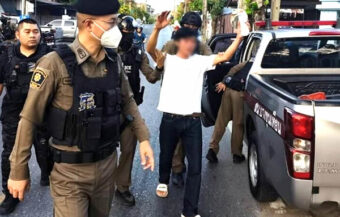
While polling data dominated early headlines, election day itself was marked by disruption. In several provinces, officials confirmed incidents of suspected electoral misconduct. Some cases escalated quickly. In Phayao province, an election official was arrested at a polling station. She allegedly attempted to cast seven ballots. Police confirmed she admitted receiving a bribe.
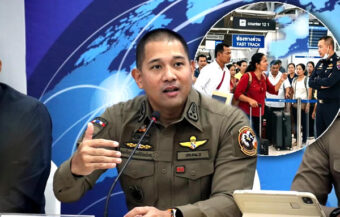
Similarly, in Chachoengsao province, officials raised alarms over suspected vote buying. Reports of corruption circulated during polling hours. Investigations were initiated at multiple locations. Earlier, the Election Commission acknowledged these incidents publicly. Secretary-General Saweang Boonmee confirmed that vote buying was detected in two to three locations nationwide.
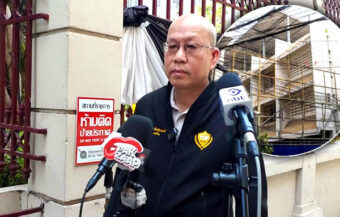
On February 8, Saweang cast his own vote in Bangkok. He voted at polling station 56 in constituency 13. The station was set up in a tent in Tambon Ruamchok. After voting, he urged citizens to exercise their electoral rights. He stressed participation in both the parliamentary election and the constitutional referendum.
Arrests and vote buying allegations surface on election day as officials confirm some cases
Voters nationwide received three ballots. A pink ballot was used for party-list MPs. A green ballot was used for constituency MPs. A yellow ballot was used for the constitutional referendum. To streamline voting, polling stations were arranged in a U-shape. This allowed voters to complete all ballots in a single flow.
Meanwhile, Saweang predicted turnout would exceed 80 per cent nationwide. He cited the deployment of more than 100,000 polling stations. He also outlined identification requirements, including national ID cards and other government-issued photo documents. For advance voters, designated stations were provided for participation in the referendum.
Later, Saweang revealed further enforcement activity. Election officials and security agencies monitored suspected vote-buying networks overnight. This operation took place during what officials termed the “Night of the Howling Dogs.” Evidence of preparations for vote buying was seized in two to three locations. Surveillance had been ongoing in several areas.
Voting procedures, turnout expectations and overnight enforcement frame the final phase before counting
Despite confirmed incidents, officials declined to assess electoral impact. Saweang stated it remained unclear whether misconduct significantly influenced voter intentions. He said updates would be provided throughout the counting process.
Polls closed nationwide at 5 pm. Shortly afterwards, vote counting began. Officials confirmed procedures were proceeding normally. Crucially, the final outcome is expected to hinge on constituency races. In northern and northeastern provinces, competition remains intense. In those areas, Pheu Thai and Bhumjaithai candidates are locked in close contests.
Thailand voted. Now to see if the people of kingdom have voted for big change or a conservative path
Alongside the parliamentary election, voters also decided on a constitutional referendum. Early indications suggest the referendum passed decisively. Some reports indicate a Yes vote of around 88 per cent. However, the Election Commission has yet to certify the result. Officials cautioned that early figures are based on partial counts.
Overall, conflicting polls, tight constituency battles, and confirmed violations have created an unsettled picture. Projections continue to vary sharply between institutions. As counting proceeds, outcomes remain provisional. Until certification, the final shape of parliament remains unresolved.
Join the Thai News forum, follow Thai Examiner on Facebook here
Receive all our stories as they come out on Telegram here
Follow Thai Examiner here
Further reading:
Thailand voted. Now to see if the people of kingdom have voted for big change or a conservative path
Bank of Thailand Governor orders monitoring of cash withdrawals amid widespread vote buying fears