Fuel rationing hits Thailand as the Middle East war chokes a major global oil route. Drivers face daily limits, prices may surge and subsidies are under review. Three missing crew alive in Thai cargo ship attack. Straits of Hormuz disruption deepens fears of a widening energy and economic crisis.
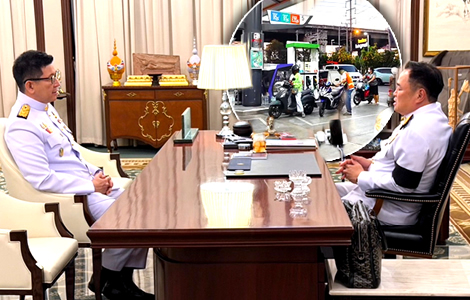
On Saturday, following the parliament opening ceremony officiated by Thailand’s King and Queen, Prime Minister Anutin Charnvirakul held emergency talks with Finance Minister Ekniti Nitithanprapas at Government House. The focus was on urgent government efforts launched this week within the Energy Ministry to secure supplies after the disruption caused by the Middle East war. The talks came as one of Thailand’s leading petrol station chains, Bangchak, began rationing petrol and oil products at the pump to ฿700 per fill.
Petrol stations across Thailand have begun rationing fuel as the country confronts a rapidly worsening energy crisis linked to the Middle East war. Motorists are now facing daily limits on petrol and diesel purchases at several service stations.
The measures appeared this week as authorities moved to prevent panic buying. At the same time, officials are attempting to preserve supplies for the weeks ahead. Consequently, the government has warned that further restrictions may follow if the conflict continues.
Meanwhile, the crisis has already begun to ripple through Thailand’s economy. Officials fear the conflict could continue for four to six weeks. Therefore, the government is reviewing subsidies that currently keep fuel prices lower at the pump.
Fuel rationing across Thailand as government warns subsidy cuts may trigger higher prices and inflation
If those subsidies are reduced, retail prices would inevitably rise. As a result, transport costs would increase across the country. Higher transport costs would then feed directly into the cost of living index. Consequently, inflation could rise, particularly for essential goods such as food and supermarket products.
For now, rationing has already appeared at several fuel stations. One major fuel retailer imposed restrictions beginning on March 13.
Under the policy, four-wheel vehicles can purchase no more than 700 baht of fuel per vehicle each day. Meanwhile, larger vehicles face different limits. Trucks with six wheels or more can buy fuel worth up to 3,000 baht per person daily.
However, the restrictions also apply to containers. Filling fuel into portable containers is generally prohibited. Nevertheless, farmers and businesses can still purchase fuel using containers when necessary.
Petrol stations limit daily purchases and ban fuel containers as retailers try to control demand nationwide
Even then, the maximum purchase remains capped at 3,000 baht per person daily. According to the company, the measure is intended to preserve supply. Therefore, the restrictions are preventative rather than emergency controls.
Earlier notices posted online triggered concern among motorists. However, the company later issued a statement reassuring the public. Fuel, it said, remains available as normal across its service stations.
Nevertheless, officials emphasised that responsible purchasing is necessary during the crisis. Consequently, the restrictions remain in place to ensure long-term access for all drivers.
In addition, the company introduced support measures for motorists if fuel prices increase. Members of its Green Miles loyalty programme will receive additional reward points after price adjustments.
Loyalty points, cheaper self-service stations and E85 fuel offered to soften impact of petrol price rises
The points will equal the difference between the previous and new price levels. Therefore, customers effectively receive compensation through the loyalty system. The policy applies to refuelling on the day following any price increase.
At the same time, the retailer highlighted cheaper alternatives for motorists seeking to reduce costs. Self-service stations offer fuel priced 0.30 baht per litre below regular service stations. Currently, around 40 such stations operate nationwide.
Meanwhile, E85 gasohol remains widely available for compatible vehicles. Consequently, drivers using ethanol-blend fuels may reduce fuel expenses during periods of high oil prices.
These developments reflect the wider energy shock triggered by the Middle East conflict. The crisis intensified after disruptions to shipping routes in the Strait of Hormuz. Previously, the strategic waterway carried around 20 per cent of the world’s oil shipments. At normal capacity, roughly 138 ships passed through the strait each day. However, traffic has now repeatedly fallen to only five vessels daily.
Strait of Hormuz traffic falls from 138 ships daily to 5 as war sends shockwaves through energy industry
As a result, global oil supply chains have been severely disrupted. Energy markets tightened rapidly as shipping slowed. Consequently, governments and energy companies began searching for alternative supply routes. Oil prices have surged amid the uncertainty. Therefore, countries heavily dependent on imported oil have faced immediate pressure.
Meanwhile, the military conflict continues to escalate. On Saturday, the United States deployed more than 2,500 marines from Japan to the Middle East. In addition, F-35 fighter jets and additional naval assets were dispatched.
The deployment reflects rising tension in the region. Furthermore, several countries have become increasingly involved in the confrontation.
At the centre of the crisis are Iranian actions around the Strait of Hormuz. The disruption there has intensified global fears of a prolonged energy shortage. Consequently, governments across the world are adjusting energy policies. In Washington, the United States temporarily waived its ban on the purchase of Russian oil. The waiver will remain in place for at least 30 days. Officials hope the move will stabilise supply during the crisis.
Thai cargo ship attacked in Gulf crisis as Bangkok protests to Iran and Navy monitors stranded crew
The conflict also affected Thailand directly this week. On Wednesday, Iranian forces attacked the Thai cargo vessel Mayuree Naree. The ship was operating in waters affected by the conflict. The attack immediately triggered concern in Bangkok. Consequently, the Royal Thai Navy began monitoring the situation closely.
Authorities later confirmed that three engineering crew members remain alive aboard the vessel. However, they were not rescued during earlier operations this week. The situation, therefore, remains unresolved. Meanwhile, the Thai government lodged a formal protest with Iran regarding the attack.
Prime Minister Anutin Charnvirakul addressed the matter publicly on Saturday. He described the attack as “inappropriate”. The government also expressed concern for Thai nationals working in international shipping. Nevertheless, the incident has highlighted Thailand’s exposure to instability in Middle Eastern waters.
Indeed, Thailand depends heavily on imported energy. Roughly half of the kingdom’s oil imports come from the Middle East. Consequently, disruptions in the region pose a direct risk to the domestic fuel supply. Therefore, government officials have spent the week scrambling to secure alternative energy sources.
Thailand opens talks with Russia and US LNG suppliers as leaders rush to secure extra energy sources
Negotiations are already underway with several partners. In particular, Thailand has begun discussions with Russia regarding possible oil purchases. The talks aim to reduce reliance on Middle Eastern suppliers. Previously, around 50 per cent of Thailand’s oil came from the region now affected by war.
At the same time, Thailand is strengthening cooperation with energy companies in the United States. Liquefied natural gas plays a critical role in Thailand’s electricity generation. Consequently, officials are seeking increased LNG deliveries under existing contracts.
On March 13, Energy Minister Atthapol Rerkpiboon met executives from Cheniere Energy Inc. The meeting included representatives from the Ministry of Energy and PTT Public Company Limited. Cheniere is one of the world’s largest LNG exporters. During the meeting, Thailand requested an increased LNG supply.
Thailand seeks larger LNG shipments from the United States while expanding long term supply contract
Currently, Thailand receives one million tonnes of LNG annually under the contract. However, officials want the volume increased to 1.3 million tonnes per year. The agreement runs until 2041, ensuring long-term supply stability. Therefore, increasing deliveries could strengthen Thailand’s energy security.
Furthermore, Thai officials asked the company to accelerate certain LNG shipments. Some deliveries scheduled for the third quarter of 2026 could arrive earlier. Instead, they may be delivered during the second quarter. Cheniere indicated it would attempt to expedite the shipments.
Meanwhile, the government is spending heavily to shield consumers from rising fuel prices. The state-run Oil Fuel Fund remains the primary tool for managing domestic prices. However, the fund is currently losing more than one billion baht each day. Acting Energy Minister Atthapol Rerkpiboon confirmed the figure earlier this week.
The losses result from subsidies that reduce retail fuel prices. Gasohol 95 and 91 currently receive subsidies of 5.38 baht per litre. E20 fuel receives 7.22 baht per litre. Meanwhile, E85 receives a subsidy of 2.28 baht per litre. Diesel receives the largest subsidy at 12.73 baht per litre.
Oil fuel fund burns over one billion baht daily as subsidies shield Thai drivers from soaring global prices
Consequently, the financial pressure on the fund is increasing rapidly. Government estimates suggest total losses could reach 10 billion baht by March 18. Nevertheless, officials say the fund has weathered similar crises before. During the early stages of the Russia-Ukraine war, the fund accumulated losses of about 120 billion baht.
Despite those losses, the fund eventually returned to surplus. Therefore, authorities believe the system remains resilient. Even so, officials continue reviewing the fund’s financial position. Possible options include gradually raising diesel prices. Another option would increase the fund’s borrowing limit, potentially guaranteed by the Ministry of Finance.
Meanwhile, the government is urging the public to remain calm. Some rural areas have already reported cases of fuel hoarding. Farmers and transport operators have begun storing additional fuel. However, officials insist supplies remain adequate.
Bangkok prepares emergency fuel plans as over 2000 garbage trucks depend on daily diesel supplies
Commerce Minister Suphajee Suthumpun addressed the issue earlier this week. She said there was no need for panic buying. Nevertheless, authorities are closely monitoring supply conditions. Additional measures could follow if the crisis continues.
At the same time, officials are attempting to reduce fuel consumption nationwide. The government has suspended most oil exports to prioritise domestic demand. In addition, biofuel blending ratios have been increased. Furthermore, some civil servants have been instructed to work from home where possible.
Local governments are also preparing contingency plans. Bangkok authorities have already assessed the risk of fuel shortages affecting essential services. The city relies heavily on diesel-powered vehicles for municipal operations. More than 2,000 garbage trucks operate across the capital every day.
These vehicles run continuously to collect waste throughout the city. Consequently, Bangkok requires a stable fuel supply to maintain sanitation services. Governor Chatchart Sittiphant said the city has begun coordinating with suppliers to secure reserves.
Government House emergency talks focus on energy security as Gulf war threatens Thailand’s economy
Officials are also calculating daily fuel consumption across municipal fleets. Ambulances, fire engines and water tankers require reliable fuel access. Therefore, authorities are planning careful allocation if shortages occur.
In the longer term, Bangkok is considering structural changes to reduce dependence on fossil fuels. Some garbage trucks may gradually be converted to electric vehicles. The transition would diversify the city’s energy sources while reducing diesel demand.
Meanwhile, national leaders continue high-level discussions on the crisis. On March 14, Prime Minister Anutin Charnvirakul held a meeting at Government House. He met Deputy Prime Minister and Finance Minister Ekniti Nitithanpraphas. The meeting occurred after the royal opening ceremony of parliament, attended by the King and Queen.
Following the ceremony, the leaders convened in the Prime Minister’s office inside the Thai Khu Fah Building. There, they reviewed oil price developments and economic risks. They also discussed measures to assist the public during the crisis.
Diplomatic talks continue as global conflict and Iranian instability threaten wider geopolitical change
In addition, the prime minister has maintained diplomatic contact with international partners. During the week, he held a dinner meeting with the Australian Ambassador to Thailand, Dr Angela Macdonald. The discussion took place as Thailand seeks broader cooperation on energy security.
Therefore, Thai authorities remain engaged on several fronts. Diplomatic talks, supply negotiations and domestic economic measures are all underway. For now, rationing, subsidies and international energy deals remain the central tools in managing the crisis. Meanwhile, developments in the Middle East continue to determine the direction of the global energy market.
Gulf War on the verge of severely harming Thailand’s economy. Petrol stations’ early 10pm closure planned
Of course, it is too early to say how the war will be resolved. However, certainly, there is the potential for this war to alter the geopolitical landscape one way or the other, depending on its outcome. This week, officials in Israel and the United States suggested that imminent regime collapse in Tehran is unlikely.
Nevertheless, there have also been ominous signs suggesting that the robust Iranian regime is fracturing. This week in particular has seen reports of defections. It has also seen the Iranian regime setting up remote bases, understood to be under bridges with armed guards, in order to escape US-Israeli bombardment.
At the same time, the regime is deploying forces and militia from outside Iran to suppress its own population, which is overwhelmingly hostile towards it.
Join the Thai News forum, follow Thai Examiner on Facebook here
Receive all our stories as they come out on Telegram here
Follow Thai Examiner here
Further reading:
US Ambassador Seán O’ Neill briefed Prime Minister Anutin Charnvirakul at Government House on War
Visa waivers, discounted hotel stays and 2,000 baht a person per day for stranded tourists announced
Liquidity crisis or shortage of cash on the ground is shrinking Thailand’s economic growth prospects
Thai Minsters engage with US trade chief Jamieson Greer in Paris at global OECD ministerial meeting