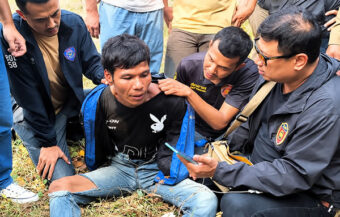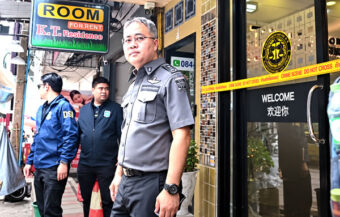
Woman denied entry at Thailand’s Don Mueang Airport for failing to meet proof of funds rule, reinstated in May as authorities tighten security against scammers. Tourists warned of stricter checks and discretionary enforcement.
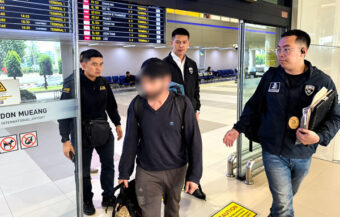
A woman was denied entry at Thailand’s Don Mueang Airport this week, highlighting the crackdown by the Immigration Bureau on access for undesirables posing as foreign tourists. The rule, previously dropped in 2023 to attract more visitors, was reinstated in May amid tighter security. In late November, authorities announced even stricter enforcement of entry rules for all travellers. The move targets scam fraudsters using Thailand as a transit hub, particularly for routes to Myanmar.
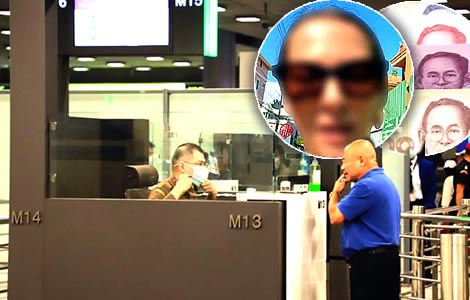
A foreign tourist was refused entry at Don Mueang Airport in Bangkok after failing to meet Thailand’s minimum cash requirement. Consequently, the traveller posted a video warning others online.
She described a confusing encounter with immigration officers and urged tourists to reconsider the airport. Thailand enforces financial requirements for foreign visitors, but enforcement is discretionary. Therefore, even frequent travellers may face refusal.
At the end of November, the Immigration Bureau warned of tighter entry criteria and tough enforcement of the rules. This came after it was revealed that foreign scammers had been abusing Thailand’s liberal tourist visa regime introduced in 2024. This offers a 60-day visa on arrival for foreign tourists from 93 different countries. A further 31 are also given a visa on arrival for a shorter period of between 15 to 30 days.
Tighter screening and enforcement applied by Immigration Bureau after visa abuse by scammers
In addition, the funds requirement was reinstated this year, having been previously disregarded as the countries sought to liberalise entry into Thailand and welcome more tourists. The requirement was dropped in 2023 and reinstated in May 2025.
The woman, whose identity remains undisclosed, said immigration officers denied her entry because she could not prove sufficient funds. She stated she had previously entered Thailand without incident. Moreover, she said no officer explained the minimum amount required. She added she would have withdrawn money from an ATM if she had known.
In her video, she said immigration officers suggested attempting entry at a different airport. However, they did not clarify how long she needed to remain outside Thailand before returning. She described the process as confusing and frustrating. Consequently, she warned tourists to avoid Don Mueang Airport.
Thailand requires all foreign tourists to demonstrate adequate financial means. Nevertheless, officers retain discretion over when to request proof. Although she had previously entered without showing funds, immigration authorities can enforce the rule at any checkpoint.
Denial of entry highlights discretionary enforcement of funds requirement by Thai immigration officers
According to the Thai Ministry of Foreign Affairs, tourists applying for a visa must provide proof of finances. Specifically, applicants must demonstrate at least ฿20,000 per individual or ฿40,000 per family. In addition, applicants must provide standard visa documents.
Travellers under the visa exemption program are also required to show funds if asked. Officials confirm the same minimum: ฿20,000 per person. Additionally, consular officers may request further documentation if deemed necessary.
Visa-exempt travellers from 93 top-tier countries may stay up to 60 days. Furthermore, they may request an extension at the Immigration Bureau in Bangkok or regional offices for a further 30 days. A single-entry visa fee of ฿1,000 applies. However, fees are subject to change without prior notice.
Some nationalities, nevertheless, must apply for a Thai visa in their home country. Therefore, travellers are advised to contact their nearest Thai embassy or consulate before departure. Official information is available on the MFA and Immigration Bureau websites.
Financial proof and visa requirements explained for tourist and visa exemption travelers in 2025
Thailand’s proof of funds requirement was reinstated for 2025. Consequently, tourists must be prepared to demonstrate financial capacity for the duration of their stay. Generally, the threshold remains ฿20,000 per person or ฿40,000 per family.
Financial proof may be requested either at an embassy or upon arrival. Travellers under visa exemption may also be asked to show documentation. Failure to comply can result in delays or refusal of entry.
Acceptable proof includes cash in Thai baht. Additionally, bank statements or a recent savings passbook are valid. International credit card statements showing available credit may also suffice. In all cases, funds must be accessible and adequate for the planned stay.
For example, a tourist entering on a 60-day single-entry visa must show at least the minimum threshold. Likewise, a family of three under visa exemption may need to demonstrate access to at least ฿60,000. These checks ensure visitors can cover expenses during their stay.
Immigration officers outline accepted financial proof for all foreign tourist arrivals and visa applicants
Immigration officers evaluate multiple factors before requesting proof. Travellers who frequently enter Thailand or have previously overstayed may face more scrutiny. Additionally, officers may review return flight tickets, hotel bookings, or travel itineraries.
The objective is to confirm that the trip is genuinely for tourism. Officers compare the declared length of stay with available funds. For instance, a two-month stay with only ฿10,000 may trigger questions.
Accepted forms of proof include cash, bank statements dated within 30 days, savings account passbooks, or valid credit card statements. Screenshots from mobile apps are generally not accepted. Likewise, funds in joint accounts without proof of access, or foreign currency without a supporting receipt, are typically rejected.
Authorities recommend carrying at least two forms of proof. For example, a stamped bank statement and an ATM withdrawal slip together provide clear evidence. This ensures faster processing at immigration checkpoints.
Mandatory proof of funds confirmed for 2025 tourist visas with clear thresholds for individuals and families
The Thai government confirmed that proof of funds is mandatory for 2025 tourist visas. Travellers applying via embassy, consulate, or upon arrival must be prepared. Procedures may differ depending on the point of verification.
The minimum funds requirement has been enforced inconsistently in the past. It has been applied, suspended, and reinstated. Consequently, many travellers remain uncertain about expectations.
Travellers are advised to review official guidance before departure. MFA and Immigration Bureau websites provide updated information. Consular officers can clarify requirements specific to each nationality.
Don Mueang incident shows that enforcement of proof of funds remains active and discretionary
The Don Mueang incident demonstrates that enforcement remains active. Even visitors who previously entered Thailand without issue may be asked for proof. Unprepared travellers risk refusal of entry.
Immigration procedures aim to confirm that visitors have sufficient resources for their stay. Authorities state this protects both tourists and Thailand’s immigration system.
Financial documentation must be verifiable and easily accessible. Officers typically accept cash in Thai baht, printed bank statements, or credit card statements. Passbooks and other official banking documents are widely recognised.
Tourists under visa exemption are not always asked for funds. Officers apply checks selectively, based on risk. Frequent visitors or long-stay travellers are more likely to face verification.
Authorities clarify that ฿20,000 benchmark applies to visa-exempt travellers if requested at entry
Notably, authorities have not set an exact amount for visa-exempt travellers, but ฿20,000 per person is the accepted benchmark. Officers may request further documentation to confirm access to funds.
Visa applicants must also comply with application procedures. Fees, supporting documents, and nationality-specific requirements must be met. Embassies and consulates provide updated guidance on these rules.
Officials emphasise that carrying proof of funds prevents delays or refusal of entry. Travellers are advised to carry multiple acceptable forms of documentation. This ensures faster processing at immigration checkpoints.
Thailand allows a 60-day stay under visa exemption. Furthermore, extensions can be requested at immigration offices. Tourist visa holders may also request a 30-day extension. Extensions follow standard procedures and require verification of supporting documents.
Longer stays or visa transitions may require additional financial documentation and guidance
Longer stays or visa transitions may require additional financial documentation. Immigration authorities may request bank records, proof of accommodation, or travel plans. These measures ensure compliance with regulations.
The Ministry of Foreign Affairs and Immigration Bureau provide detailed guidance on entry requirements. These include proof of funds, visa categories, and supporting documents. Travellers should consult official sources before departure.
The Don Mueang incident illustrates that proof of funds enforcement is discretionary but active. Officers retain the authority to deny entry if documentation is insufficient. Travellers should be prepared.
Accepted proof varies depending on convenience and reliability. Cash, bank statements, savings passbooks, and credit card statements are common. Officers evaluate the accessibility and sufficiency of funds.
Proper documentation and multiple proof options ensure faster processing at immigration checkpoints
Travellers are advised to avoid unverified digital records. Screenshots, joint accounts without proof of access, and unverified foreign currency may not be accepted. Official, verifiable documentation is recommended.
Proper preparation facilitates faster immigration processing. Multiple forms of proof allow travellers to respond quickly if requested. Delays or denied entry can be avoided with complete documentation.
Thailand’s proof of funds requirement applies to both tourist visa and visa-exempt travellers when requested.
2025 guidelines confirm proof of funds is mandatory and discretionary enforcement continues
The 2025 guidelines confirm that proof of funds is mandatory. Tourists must demonstrate financial ability for the planned duration of stay. Immigration officers retain discretion in enforcing compliance.
The denial at Don Mueang Airport highlights the importance of preparation. Travellers without verifiable funds risk refusal. MFA and Immigration Bureau advise carrying multiple forms of documentation.
Thailand applies its proof of funds requirement at all entry points, including airports, land borders, and seaports. Proper documentation reduces the risk of delays or denied entry.
Travellers should note that minimum financial thresholds, visa fees, and supporting documentation requirements may change. Checking official sources before departure is therefore essential. Embassy and consulate offices provide up-to-date guidance for each nationality.
Authorities confirm that proper proof of funds protects visitors and ensures smoother processing
Authorities maintain that proof of funds protects both visitors and the immigration system. Officers verify documents, assess financial sufficiency, and may request additional evidence to confirm legitimacy.
Immigration Bureau hit back at false reports that Chinese and Russian visitors are being targeted
Immigration Bureau tightens rules for foreign tourist visas as the country feels the heat on scammers
UK couple’s honeymoon holiday to Thailand halted by Immigration officials over smudged visa stamp
The 2025 rules confirm that proof of funds remains part of Thailand’s tourist visa requirements. Tourists must demonstrate the ability to support themselves financially for the duration of their stay. Officers retain authority to enforce this rule.
This news comes amid unprecedented security crackdowns that have been instated by the present government of Prime Minister Anutin Charnvirakul since it took power in September 2025. The government faces intense scrutiny because of suspected links to grey capital.
In the meantime, it appears to be bolstering its security credentials by tightening screening and law enforcement where it applies to all foreigners visiting Thailand.
Certainly, the Immigration Bureau has insisted that the tighter security regime should not worry genuine tourists. However, this particular story may indicate a need for visitors, even regular visitors, to be cautious and have all the required documentation for entry.
Join the Thai News forum, follow Thai Examiner on Facebook here
Receive all our stories as they come out on Telegram here
Follow Thai Examiner here
Further reading:
Immigration Bureau hit back at false reports that Chinese and Russian visitors are being targeted
Crackdown on expats working illegally deepens. Italian on Koh Phangan is arrested for woodwork
Crackdown aimed at upending foreign business trade moves from Koh Phangan to Phuket. Four arrested
Crackdown to wipe out foreign business abuses and ownership on Koh Phangan & Koh Samui intensifies
Arrogant Lebanese man held on Koh Phangan for illegal bike rental racket after being deported before