Thailand’s US trade deal is on the brink as the war with Cambodia intensifies and Bangkok weighs an oil and arms embargo. The fear is that Donald Trump will scrap talks and impose punitive tariffs, a particularly alarming prospect for Thai exporters.
Thailand may be playing with fire as it considers an oil and military arms embargo on Cambodia in the Gulf of Thailand, with the widening Thai-Cambodian war now risking a direct response from Washington, DC, despite weekend briefings by the Thai government insisting trade tariffs and sovereignty cannot be linked. The Wall Street Journal reports that after his calls with the two regional leaders last Friday, the US President insisted her warned both countries he would scrap trade talks and impose punitive tariffs, describing tariffs as an effective tool of his administration, a threat highlighted by his August decision to slap a 50% tariff on Indian exports after New Delhi refused to halt purchases of Russian oil despite US sanctions.
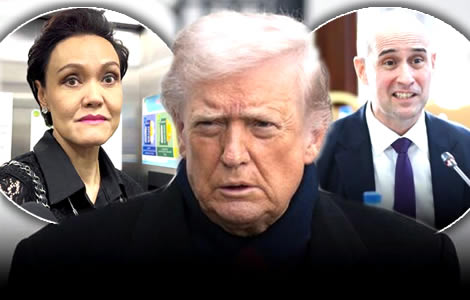
Nervous apprehension is spreading across commercial circles in Thailand as uncertainty deepens over relations with Washington. In particular, exporters and investors now fear abrupt US action. Specifically, concern centres on President Donald Trump cancelling trade talks and imposing penal tariffs. As a result, Thailand risks being treated as outside acceptable US trade frameworks.
Consequently, logistics firms, manufacturers, and financial institutions are reassessing exposure. Meanwhile, executives point to recent US actions elsewhere as warning signals. Most notably, the United States imposed a 50 per cent tariff on India on August 27. At that time, India refused to suspend oil purchases from Russia. As a result, Washington acted unilaterally.
Similarly, US officials justified that move on foreign policy grounds. Importantly, the decision reinforced tariffs as a pressure tool. Therefore, Thai officials fear comparable measures could follow. These fears intensified after direct engagement by President Trump.
Trump threatens punitive tariffs after direct calls with Thai and Cambodian leaders as border fighting escalates
On Friday, December 12, Trump held calls with regional leaders. Indeed, he spoke by phone with Thai Prime Minister Anutin Charnvirakul for the second time in a month. Separately, he spoke with Cambodian Prime Minister Hun Manet. At the same time, armed clashes along the Thai-Cambodian border were escalating. Since then, the White House has issued no formal clarification.
However, Trump spoke on the record soon after those calls. Specifically, he gave an interview to the Wall Street Journal. In that interview, he described issuing direct warnings. He said both Thailand and Cambodia faced elevated tariffs if fighting continued. Moreover, he said all trade agreements could be cancelled.
Trump stated that just minutes before the interview, he had implemented tariffs. He framed the action as a means to end the conflict. Furthermore, he said no other leader could use taxes so effectively. According to Trump, tariffs remain central to US foreign policy.
Following those remarks, Thai officials disputed the ceasefire narrative. Prime Minister Anutin stated he never agreed to a ceasefire. Instead, he said Thailand made no formal commitment. This position was supported by the Ministry of Foreign Affairs.
Thai government rejects ceasefire linkage to trade as officials push back on Trump’s tariff pressure claims
Specifically, Deputy Foreign Minister Sihasak Phuangketkeow confirmed the account. He said he was present during the call with Trump. As a result, Thai officials rejected any linkage between trade and ceasefire terms. Since Friday night, Thailand has stated that such conditions amount to coercion.
Meanwhile, conditions on the ground have worsened. Border clashes have expanded in scale and intensity. What began as skirmishes has turned into sustained combat. Consequently, both sides have deployed heavier weapons.
On Tuesday, Thailand announced its seventeenth military fatality. At the same time, officials released battlefield claims. Thailand said it had destroyed scores of Cambodian bases. Moreover, officials claimed more than 500 Cambodian soldiers were killed. Cambodia has not publicly confirmed those figures.
Meanwhile, reports from the border describe widening operations. Khmer sources say Thai air force strikes are going deeper into Cambodia. Certainly, Cambodian sources confirm intensified air attacks. At the same time, civilian security measures have increased inside Thailand.
Thailand bans civilian access to border districts as rocket fire intensifies and internal security measures expand
As a precaution, Thailand has banned citizens from entering Kantharalak District in Sisaket. Authorities cited heavy Cambodian BM-21 rocket fire. Consequently, movement restrictions remain in place. These measures reflect the expanding scope of the conflict.
Against this backdrop, trade diplomacy has stalled. On Tuesday, Commerce Minister Supajee Suthumpun confirmed talks with the United States remain frozen. She said bilateral negotiations had made no progress. This statement contrasted with earlier optimism.
Only days earlier, Supajee cited positive signals from the US State Department. However, those expectations have not materialised. Instead, negotiations remain unresolved. According to Supajee, Washington has not adjusted its tariff terms. This includes a suspension of talks on November 10 after Thailand walked away from the Thai Cambodian Peace Declaration.
At 9:20 a.m. on December 16, Supajee spoke at Government House. She said there had been no changes in talks. She added that the final decision rested with the US State Department. Moreover, she said technical teams were still discussing the matter.
Minister confirms tariff talks stalled as Washington delays decisions and security issues dominate
Supajee confirmed the US Trade Representative had made no adjustments. Therefore, Thailand is awaiting direction from Washington. When asked about Trump’s tariff threats, she said the matter had not reached her formally. Nonetheless, she acknowledged media reports.
She said Thailand had already explained its position. However, she declined to predict outcomes. According to Supajee, many factors remain in play. As a result, she said timelines remain uncertain.
When asked whether talks would conclude before a new government, Supajee said she did not know. She cited political and security variables. Meanwhile, attention has shifted to national security decisions.
Supajee was also questioned about the National Security Council resolution. The NSC is considering blocking oil and military supplies to Cambodia. She said she would wait for cabinet outcomes. Consequently, trade implications remain unclear.
Prime minister cites earlier tariff promises as border war reshapes trade outlook and security takes priority
These uncertainties contrast with recent statements from the prime minister. On Friday night, Anutin spoke of improved trade prospects. He compared potential terms to an earlier agreement. That deal involved a 19 per cent tariff rate.
The agreement was negotiated by the Pheu Thailand government. It was unveiled on August 1. According to Anutin, Trump later promised even lower rates. He said the promise came during a November 14 telephone call.
Anutin stated that Trump apologised for not acting sooner. However, developments since then have altered conditions. Border fighting has overtaken trade discussions. Consequently, security now dominates the agenda.
Meanwhile, government responses have escalated. Prime Minister Anutin has sought an informal meeting with the NSC Secretary-General. The aim is to assess further action. A cabinet decision is expected this week.
Thailand weighs oil and arms embargo as cabinet considers maritime controls and expanded martial law
Specifically, officials are considering an embargo. The proposal targets oil and military supplies to Cambodia. The route under consideration runs through the Gulf of Thailand. Additionally, authorities are discussing expanded martial law.
The proposal would extend martial law to additional regions. Officials cite the emerging threat from the conflict. As a result, domestic security measures may intensify.
At the same time, maritime issues have drawn attention. On Tuesday, Admiral Thadawut Thadpitakkul addressed these concerns. He serves as Chief of the Royal Thai Navy. He is also Secretary-General of the Maritime Security Command.
Admiral Thadawut stated that the Gulf of Thailand would not be closed. He denied reports of a complete blockade. Instead, he described targeted enforcement. His remarks came at Government House at 8:10 a.m. on December 16.
Navy chief confirms no Gulf blockade as Thailand targets only Thai-flagged vessels supplying Cambodia
He spoke ahead of a National Security Council meeting. He sought approval to upgrade enforcement under Article 27. The goal is tighter control of maritime activity. Specifically, the focus is oil and strategic materials.
The Maritime Security Command plans integrated monitoring. This includes cargo ships and fishing vessels. Both Thai operators and fleet owners are included. Moreover, ownership structures will be scrutinised.
The measures target smuggling operations. They focus on oil and military supplies bound for Cambodia. According to Admiral Thadawut, enforcement applies only to Thai-flagged vessels. Foreign ships will not be affected.
He added that international shipping lanes remain open. Thai cargo ships are subject to inspection. Thai-owned fleets operating abroad are also included. Cambodian vessels require separate verification.
AmCham Cambodia warns oil embargo would cripple US businesses and escalate economic fallout from conflict
Regarding reports of ongoing oil deliveries, he urged caution. He said information must be verified. This approach aims to avoid harming general business. He said existing measures are already active.
Admiral Thadawut denied closing any waterways. He said the objective is safety and efficiency. He emphasised private sector considerations. When asked about duration, he gave no timeline.
Despite these assurances, foreign business groups remain concerned. The American Chamber of Commerce in Cambodia has issued warnings. It has communicated with the US Embassy. These concerns focus on maritime restrictions.
On December 15, AmCham Cambodia sent a statement to the Chargé d’Affaires. The statement cited Thai military threats. Specifically, it referenced ports and oil shipments.
AmCham Cambodia warns oil shipment restrictions would disrupt US businesses and families in Cambodia
AmCham Cambodia warned that blocking oil access would have severe consequences. It said American businesses could be forced to close. Moreover, it said families would face supply shortages.
The statement cited daily necessities. These include transport, medical care, and education. It warned of broader supply chain disruption. Additionally, it highlighted trade dependence on shipping.
According to AmCham, most US-Cambodia trade relies on maritime routes. Declaring ports high-risk would raise insurance costs. Consequently, shipping expenses would increase sharply. The group warned of harm to trade growth. It said over one million vulnerable workers could be affected. The statement described the situation as escalating unnecessarily.
Ex Energy Minister supports oil and arms supplies blockade against Cambodia in the Gulf of Thailand
Travellers being ‘restricted’ from entering Thailand as security risks linked to the Thai Cambodian war
Confusion after Trump’s 20 minute phone call with PM Anutin. US side claimed a ceasefire was agreed
Casey Barnett, president of AmCham Cambodia, issued a further warning. He said threats to maritime shipments affect all countries. He described obstruction as unlawful. Barnett said blocking shipments would violate international law. He said it would amount to an attack on civilians. Furthermore, he said it would escalate the conflict.
As fighting continues, trade negotiations remain frozen. Tariff threats now loom over both Thailand and Cambodia. Consequently, commerce and conflict are increasingly linked.
For now, no formal tariff order has been issued. However, markets remain tense. Businesses await decisions in Washington, Bangkok, and Phnom Penh. The outcome remains unresolved and apprehensive. It is certainly not at all good for business.
Join the Thai News forum, follow Thai Examiner on Facebook here
Receive all our stories as they come out on Telegram here
Follow Thai Examiner here
Further reading:
Ex Energy Minister supports oil and arms supplies blockade against Cambodia in the Gulf of Thailand
War to continue says PM Anutin. Dismisses President Trump’s ceasefire talk as a ‘misunderstanding’
Confusion after Trump’s 20 minute phone call with PM Anutin. US side claimed a ceasefire was agreed