Runaway baht triggers urgent central bank action as officials push rate cuts, tighten gold scrutiny and demand a jump in outflow limits from $1m to $10m per transaction, amid fears of illicit funds, surging inflows and rising concern about one of Asia’s strongest currencies.
The Bank of Thailand and Governor Vitai Ratanakorn reached out this week to the Ministry of Finance as it detailed a package of measures to curb the value of the Thai baht, which is now one of Asia’s strongest currencies and which has appreciated by nearly 7% in the last four years against the US currency. It comes as there is rising evidence suggesting that the baht is being used by unscrupulous players to launder money, as well as being an international hedge. The Bank of Thailand is expected to lower interest rates at its Monetary Policy Committee meeting in December. On Wednesday, it asked the Finance Minister to increase the maximum transaction limit on fund outflows from $1 million to $10 million.
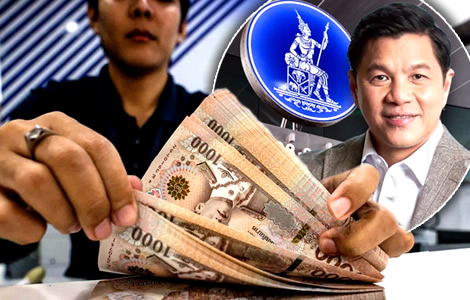
The Bank of Thailand intensified its actions this week as the baht continued to rise. The currency gained 1.7% between 4 November and 4 December. It moved from ฿32.56 to ฿32 during the period. The rise came despite weak domestic indicators.
The Monetary Policy Committee is expected to cut rates this month. That outlook, notably, follows poor economic data. It also followed a weaker US dollar. Data from the United States does not presently support a higher-priced greenback. As a result, demand for the baht has increased.
However, the appreciation has outpaced regional trends. Several Asian currencies gained substantially over the past year. In Southeast Asia, the Thai baht is accompanied by the Malaysian ringgit and the Singapore dollar.
Baht ranks among strongest currencies. Rising flows tighten exchange rate amid growing scrutiny
Yet the baht remains one of the strongest. Over the 4 years, it is the second strongest in Asia, appreciating by nearly 7%, only behind the Taiwan dollar. Indeed, the Thai currency in 2025 is listed as the 18th most influential in the world (0.26%) in an index dominated by the US dollar (49.68%) and the Euro (22.24%).
Exporters sold foreign currency as revenues came in. Bond inflows added further pressure. Gold companies sold dollars as global gold prices climbed more than 4% in a short period. Consequently, demand for baht rose quickly. The Bank of Thailand confirmed that these inflows tightened the exchange rate.
Meanwhile, fears have grown over illicit cash flows from Cambodia. Officials believe money linked to illegal activity may be routed through gold. The funds may then enter the Thai currency. These movements have drawn closer scrutiny.
On Wednesday, the Anti-Money Laundering Office froze more than ฿6 billion in shares. The shares were issued by the Bangchak Corporation. The firm is an oil refining and trading company listed on the Stock Exchange of Thailand.
Bangchak share freeze highlights cross-border links as officials track currency movements
The company is expected to delist on 12 December. The frozen shares were linked to Cambodian businesspeople. They were also linked to controversial South African financier Ben Smith. The case renewed attention on cross-border flows. It also highlighted concerns about their effect on the baht.
Assistant Governor Pimphan Charoenkhwan said the baht appreciated about 1% last week. She cited the shift in the US Federal Reserve’s outlook as the main driver. The outlook weakened the dollar. She added that exporters, gold traders and bond investors continued to influence the currency.
Capital flows remained active. Consequently, exchange rate volatility increased. She warned that financial conditions remained uncertain. The Bank of Thailand would continue to monitor the situation.
At the same time, the central bank presented new measures to the Ministry of Finance. One proposal would increase the limit on foreign income that does not need to be repatriated. The threshold would rise from US$1 million to US$10 million per transaction.
Central bank seeks higher outbound fund limits and stricter gold oversight to rein in a strong baht
The change is expected to take effect later this year. The bank said the measure would give companies more flexibility. It would reduce the amount of foreign exchange returned to Thailand. Therefore, it would ease appreciation pressure.
Additionally, the bank instructed financial institutions to tighten controls on gold-related foreign currency transactions. This followed the rapid rise in gold prices. Gold traders have had a marked impact on the exchange rate. Their activity intensified as global prices surged. Consequently, the central bank has sought stricter oversight.
The Bank of Thailand also proposed that major gold traders must report transaction data. The goal is to track currency flows more effectively. It is also to assess their impact on the baht. The bank said the data would support policy decisions. It said the data would guide further action if needed.
Further, the Bank of Thailand proposed allowing up to US$10 million in revenue per outbound international fund transfer. The goal is to curb the baht’s appreciation. The change would reduce the net volume of foreign exchange entering the country.
Bank wants larger outbound transfers as baht strength threatens competitiveness and needs action
The central bank said the increase would improve currency management for the private sector.
Moreover, the bank stressed that it would intervene when volatility threatened businesses. It noted that the baht had strengthened by 7% against the dollar this year. It is now Asia’s second-best-performing currency. The appreciation poses risks to exports and tourism. Consequently, exchange rate stability has become a priority. The bank said it would act to control sudden swings.
Bank of Thailand Governor Vitai Ratanakorn said he saw room for further rate cuts. He also said monetary policy offered limited support for an economy with deeper structural problems. The central bank cut its policy rate already four times this year.
The rate is now at a three-year low of 1.50%. The next review is scheduled for 17 December. Several economists expect another cut. The bank surprised markets in October when it held the rate unchanged.
Bangchak investigation emphasises irregular flows as authorities monitor risks and push enforcement
Nevertheless, the central bank maintains that its focus remains on the exchange rate. It said the combination of currency strength, weak local indicators, and shifting global conditions required close attention.
It added that measures now under consideration aim to reduce foreign exchange inflows. They also aim to minimise disruptions to businesses. The Bank of Thailand said it stood ready to act if conditions changed.
In addition, the bank highlighted the impact of exporter behaviour. Exporters have continued to sell foreign exchange as revenues arrive. This has strengthened the baht further. Capital inflows into Thai bonds have added another layer of pressure.
Abrupt changes in gold prices have intensified the situation. As a result, gold companies have actively sold foreign currency. The central bank said this cycle created sharp short-term appreciation.
Meanwhile, the Bangchak case highlights the scale of external money entering Thailand through complex channels. The frozen shares linked to Cambodian figures showed the reach of cross-border finance.
The connection to Ben Smith drew further attention. Authorities said the case could influence upcoming enforcement actions. The investigation remains active. It also remains tied to broader concerns about irregular flows.
Exports grew further in October but Thailand posts largest trade deficit since 2023, Baht still strong
Former Pheu Thai Finance Minister calls for a liquidity boost and a cheaper baht to pump the economy
The Bank of Thailand reaffirmed that it would continue to assess the risks. It also reaffirmed that it would manage volatility as needed. It emphasised its readiness to limit impacts on the business sector. The central bank said the situation required constant monitoring. It confirmed that new measures would be implemented as soon as approvals were completed.
Join the Thai News forum, follow Thai Examiner on Facebook here
Receive all our stories as they come out on Telegram here
Follow Thai Examiner here
Further reading:
Trump brokered peace pact between Thailand and Cambodia suspended after landmine attack this week
Prime Minister Anutin signs accord with Cambodia witnessed by US President Trump in Kuala Lumpur
Trump to oversee ground breaking new deal between Thailand and Cambodia on Saturday to map border