The US may raise tariffs if the Thailand-Cambodia peace fails. Caretaker government cannot sign any trade deal until a new parliament and cabinet approve, while technical negotiations with the US on tariffs and trade issues continue to move forward.
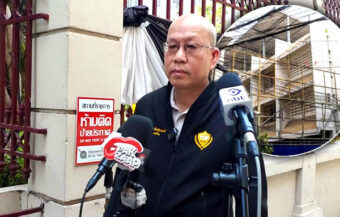
A top official at the Ministry of Commerce on Friday warned that the United States could raise tariffs if peace is not quickly restored between Thailand and Cambodia, while the Director-General of the Department of International Trade Negotiations confirmed that technical talks with the U.S. Trade Representatives’ office are ongoing; as things stand, Thailand cannot sign any trade deal until a new government is formed, likely in May 2026, because the caretaker government is barred from making binding commitments, and any agreement will also require approval from the House of Representatives, dissolved by Prime Minister Anutin Charnvirakul on December 12.
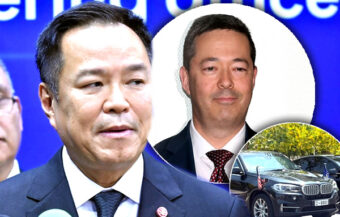
As a Thai delegation led by Minister of Foreign Affairs Sihasak Phuangketkeow takes part in the ASEAN Summit on Monday and Tuesday in Kuala Lumpur, there will be pressure to achieve a ceasefire with Cambodia.
On Friday, a top official at the Ministry of Commerce pointed to statements made by U.S. President Donald Trump regarding his plans to raise tariffs on Thailand if the warring parties do not return to peace.
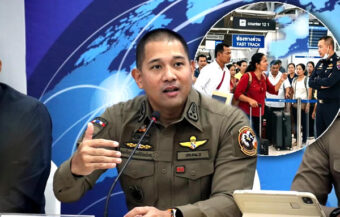
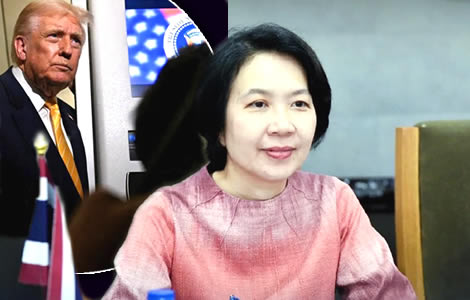
Ms. Chotima Iamsawadikul, Director-General of the Department of International Trade Negotiations, confirmed on Friday that technical discussions with the Office of the United States Trade Representative in Washington, D.C., are ongoing. These discussions follow the United States’ announcement of a 19% import tariff on Thai goods.
Thailand cannot immediately sign a trade deal as new government and cabinet approval are required
She clarified that even if Thailand finalises a deal with the United States, the agreement cannot be signed immediately. Instead, the country must wait for a new government to be installed. Afterwards, the Cabinet must endorse the agreement before it can be implemented.
Moreover, Ms. Chotima noted that U.S. President Donald Trump has threatened to raise tariffs on Thailand if the ongoing conflict with Cambodia is not resolved. This warning followed discussions between Prime Minister and Minister of the Interior Anutin Charnvirakul and President Trump.
The Department of International Trade Negotiations is leading the technical talks. These discussions are similar to broader trade liberalisation negotiations. They cover market access for goods, services, and investment. Furthermore, the United States has raised concerns about non-tariff measures. Its National Trade Estimate Report identifies these measures as affecting trade and economic security.
Regarding technical negotiations, sanitary measures are a central focus. For example, discussions on pork address the use of growth promoters. Risk assessments of processing plants are also under review. In this context, the Department of Livestock Development is examining details to ensure public health and safety are not compromised.
Local content and RVC rules from US-China talks could delay Thailand from signing a US trade deal
Local Content measures, known as Regional Value Content or RVC, are also under negotiation. However, the United States is simultaneously negotiating these measures with China. Consequently, it is expected to wait for the outcome of its China talks before applying similar rules worldwide.
Despite these constraints, the Thai side is striving to conclude technical negotiations swiftly. However, the current caretaker government lacks the authority to sign formal agreements. Therefore, even after negotiations are completed, the results must be presented to the incoming government. Following Cabinet approval, the agreement requires endorsement from the House of Representatives before signing can occur.
Ms. Chotima emphasised that Thailand’s current tariff rate remains at 19%. She added that President Trump had previously indicated a willingness to increase tariffs if the conflict with Cambodia persists.
Non-tariff and sanitary measures under review while caretaker government limits trade approvals
Additionally, non-tariff measures are expected to be clarified once the United States concludes negotiations with China. These measures could directly influence trade discussions involving Thailand. The Department of International Trade Negotiations stressed the technical nature of the talks.
The negotiations form part of ongoing efforts to manage bilateral trade relations. Officials noted that the issues addressed align with standard trade liberalisation protocols. Key areas include goods, services, investment and measures that affect economic security.
Sanitary and phytosanitary standards remain a point of negotiation. Officials are evaluating health risks associated with agricultural products. For instance, pork processing and growth-promoting substances are under detailed review. These assessments ensure compliance with safety standards while facilitating trade.
Thailand’s caretaker status imposes procedural limitations. After technical discussions conclude, formal approval by the new government is required. The Cabinet will review outcomes before forwarding them to the House of Representatives. Only then can Thailand formally sign any agreement with the United States.
Thai officials are committed to monitoring the US talks while the 19 per cent tariff remains in effect
Ms. Chotima confirmed that the Thai government is committed to completing technical negotiations efficiently. Officials coordinate with relevant departments to address issues raised by the United States. These include sanitary measures, RVC, and non-tariff barriers.
The United States has emphasised that its tariff and trade policies are linked to regional developments. Currently, the 19% tariff on Thai goods remains effective. Ms. Chotima confirmed no changes have been implemented despite earlier U.S. statements.
The Department of International Trade Negotiations will continue monitoring developments. Officials will maintain communication with the Office of the United States Trade Representative and relevant Thai agencies. Future updates are expected once technical issues are resolved and formal approval processes are completed.
Thailand follows standard trade procedures while the ASEAN summit is seen as key to border peace
Thailand’s approach follows standard trade negotiation procedures. Agreements require detailed technical discussions, followed by formal governmental approvals. This ensures compliance with domestic and international trade obligations.
Asean Summit on Monday and Tuesday seen by United States as pivotal to restoring border peace
Rising fears that Thailand’s trade deal with the United States may be scrapped over the Cambodian war
Certainly, Ms. Chotima emphasised that the Department is approaching these talks with attention to detail. Market access, investment, services and non-tariff measures are being reviewed systematically. Officials are working within limits imposed by the caretaker government while preparing for formal signing once the new government takes office.
Finally, the ongoing talks highlight the technical and regulatory dimensions of modern trade negotiations. Meanwhile, business leaders are decidedly nervous. Thailand does not yet have a signed trade pact with the United States. Significantly, this forms the bedrock of the country’s export prospects in 2026. The United States is the kingdom’s largest and most profitable market. Any complication, such as the imposition of a higher tariff or the jettisoning of the deal, would be catastrophic at this time.
Join the Thai News forum, follow Thai Examiner on Facebook here
Receive all our stories as they come out on Telegram here
Follow Thai Examiner here
Further reading:
Asean Summit on Monday and Tuesday seen by United States as pivotal to restoring border peace
War to continue says PM Anutin. Dismisses President Trump’s ceasefire talk as a ‘misunderstanding’
Confusion after Trump’s 20 minute phone call with PM Anutin. US side claimed a ceasefire was agreed