Mystery deepens over soldier’s custody death after a spoon was found in cremation ashes. Autopsy ruled heart failure, but the family questions the findings as witnesses allege assault. Army transfers senior prison officers and launches expanded probe.
On Monday, the Minister of Defence ordered a full investigation into the November death of an armed forces member in custody. Later that day, it was confirmed that two senior officers, including the director of a military prison and its warden, had been temporarily transferred as a committee of inquiry began work. At the centre of the growing controversy is the discovery of a stainless steel spoon in the remains of Private Phetcharat Kamlangying after his cremation.
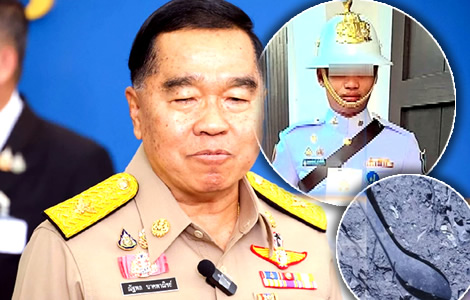
The discovery of a stainless steel spoon in the cremated remains of a soldier who died in military custody has triggered an expanded Army investigation. The utensil was found in the ash collection tray after the cremation was completed.
Just before the flames took hold, however, the funeral undertaker felt a hard obstruction inside the dead man’s mouth while placing ritual flowers. That moment, brief and unexpected, has since become central to the case.
Private Phetcharat Kamlangying died on November 10, 2025. At the time, he was serving with the 2nd Artillery Regiment, Royal Guard, at Phrom Yothi Camp in Prachinburi Province. However, when he collapsed, he was being held in the 12th Military District Prison.
Soldier collapsed in custody before autopsy ruled heart failure with no assault or internal injuries found
According to the 1st Army Area Command, he suffered a seizure. He was found without a pulse. He was then transported to hospital. Shortly afterwards, doctors pronounced him dead.
Subsequently, an autopsy was conducted under standard military procedures. Doctors reported no signs of physical assault. There was no brain contusion. There was no internal bleeding. Therefore, the cause of death was recorded as acute heart failure due to hypertrophic cardiomyopathy and heart blockage. The Army described these findings as complete and conclusive.
However, events during the cremation introduced a new and highly specific detail. During the funeral ceremony, undertaker Sittiporn, 39, followed traditional rites. First, he lit flower papers. Then, as required by custom, he placed them into the deceased’s mouth. At that moment, he felt resistance. He later described it as a hard object or foreign obstruction inside the mouth.
Nevertheless, he allowed the cremation to proceed. Only after the body had fully burned did he inspect the ashes carefully. There, among the remains, he found a stainless steel spoon. Importantly, the utensil was intact. Metal does not disintegrate in cremation heat. Therefore, if present before ignition, it would remain afterwards.
Family told no spoon was used as detention and prior punishment details emerge from military
Sittiporn immediately informed the family. He stated clearly that no spoon had been used during body preparation. Moreover, he confirmed that no utensil was inserted during the ceremony. The spoon was not part of any ritual practice. The family said they had no knowledge of any such object before cremation.
Earlier, the family had relied on the Army’s explanation. They were told that Private Phetcharat died from heart failure. They were also told that the autopsy found no injuries and no signs of struggle. Accordingly, they proceeded with funeral rites.
Before his death, the soldier had faced disciplinary action. His commander told the family that he returned late from leave. As a result, he was punished. The commander stated that punishments could range from minor penalties to imprisonment.
However, he did not specify which penalty was imposed in this case. It is now confirmed that Phetcharat was detained in the 12th Military District Prison prior to his collapse.
Army transfers prison commanders and form enquiry committee while reaffirming autopsy findings
Following the discovery of the spoon, the Army initiated immediate administrative measures. The Commander of the 12th Military District Prison was transferred to headquarters pending investigation. In addition, the prison warden was transferred. Furthermore, the Commander of the 1st Army Region ordered the formation of a central investigative committee.
According to official statements, the committee will examine all relevant units. It will review detention procedures. It will also ensure fairness to both the soldier’s unit and his family.
On February 23, the 1st Army Area Command issued a detailed statement. It reaffirmed the autopsy findings. Specifically, it repeated that there were no signs of assault, brain injury, or bleeding. Therefore, the official cause of death remains sudden cardiac arrest linked to acute heart failure.
However, the statement acknowledged that the family may still have questions. Accordingly, it pledged transparency and fairness. It promised to announce the results once the investigation is complete. At the same time, it expressed condolences to the family. It also reiterated that the Army has no policy of supporting or protecting wrongdoing.
Family questions heart diagnosis as anonymous witnesses allege chest assault by senior soldier
Meanwhile, the family has asked for clarification rather than accusations. The father stated that they have not blamed any specific Army personnel. Instead, he said they want clear answers about what happened. He also noted that compensation under soldier welfare benefits had been promised. However, nearly three months after the death, no payment had been received.
Additionally, Phetcharat’s aunt publicly questioned the heart failure diagnosis. She told Channel 7 that he had no known congenital disease. Moreover, she said he had worked in the family’s logging business before enlistment. According to her, he showed no prior heart problems.
As the case drew attention, it expanded beyond the immediate family. Nitchanan Wangkahat, a former People’s Party candidate for Parliament in Chon Buri, posted about the case on Facebook.
Subsequently, witnesses and soldiers contacted her privately. According to Nitchanan, at least three individuals provided similar accounts alleging that a higher-ranking soldier kicked Phetcharat hard in the chest.
Defence minister orders wider probe as autopsy findings remain central to official position
However, those allegations have not been confirmed by the Army. Nevertheless, they increased public scrutiny. Consequently, Defence Minister General Nattaphol Nakpanich addressed the matter on February 23, 2026.
He confirmed that an expanded investigation would proceed. Furthermore, he warned that if violence was involved, those responsible would face legal proceedings under the Act on Prevention and Suppression of Torture and Enforced Disappearance.
He stated that subordinate units had already submitted preliminary reports. Those reports indicated no irregularities. However, he added that the Army was ready to allow further investigation if necessary. When asked whether spoons were normally permitted in detention, he said he did not know the detailed regulations. Nevertheless, he noted that soldiers often carry spoons, and some units carry spoons and glasses as standard items.
In addition, he addressed speculation that the spoon could have been used as a weapon. He said that determination requires further investigation by the relevant unit. He again emphasised that the autopsy found no internal injuries. Therefore, medical findings remain central to the official position.
Defence council stresses strict discipline as spoon discovery remains an unexplained anomaly
At a Defence Council meeting, General Nattaphol instructed commanders to scrutinise military discipline strictly. He noted that past military operations had received public praise. However, he warned that unresolved incidents could damage institutional credibility.
He ordered commanders to examine matters involving enlisted soldiers, rangers, civil servants, and non-commissioned officers. Moreover, he emphasised that transparency is essential in the current era.
Minister Sutin asks army to probe claims by a former female soldier that she was sexually molested
Lovesick military cadet thought to have murdered his star girlfriend and taken his life in calamity
He further stated that if allegations of torture arise, proceedings will follow the Anti-Torture Act and other relevant laws. This, he said, is firm policy direction. Subordinates, he added, must consider the broader impact of misconduct.
For now, the official cause of death remains acute heart failure. However, one fact remains undisputed. A stainless steel spoon was discovered in the ashes after cremation. Before that discovery, the undertaker felt a hard object inside the soldier’s mouth. Yet the autopsy did not record any foreign object.
Join the Thai News forum, follow Thai Examiner on Facebook here
Receive all our stories as they come out on Telegram here
Follow Thai Examiner here
Further reading:
Minister Sutin asks army to probe claims by a former female soldier that she was sexually molested
Justice crusader alleges depraved female school teacher sexually abused 12-year-old in Bangkok
Man with four wives suspected of murdering five of his ten children in eleven years of terror
Killer sentenced to death for the 2nd time for the murder of a woman 7 months after being paroled
Sadistic rapist, drug dealer and serial murderer is sentenced to life in prison by Thon Buri court
Death sentence for murderous trio who executed a loving Thai wife and her UK husband in Phrae