War shock rattles Thailand as PM Anutin faces falling popularity amid a deepening fuel crisis. US-Iran conflict disrupts oil routes, petrol stations close, queues grow, and prices surge. Parliament attacks the government while Songkran travel fears and economic risks mount.
The pressure caused by the US-Iran war is now falling squarely on Prime Minister Anutin Charnvirakul. On Thursday, news came that Israelis killed the Iranian navy commander behind the Strait of Hormuz blockade of US and allied ships, while US marines and paratroopers head toward the conflict zone. On Wednesday, Prime Minister Anutin Charnvirakul, showing off his new BYD electric car, fended off questions as his government was torn apart by the opposition in parliament. They point to closed petrol stations, supply shortages and the worsening crisis.
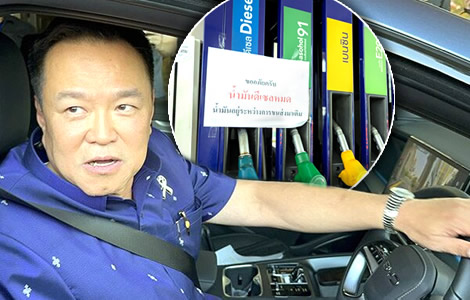
Prime Minister Anutin Charnvirakul is facing declining political popularity as Thailand confronts an energy crisis tied to the US-Iran war in the Middle East. The caretaker government is widely seen as struggling to respond effectively.
As a result, public concern has increased over fuel supplies, rising prices, and economic disruption. Meanwhile, the wider conflict began on February 28 and continues to shape global energy markets. Since then, reports of negotiations have circulated in the news. However, evidence suggests the United States and Israel are preparing a new phase of the war.
On Thursday, Israel’s Minister of Defence Katz reported the death of Iranian naval chief Alireza Tangsiri, responsible for the blockade of the Strait of Hormuz. At the same time, the United States is sending marines and paratroopers to the region.
Rising tensions in the US-Iran war push Thailand into energy crisis and political pressure on government
Despite official denials, the conflict still undoubtedly appears aimed at removing the regime in Tehran. That regime has been accused of sponsoring terrorism since 1979. Consequently, regional tension has remained high and supply routes are under close supervision.
At the same time, Thailand has recently been described as a friend of Iran in regional commentary. Meanwhile, maritime shipments remain a key focus. At least one Thai tanker loaded with oil for Bangchak has sailed through the Strait of Hormuz. Therefore, attention has turned to the security of supply lines connected to Thailand.
However, officials acknowledge the crisis is far from over. In Thailand, the government is now expected to allow electricity prices to rise from May to August. Currently, the electricity rate stands at ฿3.99 per unit. At length, officials say the price could reach between ฿3.99 and ฿4.59 during that period.
At the same time, petrol prices at pumps rose sharply on Thursday. Previously, the government attempted to regulate energy prices. Now, authorities say the scale of the crisis has forced a shift in policy. As a result, direct price control efforts have largely been abandoned.
Parliament criticism intensifies as fuel shortages, closures and long queues spread across provinces
Meanwhile, political pressure intensified inside parliament as the energy situation worsened.
On Wednesday, Anutin appeared at Government House displaying his BYD Sealion electric vehicle. Shortly afterwards, he drove himself to a doctor’s appointment. However, at the same time, criticism surged inside the House of Representatives. First, coalition partner Kla Tham Party led the attack during a debate on energy supplies.
Then, the Democrat Party and the People’s Party supported the criticism. Lawmakers questioned repeated government claims that oil reserves were sufficient. Meanwhile, officials continued to insist the country has adequate supplies.
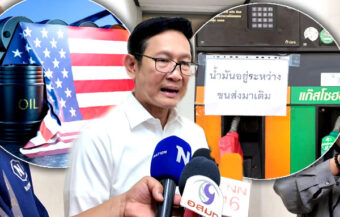
However, conditions across the kingdom have remained strained for two weeks. In many provinces, petrol station closures have been reported. At the same time, long queues formed for diesel and petrol purchases. Consequently, some stations introduced restrictions on sales to manage supply.
Specifically, bans on containers and quantity limits were imposed in several locations. As a result, key sectors have reacted strongly to the restrictions. Fishermen reported operational disruptions tied to fuel access. Farmers also complained about limits affecting transport and machinery use. Meanwhile, businesses dependent on fuel deliveries reported delays and uncertainty.
Oil smuggling arrests and enforcement actions expose networks with influence and deepen concern
At the same time, the public has received mixed signals from authorities about enforcement. Officials say corruption and oil smuggling are being tackled. However, enforcement operations have also highlighted ongoing illegal transport.
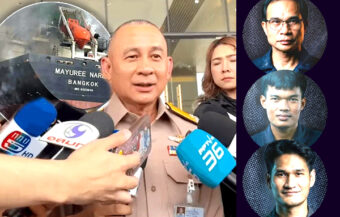
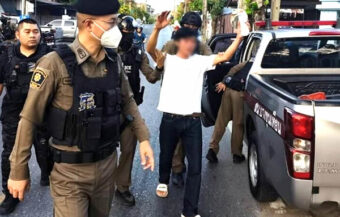
The Royal Thai Navy has reported arrests of vessels carrying smuggled oil. Some shipments were allegedly destined for sectors within Thailand. Others were reportedly headed to notable foreign markets.
Consequently, attention has turned to the scale of the smuggling network. Thailand’s oil smuggling industry is widely acknowledged and long-established. The network is known to maintain influence in Bangkok. Therefore, enforcement actions have increased during the current crisis.
Meanwhile, the situation has also exposed Thailand’s dependence on imported fossil fuels. Oil remains central to the country’s economy and transport system. However, Thailand has made progress in developing an electric vehicle industry.
Energy dependence exposed as crisis highlights reliance on imports despite electric vehicle progress
Even so, the shift has not reduced immediate reliance on imported oil. As a result, the current conflict has quickly affected domestic energy stability. In addition, economic consequences are becoming clearer.
Agriculture is facing shortages of fertiliser supplies linked to disrupted markets. In the meantime, rising prices are expected to affect lower-income households most strongly. Businesses are monitoring the impact on production costs and logistics.
Additionally, tourism projections have shifted due to uncertainty. Foreign arrivals in 2026 could fall by up to 20 per cent compared with 2025. Consequently, the tourism sector could return to levels last seen in 2023. That year followed the country’s reopening after the COVID-19 crisis.
Indeed, many Thais and expatriates now compare the current disruption to that earlier emergency. However, officials continue to insist the situation remains under control. Meanwhile, the public has experienced repeated disruptions linked to fuel supply and prices.
Government response under scrutiny as cabinet transition nears and Songkran travel concerns grow
At present, a new cabinet is scheduled to be sworn in during mid-April. Therefore, the full political and economic impact remains unclear. Even so, debate over policy responses continues across government and parliament.
Against this backdrop, Prime Minister Anutin addressed the issue publicly on March 25. At 5:10 PM, he spoke with reporters at Government House. He responded directly to questions about fuel availability during the Songkran festival.
First, he said the government’s goal was to ensure travel without disruption. Songkran is one of Thailand’s busiest annual travel periods. Therefore, fuel supply has become a central concern for millions of travellers. Accordingly, he said he had issued instructions to the responsible agencies. Officials were already implementing those instructions, he said. Consequently, he expressed confidence that travel could proceed normally.
However, he also warned against hoarding fuel during the crisis. For now, the government is asking the public for cooperation. Later, authorities will pursue those storing large quantities illegally. He said hoarding requires significant storage facilities.
Enforcement focus grows as authorities target hoarding and adjust price stabilisation measures
Therefore, unusually large quantities can be detected by investigators. If excessive fuel storage is found, legal action will follow. Meanwhile, the Minister of Justice and the Department of Energy Business are already involved in enforcement work.
They are adjusting mechanisms aimed at stabilising prices and monitoring supply patterns. As a result, investigations are continuing across multiple agencies.
Anutin also described earlier price stabilisation measures taken by the government. During the first two to three weeks of the crisis, the focus was on protecting the public. Therefore, the government used subsidies and the Oil Fund to stabilise prices.
The aim was to prevent rapid increases that could trigger panic. However, after about 15 days, new measures were introduced. At the same time, price control of goods became a priority. Specifically, the Permanent Secretary of the Ministry of Commerce oversees the monitoring of goods prices. Meanwhile, other agencies continue to assess market conditions. Consequently, the government is reviewing additional policy responses.
Tax relief discussions and work from home options are considered as crisis management continues
Furthermore, Anutin said he had invited the Finance Minister and relevant agencies for consultations. Together, they are examining possible tax relief measures. For example, assistance could apply to the transport of oil and other goods. Officials are reviewing several proposals within government.
Detailed announcements are expected in the near future. Meanwhile, the Prime Minister also discussed work-from-home policies. Previously, such measures were used during earlier crises.
Therefore, he described them as normal administrative tools. He said remote work can reduce operational expenses in some sectors. Accordingly, agencies and companies should apply the measure where feasible. However, he acknowledged that many workplaces cannot operate remotely.
Next, he addressed fuel consumption trends during the crisis. Normally, Thailand consumes about 67 million litres of fuel daily. However, current daily consumption has increased to around 80 million litres. Authorities attribute part of the increase to public anxiety and hoarding behaviour.
Prime minister urges lower fuel use while defending communication and crisis decision making
Nevertheless, he said the situation remains manageable for now. At the same time, he urged people to use energy more carefully. Specifically, he suggested reducing consumption levels nationwide.
He said lowering daily use to around 55 million litres could be achievable. In his view, that reduction would stabilise reserves and energy demand. He also said such a reduction could occur without raising living costs or commodity prices.
Meanwhile, reporters questioned whether government communication had lost public trust. Critics argue official messaging has failed to reassure many citizens. In response, Anutin said officials were continuing to work intensively. He said most agencies were focused on managing the crisis situation.
However, constant responses to criticism can slow work, he added. Therefore, he emphasised internal coordination and decision-making. He said brainstorming sessions include experienced officials and outside stakeholders.
Opposition criticism grows after EV promotion comments and reports of fuel shortages in north
Private sector representatives are also consulted during discussions. Additionally, suggestions from parliament are reviewed carefully. Where proposals are feasible, he said, they will be implemented. Consequently, government policy may evolve as the crisis develops.
Next, reporters asked whether Thailand might declare an energy emergency. In response, the Prime Minister shook his head and declined to answer the question. He was also asked about stress during the crisis. He said handling difficult situations is part of leadership responsibility. Moreover, he noted that this was not the first crisis faced by his government.
Therefore, he said, officials have experience managing emergency conditions. He expressed confidence that the country would get through the situation. After the interview, he left Government House, driving his electric vehicle. He said the car had been ordered long before the current crisis. He also said he was heading to see a doctor for muscle pain.
Meanwhile, criticism continued in parliament on the same day. Dachai Ekpathapi, a Kla Tham Party MP from Lampang, spoke during the House of Representatives debate. He criticised the Prime Minister’s promotion of electric vehicles. Specifically, he referred to Anutin’s purchase of a dark grey BYD Sealion 7 electric SUV. The vehicle costs approximately 1.3 million baht.
Local accounts of queues, empty stations and service disruption intensify pressure on government
According to Dachai, many citizens cannot afford such vehicles. Instead, workers across the provinces rely heavily on diesel pickup trucks. These vehicles are essential for daily livelihoods and transport work. Therefore, he argued that electric vehicle promotion does not address current fuel shortages.
Furthermore, Dachai said the country is facing a national fuel crisis. Yet the government continues to insist that supplies are sufficient. According to him, conditions in northern provinces contradict that claim. He described driving from Nakhon Sawan back to Lampang.
Along the route, he said, petrol stations lacked fuel entirely. As a result, residents queued for extended periods. Some people reportedly waited from 8 AM until 4 PM. Consequently, he questioned the government’s description of adequate supply. He also described problems in the Jae Hom district. According to his account, sewage trucks lacked fuel for operations.
Therefore, septic tanks overflowed across the district. More than 1,000 households were affected, he said. As a result, local agencies convened urgent meetings to address the issue.
Songkran travel worries grow as migrant workers question fuel access and government assurances
Dachai said the crisis affects daily life beyond transportation. It also impacts sanitation systems and municipal services. Therefore, he criticised official messaging about Songkran travel plans. He said many people still do not know how they will travel home. Meanwhile, the Prime Minister has said there will be no shortage during the festival.
Consequently, Dachai called for clearer explanations from the government. He also noted concern among migrant workers in Bangkok and surrounding provinces. Many plan to travel home during Songkran. However, uncertainty about fuel access remains widespread.
Anxiety about oil supplies and prices as economic growth in 2026 now dependent on the US Iran War
2026 economic growth could be slashed to 0.5% if War with Iran rages on for months says Bank of Thailand
Thai economy feels the stress as US Israeli War on Iran continues with 2 key Iranian leaders just killed
Therefore, he urged authorities to clarify the situation quickly and directly. Meanwhile, the government continues to maintain that fuel supplies remain sufficient. Even so, the dispute has intensified political pressure as the crisis unfolds.
Join the Thai News forum, follow Thai Examiner on Facebook here
Receive all our stories as they come out on Telegram here
Follow Thai Examiner here
Further reading:
Anxiety about oil supplies and prices as economic growth in 2026 now dependent on the US Iran War
US Ambassador Seán O’ Neill briefed Prime Minister Anutin Charnvirakul at Government House on War
Visa waivers, discounted hotel stays and 2,000 baht a person per day for stranded tourists announced
Liquidity crisis or shortage of cash on the ground is shrinking Thailand’s economic growth prospects
Thai Minsters engage with US trade chief Jamieson Greer in Paris at global OECD ministerial meeting