Thailand’s biggest civil service exam scandal deepens as 5,000 officials face the sack, criminal prosecution and salary clawbacks, while Bhumjaithai unveils a tough new law threatening cheats with 15 years in prison and lifetime bans.
Up to 5,000 newly appointed local government officials could lose their jobs, face criminal prosecution and be forced to repay their salaries as Thailand confronts one of its biggest civil service recruitment scandals. At the same time, the ruling Bhumjaithai Party is pushing landmark legislation that would impose prison terms of up to 15 years, lifetime bans from government service and sweeping new investigative powers to crush examination fraud, while investigators widen a probe that could ultimately scrutinise the results of 400,000 candidates who sat last year’s nationwide recruitment tests.
Around 5,000 newly appointed local government officials are facing possible dismissal and criminal investigation as the ruling Bhumjaithai Party prepares one of Thailand’s toughest anti-corruption laws targeting fraud in civil service recruitment examinations.
The proposed legislation will be submitted to Parliament on Wednesday. It creates specific criminal offences covering corruption in government recruitment examinations.
Offenders could face up to 15 years in prison, fines of ฿300,000, confiscation of illicit assets and lifetime bans from government service. Separately, the Interior Ministry is investigating alleged irregularities affecting about one-third of the 15,000 officials recruited through the Department of Local Administration (DLA).
Anutin warns corrupt recruits face dismissal as Bhumjaithai moves to close legal loopholes in exam fraud
Prime Minister Anutin Charnvirakul has already warned that anyone appointed through corruption will lose their position. They will also face legal proceedings and be required to repay salaries received from the state.
Meanwhile, investigators are preparing to widen the inquiry because about 400,000 candidates sat the DLA recruitment examinations late last year.
Bhumjaithai Party list MP Supachai Jaisamut announced the proposed legislation on Tuesday at the party’s headquarters. He said the draft Act on Offences in Examinations for Employment in Government Agencies would be submitted to Parliament on July 8.
According to Mr Supachai, the legislation fills a gap in existing law by creating dedicated offences covering corruption throughout the government recruitment system. It also aims to protect honest candidates and reinforce confidence in public administration.
The bill reaches across the entire civil service recruitment process. It applies to examinations for recruiting civil servants, government employees and officials of every category. In parallel, it also covers examinations and assessments organised by government agencies using public funds. As a result, the proposed law extends well beyond traditional civil service entrance examinations.
Draft law targets cheating, bribery and leaked exam papers with severe criminal penalties
The draft identifies a broad range of criminal offences. Candidates who cheat during examinations would face prosecution. So too would anyone sitting an examination for another person.
The legislation also targets those paying or receiving bribes linked to recruitment tests. In addition, threatening others into committing offences becomes a criminal act. Notably, the unlawful disclosure of examination material also carries severe penalties. That includes secretly obtaining examination papers and leaking questions before candidates sit the tests.
Mr Supachai said penalties would reflect the seriousness of each offence. However, the harshest punishment would be 15 years’ imprisonment.
Offenders could also be fined up to ฿300,000. In response, courts would receive powers to confiscate assets or financial benefits obtained through examination fraud. Consequently, those profiting from corruption could lose both their liberty and their illegal gains.
The legislation also imposes tougher sanctions on public officials abusing positions of trust. Civil servants convicted under the law would receive heavier penalties. Moreover, organisers involved in examination fraud would face double punishment. Their conduct would also be treated as a serious disciplinary offence. Therefore, they could face dismissal alongside criminal prosecution.
NACC, PACC and AMLO to gain stronger powers as lifetime bans proposed for convicted offenders
On another front, the proposal strengthens cooperation between Thailand’s principal anti-corruption agencies. Investigations would involve the National Anti-Corruption Commission (NACC), the Public Sector Anti-Corruption Commission (PACC) and the Anti-Money Laundering Office (AMLO).
The bill also establishes an electronic reporting system for complaints and evidence. Additionally, the NACC would gain authority to suspend examinations temporarily where there are reasonable grounds to suspect corruption.
The draft also introduces permanent employment sanctions. Anyone convicted of examination fraud would be barred for life from government employment. Likewise, serving civil servants found guilty would be dismissed immediately. Accordingly, successful candidates who cheated would lose both their careers and future access to public office.
The legislative proposal emerges as investigators examine one of Thailand’s largest alleged recruitment scandals. Deputy Interior Minister Worasit Liangprasit said investigators had uncovered irregularities affecting approximately 5,000 newly recruited local administrative officials.
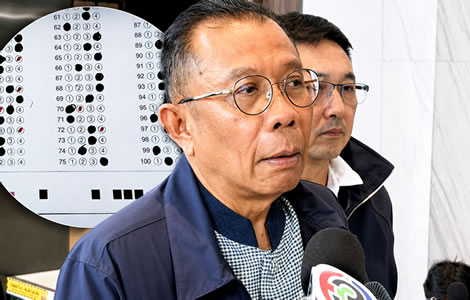
Speaking at Government House on Tuesday, he said discrepancies had been found between officially announced examination scores and candidates’ answer sheets. Those discrepancies involve roughly one-third of the 15,000 officials recruited through the DLA.
Interior Ministry widens probe as irregularities emerge across one-third of newly recruited officials
As part of this, the Interior Ministry will ask the NACC to launch a formal anti-corruption investigation. Simultaneously, it will begin disciplinary proceedings against the officials concerned.
If corruption is confirmed, those officials will be dismissed, Mr Worasit said. The inquiry will determine whether appointments resulted from organised examination fraud rather than legitimate competition.
Mr Anutin, who also serves as Interior Minister, adopted an equally firm position. He said corruptly recruited officials would face prosecution as well as dismissal. They would also have to return salaries already paid by the government. Beyond that, he warned that the investigation may need to extend across the wider recruitment exercise involving approximately 400,000 examination candidates.
The scandal first surfaced last month after police raided a house in Nonthaburi. Ten people were arrested during the operation.
Police allege organised network altered answer sheets after collecting bribes of up to ฿800,000
Most were civil servants. Investigators alleged they had tampered with about 3,000 examination answer sheets. Police believe the papers were altered to match the officially announced scores of successful candidates.
Subsequent inquiries pointed to what investigators believe was an organised corruption network. Detectives allege applicants paid between ฿350,000 and ฿800,000, depending on the government position sought.
The payments were allegedly intended to secure passing examination scores. Since then, investigators have examined whether the network reached beyond those already arrested.
Initially, Mr Anutin ordered a freeze on appointments arising from the recruitment exercise. However, the central committee for local government officials reversed that decision the following day. Consequently, successful applicants began work on July 1 despite the continuing investigation.
Ministry pursues disciplinary action as appointments continue while wider corruption investigation deepens
Reporters later asked whether officials under investigation could remain in office while the NACC completed its inquiry. Mr Anutin said the Interior Ministry would not necessarily wait for the anti-graft body’s findings.
Instead, the ministry could rely on its own disciplinary procedures where evidence of examination tampering was clear. Under that approach, dismissals could proceed before the NACC reaches its final conclusions.
Former Justice Minister calls for action on exam scandal. Says five officials disciplined are scapegoats
Officials face disciplinary action over exam cheating scandal as appointments get the go ahead case by case
Finally, Interior Ministry permanent secretary Unsit Sampuntharat has ordered an investigation into five senior officials suspected of involvement in the examination-rigging scandal. That inquiry runs alongside the broader criminal and disciplinary investigations already underway.
If enacted, Bhumjaithai’s legislation would establish Thailand’s first dedicated criminal framework governing corruption in government recruitment examinations. Collectively, it would create specific offences covering every stage of the recruitment process, impose severe prison terms, strengthen investigative powers and permanently exclude offenders from public service.
Join the Thai News forum, follow Thai Examiner on Facebook here
Receive all our stories as they come out on Telegram here
Follow Thai Examiner here
Further reading:
Job appointments in poisoned exam process goes ahead as the impact of the scandal is still expanding
Jobs for cash corruption scandal creating shockwaves as Deputy PM promises to uncover the full truth
Raids on Lawyer Tum’s luxury home and high-profile legal office as he and his wife are imprisoned
Legal eagle in hot water as wealthy French-based Thai woman claims she gave him ฿71 million for deal