Bangkok has overtaken Jakarta as Southeast Asia’s fastest-growing ultra-wealthy city, with a global report predicting a dramatic rise in millionaires as Thailand cements its place among the world’s leading emerging wealth hubs.
Bangkok is poised to become Southeast Asia’s fastest-growing centre for ultra-wealthy individuals after a landmark global wealth report forecast a more than 50% surge in its richest residents by 2030, placing the Thai capital among the world’s fastest-rising wealth hubs. The findings reveal not only how Thailand’s billionaire business dynasties continue to dominate the economy, but also why entrepreneurship, international investment and the coming AI revolution are expected to propel both Bangkok and global private wealth to unprecedented heights over the rest of the decade.
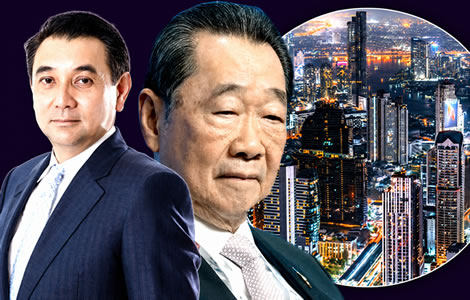
Bangkok is emerging as one of Asia’s fastest-growing centres for private wealth. The Thai capital is also becoming Southeast Asia’s leading destination for ultra-high-net-worth individuals. New projections suggest that momentum will accelerate through the end of the decade despite persistent economic and geopolitical uncertainty.
According to wealth intelligence firm Altrata’s World Ultra Wealth Report 2026, Thailand was home to 2,090 ultra-high-net-worth (UHNW) individuals in 2025. Among them, 1,210 were primary residents of Bangkok.
UHNW individuals are defined as those with net assets exceeding US$30 million. As a result, Bangkok accounted for almost three-fifths of Thailand’s entire ultra-wealthy population.
Bangkok forecast to become Southeast Asia’s fastest-growing ultra-wealthy hub by the end of the decade
Altrata forecasts Bangkok’s UHNW population will climb to around 1,840 by 2030. That compares with 1,210 residents in 2025. The increase exceeds 50% over five years. It also represents an average annual growth rate of 8.7%.
Notably, the projection ranks Bangkok as the world’s 12th fastest-growing major UHNW city among the 100 largest urban economies by nominal GDP. It also places the city ahead of Jakarta as Southeast Asia’s fastest-growing wealth hub.
The findings position Bangkok among a small group of cities reshaping the global wealth map. While many established financial centres are recording slower growth, Bangkok is expected to expand at one of the fastest rates worldwide. Consequently, the Thai capital is strengthening its standing as an emerging international wealth centre.
Maya Imberg, senior director and head of thought leadership and analytics at Altrata, said Bangkok’s performance reflects more than rising personal fortunes. Instead, she said the city combines entrepreneurial strength with growing international appeal.
Altrata says Bangkok combines entrepreneurial strength with rising international appeal and wealth
“Bangkok stands out not only because of the pace of its wealth creation, but also because it combines strong domestic entrepreneurship with growing international appeal,” she said.
She added that Bangkok is expected to record one of the strongest increases in ultra-wealthy residents among the world’s major cities during the next five years. In turn, that expansion will reinforce its position within the global wealth economy.
Unlike cities dependent on a single dominant industry, Bangkok’s wealth is generated across a wide commercial base. Real estate remains a major contributor. Hospitality and entertainment also continue producing substantial fortunes. Banking and finance add another important pillar. Business and consumer services further broaden the city’s wealth base. Together, these industries provide multiple sources of long-term capital creation.
The report also examined how Bangkok’s wealth is created. Most UHNW residents are self-made entrepreneurs. However, many received financial support during the early stages of building their businesses. Even so, inherited fortunes alone account for only a small proportion of the city’s wealthiest households.
According to Ms Imberg, fully inherited wealth represents less than one-tenth of Bangkok’s ultra-high-net-worth population.
“The majority are entrepreneurs who have built their fortunes themselves, often with some degree of family support rather than inheritance alone,” she said.
Long-term institutions, entrepreneurship and capital markets drive Thailand’s expanding ultra-rich clique
She also said Thailand’s expanding wealthy population reflects structural economic strengths rather than temporary market cycles.
“The size and growth of a country’s ultra-high-net-worth population are shaped by multiple long-term factors, including institutional quality, tax and trade policies, entrepreneurship, capital markets and currency strength,” she said.
Those factors operate over many years rather than individual business cycles. Stable institutions support investment. Effective capital markets encourage expansion. Meanwhile, entrepreneurship continues to generate new wealth across multiple sectors. Collectively, those conditions underpin Thailand’s long-term wealth creation.
Separately, Altrata highlighted the growing mobility of wealthy individuals. Affluent entrepreneurs increasingly invest, work and live across several countries. At the same time, they maintain extensive international business networks. Cross-border investment has therefore become an increasingly important feature of global wealth management.
Bangkok appears well placed to benefit from that trend. The city combines developed infrastructure with a diversified economy. It also offers deep business networks and expanding financial services. In parallel, Thailand continues producing successful domestic entrepreneurs. That combination has strengthened Bangkok’s appeal to internationally connected investors.
Thailand’s biggest business families continue to dominate wealth across diverse economic sectors
The report also reflects the structure of Thailand’s own private wealth. Much remains concentrated among a relatively small number of powerful business families. Their influence extends across electricity generation, retail, banking, food production, telecommunications, healthcare, insurance, hospitality and property. Many transformed family enterprises into regional or international corporations over several decades.
Sarath Ratanavadi now ranks as Thailand’s wealthiest individual. His fortune has grown through Gulf Development, one of Southeast Asia’s largest private power producers.
The company began in electricity generation before expanding into renewable energy, natural gas, infrastructure, ports, digital businesses and telecommunications. As part of this strategy, Gulf has become one of Thailand’s largest listed companies.
Dhanin Chearavanont and his family remain among the country’s richest through the Charoen Pokphand Group. The company started as a seed business before expanding into agriculture, food production, retail, telecommunications and finance. The family also controls Thailand’s extensive network of 7-Eleven convenience stores. Beyond Thailand, CP maintains substantial investments throughout China and Southeast Asia.
Retail, property, healthcare and consumer concerns reinforce Thailand’s established business empires
On another front, Charoen Sirivadhanabhakdi built one of Thailand’s largest business empires through beverages. He later expanded aggressively into hotels, commercial property and retail. Thai Beverage dominates the domestic spirits and beer markets. His wider holdings also include shopping centres, office developments, industrial property and major international real estate investments.
The Chirathivat family controls Central Group, Thailand’s largest retail empire. The business began with a single Bangkok department store in 1947. Since then, it has expanded across Thailand, Vietnam and Europe. Today, its operations include department stores, luxury shopping centres, supermarkets, hotels and digital businesses.
Healthcare has also created substantial wealth. Prasert Prasarttong-Osoth founded Bangkok Dusit Medical Services, Thailand’s largest private hospital operator. The group’s hospitals have helped establish Thailand as one of Asia’s leading medical tourism destinations.
Duty-free, insurance and consumer goods broaden Thailand’s increasingly diversified private wealth
Meanwhile, Aiyawatt Srivaddhanaprabha leads the King Power empire created by the late Vichai Srivaddhanaprabha. King Power dominates Thailand’s duty-free retail market and operates major airport concessions. The family also owns Leicester City Football Club. It continues expanding investments in hospitality, travel and commercial property.
Elsewhere, Vanich Chaiyawan built his fortune through Thai Life Insurance, one of the country’s largest insurers. The Osathanugrah family controls Osotspa, one of Thailand’s oldest consumer products companies. The business continues expanding exports across Asian markets.
Taken together, these business families illustrate Thailand’s changing wealth profile. Earlier fortunes often emerged from agriculture, trading and beverages. More recently, electricity generation, infrastructure, healthcare and telecommunications have become major wealth creators. Financial services have also grown in importance. Consequently, Thailand’s wealth base has become broader and more diversified.
Globally, the report recorded another milestone for the world’s wealthiest individuals. The UHNW population reached a record 556,850 in 2025. That represented annual growth of 14.4%. It also marked the second consecutive year of double-digit expansion. Moreover, it was the strongest increase since 2017.
Artificial intelligence and private capital are expected to power the next wave of global wealth creation
Combined global UHNW wealth climbed to US$63.8 trillion. That exceeds twice the annual gross domestic product of the United States. Looking ahead, Altrata expects the global UHNW population to reach 746,570 by 2030. Combined wealth is projected to rise further to US$85 trillion.
Future fortunes are expected to emerge from technological transformation and expanding private capital. Artificial intelligence will play a central role. Digital infrastructure will also remain a major driver. The energy transition is expected to generate further opportunities. In addition, Altrata identified private credit, defence technology, renewable energy, biotechnology, advanced manufacturing and network infrastructure as leading growth sectors.
The report also highlighted the financial influence of the world’s richest individuals. Collectively, they control approximately US$26 trillion in investable assets. They spend an estimated US$282 billion each year on luxury goods and services. They also contribute around US$220 billion annually to philanthropy.
Younger Asian billionaires and rising female wealth reshape the future of global private fortunes
Demographic trends are changing alongside wealth creation. Since 2004, the global UHNW population has expanded by 255%. That increase exceeded growth in the world’s adult population by sevenfold. There were just under 51 million millionaires worldwide in 2025. Although UHNW individuals represented only 1.1% of that total, they controlled 32% of all millionaire wealth.
One segment has expanded particularly quickly. Centi-millionaires, with assets exceeding US$30 million, have almost doubled in number over the past decade. Their ranks grew to more than 117,000 in 2025 from around 60,000. The technology boom has been the principal driver behind that increase.
Asia also has a younger UHNW population than any other major region. By comparison, North America has the oldest demographic. Women account for 13% of Asia’s ultra-wealthy population.
Top tycoon’s Gulf conglomerate increases its stake in Kasikorn Bank to over 10%. Warns about speculation
Red Bull family fortune charges ahead for another year, ranking as Thailand’s No.1 and powered by China
Although still relatively modest, that represents the highest regional share. Looking further ahead, female representation globally is projected to increase from 12% today to 19% by 2040 through broader wealth diversification, expanding entrepreneurial opportunities and rising intergenerational wealth transfers.
Financial services remain the dominant industry among UHNW individuals worldwide. Business and consumer services rank second across every major region. Finally, Delhi is projected to become the world’s fastest-growing UHNW city by 2030. Bangkok, however, has secured its place among the world’s leading emerging wealth centres. The latest projections suggest its role in global private wealth will continue expanding throughout the decade.
Join the Thai News forum, follow Thai Examiner on Facebook here
Receive all our stories as they come out on Telegram here
Follow Thai Examiner here
Further reading:
CP boss says Thailand must engage US and become Southeast Asia’s top data centre with cheap energy
Thailand’s obscure negotiation strategy with United States an outlier as PM promises a ‘secret deal’