Pheu Thai unveils Thaksin’s nephew Yotsanan as prime ministerial nominee ahead of February election, seeking a reset after turmoil as polls fragment, rivals gain ground, coalition talks loom and millions of Thai voters remain undecided after recent political events.
In recent days the Election Commission confirmed Sunday, February 8th as the date of the next General Election, while this week the Pheu Thai Party unveiled Mr. Yotsanan Wongsawat as its top prime ministerial pick, alongside political veteran Mr. Suriya Jungrungruangkit and party leader Julapun Amornvivat. Television audiences have since seen a blitz of high-profile interviews with the 46-year-old engineer whose uncle is Thaksin Shinawatra, the jailed politician who dominated Thai politics for two decades, and whose father, Somchai Wongsawat, also served as prime minister, with Pheu Thai now betting that a fresh face and younger leader can reset the party and capture up to a third of an electorate that remains undecided.
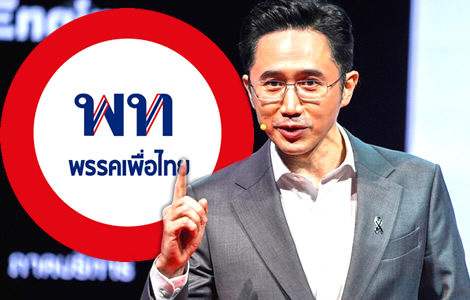
Over the past week, Thai politics entered a sharper phase. Specifically, the Pheu Thai Party elevated Mr. Yotsanan Wongsawat as its leading prime ministerial nominee. Notably, he is the nephew of former prime minister Thaksin Shinawatra.
Additionally, he is the son of former Prime Minister Somchai Wongsawat. Mr. Somchai led the People’s Power Party government from September to December 2008 for just over two months before that party was dissolved.
Mr. Yotsanan’s mother, Yaowapa Wongsawat, has been a regular visitor to Khlong Prem Prison to meet her brother Thaksin Shinawatra. The former premier was jailed in September. It had long been known that Mr. Thaksin was looking for a new family standard-bearer. As a result, the party confirmed him as its first choice after the February 2026 general election.
Pheu Thai resets after months of turmoil, declining support and the collapse of its last government
At the same time, the decision signals a calculated reset. Previously, Pheu Thai struggled with declining support. Now, it is repositioning ahead of an expected coalition process. Consequently, party leaders are preparing for negotiations likely in March and April 2026. Meanwhile, the broader political field remains unsettled.
Thailand’s general election is scheduled for February 8, 2026. However, the campaign follows months of upheaval. In August, former prime minister Paetongtarn Shinawatra was removed from office.
That removal followed a court order. Shortly before, a leaked June phone call caused political damage. The call involved Cambodia’s former leader Hun Sen. At the time, border tensions were escalating.
Subsequently, Parliament elected Bhumjaithai Party leader Anutin Charnvirakul as prime minister. Importantly, he gained office with support from the People’s Party. In September, his elevation formed a minority government. Since then, that government has struggled to consolidate authority. Consequently, public confidence has weakened.
Polls show voter confidence sliding as minority ministry falters and party loyalties fragment nationwide
Polling data reflects this erosion. According to the National Institute of Development Administration, support for the People’s Party fell sharply. Previously, the party peaked near 47 per cent. Now, it polls at 25.28 per cent. Meanwhile, Bhumjaithai registers only 9.92 per cent support nationwide.
In contrast, Pheu Thai has shown modest recovery. After Paetongtarn’s removal, its support dipped below 10 per cent. However, the December NIDA poll placed it at 11.04 per cent. Still, that figure declined from 13.96 per cent in September. Moreover, it remains far below the 28.05 per cent recorded in March.
Despite weakened polling, the ruling Bhumjaithai Party retains potential parliamentary weight. In the 2023 general election, it secured 71 constituency MPs. This occurred despite receiving only 3 per cent of the party-list vote. Significantly, party officials argue that its grassroots machinery is expanding with more ‘Big House’ support and power networks.
Looking ahead, the party is targeting 200 seats. Party executives have repeated this objective publicly.
So too is the Pheu Thai Party. According to Mr. Suriya Jungrungruangkit, such a target remains realistic. He cited better discipline and campaign intensity. Furthermore, he pointed to improved social media use. At the same time, most observers see the former ruling party as unlikely to gain more than 100 seats.
Rival parties reposition as Democrats surge, People’s Party eyes majority and no clear winner emerges
Meanwhile, the People’s Party is pursuing an outright majority. Its stated aim is 250 seats in the House. However, analysts question its viability. Support has softened across all major parties. As a result, no clear winner is expected.
At the same time, the Democrat Party has regained momentum. It is Thailand’s oldest political party. Its revival followed severe flooding in late November. The floods devastated Hat Yai in the south. Subsequently, the Democrats rose in public support. In the December polling, they reached 11.80 per cent. Therefore, they now lead both Pheu Thai and Bhumjaithai.
Given these numbers, the People’s Party is likely to top the poll. Most analysts agree on this point. In the meantime, the Pheu Thai Party is aiming to retain its position as a key player. A projected seat range of 50 to 100 is widely cited. Nevertheless, the outcomes remain fluid, particularly with the excitement developing about Mr Yotsanan Wongsawat.
One key variable is undecided voters. The NIDA poll shows 32.36 per cent support no party. Likewise, 40.60 per cent see no suitable prime ministerial candidate. Importantly, many undecided voters previously backed Pheu Thai or the People’s Party. Consequently, late shifts could reshape results.
Early dissolution accelerates campaign timeline and complicates post-election coalition building
Another variable is government performance. Prime Minister Anutin dissolved Parliament earlier than expected. This followed a dispute with the People’s Party. As a result, Thailand entered campaign mode sooner than planned. Meanwhile, Anutin remains caretaker prime minister.
Government formation may take months. Analysts expect negotiations to extend into April or May 2026. Therefore, Anutin could remain in office during that period. Coalition talks are expected to be complex. No party appears positioned for a majority.
Against this backdrop, Pheu Thai has turned to Mr. Yotsanan. He is 46 years old. Professionally, he is an academic. He holds a PhD from the University of Texas at Arlington. Currently, he serves as a professor of biomedical engineering at Mahidol University. His background contrasts with that of traditional political figures.
Politically, his experience is limited. Previously, he served as an adviser on technology policy. That role was under the last Pheu Thai-led government. Nevertheless, party leaders view his profile as timely. They argue modern governance requires technical competence.
Pheu Thai unveils candidates, confirming Yotsanan as top choice amid internal party calculations
On December 16, Pheu Thai formally unveiled its prime ministerial candidates. The event took place at the party headquarters in Bangkok. Three candidates were presented. They were Mr. Yotsanan, Mr. Suriya, and Mr. Julaphan Amornvivat. However, the ranking was clear.
Party officials confirmed Mr. Yotsanan ranks first. The other two were not ranked. Instead, they were described as available alternatives. All three were said to meet legal qualifications. All three pledged readiness to serve.
During the event, Mr. Julaphan addressed reporters directly. The recently elected Pheu Thai leader said the party listened to its members. He stressed current national conditions. Notably, he said Thailand needs leadership beyond conflict. He cited economic transition and technology integration. Consequently, he named Mr. Yotsanan as the most suitable choice.
Mr. Yotsanan responded to questions about recognition. He acknowledged limited public familiarity. However, he stressed direct engagement. He said policy discussions must reflect public needs. Therefore, he prioritised outreach over campaigning mechanics.
Family influence questions surface as Yotsanan defends independence and party unity under scrutiny
Questions also focused on family ties. Mr. Yotsanan addressed them directly. For instance, in one response, he said lineage can be an advantage. He pointed to accumulated experience and perspective. The Prime Ministerial nominee rejected claims that this would limit independence.
Further questions addressed the potential influence of his mother, Yaowapa Wongsawat. Mr. Yotsanan denied external control. In particular, he emphasised decisions would involve the party executive committee. He emphasised responsiveness to global change. He cited education, science, and technology priorities.
Mr. Suriya expanded on the party’s reasoning. He contrasted old-style politics with current demands. He said governance now requires technological competition. According to him, other candidates lacked that strength. Therefore, Mr. Yotsanan was selected.
The Cambodian border conflict also featured prominently. Fighting erupted weeks after Paetongtarn’s removal. It flared again on December 8. As a result, nationalist sentiment has intensified nationwide.
Border conflict and media shape campaign as Pheu Thai urges caution and stronger messaging
Mr. Yotsanan addressed the issue cautiously. He said sovereignty must be protected. He said citizen safety is paramount. However, he urged adherence to international law. He warned about negative foreign media narratives.
Specifically, he cited reports alleging Thai airstrikes. He said such coverage could cause long-term harm. Therefore, he urged the government to reassess communication. He also stressed civilian safety near the border. He said evacuations should be supported where necessary.
Mr. Julaphan echoed these concerns. The party leader said Thailand’s foreign communication is weak. He warned that this creates strategic vulnerability. Julaphan stressed proportional responses. He also emphasised careful messaging.
Meanwhile, Mr. Suriya addressed party defections. Several MPs have moved to other parties. These include Bhumjaithai and Kla Tham. According to him, such shifts were anticipated. He said Pheu Thai previously won 141 seats. He expects only minor losses.
Pheu Thai confronts past campaign failures while Thaksin’s imprisonment reshapes political dynamics
Mr. Yotsanan admitted mistakes in the last election. He said candidates grew complacent. He said constituency campaigning declined. This time, he said, discipline has improved. Campaigning will intensify nationwide. Speakers have been prepared for rallies.
Thaksin Shinawatra remains a central factor. The ex-premier returned to Thailand on September 4. He was jailed the following day. He is serving a one-year sentence. His earliest possible release is March 2026.
Despite imprisonment, his influence persists. Party leaders note rising sympathy. Polling suggests a modest recovery since his return. However, he cannot participate in the election. His role remains indirect.
Pheu Thai has a history of backing newcomers. Yingluck Shinawatra won in 2011. Srettha Thavisin and Paetongtarn Shinawatra won in 2023. Consequently, the strategy has precedent.
Fragmented polling and high indecision point to prolonged negotiations after an unpredictable election
Mr. Yotsanan has signalled openness to coalition government. He said alignment of intent matters. He did not name preferred partners. This reflects the fragmented landscape.
Polling confirms fragmentation. The People’s Party leads with 25.28 per cent. Democrats follow at 11.80 per cent. Pheu Thai records 11.04 per cent. Bhumjaithai follows at 9.92 per cent. Smaller parties trail far behind.
Prime ministerial preferences show similar dispersion. Natthaphong Ruengpanyawut leads the named candidates at 17.20 per cent. Anutin Charnvirakul follows at 12.32 per cent. Abhisit Vejjajiva records 10.76 per cent. Mr. Julaphan polls at 6.28 per cent.
Chuwit described the People’s Party’s leadership as ‘childish’ and says the party was spoilt by voters
Thailand moves to election mode after King approves dissolution of parliament decree request by Anutin
Notably, no candidate dominates. Instead, voter indecision remains high. Consequently, late campaign dynamics will matter. Media exposure will be critical.
Election campaigning is now fully underway. Over the next 60 days, party positioning will intensify. The outcome remains uncertain. Mr. Yotsanan’s performance will be closely watched. For Pheu Thai, the stakes are clear. The party is fighting for survival, relevance and leverage in Thailand’s next coalition government.
Join the Thai News forum, follow Thai Examiner on Facebook here
Receive all our stories as they come out on Telegram here
Follow Thai Examiner here
Further reading:
People’s Party on campaign but on guard against potential legal complaints to oversight agencies
Wealthy young People’s Party leader aims to create a technology-driven and efficient welfare state