Thailand’s tourism sector enters 2026 in crisis as January arrivals are forecast to plunge 18%, hit by floods, border conflict, visa crackdowns and a rising baht, with sharp falls from China and Malaysia driving one of the weakest starts in years.
Thailand’s foreign tourism sector has started 2026 badly, already under strain from security scares, the Thai-Cambodian conflict, and catastrophic flooding in the south in 2025. Figures released on Tuesday by Tourism and Sports Minister Atthakorn Sirilatthayakorn indicate that arrivals in January 2026 could total about 3 million, roughly 18% lower than January 2025. The latest setback comes as media observers point to damaging international coverage, including reports of construction disasters such as a crane crashing onto an express train and a vehicle on a motorway, incidents cited as undermining confidence in Thailand as a safe holiday destination.

Thailand’s foreign tourism sector has entered 2026 under heavy pressure. At the start of the year, official projections point to a sharp contraction. On Tuesday, the Ministry of Tourism and Sports forecast that January arrivals will fall 18% compared with January 2025. As a result, the industry faces one of its weakest openings in recent years.
This follows last year’s disastrous year, when foreign tourist arrivals fell by 7.23% despite a projected 15% gain. Indeed, operationally, the industry is experiencing a shock reversal. This is particularly dangerous as the kingdom’s foreign tourism industry never fully recovered from the COVID-19 disaster in 2020 and 2021.
According to the ministry, two factors are driving the decline. First, the ongoing Thai-Cambodian conflict has disrupted cross-border travel. Second, the severe floods that struck Hat Yai late last year have damaged confidence in southern destinations. Together, these events have reduced regional mobility and weakened demand.
Overseas image damage as early arrivals show sharp declines led by Chinese and Malaysian markets
Meanwhile, Thailand’s international image has also come under strain. Media coverage abroad has focused on construction disasters across several regions. In addition, reports of political instability have gained prominence. Moreover, persistent stories of rampant corruption have circulated widely. Consequently, overseas perceptions of safety and reliability have deteriorated.
Early arrival data already reflect these pressures. Between January 1 and January 14, total foreign arrivals reached 1.43 million. However, this figure represented a 6.67% decline year-on-year. Notably, the contraction was led by sharp falls from China and Malaysia.
Historically, Chinese and Malaysian tourists have been core contributors to Thailand’s tourism volume. Therefore, declines in these markets have an outsized impact. In particular, Malaysian short-stay travel has weakened sharply. At the same time, Chinese arrivals remain well below previous recovery expectations.
Hat Yai tourism hit by flood devastation, mass casualties and a collapse in Malaysian visitor bookings
Conditions in southern Thailand remain especially difficult. Hat Yai has long been a key destination for Malaysian visitors. However, tourism operators there report a dramatic collapse in bookings this year. As a result, many businesses have struggled to maintain operations.
One Hat Yai operator told local media that his business had entered a “coma.” Occupancy rates range from 10–20%. The comment referred to conditions following the floods in November. Since then, forward bookings have remained weak. Consequently, recovery has been slower than expected.
The floods struck Hat Yai and surrounding districts in Songkhla province. They caused widespread damage across urban and outlying areas. According to official figures, 145 people died in the disaster. Among them were several Malaysian tourists.
One confirmed fatality was Asri Shafii, a reporter with Astro Awani. He died on November 26 while covering the floods. His death was widely reported in Malaysia. As a result, awareness of the disaster spread quickly across Malaysian media.
Tourist fears grows as flood fears persist while strict visa enforcement further suppresses arrivals
Tourism operators say the coverage has affected traveller behaviour. Specifically, Malaysian tourists have become more cautious about visiting Hat Yai. In addition, some travellers now question the safety of southern Thailand more broadly. Consequently, operators fear prolonged weakness in the Malaysian market.
Moreover, some tourism businesses express concern about long-term perceptions. They report that certain foreign tourists view the floods as recurring events. Furthermore, some visitors associate the disasters with ongoing weather risks. As a result, repeat travel decisions may be affected.
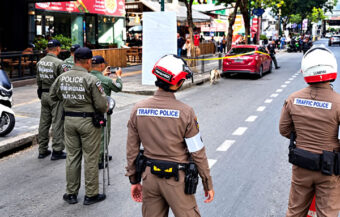
At the same time, policy changes have further reduced arrivals. Since November, the Immigration Bureau has intensified enforcement measures nationwide. In particular, officers have targeted the misuse of visa exemption facilities. These measures focus on foreigners repeatedly entering and exiting the country.
As part of the crackdown, screening procedures have become stricter. In addition, discretionary powers have been expanded for immigration officers. These powers are applied most strongly at land border crossings. Consequently, visa runs are now more likely to be blocked.
Northeastern border crackdown halves January arrivals despite late 2025 tourism gains
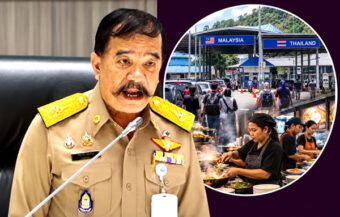
The effects are most visible in northeastern Thailand. In January, arrivals through four northeastern border checkpoints fell sharply. Specifically, numbers declined by 50% year-on-year. The affected checkpoints are in Nakhon Phanom, Mukdahan, Nong Khai, and Ubon Ratchathani.
Caretaker Tourism and Sports Minister Artthakorn Sirilatthayakorn confirmed the decline. He said the drop reflected stricter visa enforcement. However, he stressed that the policy aims to prevent foreign criminal activity. Accordingly, no immediate easing is planned.
Despite the January fall, late-2025 data showed mixed results in the region. In December, tourism in Bueng Kan, Nong Khai, and Udon Thani remained positive. Bueng Kan recorded 87,067 visitors, up 2.7% year-on-year. Meanwhile, Nong Khai saw 345,254 visitors, a rise of 1.1%.
At the same time, Udon Thani recorded 478,211 visitors in December. This represented growth of 3% year-on-year. Officials attributed these gains to the high season. Nevertheless, January figures reversed much of that momentum.
Border conflict keeps crossings closed as tour operators adapt to tighter scrutiny rules at borders
Elsewhere, border disruptions persist. Two immigration checkpoints in Sa Kaeo and Surin remain closed. These closures are linked to the Thai-Cambodian border conflict. Although a ceasefire was agreed on December 27, 2025, skirmishes and tensions have continued.
As a result, cross-border tourism has yet to recover fully. The conflict continues to affect travel confidence. Consequently, border regions remain under pressure.
Tour operators have adjusted their practices in response. Sukanda Phansua, manager of Kantana Tour, said operators were informed that travellers from 17 countries face increased scrutiny. Therefore, tour companies now confirm itineraries and departure tickets in advance.
According to Ms Sukanda, organised tour demand has remained stable so far. She said structured travel reduces the risk of entry refusal. However, independent travel through land borders remains weaker.
National outlook darkens as January arrivals fall and key source markets post steep declines overall
National forecasts remain cautious. The Tourism Authority of Thailand’s Intelligence Centre projects January arrivals at about 3 million. This represents an 18% year-on-year contraction. On average, arrivals would reach about 101,000 per day.
The authority cited several obstacles. These include the border dispute with Cambodia and a weak recovery in China and Malaysia. Chinese arrivals are forecast to drop 49% year-on-year in January. Similarly, Malaysian arrivals are expected to fall 46%.
Even so, China and Malaysia are expected to remain the top two source markets. Chinese arrivals may reach 336,000 for the month. Malaysian arrivals are projected at around 241,000. However, both figures remain far below previous norms.
Other markets show mixed performance. The Russian market is expected to surpass Malaysia in January. Russian arrivals are forecast at 257,000, up 0.4% year-on-year. Meanwhile, the Indian market is projected to grow 4% to 194,000 visitors.
Weak bookings, election uncertainty and a surging baht deepen pressure on Thailand’s tourism economy
Forward booking data suggest limited short-term improvement. Seat bookings for January and February may decline by 2%. Alternatively, they may rise by no more than 4%. This compares with earlier forecasts of 4% to 5% growth.
Political uncertainty adds further pressure. There are concerns that the February 8 general election may affect sentiment. Reports of vote buying have increased during the campaign. The contest is widely seen as a clash between traditional and conservative forces.
Crisis for Thailand as baht rockets in value putting exports and foreign tourism under further pressure
Top tourist body expresses concern about the Thai Cambodian war’s impact on foreign tourism industry
Following the election, extended political negotiations are expected. Weeks or even months of bargaining may follow. Historically, such periods have influenced confidence. As a result, uncertainty remains a factor shaping Thailand’s tourism outlook in early 2026.
Thailand’s economy is particularly dependent on the foreign tourism sector. Accounting for 12% of GDP, it also accounts for 20% of employment. In addition, it is critical for delivering cash to the country’s grassroots economy.
In addition, the appreciating Thai baht is another key factor. Despite a 9% gain in 2025, the Thai currency has begun 2026 by gaining a further 1.2% against the US dollar. Certainly, other regional currencies are also appreciating against the greenback, but the baht has been the strongest despite the kingdom’s stagnant and challenged economy.
Join the Thai News forum, follow Thai Examiner on Facebook here
Receive all our stories as they come out on Telegram here
Follow Thai Examiner here
Further reading:
Rates cut to 1.25% as damaged economy limps on to the end of 2025 with even stiffer headwinds ahead
Ex Energy Minister supports oil and arms supplies blockade against Cambodia in the Gulf of Thailand
War to continue says PM Anutin. Dismisses President Trump’s ceasefire talk as a ‘misunderstanding’
Confusion after Trump’s 20 minute phone call with PM Anutin. US side claimed a ceasefire was agreed