Vote-buying fears grip Thailand as election nears, with allegations of intimidation, misuse of state power and a probe into ฿250 million cash withdrawals, prompting intensified monitoring, police deployment and warnings that the final campaign week carries the highest risk.
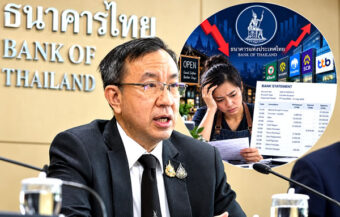
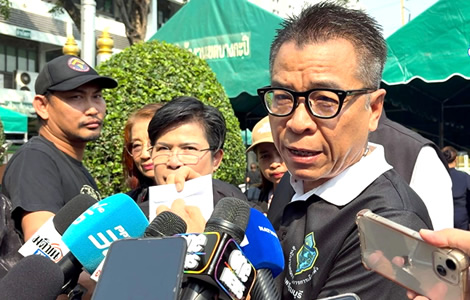
The Secretary-General of the Election Commission, Sawaeng Boonmee, has confirmed that the election watchdog received information from the Bank of Thailand on Friday concerning the withdrawal of ฿250 million under suspicious circumstances. He said six account holders were involved and investigators were already examining the transactions. However, he cautioned that the withdrawals may have been for business purposes and stressed the need for fairness. Mr Sawaeng also said that preparing money for vote buying was not, in itself, a criminal offence.
Fears of vote buying are intensifying as Thailand’s general election enters its final week of campaigning. Across the country, political activity has accelerated, while complaints have multiplied. As a result, scrutiny of campaign conduct has sharpened. At the same time, election authorities have moved to reinforce monitoring measures.
On Friday, former deputy prime minister Phumtham Wechayachai publicly warned of growing irregularities. He said the Pheu Thai Party had received complaints from several provinces. According to him, the allegations ranged from vote buying to intimidation. In addition, they included claims of state power being used against political opponents.
Mr Phumtham named several provinces where complaints had emerged. These included Kanchanaburi, Sisaket, Kalasin, and Ubon Ratchathani. In those areas, he said the behaviour was deeply concerning. Specifically, he alleged that party executives holding state authority were involved.
Complaints allege officials, police and leaders abused state authority to intimidate rivals
According to Mr Phumtham, some officials abused their positions during the campaign. In particular, he said government officials were directed to act politically. As a result, administrative neutrality was compromised. He said this conduct occurred at multiple levels.
Furthermore, he alleged the involvement of village headmen and local police officers. According to his account, they were used as political canvassers. They allegedly worked to benefit candidates from their own parties. At the same time, he said opposing candidates were pressured.
In addition, Mr Phumtham described intimidation tactics. He said threats were made against rival candidates. He said pressure was exerted through official channels. In return, he said, benefits or career advancement were allegedly offered.
Mr Phumtham also addressed vote buying directly. He said the scale of vote buying was unprecedented. According to him, it was more extensive than in previous elections. As a result, public confidence in the electoral system was weakened.
Phumtham says vote buying damaged fair elections while urging voters to preserve integrity
He said these actions undermined fair and equal competition. Moreover, he said they damaged the credibility of the election process. During his remarks, he urged voters to act independently. He called on them to vote according to conscience and preserve electoral integrity.
Meanwhile, attention has focused on large cash withdrawals disclosed by election authorities. Secretary-General of the Election Commission Sawaeng Boonmee revealed new details. He said the Bank of Thailand had provided information to his agency. This information concerned recent cash withdrawals.
Specifically, the withdrawals totalled 250 million baht. According to Mr Sawaeng, the funds were withdrawn through commercial bank branches. He said six account holders were involved. He described the transactions as unusual.
As a result, the Election Commission initiated an investigation. Mr Sawaeng said the purpose of the withdrawals was unclear. Therefore, the commission began examining the circumstances. He said the information was received on January 30.
Election Commission probes 250 million baht withdrawals, checking links to parties and candidates
According to Mr Sawaeng, the data was forwarded to an investigation team. The team was tasked with identifying possible connections. In particular, they were instructed to examine links to political parties or candidates. They were also asked to determine the purpose of the funds.
However, Mr Sawaeng urged caution in interpreting the withdrawals. He said the funds might have been withdrawn for business purposes. Therefore, he said, fairness must be maintained. He emphasised that conclusions should not be drawn prematurely.
At the same time, the Election Commission sought assistance from other agencies. Mr Sawaeng said the Anti-Money Laundering Office had been contacted. AMLO was asked to investigate the source of the funds. As a result, inter-agency cooperation was underway.
When asked whether the money posed a risk of vote buying, Mr Sawaeng declined to speculate. He said the size of the withdrawal alone was insufficient. According to him, a clear connection must first be established. Without such evidence, the funds could be legitimate business capital.
Officials say withdrawals alone are legal, but conspiracy and distribution could still trigger offences
Nevertheless, he said investigations would proceed quickly if links were found. He said any connection to political parties or candidates would simplify the inquiry. He added that findings would be submitted to the Election Commission on February 2.
Mr Sawaeng also addressed legal interpretations related to vote buying. He said withdrawing money alone was not a criminal offence. According to him, an offence occurs when money is distributed. Therefore, preparation alone does not automatically violate the law.
However, he acknowledged legal complexity. Some legal analysts suggest that conspiracy to commit vote buying could still be an offence. As a result, investigators must examine intent and coordination. Of course, they point out that enforcement depends on evidence and jurisdiction.
Certainly, enforcement authority relating to such activities remains divided. The Election Commission oversees electoral conduct. The National Anti-Corruption Commission also plays a role. In addition, the Anti-Money Laundering Office handles financial aspects. So does the police and the Department of Special Investigation (DSI).
As a result, coordination challenges persist. Experts acknowledge these difficulties. They pointed to recent problems faced by investigators as an example.
Prosecutorial setback in Senate plot case exposes gaps between election and justice agencies
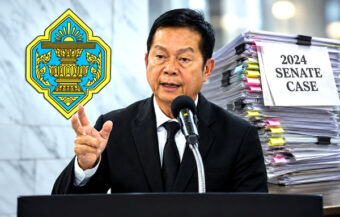
Specifically, they referred to the Department of Special Investigation. Just this week, the DSI encountered a setback in a separate case. That case involved an alleged plot linked to the 2024 Senate election.
In that case, prosecutors declined to proceed against several suspects. A prosecutor refused to press charges against eight individuals. The reason cited was procedural. Not all alleged participants were charged.
Furthermore, prosecutors said the Election Commission must act first. It was suggested that procedural steps were incomplete. Consequently, the case could not advance at that stage.
Meanwhile, election monitoring has intensified nationwide. Mr Sawaeng said the Election Commission had categorised provinces by competition levels. According to the commission, 35 provinces showed normal competition.
In contrast, 42 provinces were classified as having intense competition. Each constituency was assessed individually. As a result, those areas were identified as higher risk. Accordingly, officials increased monitoring in those provinces. Mr Sawaeng said instructions had been issued to field officers. Resources were redeployed to high-risk constituencies.
Election Commission classifies 42 provinces as high risk and orders intensified monitoring
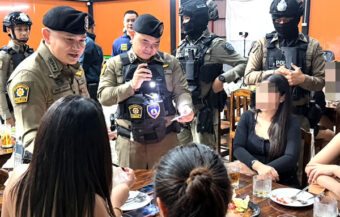
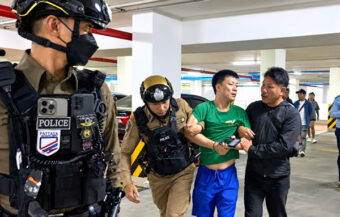
In addition, police deployment was expanded. Mr Sawaeng said half of the national police force had been mobilised. They were assigned as rapid response teams. Their task was to inspect areas ahead of polling day.
Furthermore, election inspectors were deployed nationwide. Sub-district Democracy and Election Promotion Centres were also activated. These centres were tasked with reporting suspicious activity.
Particular attention was given to high-risk areas. Officials were instructed to report incidents immediately. As a result, monitoring density increased significantly.
Mr Sawaeng acknowledged that rumours of vote buying were circulating. He said such rumours were common during elections. However, he said no confirmed cases had been reported so far.
Even so, he said preventive measures were in place. Administrative officials were involved in monitoring. Police units were also engaged. The Election Commission coordinated the response.
Mr Sawaeng also commented on timing. He said vote buying typically intensifies late in campaigns. According to him, February 1 often marks escalation. However, he said no concrete reports had emerged yet.
Instead, he said most complaints involved other issues. These included procedural and administrative matters. Nevertheless, he anticipated increased reports in the final week.
Official warns final campaign days carry highest vote buying risk as police secure February 8 poll
On Saturday, Mr Sawaeng addressed voter concerns publicly. He said police and election officials were working intensively. Their focus was on safeguarding the February 8 poll. At the same time, he repeated warnings about timing. He said the last campaign week posed the greatest risk. He said this assessment was based on past experience.
Bank of Thailand boss acts to thwart illicit activity in the banking system which could be vote buying
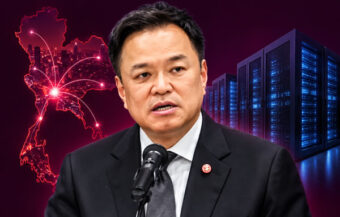
Bank of Thailand Governor orders monitoring of cash withdrawals amid widespread vote buying fears
Pheu Thai candidate calls on Election Commission to act. ฿1 billion for vote buying in Ubon Ratchathani
Former minister and party leader Sudarat warns of ฿20 billion plot by ‘Scambodia’ to take political power
On Friday, January 30, former Deputy Prime Minister Phumtham Wechayachai posted comments on social media. He described recurring election-stage problems. He cited vote buying, state interference, and harassment of candidates.
According to him, officials were ignoring established rules. He said such conduct undermined public confidence. He said current complaints reflected similar patterns. Mr Phumtham again urged voters to choose independently. He called on them not to be swayed by money. However, he did not outline specific enforcement measures.
The Election Commission has not directly addressed his allegations. Instead, it has emphasised monitoring and investigation. As election day approaches, scrutiny remains high nationwide.
Join the Thai News forum, follow Thai Examiner on Facebook here
Receive all our stories as they come out on Telegram here
Follow Thai Examiner here
Further reading:
Bank of Thailand Governor orders monitoring of cash withdrawals amid widespread vote buying fears
High powered, secretive meeting chaired by PM agrees robust action against Cambodian networks