Thailand has slammed the door on nearly 30,000 foreigners this year as PM Anutin’s government launches a sweeping crackdown on visa abuse, crime and nominee businesses. More than 14,000 have been arrested, while thousands are stopped before even boarding flights.
Thailand is tightening control over who enters, stays and does business in the kingdom, refusing entry to nearly 30,000 foreign nationals this year, arresting more than 14,000 others and expanding scrutiny of visa holders, foreign-owned businesses and suspected criminal networks. The figures, disclosed this week by Immigration Bureau Commissioner Police Lieutenant General Panumas Boonyalak, mark a significant escalation by Prime Minister Anutin Charnvirakul’s government as it aligns immigration policy, tourism strategy and economic security behind a broader effort to curb unlawful foreign activity, visa abuse and nominee business structures that undermine legal protections for Thais.
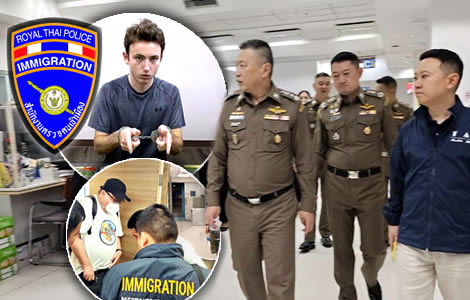
Thailand has refused entry to 29,490 foreign nationals so far this year as the government expands a broader campaign against illegal migration, visa abuse, organised crime and unlawful foreign activity.
The figure, disclosed on Thursday by Immigration Bureau Commissioner Police Lieutenant General Panumas Boonyalak, reflects a tougher approach now visible across several ministries. Immigration enforcement, tourism policy and economic regulation are increasingly moving in the same direction.
On Friday, Prime Minister Anutin Charnvirakul reinforced that message. He reaffirmed his government’s determination to tackle nominee structures used by foreigners to control Thai businesses and property.
Government links tougher immigration enforcement with nominee crackdown and tourism policy shift
The prime minister warned that the practice threatens both security and sovereignty. He said the issue has developed over decades and requires sustained enforcement action.
In parallel, Tourism and Sports Minister Surasak Phancharoenworakul strengthened the government’s evolving tourism strategy. During a ministry meeting, he repeated a position first outlined in April.
Thailand is no longer focused solely on visitor numbers. Instead, officials are prioritising security, visitor quality and economic value. The minister made clear that attracting high-spending visitors now carries greater importance than increasing arrival totals.
As part of this shift, authorities are paying closer attention to travellers viewed as posing risks to public order. Immigration enforcement has become one of the most visible parts of that effort.
Police Lieutenant General Panumas said thousands of people are now being blocked before they even begin travelling. Many never reach a Thai airport.
Immigration screening blocks thousands before travel as blacklist reaches more than 169,000 names
The Immigration Bureau relies on the Advanced Passenger Processing System, or APPS, to screen passengers before departure. The system checks traveller information against immigration and law enforcement databases.
Notably, Thailand’s blacklist currently contains 169,506 names. The database includes foreigners previously imprisoned in Thailand, immigration violators and individuals subject to Interpol arrest warrants.
Those identified through the system cannot board flights to Thailand. Airlines receive notifications before departure and deny boarding.
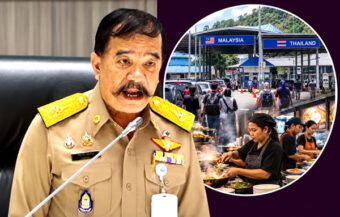
Likewise, blacklisted individuals attempting land entry are refused at border checkpoints. Officials said the objective is to stop high-risk travellers before they enter the country.
The screening programme extends beyond criminal records. Immigration officers are also examining travellers arriving under visa exemption arrangements.
Authorities target illegal workers and scam suspects under expanding Three No’s enforcement campaign
In particular, authorities are targeting people suspected of working illegally while presenting themselves as tourists. They are also scrutinising individuals believed to have links to transnational scam operations.
According to immigration figures, these measures resulted in 29,490 refusals between January and May.
The operation forms part of the bureau’s “Three No’s” strategy. The policy centres on three principles: “No Entry”, “No Stay” and “No Escape”.
The first pillar focuses on border screening. It aims to prevent undesirable individuals from entering Thailand.
The second pillar targets foreigners already residing in the kingdom. Enforcement efforts concentrate on visa violations and unlawful activities.
In response, immigration authorities have increased visa reviews and investigations. Particular attention has been directed towards educational visas.
Student visa abuse under scrutiny as deportations and visa revocations accelerate nationwide
Officials reported cases involving foreigners holding student visas without undertaking genuine studies. Such cases have become a growing focus for investigators.
Between January and May, authorities revoked visas and deported 668 foreign nationals. The figure included both visa-exempt visitors and holders of formally issued visas.
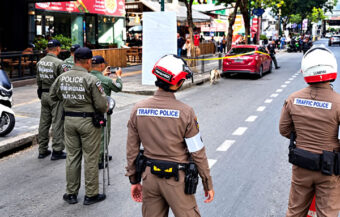
Separately, immigration officers expanded inspections nationwide. Large-scale operations were conducted in tourist centres and provinces with sizeable foreign communities.
From January through April, authorities arrested 14,161 foreign nationals in various cases. The operations involved coordinated action between immigration units and local police.
On another front, investigators have intensified intelligence gathering on foreign residents considered public order risks. This forms the final element of the strategy, known as “No Escape”.
Under the programme, immigration offices compile information on selected targets. The intelligence is then shared with provincial police forces for further action.
Intelligence-led operations focus on foreign residents identified as potential public order risks
Subsequently, authorities conduct joint operations and targeted searches. The focus remains on individuals whose activities raise security concerns.
So far, immigration officials have identified 190 targets nationwide. Chonburi accounts for 147 of those cases.
Elsewhere, Surat Thani has 22 targets. Phuket has 10. Chiang Mai has nine. Mae Hong Son has two.
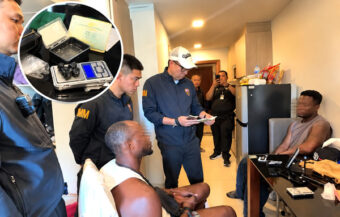
Search operations have already produced arrests. Authorities reported that 31 identified targets have been detained.
Meanwhile, investigations continue into the remaining cases. Officials said those individuals remain under close observation.
Immigration Bureau spokesperson Police Major General Cherngron Rimphadee said Police Lieutenant General Panumas has instructed all divisions to maintain enforcement pressure. Commanders have also been ordered to monitor results closely.
Nearly 30,000 denied entry as Thailand tightens controls on foreigners and tourist arrivals
The figures illustrate the scale of the campaign. Nearly 30,000 people have been refused entry. More than 14,000 foreign nationals have been arrested. Hundreds have lost visas and been deported.
Taken together, the numbers reveal a significant tightening of Thailand’s immigration regime. They also align with broader government priorities.
Tourist safety again in the spotlight after Bolt driver’s attack and an attempted rape ot Koh Samet hotel
India may be biggest loser in new get tough foreign tourism visa policy approved by cabinet on Tuesday
Hardline foreign tourism confirmed by new minster. More charges, shorter visas and mandatory insurance
While Prime Minister Anutin targets nominee ownership structures, other agencies are focusing on border controls and visa compliance. At the same time, tourism officials are reshaping policy around security and visitor quality.
For immigration authorities, the message is direct. Foreign nationals considered security risks, immigration violators or public order concerns face increased scrutiny.
As a result, enforcement activity is expanding both at Thailand’s borders and within the country itself. The latest statistics suggest the campaign is operating on a scale rarely seen in recent years.
Join the Thai News forum, follow Thai Examiner on Facebook here
Receive all our stories as they come out on Telegram here
Follow Thai Examiner here
Further reading:
60-day visa regime to be ended confirms Minister responding to rising industry security concerns
Tourism boss warns Thailand it is facing a Chinese blacklist if another security controversy erupts
Visa waiver scheme questioned with another China Crisis for foreign tourism driven by security fears
Tourism cryptocurrency sandbox payment plan is bound to face stiff opposition from the central bank
Thaksin calls for crypto-based bonds. Notes success and beauty of Isan women who marry foreigners
Future Bank of Thailand Chairman Pick warns that the Thai economy faces ‘disaster’ without rate cuts