Parliamentary immunity has ended and Kla Tham MP Chonnapat Naksua has appeared before the DSI to acknowledge fresh organised crime and transnational organised crime charges. Prosecutors will next review the expanded online gambling investigation file.
The Department of Special Investigation (DSI) moved against Kla Tham Party MP Chonnapat Naksua on Monday after the lawmaker quietly appeared to acknowledge new charges of participating in a criminal organisation and a transnational organised crime syndicate. The meeting followed the expiry of his parliamentary immunity, clearing the way for investigators to formally question him over the expanded online gambling investigation after tracing financial links overseas.
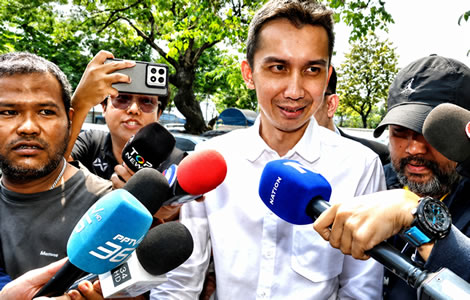
Kla Tham Party MP Chonnapat Naksua reported to the Department of Special Investigation (DSI) on Monday to acknowledge two additional criminal charges after parliamentary immunity expired with the close of the House session.
The appearance moved one of Thailand’s highest-profile organised crime investigations into a new phase. It also allowed investigators to formally question the Songkhla MP for the first time on the expanded allegations.
Mr Chonnapat arrived at Government Complex Building C on Chaeng Wattana Road shortly before 3.40pm. He reported to the Technology and Information Crime Division, which is handling Special Case 150/2568. The investigation centres on allegations involving online gambling operations and money laundering. In total, the case now involves 27 suspects.
DSI expands gambling case after overseas money trail prompts organised crime and transnational charges
Previously, investigators summoned Mr Chonnapat to acknowledge allegations linked to operating online gambling websites and laundering gambling proceeds.
However, the investigation later widened after detectives uncovered financial transactions extending overseas. Those findings prompted fresh legal consultations. Investigators believed some suspected offences may have originated outside Thailand.
As part of that process, the Office of the Attorney General reviewed the expanded evidence. The Attorney General then exercised powers under Section 20 of the Criminal Procedure Code. Responsibility for the case was assigned to the DSI Director-General and the special investigation team.
In response, prosecutors authorised two further charges. They accuse Mr Chonnapat of participating in a criminal organisation and a transnational organised crime syndicate.
Those additional allegations could not immediately be presented to the MP. Under Article 125 of Thailand’s Constitution, Members of Parliament cannot be summoned as criminal suspects during a parliamentary session without House approval.
Likewise, investigators generally cannot compel questioning, arrest or detention while Parliament remains in session. The constitutional safeguard does not halt a criminal investigation. Instead, it temporarily delays compulsory legal action against a sitting MP.
House blocked DSI questioning of MP until parliamentary immunity expired with session ending in July
That constitutional protection became the focus of intense political debate on May 29. Speaker Sophon Saram chaired the House sitting as MPs considered a DSI request concerning Mr Chonnapat. The department had formally asked permission to summon him. The request followed instructions issued by the Attorney General after investigators sought to notify him of the additional allegations.
After hours of debate, the House rejected the DSI request by 308 votes to 126. Meanwhile, two MPs abstained and three voted against the motion.
The decision prevented investigators from compelling Mr Chonnapat to appear before the DSI while Parliament remained in session. Government coalition MPs argued they were defending constitutional parliamentary privilege. Opposition MPs, by contrast, accused the House of delaying the criminal process.
Notably, the constitutional protection was never permanent. Parliamentary immunity automatically expired when the House adjourned on July 11. From that point, investigators no longer required parliamentary approval. Two days later, Mr Chonnapat contacted the DSI himself. He requested an appointment to acknowledge the expanded allegations. The meeting was subsequently arranged for July 13.
MP avoids cameras before entering DSI offices to acknowledge fresh organised crime allegations
Reporters observed Mr Chonnapat arriving in a white long-sleeved shirt and black trousers. He was not wearing a face mask. He was accompanied by family members and his legal team. Throughout his arrival, he attempted to avoid media attention.
Instead, he stood beside a restroom entrance on the building’s second floor. He kept his back towards waiting photographers at all times. He remained there while waiting for the elevator.
Shortly afterwards, DSI officers arrived to escort him upstairs. Even then, Mr Chonnapat continued turning away from cameras. He prevented photographers from taking frontal images before entering the investigation offices. Separately, he declined to answer questions from reporters. Instead, he proceeded directly to meet investigators handling the case.
Inside the Technology and Information Crime Division, investigators formally informed him of the two additional charges. They then began further questioning. According to an internal DSI source, officers questioned the MP on issues arising from the expanded investigation.
The interview also allowed him to explain the facts and clarify matters identified during the inquiry. He was given an opportunity to present information supporting his defence.
DSI prepares final case file after questioning as prosecutors weigh next steps in organised crime enquiry
In parallel, investigators continued examining financial evidence linked to overseas transactions. Those financial trails formed the basis for the organised crime allegations. Officials concluded the suspected activities extended beyond Thailand’s borders.
Consequently, prosecutors added organised crime and transnational organised crime allegations to the existing online gambling and money laundering case.
Attention also turned to whether Mr Chonnapat should be detained after acknowledging the new allegations. Investigators decided detention was unnecessary. Officials noted the latest offences supplemented the original criminal case rather than replacing it.
Moreover, Mr Chonnapat voluntarily appeared before investigators. He also has a permanent address. Investigators found no indication he intended to flee. Accordingly, officers allowed him to leave after the questioning concluded.
On another front, investigators are moving quickly to complete the case file. Officials said the investigation would be finalised as soon as possible. Afterwards, the completed file will be submitted to the Office of the Attorney General. Investigators will also forward their legal opinions and recommendations. Prosecutors will then examine both the evidence and the investigative findings before determining the next legal step.
End of parliamentary immunity allows DSI to press organised crime case and complete prosecution file
The developments also illustrate the practical limits of parliamentary immunity under Thailand’s Constitution. The protection never prevented investigators from collecting evidence or expanding the inquiry.
Instead, it delayed compulsory legal action while Parliament remained in session. Once the House adjourned, that procedural barrier disappeared. Investigators could then proceed under normal criminal procedures without seeking parliamentary approval.
Political firestorm as parliament votes to withhold MP wanted by DSI police over organised crime probe
Parliament to decide on DSI request to quiz Songhla MP Chonnapat who police link to organised crime
For the DSI, Monday’s appearance represented the first opportunity to formally notify Mr Chonnapat of the expanded allegations. Equally important, investigators were able to continue questioning under standard criminal procedures.
The case has now entered a more advanced stage. Organised crime and transnational organised crime allegations have been added to the existing prosecution. The completed investigation will now pass to the Office of the Attorney General, which will determine the next course of legal action.
Join the Thai News forum, follow Thai Examiner on Facebook here
Receive all our stories as they come out on Telegram here
Follow Thai Examiner here
Further reading:
Parliament to decide on DSI request to quiz Songhla MP Chonnapat who police link to organised crime
Bombshell as former Police Chief Torsak and 200 senior officers are linked to corruption by board
High powered, secretive meeting chaired by PM agrees robust action against Cambodian networks