A senior Bhumjaithai Party MP has called for Thailand’s biggest forex law overhaul in more than 80 years after a huge DSI fraud probe exposed alleged legal loopholes and the Bank of Thailand warned no retail forex trading platforms are licensed.
A widening Department of Special Investigation (DSI) fraud probe, fresh warnings from the Bank of Thailand and a parliamentary drive to rewrite Thailand’s 1942 foreign exchange law have thrust the country’s online forex market under unprecedented scrutiny. Senior Bhumjaithai Party MP Juti Krairiksh is demanding tougher prison sentences and stronger anti-money laundering laws after investigators uncovered alleged legal loopholes exploited by unauthorised investment businesses. At the same time, the case has exposed growing uncertainty over whether Thai residents trading through overseas licensed forex platforms are operating within Thailand’s exchange control framework or an increasingly risky legal grey area for entrepreneurs and investors.

A senior Bhumjaithai Party MP has called for Thailand’s foreign exchange laws to be rewritten, demanding tougher prison sentences, stronger anti-money laundering powers and faster enforcement after a major Department of Special Investigation (DSI) fraud probe exposed what he described as dangerous legal loopholes.
The proposed reforms would also modernise legislation that has remained largely unchanged since 1942.
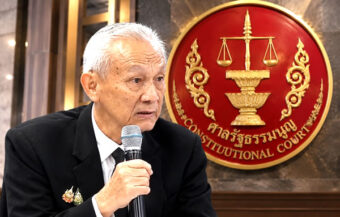
Mr Juti Krairiksh, the Bhumjaithai Party MP for Phitsanulok and chairman of the House Committee on Finance, Fiscal Affairs, Financial Institutions and Financial Markets, said organised fraud had outgrown Thailand’s legal framework.
Instead, he argued, outdated legislation has left enforcement agencies pursuing increasingly sophisticated financial crime with inadequate penalties. As a result, Parliament intends to move directly to amend the law rather than wait for the normal legislative process.
Parliament prepares sweeping overhaul of 1942 forex law after MP warns fraudsters exploit legal loopholes
His intervention comes as the DSI expands one of Thailand’s largest alleged investment fraud investigations. Investigators are examining a network accused of promoting unauthorised foreign exchange investment products to Thai investors.
Authorities believe the operation may have processed billions of baht. They are examining suspected offences including public fraud, operating an unauthorised financial business and money laundering.
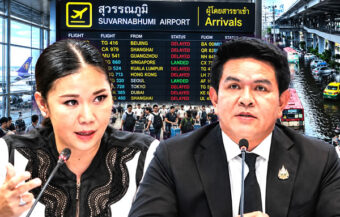
Notably, the investigation has attracted nationwide attention after DSI officials confirmed that evidence had linked former actor and businessman Rattapoom Tokongsup, widely known as “Film”, and People’s Party MP Pawut Pongwitayaphanu to aspects of the inquiry.
Investigators have stressed that both men are being examined because of evidence uncovered during the investigation. The legal process remains ongoing. Film has denied wrongdoing and said he is preparing documents with his legal team. Likewise, Mr Pawut has rejected allegations of fraud, saying he merely introduced people to business opportunities. Both have pledged to cooperate fully with investigators. Neither has been found guilty of any offence.
DSI widens alleged forex fraud investigation as Film and People’s Party MP deny any wrongdoing
Separately, the Bank of Thailand has intensified scrutiny of the sector. Last week, it reiterated that it has never licensed retail forex trading platforms in Thailand.
It also warned that payment gateways supporting unauthorised forex businesses could breach the Exchange Control Act. The statement reinforced concerns surrounding investor protection, financial crime and potential money laundering.
However, the warning arrived against a changing regulatory backdrop. Last year, the Bank of Thailand relaxed foreign exchange controls governing overseas investment. Those changes made it easier for Thai residents to transfer funds abroad through authorised channels.
Consequently, many investors opened accounts with overseas brokers to trade forex and other financial products. Nevertheless, the central bank continues to distinguish between authorised overseas investment and businesses offering speculative retail forex trading services inside Thailand.
Speaking on July 5, Mr Juti outlined the Finance Committee’s review of forex-related complaints. The committee invited complainants, the Bank of Thailand and the Anti-Money Laundering Office (AMLO) to provide evidence directly. Previously, many complainants had little opportunity to present their cases before Parliament. In response, lawmakers compared investor complaints with explanations from regulators and enforcement agencies.
Bank of Thailand warning and committee hearings expose growing concerns over forex investment laws
According to Mr Juti, those hearings exposed significant weaknesses in Thailand’s legal framework. He said fraudsters exploited legal gaps to persuade members of the public to invest in businesses presented as legitimate forex operators.
In reality, he said, those businesses lacked regulatory approval. The Bank of Thailand also confirmed that it has never licensed individuals or private companies to operate retail forex trading businesses in Thailand. Instead, licences are granted only to authorised foreign exchange businesses operating within the central bank’s framework.
Following those findings, the Royal Thai Police, the DSI and AMLO are expected to continue financial investigations and asset seizure proceedings. Investigators are also reviewing financial records, company ownership structures and communications connected with the alleged schemes. At the same time, they continue tracing money flows to establish how investor funds moved through the network.
Mr Juti argued that Thailand’s current forex legislation no longer reflects the realities of modern financial crime. The principal law, he noted, still dates back to 1942. Since then, financial markets have changed dramatically. Digital payments, online investment platforms and cross-border financial services have transformed how money moves. Yet, he said, the legal framework has failed to keep pace.
MP says outdated penalties and weak enforcement leave Thailand exposed to increasingly sophisticated fraud
He singled out the penalties as a particular weakness. Under current law, offenders face a maximum fine of only 2,500 baht and imprisonment of up to two years. Mr Juti argued that those sanctions no longer deter organised financial crime. Instead, offenders often expect modest fines and suspended prison sentences. Consequently, he said the law provides little protection against sophisticated investment fraud.
On another front, Mr Juti criticised penalties under the Anti-Money Laundering Act. Certain offences carry prison terms of only one year. By contrast, the Personal Data Protection Act provides prison terms of up to five years for some offences. He argued that offences capable of undermining Thailand’s financial system should carry substantially stronger penalties.
“This is Thailand’s weakness. The laws are good, but enforcement is flawed,” Mr Juti said. He added that offenders continue to avoid investigation and arrest despite existing enforcement powers. Therefore, he said future reforms must ensure serious financial criminals receive genuine prison sentences rather than suspended punishment.
He also said the government remains committed to suppressing scammers, eliminating money laundering and strengthening confidence in Thailand’s capital markets.
As part of this effort, Parliament intends to accelerate the legislative process. Mr Juti said MPs will submit amendment bills directly after the Bank of Thailand completes its review of weaknesses in the existing law. The proposed reforms would increase prison sentences, strengthen enforcement powers and close loopholes identified during recent investigations.
Parliament seeks reforms before OECD target and international money laundering assessment in 2027
In parallel, Parliament is also reviewing amendments to the Anti-Money Laundering Act. An ad hoc committee has asked government agencies to reduce the period required to issue supporting regulations. The current period is 240 days. The committee wants that reduced to 120 days. Mr Juti said the accelerated timetable reflects Thailand’s international obligations.
Thailand is scheduled to undergo an international anti-money laundering assessment on June 30, 2027. The review will examine both legislative reform and enforcement performance. Mr Juti said completing the legal changes beforehand remains a priority.
He also linked the reforms to Thailand’s ambition of joining the Organisation for Economic Co-operation and Development (OECD) by the middle of 2027.
Meanwhile, the DSI investigation continues to widen. Authorities believe the alleged investment network processed billions of baht through multiple companies and financial channels. Investigators have already frozen assets. They continue tracing thousands of financial transactions while examining company structures, accounting records, communications and money trails. Their objective is to establish the full extent of the alleged operation.
According to investigators, the inquiry centres on complaints from investors who believed they were placing funds with legitimate forex investment businesses. Investigators say those companies lacked Bank of Thailand authorisation to operate retail forex trading platforms.
Investigators trace billions in transactions while expanding the alleged forex investment fraud case
Consequently, the investigation has expanded into what officials describe as an organised business network involving brokers, promoters, nominee companies and payment channels. Investigators are also examining whether investor funds passed through multiple accounts to conceal their origin or destination.
Beyond the criminal allegations, the case has intensified scrutiny of Thailand’s wider forex regulatory framework. The Bank of Thailand regulates foreign exchange transactions under the Exchange Control Act.
Generally, cross-border transfers must pass through authorised financial institutions. However, reforms introduced last year relaxed outward remittance rules for approved overseas investment. As a result, many Thai residents legally transferred funds abroad before opening overseas trading accounts.
Even so, the Bank of Thailand maintains that it does not license businesses offering speculative retail forex trading services in Thailand. Recent DSI investigations have concentrated on alleged fraud, unlicensed investment businesses, public solicitation, money laundering, payment processing and transnational financial crime.
Offshore forex trading remains legally distinct from fraud and money laundering investigations in Thailand
They have not focused solely on individuals placing forex trades through overseas accounts. Instead, investigators are examining how businesses recruited investors, how money moved through the financial system and whether regulated financial services were provided without legal authority.
Finally, the investigation has also highlighted the legal distinction surrounding offshore forex trading. No widely reported Supreme Court judgment has established that merely opening an account with a properly regulated overseas broker automatically constitutes a criminal offence.
Bank of Thailand pushes a baht backed stablecoin but warns against Forex trading and payment gateways
Forex trading network scam smashed by DSI police. Billions of baht in losses as People’s Party MP denies culpability
Instead, legal questions may depend on compliance with exchange control rules, the movement of funds, the services provided in Thailand and whether businesses unlawfully solicited Thai clients. Those issues remain distinct from the criminal allegations now under investigation.
Together, the DSI investigation, the Bank of Thailand’s warning and Parliament’s proposed reforms have pushed Thailand’s forex regulatory framework into the national spotlight.
If approved, the amendments would replace legislation dating back more than eight decades, strengthen anti-money laundering powers and introduce substantially tougher prison sentences.
Meanwhile, DSI investigators continue tracing financial transactions and gathering evidence in one of Thailand’s most significant alleged forex investment fraud investigations. A criminal case that has raised troubling questions about the emerging world of online trading and investing in Thailand.
Join the Thai News forum, follow Thai Examiner on Facebook here
Receive all our stories as they come out on Telegram here
Follow Thai Examiner here
Further reading:
Rates cut to 1.25% as damaged economy limps on to the end of 2025 with even stiffer headwinds ahead
Ex Energy Minister supports oil and arms supplies blockade against Cambodia in the Gulf of Thailand
War to continue says PM Anutin. Dismisses President Trump’s ceasefire talk as a ‘misunderstanding’
Confusion after Trump’s 20 minute phone call with PM Anutin. US side claimed a ceasefire was agreed